
We are reader supported. When you purchase through links on our site, we may earn an affiliate commission. Also, as an Amazon affiliate, we earn from qualifying purchases.
Nano aquariums magnify both beauty and risk. With less water volume, chlorine, chloramine, and trace ammonia can harm fish and shrimp fast. A reliable water conditioner is non-negotiable. The best choices for nanos work quickly, dose precisely in tiny amounts, protect sensitive livestock, and keep water chemistry stable. Below are the five standout conditioners for 2026, with clear use cases, strengths, and caveats to help you choose with confidence.
What to look for in a nano water conditioner
Chlorine and chloramine removal: This is the baseline. Both must be neutralized before water touches the tank.
Ammonia and nitrite detox support: Especially useful for emergency protection in small tanks where spikes hit harder.
Low-volume dosing control: Dropper or syringe-friendly formulas prevent overdosing in 2–10 gallon setups.
Plant and invertebrate safe: Shrimp and snails are sensitive. Select conditioners widely used in shrimp and planted nanos.
Minimal residue: Some slime-coat enhancers can leave films when overdosed. Balance protection with clarity.
Seachem Prime
Why it helps
Prime is a high-concentration all-rounder. It neutralizes chlorine and chloramine and detoxifies ammonia and nitrite for short-term protection, which is invaluable in small tanks during filter hiccups or after overfeeding. Its potency means tiny doses go a long way, making it practical for nanos when measured carefully.
Standout features
– Strong detox support for emergencies
– Very concentrated, cost-efficient
– Widely used with shrimp, snails, and planted tanks
Best for
All-purpose nano use where you want one bottle that covers routine conditioning and offers a safety net during small spikes.
How to dose in nanos
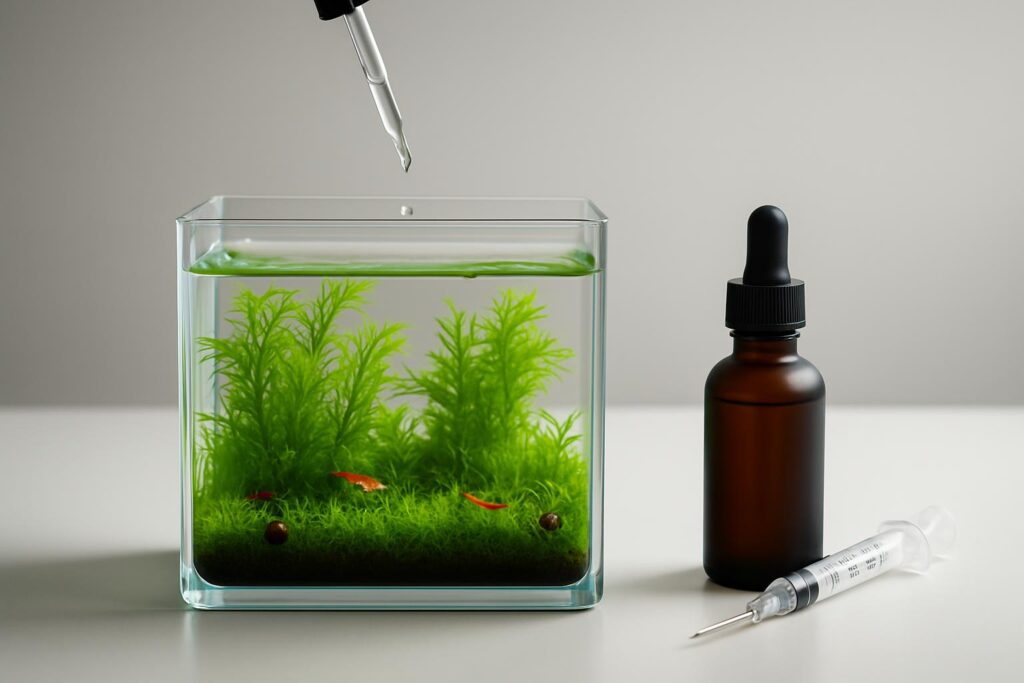
Use a 1 mL syringe or pipette for precision. Dose only for the volume of new water during water changes. For emergencies, you can increase the dose temporarily as the label allows, and add aeration.
Potential downsides
– Noticeable sulfur smell
– Easy to overshoot in very small volumes if you eyeball it
Real-world tip
Pre-mix Prime into the change-water bucket, then add to the tank. This improves distribution and prevents localized overdosing.
API Tap Water Conditioner
Why it helps
Simple, concentrated, and effective at removing chlorine and chloramine. It does not add extras or dyes, which many minimalists prefer in tight systems. The focus is straightforward tap water safety without altering other parameters.
Standout features
– Highly concentrated formula for small tanks
– No slime-coat additives or colorants
– Reliable dechlorination performance
Best for
Stable, lightly stocked nanos where you only need precise dechlorination and keep ammonia under control through maintenance.
How to dose in nanos
Measure with a micro-pipette or syringe to avoid overdosing. Treat only the new water volume, not the whole tank, when doing partial changes.
Potential downsides
– No ammonia or nitrite detox support
– No slime-coat component for stressed or newly introduced fish
Real-world tip
Pair with consistent maintenance and a good biofilter. For tanks with sensitive fish or frequent netting, consider a separate slime-coat product when needed.
Tetra AquaSafe Plus
Why it helps
This conditioner targets chlorine and chloramine and also adds slime-coat enhancers and beneficial compounds that support fish during transitions. In nanos where fish experience frequent small changes, that extra protection can reduce stress.
Standout features
– Slime-coat support for handling and transport
– Gentle on plants and shrimp at directed doses
– Good all-in-one for community nano tanks
Best for
Community nanos with frequent stocking or handling, like betta cubes or shrimp-fish mixes where minor stress is common.
How to dose in nanos
Shake well, measure with a syringe, and pre-mix in the change-water. Start with the standard dose and observe for any surface film before adjusting.
Potential downsides
– Heavy dosing can cause slight film or foaming in tiny tanks
– Not a solution for ammonia emergencies
Real-world tip
Use it routinely for water changes and after netting or aquascape tweaks when fish are more prone to stress.
Fritz Complete Water Conditioner
Why it helps
Fritz Complete neutralizes chlorine and chloramine and provides detox support for ammonia and nitrite. It is a clean, effective alternative to other flagship formulas and is favored by aquarists who want strong performance without added dyes.
Standout features
– Robust detox profile for small volume safety
– Concentrated and economical
– Works well in planted and shrimp tanks when dosed correctly
Best for
Nanos with higher bioloads or those still maturing biologically, where a conditioner with detox support adds a margin of safety.
How to dose in nanos
Rely on a syringe for sub-milliliter accuracy. Treat new water in a bucket first, then add to the tank. Maintain steady aeration during any emergency detox dosing.
Potential downsides
– Less commonly stocked in brick-and-mortar shops
– As with all concentrated products, precision is essential
Real-world tip
Keep a small log of dosing amounts for your specific water change volumes. Repeatability prevents creeping overdoses in nanos.
API Stress Coat
Why it helps
Stress Coat handles chlorine and chloramine while adding aloe-based slime-coat support. This is useful for new fish, after transport, or when you have delicate species that react strongly to small disturbances common in tiny tanks.
Standout features
– Slime-coat enhancement for recovery after handling
– Simple dechlorination in one step
– Familiar, trusted formula for community setups
Best for
New fish introductions and recovery periods in betta bowls, pico cubes, and community nanos.
How to dose in nanos
Use measured doses and pre-mix in the bucket. Observe surface behavior; scale back if you notice a persistent film.
Potential downsides
– Overuse can leave residue or film in very small tanks
– Does not provide ammonia detox support
Real-world tip
Alternate with a minimalist conditioner on routine changes, and reserve Stress Coat for post-transport or post-maintenance recovery.
How to use conditioners efficiently in nano tanks
Measure with intent
Use a 1 mL syringe or lab pipette for accurate micro-dosing. Avoid capfuls and guessing.
Pre-mix in a bucket
Condition the new water before it reaches the tank. This evens out concentration and protects livestock immediately.
Dose for new water volume only
In partial changes, dose for the replacement water, not the entire tank. This prevents creeping overdoses.
Match your goals
Choose a detox-capable formula for immature biofilters or higher bioloads. Choose slime-coat support when fish are stressed or newly added. Use minimalist dechlorination if you prefer ultra-clear water and stable stock.
Watch livestock feedback
Film, flashing, or surface gulping may indicate overdose or poor aeration. Adjust doses and add air if you increase detox treatments during emergencies.
Conclusion
For most nano aquariums in 2026, Seachem Prime stands out as the best all-round pick thanks to strong detox support and high concentration. API Tap Water Conditioner delivers clean, no-frills dechlorination with precise control. Tetra AquaSafe Plus and API Stress Coat add valuable slime-coat support for stressful moments. Fritz Complete offers a powerful, dye-free alternative with ammonia and nitrite detox. Match the conditioner to your bioload, maintenance style, and livestock sensitivity, measure accurately, and pre-mix every change. Small tanks reward careful habits.
FAQ
Q: Which water conditioner is the most versatile for nano tanks?
A: Seachem Prime is the best all-around pick due to its concentration and ability to detoxify ammonia and nitrite.
Q: What is a safe way to dose conditioners in a 5-gallon tank?
A: Use a 1 mL syringe or pipette, pre-mix in a bucket, and dose for the new water volume, not the whole tank.
Q: Do shrimp and snails tolerate these conditioners?
A: All five picks are widely used with shrimp, snails, and planted tanks when dosed correctly.
Q: When should slime-coat formulas be preferred?
A: During new fish introduction or after netting and transport, Tetra AquaSafe Plus or API Stress Coat provide helpful slime-coat support.
Q: What are common downsides to watch out for?
A: Overdosing in tiny volumes, a strong sulfur smell with some products, and potential film from heavier slime-coat formulas.