
We are reader supported. When you purchase through links on our site, we may earn an affiliate commission. Also, as an Amazon affiliate, we earn from qualifying purchases.
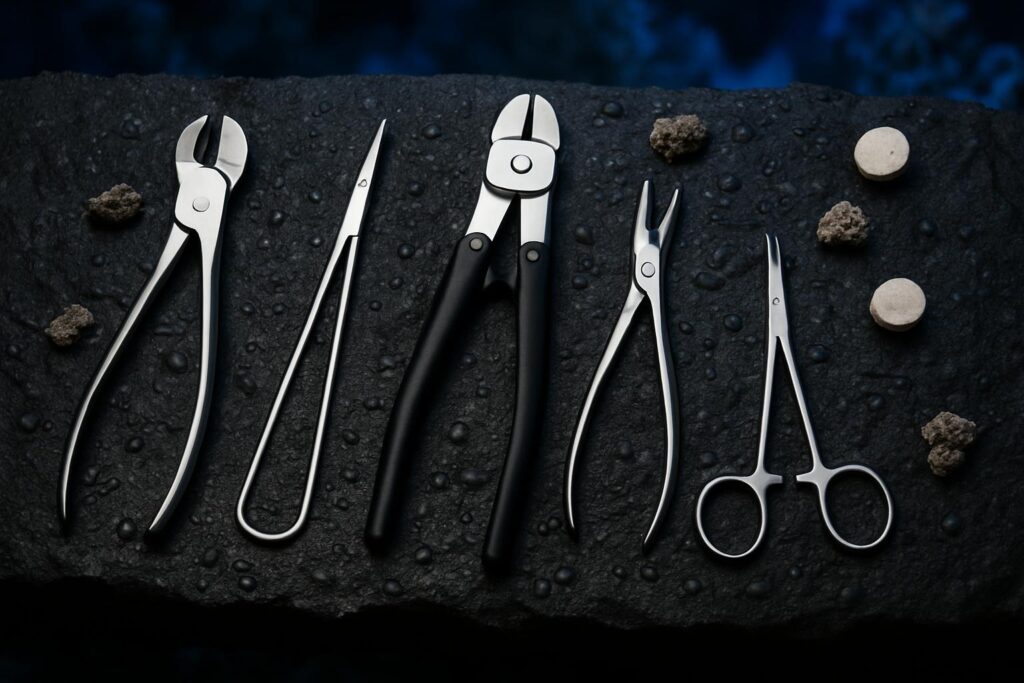
Cutting coral the right way protects your colonies, improves frag success, and keeps your reef on track. The wrong tool crushes skeletons, tears tissue, and rusts fast. The right tool makes a clean, controlled cut that heals quickly. This guide simplifies the decision and reviews five proven coral cutters for 2026 that cover SPS, LPS, and soft coral needs. Stay for the options, but also note the care tips and safety points that save livestock and tools alike.
How to choose coral cutters in 2026
Material and rust resistance
Stainless steel is standard. 420 stainless holds an edge and resists rust reasonably well, but every tool will corrode if left salty and wet. A good rinse and dry routine matters more than the alloy stamp.
Jaw profile and cut type
Bone cutters and rongeurs are for hard skeletons and frag plugs. Scissors are for flesh and soft tissue. Flush-cut profiles reduce crushing. Double-action jaws add power for thicker SPS branches and ceramic plugs.
Size and leverage
6 to 7 inch cutters balance control and reach for most reef tasks. 8 inch compact bolt cutters add serious leverage for dense skeleton and plugs but require careful aim near living tissue.
Safety and coral health
Wear eye protection and nitrile gloves. Work outside the tank when possible. Make swift, single cuts. Dip frags after cutting in an iodine-based solution to reduce bacterial load and improve healing.
The 5 Best Reef Tank Coral Cutters for 2026
1) Oceans Wonders Stainless Steel Coral Bone Cutters, 7 inch
Reliable, reef-focused bone cutters with a precise jaw profile that snaps SPS branches and frag plug edges cleanly. The 7 inch size is the sweet spot for control without hand fatigue.
Key specs: 7 inch length, stainless steel, fine bone-cutter jaws, spring return
Why it helps: Clean mechanical cuts reduce crushing on acropora and montipora bases, improving frag survival and regrowth lines.
Best for: Everyday SPS fragging, trimming encrusted plug rims, making starter cuts before chisel work
Potential downsides: Not ideal for very thick ceramic plugs or large branch bases; rinse and dry religiously to avoid hinge corrosion
Pro tip: Aim for bare skeleton just below living tissue, then use a scalpel to tidy any small tissue tags.
2) Tamsco Double-Action Bone Cutting Forceps, 7 inch
Medical-style double-action forceps that deliver more power with less hand strain. Ideal when a standard bone cutter stalls on dense skeleton or thick encrustations.
Key specs: 7 inch length, double-action joint, stainless steel, curved cutting edge
Why it helps: The double-action mechanism multiplies force, giving controlled cuts through stiffer SPS skeleton and stubborn plug material.
Best for: Thicker SPS branches, euphylids with calcified bases when working on skeleton only
Potential downsides: The bulkier head reduces precision in tight spaces; keep well-lubed to maintain smooth action
Pro tip: Start the cut slowly to seat the jaws, then complete in one decisive squeeze to avoid micro-fractures.
3) Knipex 71 01 200 CoBolt Compact Bolt Cutter, 8 inch
A compact bolt cutter that many reef keepers use for ultra-clean snaps on thick plug stems and large SPS branches. The leverage and hardened cutting edges are unmatched for tough cuts.
Key specs: 8 inch length, hardened cutting edges, high leverage joint, nonslip handles
Why it helps: Massive cutting power with minimal hand force makes clean breaks on dense skeleton and ceramics, reducing crushing near the cut line.
Best for: Thick acropora table roots, ceramic frag plugs, trimming rack hardware away from frags
Potential downsides: Not stainless; must be rinsed, dried, and lightly oiled after every use; large head requires accuracy to avoid tissue
Pro tip: Use a bone cutter to score a groove, then finish with the CoBolt for a reliable snap along the score line.
4) SURGICAL ONLINE Luer Bone Rongeur, 6 inch
Precision rongeur for controlled nibbling of skeleton. Useful when you need to shape a base, remove small encrusted ridges, or thin a frag mount without shock-loading the coral.
Key specs: 6 inch length, luer-style rongeur jaws, stainless steel, spring return
Why it helps: Allows gradual removal of small amounts of skeleton with minimal vibration, ideal near living tissue and fine bases.
Best for: Precision trimming of SPS bases, opening a channel for grafts, cleaning plug rims close to polyps
Potential downsides: Slow for large cuts; does not replace a true bone cutter for snapping branches
Pro tip: After rough shaping with the rongeur, polish the edge with a scalpel to prevent sharp micro-spurs that can irritate tissue.
5) Oceans Wonders Stainless Steel Coral Fragging Scissors, 4.5 inch
Short-blade scissors designed for reef use. The compact length and sharp edges give clean tissue cuts on soft corals and fleshy LPS without tearing.
Key specs: 4.5 inch length, stainless steel, fine tips, straight blades
Why it helps: Scissor cuts preserve tissue integrity on zoas, xenia, mushrooms, and fleshy LPS, reducing stress and improving recovery.
Best for: Soft corals, trimming fleshy skirts, separating polyps from mats, taking small LPS tissue frags
Potential downsides: Not appropriate for hard skeletons or plug stems; keep reserved for flesh-only jobs
Pro tip: For zoa mats, cut the mat from the underside to avoid crushing polyps, then mount with a low-gel cyanoacrylate.
Care and maintenance tips
- Rinse tools in RO/DI water immediately after use.
- Dry completely, especially the pivot and serrations. Compressed air helps.
- Apply a thin coat of food-grade mineral oil to the hinge and wipe excess.
- Disinfect with isopropyl alcohol or an iodine-based solution between sessions.
- Store dry and separate from salt spray; avoid leaving tools near sumps.
- Sharpen or replace when cuts start to crush rather than snap cleanly.
Quick picking guide
- One-tool starter choice: 7 inch stainless bone cutter.
- Thick skeleton and plugs: 7 inch double-action bone cutter or 8 inch compact bolt cutter.
- Precision shaping near tissue: 6 inch luer rongeur.
- Softies and fleshy LPS: short-blade stainless fragging scissors.
Conclusion
Cleaner cuts equal healthier frags. Start with a 7 inch bone cutter for most work, add double-action power or a compact bolt cutter for thick skeleton and plugs, keep a rongeur for precision shaping, and use dedicated scissors for soft tissue. Maintain your tools, protect yourself with goggles and gloves, and dip corals after cutting. With the right cutter and routine, fragging becomes consistent, safe, and repeatable.
FAQ
Q: Which cutter size should beginners start with?
A: A 7 inch bone cutter is the most versatile starter size because it balances reach and control for most SPS branches and frag plugs.
Q: How do I prevent rust on stainless steel coral cutters?
A: Rinse in RO/DI water after each use, dry completely, and apply a light coat of food-grade mineral oil to the pivot and blades; store dry.
Q: What tool should I use for thick SPS branches and ceramic frag plugs?
A: A double-action bone cutter or an 8 inch compact bolt cutter provides the leverage to snap thicker skeleton and plugs cleanly.
Q: What should I use for soft corals and fleshy LPS?
A: Short-blade stainless fragging scissors make clean scissor cuts that minimize tissue tearing on softies and fleshy LPS.
Q: Do I need to dip corals after cutting?
A: Yes, an iodine-based coral dip after fragging reduces bacterial load and helps tissues close; also wear eye protection and nitrile gloves.