
We are reader supported. When you purchase through links on our site, we may earn an affiliate commission. Also, as an Amazon affiliate, we earn from qualifying purchases.
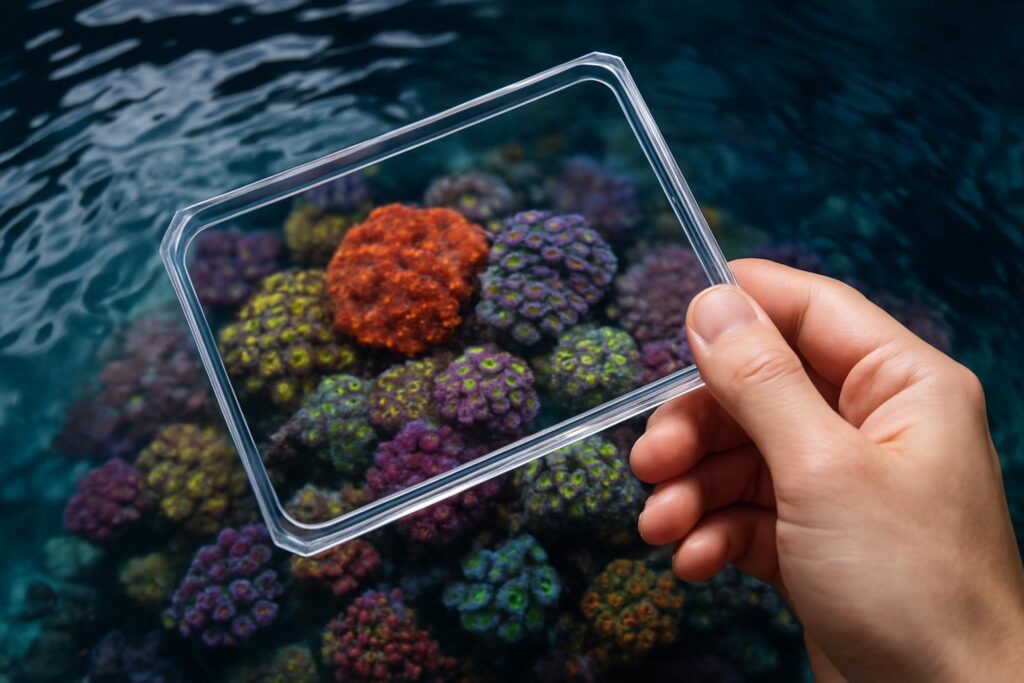
Top-down coral viewers turn a rippling surface into a clear window. You see polyp structure, tissue health, growth edges, and pests that side glass often hides. You get better placement decisions and cleaner photos without putting your hands in the water. If you want faster inspections and less guesswork, a good viewer pays for itself.
What a Coral Viewer Does and Why It Matters
Surface shimmer looks great from the couch. It ruins detail when you need to judge color, flesh recession, vermetid snails, flatworms, or algae creeping up a frag plug. A viewer removes that distortion by creating a still, flat interface between your eyes and the water. The result is clarity and true color from above. Pair it with a phone lens filter and you capture accurate images without heavy editing.
How We Picked These for 2026
We focused on clear acrylic that resists distortion, edges that will not scratch glass, stable buoyancy or secure mounting, and sizes that fit most reef layouts. We also considered how easy they are to handle with wet hands, how they pair with smartphone filters, and whether they help you find problems faster. You will see a mix of top-down floating viewers and magnetic side viewers, since both solve different inspection needs.
Top 5 Reef Tank Coral Viewers for 2026
IceCap Coral Viewer 6 Inch
A dependable top-down viewer with a generous opening and a soft protective rim. The 6 inch diameter balances coverage and maneuverability, so you can hover over acros on the top shelf or zoas on the sand without bumping rockwork. The acrylic is clear and distortion free when kept clean, and the low-profile lip helps you get close to glass and scape.
Why it helps: Removes surface ripples for true color checks and crisp top-down photos. The wider opening makes scanning colonies fast during maintenance.
Best for: Nano to midsize tanks where you want one viewer that handles most coral placements. Great for frag racks and aquascapes with varied heights.
Potential downsides: Acrylic can scratch if you use paper towels or gritty cloths. The 6 inch body may feel tight in very small cubes with dense rock.
Pro tip: Turn pumps off for a minute to stop microbubbles from collecting on the viewing pane. Rinse the viewer in fresh water after each use to prevent salt haze.
Eshopps Coral Viewer
A sturdy, top-down acrylic viewer from a reef brand known for clean build quality. It sits flat, feels solid in the hand, and its clear panel delivers accurate color without warping edges. The form factor is simple and effective, with enough depth to block ambient room glare when you lean over the tank.
Why it helps: Quick inspection tool for spotting pests at growth margins and checking polyp extension. Makes documenting progress on acropora tips and LPS mouths easier.
Best for: Reefers who want a durable, no-fuss top-down viewer for weekly checks and photo sessions.
Potential downsides: Bulkier than minimalist tubes, so it needs a little more clearance around branching corals. Like all acrylic, it needs careful cleaning to avoid hairline scratches.
Setup note: Wipe the viewing face with a microfiber cloth before use. A tiny film of dust creates glare under reef lighting.
Flipper DeepSee Magnetic Viewer Standard
A magnet-mounted magnified viewer for side glass that excels at up-close inspections. Snap it onto clean glass and slide along coral faces to evaluate polyp extension, tissue texture, and coloration that is hard to judge with the naked eye. It doubles as a fun viewer for kids and guests who want a better look without leaning over the tank.
Why it helps: Side viewing reveals angles that top-down cannot. It is ideal for scanning shaded branches, underhangs, and areas you cannot reach from above.
Best for: Mixed reefs where you need frequent checkups without reaching into the tank. Also good for quick videos through glass.
Potential downsides: The magnified sweet spot is smaller than a top-down pane, so you scan rather than capture a whole colony at once. Algae film on glass reduces clarity, so clean the pane first.
Use tip: Dim your room lights to cut reflections on the magnet lens. Slide slowly to keep the image sharp and stable.
Flipper DeepSee MAX Magnetic Viewer
The larger sibling to the standard unit, built for bigger aquariums and thicker glass. The broader lens is more forgiving and easier to frame, which helps when you are checking multiple colonies on a long reef wall. If you keep mature SPS stands or deep LPS gardens, the extra field of view is welcome.
Why it helps: Larger lens equals less sliding and more time evaluating details. Confident hold on thicker panes keeps the image steady for longer looks.
Best for: Large display tanks, peninsula builds, and reefers who prefer side viewing for daily health checks.
Potential downsides: Heavier and pricier than compact units. It still will not remove surface shimmer for top-down photography.
Workflow idea: Use this for fast weekday inspections. Save the top-down viewer for weekly deep dives and photo logs.
Polyplab Coral View Lens V2 Kit
A clip-on smartphone lens and filter kit that tames heavy blue lighting and boosts detail in your photos and videos. Use the included filters to correct color and the macro to get close on small frags. Pair it with any top-down viewer to produce sharp, accurate images that reflect what your eyes see.
Why it helps: True-to-life color capture makes tracking subtle changes easier. Your notes and photos become reliable references for dosing, lighting, and placement decisions.
Best for: Reefers who document progress with a phone and want clean results without post-processing.
Potential downsides: Some phone cases need removal for a firm clip. It does not stop surface shimmer by itself, so combine it with a top-down viewer for best results.
Photo tip: Turn pumps off, place the top-down viewer, then attach the filter kit and expose for the coral, not the background.
Top-Down vs Magnetic Side Viewers
Top-down viewers remove surface distortion and show true growth edges and polyp structure from above. They are best for placement decisions and photography. Magnetic side viewers magnify specific areas through the glass. They are best for daily checks and scanning shaded zones. Many reefers use both to cover every angle.
Quick Buying Tips
– Pick a diameter that fits your scape. Six inches is a safe middle ground for most layouts.
– Check edge protection. A soft rim or beveled edge protects glass and rim polish.
– Keep handling simple. A viewer you grab often gets used often, which means faster detection of problems.
– Plan for photos. If you shoot with a phone, a filter kit pairs perfectly with a top-down viewer.
Care and Maintenance
Acrylic is clear and light but scratches if abused. Rinse with fresh water after each use. Dry with a clean microfiber cloth only. Avoid paper towels and household glass cleaners. Store the viewer upright so the viewing face never rests on a gritty surface. Before use, turn pumps off for a minute to stop bubbles collecting on the pane and to stabilize the image.
Conclusion
Clarity leads to better reef decisions. A solid top-down viewer reveals real color and structure, while a magnetic side viewer closes the gap on hard-to-see areas. Add a phone filter kit and your records become consistent and useful. Choose one tool to start, learn its rhythm, and you will spot issues earlier and celebrate growth with cleaner photos.
FAQ
Q: What does a coral viewer actually do
A: It removes surface distortion so you see true color and detail from above, making inspections and photos clearer.
Q: Should I turn off pumps when using a coral viewer
A: Yes, turning pumps off for a minute reduces microbubbles and stabilizes the image for sharper viewing and photos.
Q: How do I clean and care for an acrylic coral viewer
A: Rinse with fresh water, dry with a clean microfiber cloth, avoid paper towels and household glass cleaners, and store it so the viewing face does not touch gritty surfaces.
Q: What is the difference between a top-down viewer and a magnetic side viewer
A: Top-down viewers remove surface shimmer for placement and photography, while magnetic side viewers magnify specific areas through the glass for fast daily inspections.
Q: Can a smartphone lens kit replace a top-down viewer
A: No, a lens kit corrects color and adds macro, but it does not stop surface shimmer; pair it with a top-down viewer for best results.