
We are reader supported. When you purchase through links on our site, we may earn an affiliate commission. Also, as an Amazon affiliate, we earn from qualifying purchases.
Choosing the right filter socks for a reef tank is not guesswork. The right micron rating, ring size, and material will decide how clear your water stays, how quiet your sump runs, and how much time you spend swapping and cleaning. This guide breaks down what matters, then reviews five reliable filter socks for 2026 that cover different needs, from ultra-fine polishing to high-flow systems.
Filter sock basics for reef clarity
Filter socks are your reef tank’s first mechanical barrier. They trap uneaten food, fish waste, and floating detritus before it breaks down into nutrients that fuel algae. A good sock also reduces microbubbles and helps your skimmer work more consistently.
Pick the right micron and material
Micron rating controls how much a sock captures versus how fast it clogs. For daily reef use, 200 micron felt is the balanced choice. It pulls out fine particles without choking too quickly. If you run a heavy-fed or messy system, 300 micron mesh flows longer and is easier to rinse. For short-term water polishing, 100 micron felt can produce crystal results, but it clogs fast and should be used sparingly.
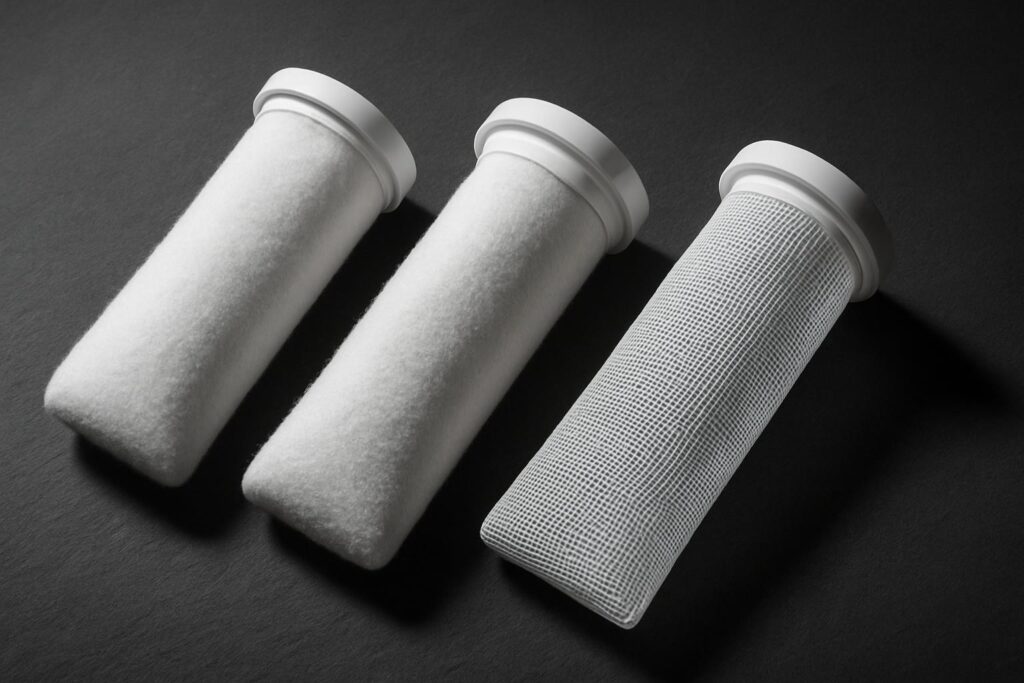
Felt vs mesh matters. Felt traps finer debris and gives cleaner water but needs more frequent changes. Mesh flows better, resists clogging, and rinses quickly, but it will let some fines pass.
Get the size and fit right
Most sumps use either 4 inch or 7 inch ring socks. Four inch is the most common for small to mid-size tanks and compact sumps. Seven inch suits high-flow systems and larger sumps because the extra surface area delays clogging. Always match the ring diameter to your sump holder. Length is less strict; 10 to 14 inches works for most chambers as long as the bottom sits submerged.
Maintenance and rotation that works
Swap socks every 2 to 3 days. Do not let a sock go more than 4 to 5 days or you risk trapped waste breaking down and raising nutrients. Rinse dirty socks well, then machine wash on hot with no detergent. If needed, a light unscented bleach wash followed by an extra rinse is effective; dry completely until no bleach smell remains before reuse. Keep a rotation of enough clean socks to make changes quick and consistent.
How these picks were evaluated for 2026
The products below were chosen for consistent build quality, accurate micron rating, durable stitching, rigid rings that seal well, strong flow retention, ease of cleaning, and broad compatibility with common sumps. Each pick notes why it helps, who it is best for, and potential downsides so you can match your setup and maintenance style.
5 Best Reef Tank Filter Socks for 2026
Aquatic Experts 200 Micron Felt Filter Socks, 4 Inch Ring
This is a dependable daily-use sock for most reef tanks running 4 inch holders. The thick felt captures fine waste, the plastic ring seats securely, and the stitching holds up to repeated washing. Key specs: 200 micron felt, 4 inch ring, typical length 14 inches, white felt for easy dirt visibility.
Why it helps
Balanced filtration and flow. It clears the water fast enough to see a difference in 24 hours, yet does not choke so quickly that you are swapping it daily. It is a reliable baseline sock for a mixed reef.
Best for
Small to mid-size reef sumps using 4 inch holders and hobbyists who want one go-to sock for routine use.
Potential downsides
Like all felt socks at 200 micron, it will clog in nutrient-rich systems. Expect to change it every 2 to 3 days, sometimes sooner after heavy feeding.
Eshopps 7 Inch 200 Micron Felt Filter Sock
A workhorse option for higher flow sumps that use 7 inch holders. The larger diameter spreads incoming water across more surface area, delaying clogging and reducing splash. Key specs: 200 micron felt, 7 inch ring, generous depth for deep sock chambers.
Why it helps
More surface area equals more time between swaps. If your return pump pushes strong flow, this sock stays quiet and consistent while keeping water polished.
Best for
Medium to large reefs, high-biomass tanks, or anyone wanting fewer sock changes without moving to mesh.
Potential downsides
Bulky to wash and slower to dry than 4 inch socks. You need the correct 7 inch holder to use it.
IceCap 300 Micron Mesh Filter Sock, 4 Inch Ring
Mesh is the right call when you want better flow and easier cleaning. This 300 micron sock resists clogging, rinses out fast, and keeps detritus from recirculating without stripping too much plankton. Key specs: 300 micron mesh, 4 inch ring, quick-dry material.
Why it helps
It is forgiving. If you tend to stretch sock changes or feed heavy, this sock extends runtime compared to felt and reduces the risk of overflow in the sock chamber.
Best for
Heavily fed reefs, fish-centered systems, or anyone who wants simpler maintenance with fewer swaps.
Potential downsides
It will not polish as finely as 200 or 100 micron felt. Expect some very fine particles to pass through.
Aqueon ProFlex 200 Micron Replacement Filter Socks
Designed to fit Aqueon ProFlex sumps precisely, these 4 inch ring felt socks sit firmly in the holders and control splash well. The felt thickness and stitching handle repeated washes, and the fit reduces bypass that can occur with generic socks. Key specs: 200 micron felt, 4 inch ring, optimized for ProFlex chambers.
Why it helps
Fit matters. A snug ring seal reduces noise, prevents detritus bypass, and keeps water routed through the sock rather than around it.
Best for
Reef keepers running Aqueon ProFlex sumps who want a perfect fit and predictable performance.
Potential downsides
The ring lip and depth are tailored for ProFlex holders. Fit may vary in non-Aqueon sumps.
Trigger Systems 7 Inch 200 Micron Felt Filter Sock
Trigger Systems is known for clean sump layouts and solid accessories. Their 7 inch felt sock pairs well with high-flow Trigger sumps and any system using 7 inch cups. It offers robust felt, secure ring, and consistent stitching. Key specs: 200 micron felt, 7 inch ring, deep profile.
Why it helps
It maintains clarity under strong flow while staying quiet and stable in the holder. For large reefs, it is a reliable daily workhorse.
Best for
Large mixed reefs and SPS systems using 7 inch sock holders that demand clear water and steady turnover.
Potential downsides
As with any 200 micron felt, frequent swaps are needed in nutrient-rich tanks. Price per sock can be higher than generic options.
How to match a sock to your routine
If you want set-and-forget runtime
Use mesh at 300 micron or a 7 inch felt sock to delay clogging. This approach is good for heavy feeding or when you cannot swap socks often.
If you want the clearest look
Use 200 micron felt daily, with a 100 micron felt sock for short-term polishing before photos or events. Do not leave 100 micron on for long; it clogs fast.
If your sump is noisy or splashing
Verify the ring size and seat. A snug 4 inch or 7 inch ring reduces bypass and splash. If the sock chamber water rises quickly, swap socks more often or move to mesh.
Conclusion
Start with a 200 micron felt sock that matches your holder size. Add a mesh sock for high-flow days and a spare set for quick swaps. Stable, predictable maintenance beats constant tweaking, and clean socks keep nutrients in check, microbubbles under control, and corals happy.
FAQ
Q: How often should I change reef filter socks?
A: Swap socks every 2 to 3 days. Do not let a sock go more than 4 to 5 days, and change sooner if the sock chamber water level rises or after heavy feeding.
Q: Which micron rating is best for daily reef use?
A: 200 micron felt is the balanced choice for daily use. Use 300 micron mesh for longer runtime and easier cleaning, and reserve 100 micron felt for short-term polishing.
Q: Should I choose a 4 inch or 7 inch filter sock?
A: Match your sump holder. Four inch is common for small to mid-size systems, while seven inch works best for larger, high-flow setups because it delays clogging.
Q: Is felt or mesh better for a reef tank?
A: Felt polishes the water more finely but clogs faster and needs frequent swaps. Mesh flows better, resists clogging, and rinses quickly, but it allows some fine particles to pass.
Q: How do I clean and reuse filter socks safely?
A: Rinse thoroughly, machine wash on hot with no detergent, and if needed use a light unscented bleach wash followed by an extra rinse. Dry completely until no bleach smell remains before reuse.