
We are reader supported. When you purchase through links on our site, we may earn an affiliate commission. Also, as an Amazon affiliate, we earn from qualifying purchases.
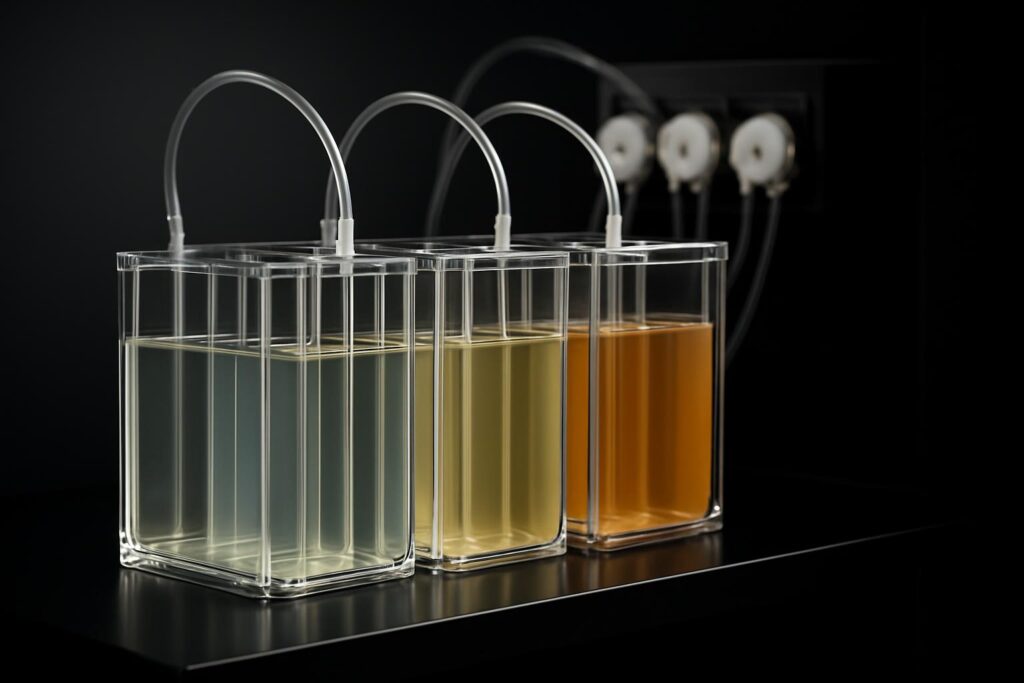
Reef tanks thrive on stability. Calcium, alkalinity, magnesium, trace elements, and nutrient solutions all need consistent dosing to keep corals growing and colors vibrant. A reliable dosing container pairs with your dosing pump to deliver that consistency. It keeps solutions sealed, organized, and easy to monitor, so you spend less time fiddling and more time enjoying your reef. Below you will find how to choose the right reservoir, practical setup tips that prevent common mistakes, and the 4 best reef tank dosing containers for 2026.
How to choose a reef dosing container in 2026
Capacity and refill frequency
Size your reservoirs to cover at least two to four weeks between refills. For small to medium tanks, 1 to 1.5 liters per chamber is often enough. For larger or high-demand SPS systems, aim for 2 liters or more per chamber to reduce maintenance and keep levels steady.
Number of chambers
Match chambers to your additive plan. Two-part dosing needs calcium and alkalinity, and most reefers add magnesium, so three chambers cover the essentials. If you dose trace elements, nitrates, or phosphates separately, four chambers give you room to expand without a second container.
Compatibility with common tubing
Look for 1/4 inch OD push-fit or hose-barb ports. This size is widely used by popular dosing pumps and makes routing cleaner. If you already own a pump, confirm the port style to avoid adapters or leaks.
Build, seals, and ease of cleaning
Thick, clear acrylic lets you see levels at a glance and resists warping. Wide openings simplify refills and scrubbing. Graduated markings help you verify actual volumes, which is critical when dialing in daily dose amounts. Stable, non-slip feet keep the container steady in the cabinet.
Footprint and cabinet fit
Measure your sump space first. Longer four-chamber units need more horizontal room, while deeper three-chamber designs can be easier to tuck next to a sump. Keep all lines as short and direct as possible to your dosing pump.
The 4 best reef tank dosing containers for 2026
Eshopps Dosing Container 3 x 2L
The Eshopps Dosing Container is a staple in many reef cabinets for a reason. It strikes a smart balance between capacity and durability, with three generous 2-liter chambers in a clear, robust acrylic body. Graduated marks make it straightforward to verify remaining solution and recalculate daily usage after changes in coral demand.
Why it helps: Each chamber’s 2-liter capacity reduces refill frequency, which keeps dosing more consistent over time. Clear sightlines and labeled lids simplify organization of calcium, alkalinity, and magnesium. Ports accept standard dosing tubing, so the setup is quick and tidy.
Best for: Medium to large reef tanks running two-part plus magnesium. Also a strong fit for anyone who values fewer refills and solid cabinet stability.
Potential downsides: The larger footprint requires planning if your stand is tight. If your tank is small or lightly stocked, you may not need 2 liters per chamber.
Practical tip: Place alkalinity in the center chamber for the shortest, straightest run to the pump head that doses most frequently, reducing chances of kinks.
Bubble Magus Dosing Container 3 x 1.5L
Bubble Magus delivers a compact, well-finished reservoir set that fits tight stands without feeling cramped. With 1.5 liters per chamber, it offers a good middle ground for most mixed reefs. Clear acrylic walls, simple lids, and standard tubing ports make it straightforward to integrate with popular dosing pumps.
Why it helps: The smaller footprint is easy to place, yet 1.5 liters per chamber still covers a comfortable window between refills for most tanks. The transparent body helps you catch precipitation or contamination early.
Best for: Small to medium systems and mixed reefs that want dependable capacity in a cabinet-friendly size.
Potential downsides: Narrower openings can make deep cleaning more tedious. High-demand SPS tanks may outgrow 1.5-liter chambers faster.
Practical tip: Calibrate your pump after the first refill. Graduated marks allow you to verify the true milliliters dispensed per day against actual volume change over a week.
IceCap 4-Chamber Dosing Container 4 x 1.5L
For reefers who want headroom for trace and nutrient solutions, the IceCap four-chamber unit stands out. You get four equal 1.5-liter reservoirs in a clean, modular layout with stable feet and clear volume visibility. It is an easy upgrade path if you already run two-part and magnesium and plan to add trace dosing later.
Why it helps: Four chambers keep your additive plan organized without mixing solutions or doubling up containers. The uniform volumes make dosing math predictable across all solutions.
Best for: Reefers planning growth beyond the essentials. Ideal if you will add trace elements, nitrate, or phosphate solutions on a set schedule.
Potential downsides: The wider footprint can challenge narrow stands. Per-chamber capacity is modest for ultra-high demand tanks.
Practical tip: Reserve the outermost chamber for the least frequently dosed solution so daily refills or checks do not disturb your main dosing lines.
Marine Color 3-Chamber Acrylic Dosing Container 3 x 1.5L
Marine Color offers a budget-friendly, no-frills acrylic container that still checks the important boxes. Three clear 1.5-liter chambers, simple lids, and ports compatible with common dosing lines make it a straightforward choice for new reefers or backup stations.
Why it helps: You get dependable organization for two-part plus magnesium without overspending. Clear panels help you see any air ingress or sediment before it reaches your pump heads.
Best for: Newcomers building their first automated dosing setup and experienced hobbyists assembling a secondary dosing bank.
Potential downsides: Edges and fittings can be a bit utilitarian compared with higher-end units. Plan to double-check seals during the first week of use.
Practical tip: Label lids and lines at both the container and pump head. This prevents accidental cross-connection when you swap tubing or refill quickly.
Setup tips that prevent dosing headaches
Placement and line routing
Keep the container in a shaded, cool cabinet away from sump splashes. Route lines upward from the reservoir before they drop to the pump to limit siphoning. Keep lines short and anchored to prevent kinks that alter dose rates.
Labeling and calibration
Use waterproof labels for each chamber and matching pump head. After the first week, compare the reservoir’s graduated marks with the pump’s programmed total. Adjust milliliters per minute until actual draw matches the plan.
Maintenance routine
Rinse and inspect monthly. Wipe lids and ports to remove salt creep. Deep clean between solution changes to avoid cross-contamination. If you switch brands or concentrations, purge lines and prime anew.
Chemistry safeguards
Do not mix calcium and alkalinity in the same chamber. Keep dosing lines separated at the sump return area to minimize immediate precipitation. If you see clouding in a chamber, stop dosing that line, clean, and replace the solution.
Conclusion
Stable dosing underpins stable reef chemistry. Choose the container that matches your cabinet space, dosing plan, and maintenance style. Eshopps delivers maximum per-chamber capacity for fewer refills. Bubble Magus fits most stands without sacrificing clarity or control. IceCap gives four organized lanes for expanding additive schedules. Marine Color keeps costs in check while covering the essentials. Set it up cleanly, label everything, calibrate against real volume changes, and your corals will show the results.
FAQ
Q: How big should a reef tank dosing container be
A: Size it to cover at least two to four weeks between refills, with 1 to 1.5 liters per chamber for small to medium tanks and 2 liters or more per chamber for larger or high-demand systems.
Q: Do I need three or four chambers
A: Three chambers cover calcium, alkalinity, and magnesium, while four chambers add room for trace elements or nutrient solutions without adding another container.
Q: Will these containers work with common dosing tubing
A: Yes, all the picks use ports compatible with standard 1/4 inch dosing lines used by popular pumps.
Q: Where should I place a dosing container
A: Place it in a shaded, cool cabinet near the dosing pump, keep lines short and anchored, and route lines upward before dropping to the pump to reduce siphoning.
Q: How often should I clean dosing containers
A: Rinse and inspect monthly, wipe lids and ports to remove salt creep, and deep clean between solution changes to avoid cross-contamination.