
We are reader supported. When you purchase through links on our site, we may earn an affiliate commission. Also, as an Amazon affiliate, we earn from qualifying purchases.
Phosphate control is nonnegotiable in a thriving reef tank. Elevated phosphate fuels nuisance algae, weakens coral coloration, and slows calcification. Granular ferric oxide media, commonly called GFO, quietly fixes this by adsorbing phosphate and often silicates from the water. The challenge is choosing a product that fits your system size, budget, and maintenance style without stripping nutrients too fast. Below are the five best reef-safe GFO options for 2026, how each one helps, and how to get consistent results with fewer surprises.
What GFO Does and Why It Matters
Target outcome
GFO binds phosphate and reduces it to a stable, low range that discourages algae and supports coral health. Most iron-based media also reduce silicates that fuel diatoms.
How to run it
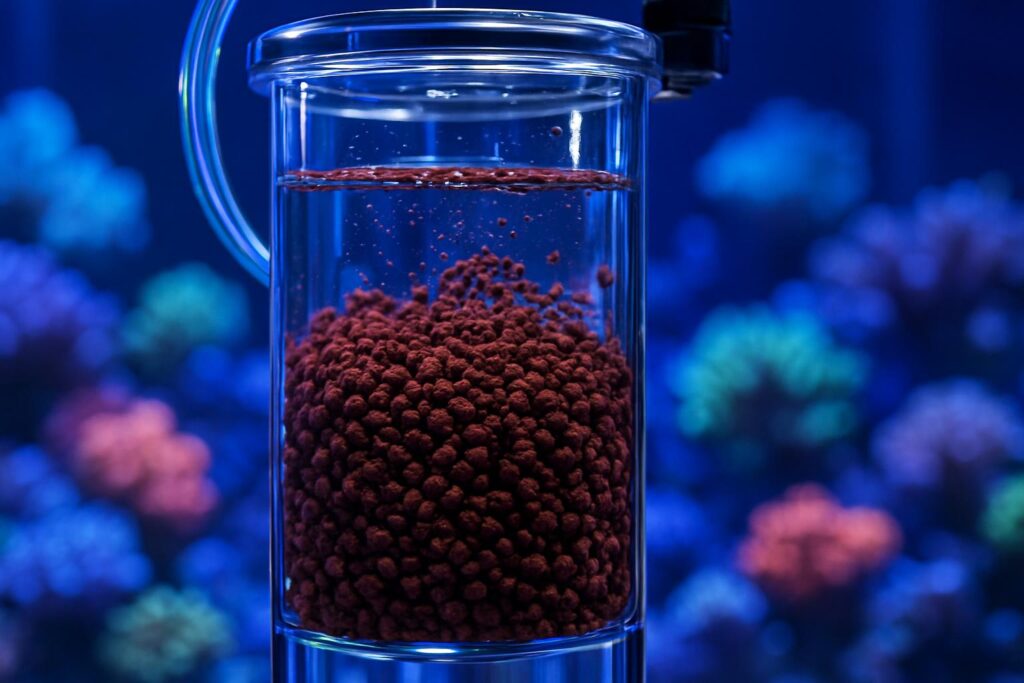
You can use GFO in a reactor or a media bag placed in high flow. Both a reactor and a media bag work; a reactor is more efficient because it prevents channeling and keeps the granules gently tumbling.
How to choose
Pick the grain size and format that match your setup. Finer media excels in reactors at gentle tumble. Larger granules are friendlier in media bags and smaller tanks. High-capacity formulas last longer at higher phosphate loads but cost more. Dustiness varies by brand, so always rinse before use.
The 5 Best Reef Tank GFO Media for 2026
1) Two Little Fishies PhosBan Granular Ferric Oxide
Why it helps: Proven, reef-safe iron oxide media that reliably drops phosphate and reduces silicates without exotic handling. Excellent track record and broad community use.
Best for: Mixed-reef keepers who want consistent performance in a reactor or media bag with predictable dosing and maintenance.
What stands out: Balanced granule size that resists pulverizing yet tumbles smoothly. Easy to dial in for both small and medium systems.
Use tips: Rinse until water runs clear. Start with half the recommended dose, then test phosphate every 2–3 days. Aim for a gentle tumble in reactors to prevent clumping.
Potential downsides: Can compact if blasted with high flow. More frequent changes may be needed in heavily fed systems compared to high-capacity variants.
2) Rowaphos Iron Hydroxide Adsorbent
Why it helps: High-capacity iron hydroxide media known for steady, controlled phosphate reduction. Works well for preventing rebound between media changes.
Best for: SPS-focused systems and tanks chasing ultra-stable low phosphate where consistency matters most.
What stands out: Strong binding efficiency at lower concentrations. A favorite for long maintenance intervals when dosed conservatively.
Use tips: Use a reactor with very gentle flow to avoid grinding. In media bags, flatten to a thin layer and place in strong but smooth flow.
Potential downsides: Pricier than many GFO options. Over-tumbling can lead to fines and compaction.
3) Bulk Reef Supply High Capacity GFO
Why it helps: Dense, high-surface-area media designed to last longer per dose. Excellent when battling stubbornly high phosphate after big feedings or rock leaching.
Best for: Larger tanks, high-biomass fish systems, or anyone who prefers fewer media swaps.
What stands out: Strong performance per gram and a consistent granule that resists crumbling in reactors. Handles higher loads without needing constant attention.
Use tips: Start low to avoid stripping nutrients too quickly. A slow, even tumble is enough. Pairing with regular testing prevents overshooting your target range.
Potential downsides: Higher cost up front. Because efficiency is high, misuse can drop phosphate too fast for sensitive corals.
4) Brightwell Aquatics Ferrion
Why it helps: High-purity iron oxide hydroxide formulated for reef aquaria. Reliable adsorption plus a price point that fits routine maintenance.
Best for: Nano to mid-size tanks where dosing control and cost balance are priorities.
What stands out: Even granulation and predictable performance make it beginner friendly. Suitable for a fine-mesh bag or reactor with tight sponges.
Use tips: Use fine foam pads or a fine-mesh bag to keep small grains from escaping. Rinse thoroughly to reduce initial clouding.
Potential downsides: Smaller granules can migrate through coarse reactor sponges if not secured. Replace pads if you see fines in the return section.
5) Aquaforest Phosphate Minus
Why it helps: Robust iron-based media that tackles phosphate and helps tamp down silicates. Designed for saltwater use with stable granules.
Best for: Mixed reefs and softie tanks needing steady nutrient control without aggressive swings.
What stands out: Consistent grain sizing that works in reactors or bags. Solid choice if you want straightforward dosing and cleanup.
Use tips: Rinse well and adjust flow to avoid churning. Replace when phosphate plateaus at a higher level than your target.
Potential downsides: Can stiffen and clump if blasted by high flow. Monitor reactor velocity and keep it at a gentle simmer.
How to Use GFO the Right Way
Start slow and test
Lower phosphate gradually; start with half the recommended dose and test every 2–3 days. A practical target range for reef tanks is 0.02–0.08 ppm phosphate.
Flow settings
In reactors, aim for gentle tumbling at the surface of the media bed. Too much flow pulverizes granules and releases fines. In bags, press the media into a thin, even layer in a high-flow zone to avoid channeling.
Rinsing and maintenance
Always rinse GFO until rinse water runs clear. Replace GFO every 4–6 weeks, or sooner if phosphate stops dropping or begins to rise. If corals pale or algae declines too fast, remove or reduce media to prevent nutrient shock.
Pairing with other filtration
GFO complements protein skimming and carbon. Avoid running carbon so aggressively that water becomes ultra low nutrient overnight. Keep feeding consistent and make one change at a time.
Which One Should You Pick
If you want set-and-forget stability
Choose a high-capacity option like Rowaphos or BRS High Capacity GFO, especially in larger or heavily fed systems.
If you want balanced performance and value
Two Little Fishies PhosBan and Brightwell Ferrion offer a strong mix of efficiency, reasonable cost, and easy tuning across common tank sizes.
If you want simple and predictable handling
Aquaforest Phosphate Minus performs reliably in both reactors and bags and is straightforward to maintain.
Conclusion
Phosphate management is groundwork for coral color, growth, and a clean look. The right GFO media makes that job easier and more predictable. Pick a product sized to your tank and bioload, start with a conservative dose, and test consistently. Keep changes gradual and stable. Do that and any of the five options above will support a healthier reef with fewer algae headaches.
FAQ
Q: How often should I replace GFO in a reef tank?
A: Replace GFO every 4–6 weeks, or sooner if phosphate stops dropping or begins to rise.
Q: Do I need a reactor or can I use a media bag?
A: Both a reactor and a media bag work; a reactor is more efficient because it prevents channeling and keeps the granules gently tumbling.
Q: How fast should I lower phosphate with GFO?
A: Lower phosphate gradually; start with half the recommended dose and test every 2–3 days.
Q: Does GFO remove silicates?
A: Most iron-based media also reduce silicates that fuel diatoms.
Q: What phosphate level should I target in a reef tank?
A: A practical target range for reef tanks is 0.02–0.08 ppm phosphate.