
We are reader supported. When you purchase through links on our site, we may earn an affiliate commission. Also, as an Amazon affiliate, we earn from qualifying purchases.
Clear water is not just for looks in a reef tank. Activated carbon removes yellowing compounds, coral toxins, and trace organics that suppress light and stress fish. In 2026, choices have improved, but not all carbons are equal. Some strip too aggressively, some release dust, and some are poor fits for media bags or reactors. This guide narrows the field to five reliable options that balance purity, capacity, and stability for saltwater systems. If you want better light penetration, safer coral allelopathy control, and a cleaner smell without chasing swingy parameters, read on.
What to look for in reef‑safe activated carbon in 2026
Low phosphate and ash
Reef systems are sensitive. Choose products known for minimal phosphate content and low ash to avoid nuisance algae and pH swings.
Right pore structure and form
Bituminous or ROX-type carbons remove a wide range of organics quickly. Pellets resist grinding in reactors. Small granules polish water fast but need gentler flow.
Cleanliness and dust control
Fines irritate fish gills and coat pumps. Pick brands that rinse clear in under a minute and avoid aggressive tumbling.
Media compatibility
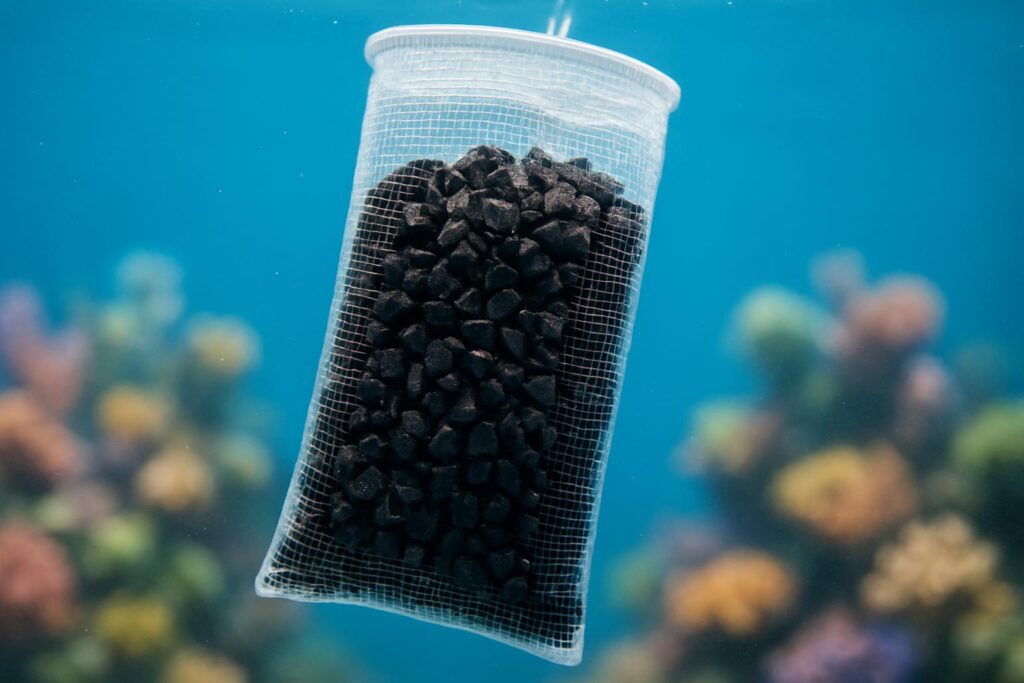
Decide where you will run it. Some carbons excel in a reactor with steady, non-tumbling flow. Others work best packed in a high-flow media bag.
The 5 best reef tank activated carbon for 2026
AquaMaxx ROX 0.8 Aquarium Carbon
Why it helps: ROX 0.8 is known for rapid removal of yellowing compounds and stubborn organics. The tiny, consistent granule size creates high contact area, which translates to quick polishing and crisp, high-clarity water that benefits photosynthetic corals.
Best for: SPS-dominant systems that demand ultra-clear water and reefers who want fast toxin control after coral warfare, chemical treatments, or spawning events.
How to use: Rinse thoroughly until the water runs clear. Use in a reactor with a gentle, non-tumbling flow or in a tightly packed media bag placed in a high-flow area. Start with a small amount and scale up slowly to avoid shocking corals with a sudden jump in light.
Potential downsides: The aggressive polishing power can strip organics quickly if overdosed. Fine particles require careful handling and moderate flow. Rinse well to reduce dust.
Seachem Matrix Carbon
Why it helps: Matrix Carbon uses bead-shaped carbon with excellent porosity and low phosphate. The spherical form lowers backpressure in bags and reactors, encourages even flow, and reduces dust during rinsing.
Best for: Mixed reefs where stability and low fines are priorities. Good for hobbyists who want consistent performance without clouding.
How to use: Rinse until clear and place in a media bag or reactor with steady flow. Replace on a regular schedule. Because it is efficient, begin with a conservative amount and increase based on water clarity and odor.
Potential downsides: Slower at the absolute peak of polishing compared to ROX-type carbons, but more forgiving and cleaner to handle.
Two Little Fishies HydroCarbon 2 Granular Activated Carbon
Why it helps: HydroCarbon 2 is a reef favorite for balancing high capacity with manageable dust. It targets dissolved organics that discolor water and carries a reputation for stable pH behavior in saltwater.
Best for: Reefers who plan to run carbon continuously. It is a strong choice for both media bags and gentle-flow reactors.
How to use: Rinse well, then use in a reactor with controlled flow or a snug media bag placed in a high-flow section of the sump. Keep the bed from churning to avoid grinding.
Potential downsides: If flow is too strong in a reactor, granules can abrade and release fines. Set the reactor to eliminate tumbling.
Aquaforest Carbon
Why it helps: Designed with marine systems in mind, Aquaforest Carbon focuses on clarity and toxin control with low dust. It is effective at removing phenols and other organics that suppress coral coloration.
Best for: Color-focused reefers and those running modern nutrient management where clear, stable water helps maintain predictable PAR levels.
How to use: Rinse briefly and deploy in a media bag in a high-flow area or in a reactor with a gentle flow. Replace routinely or after any contamination event.
Potential downsides: Like other high-capacity carbons, using too much at once can brighten water faster than corals are ready for. Start light and observe.
Why it helps: A long-standing classic that delivers solid organic removal at a low cost. It is widely used for routine polishing and odor control, making it accessible for large systems where frequent changes are needed.
Best for: Budget-conscious reefers, large tanks that benefit from more frequent carbon refreshes, and backup use during emergencies.
How to use: Rinse thoroughly to remove fines. Pack tightly in a media bag and place in a high-flow section. Replace often to keep performance consistent.
Potential downsides: More dust than premium options and slightly less efficient per gram. Requires a more thorough rinse and more frequent changes to match the results of higher-end carbons.
How to use activated carbon in a reef tank
Rinse and place correctly
Always rinse until the rinse water is clear. In reactors, set a gentle flow that passes evenly through the media bed without tumbling. In media bags, pack tightly and place in a high-flow area of the sump.
Start small and scale up
Activated carbon can increase light penetration quickly. Start with a small amount, about half of the label guidance, then increase slowly over several days while observing coral response.
Change on a schedule
Replace every 2 to 4 weeks, or sooner if water yellows, odors return, or after chemical treatments. Spreading changes across the month keeps clarity consistent and avoids big swings.
Avoid common mistakes
Do not tumble aggressively. Do not dump a large new batch into a dim, nutrient-rich tank overnight. Rinse thoroughly, keep flow moderate, and monitor polyp extension and coloration.
Picking the right carbon for your setup
If speed and maximum clarity are your goals, AquaMaxx ROX 0.8 leads. For balanced performance and very clean handling, Seachem Matrix Carbon is reliable. For continuous use with good capacity and flexibility, Two Little Fishies HydroCarbon 2 is a solid middle ground. If you prefer a marine-branded formulation focused on color and clarity, Aquaforest Carbon fits well. If you want an affordable workhorse for frequent swaps or large volumes, Marineland Black Diamond delivers value.
Conclusion
Activated carbon remains a core tool for reef stability in 2026. The right product restores clarity, removes coral toxins, and supports consistent light for growth and color. Match the media to your flow method, start with a conservative dose, and refresh it regularly. Done right, you get a brighter, calmer reef with fewer surprises.
FAQ
Q: How often should I replace activated carbon in a reef tank?
A: Replace every 2 to 4 weeks, or sooner if water yellows, odors return, or after chemical treatments.
Q: Is activated carbon safe for corals and inverts?
A: Yes, when rinsed well and used in moderate amounts. Start small and increase slowly to avoid sudden jumps in water clarity that can stress corals.
Q: Can I run carbon in a media bag instead of a reactor?
A: Yes. Pack it tightly in a bag and place it in a high-flow sump area. A reactor can improve contact time, but tumbling should be avoided.
Q: Which carbon is best for maximum water polishing?
A: AquaMaxx ROX 0.8 is the top pick when you need fast, high-clarity results.
Q: What are common mistakes to avoid with carbon use?
A: Do not tumble aggressively, do not add a large amount all at once, and always rinse thoroughly before use.