
We are reader supported. When you purchase through links on our site, we may earn an affiliate commission. Also, as an Amazon affiliate, we earn from qualifying purchases.
Keeping calcium, alkalinity, and pH steady is what makes corals grow with color and structure. Kalkwasser is a simple, affordable tool for that job. It is just calcium hydroxide, but when mixed correctly and dosed slowly, it supplies balanced calcium and alkalinity while nudging pH upward. For many reef tanks, especially small to mid-size systems, kalkwasser is the cleanest daily maintenance approach. Below are the five best kalkwasser mixes for 2026, how they differ, and how to pick the right one for your reef.
What Kalkwasser Does and Why It Matters
Kalkwasser adds calcium and alkalinity in the same ratio corals consume them. It also raises pH by consuming dissolved CO2. This combination helps stabilize daily swings, improves calcification, and can reduce nuisance algae pressure tied to low pH.
Use kalkwasser when your coral demand is low to moderate, or as a baseline that you can supplement later with a two-part or a calcium reactor if demand grows beyond what kalk alone can supply.
How We Chose These Kalk Mixes
- Purity and consistency
- How clearly the solution mixes and settles
- Packaging that limits CO2 exposure and moisture
- Value per gram and per gallon of saturated solution
- Real-world reefing feedback on stability and residue
Quick Safety and Mixing Basics
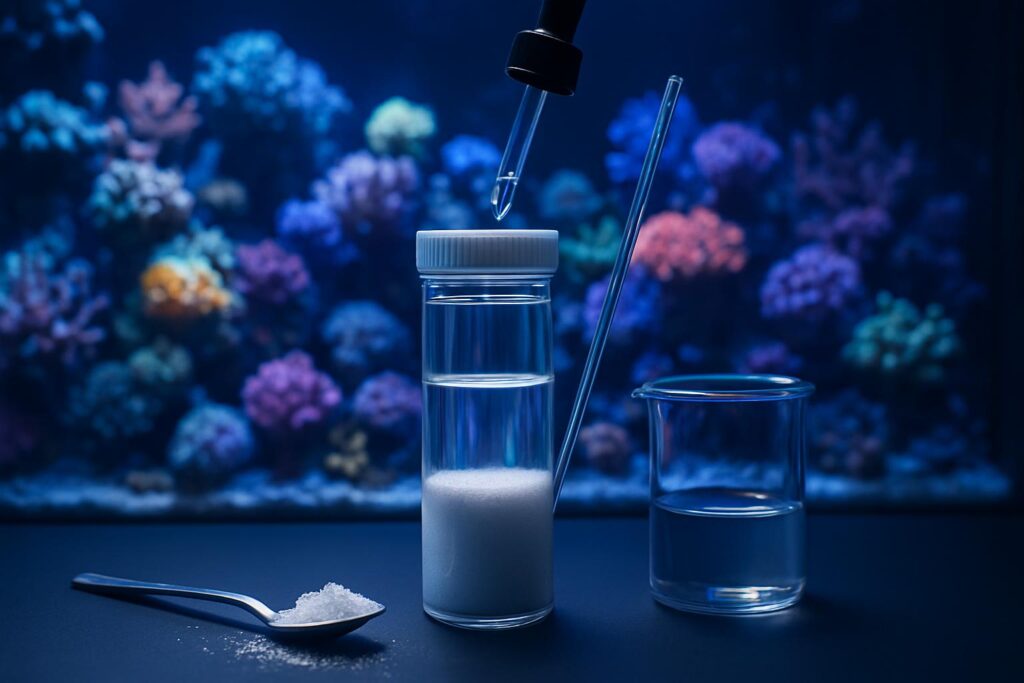
- Use RO/DI water only. Wear gloves and eye protection. Avoid inhaling dust.
- Start at 1 teaspoon per gallon. Maximum saturation is about 2 teaspoons per gallon.
- Stir briefly, let settle, and dose only the clear solution. Do not dose the white slurry.
- Keep the reservoir sealed to slow CO2 absorption and potency loss.
- Drip slowly or use an ATO with precautions to prevent overdosing.
5 Best Reef Tank Kalkwasser Mixes for 2026
1) Seachem Reef Kalkwasser
Seachem’s kalk is known for clean mixing, good lot-to-lot consistency, and reliable strength. It is a straightforward, high-purity calcium hydroxide with minimal insoluble residue, which helps keep reservoirs cleaner and reduces maintenance.
Why it helps: Consistent potency, clear mixing, and dependable pH support keep daily parameters steady with less fuss.
Best for: Beginners who want a predictable first kalk, nano to mid-size reefs, and anyone prioritizing clarity in their ATO reservoir.
Potential downsides: Priced mid to high versus budget lime; not the cheapest long-term option for very large systems.
Mixing notes: Start at 1 teaspoon per gallon RO/DI and increase to 2 teaspoons if your tank can use it without elevating pH too high. Always dose the clear layer only.
2) Brightwell Aquatics Kalk+2
Brightwell formulates kalkwasser fortified with trace strontium and magnesium. The main effect still comes from calcium hydroxide, but the added ions slightly offset the gradual depletion that many tanks experience.
Why it helps: Balanced calcium and alkalinity plus a trickle of strontium and magnesium support long-term skeleton growth and stability.
Best for: Mixed reefs that already do regular water changes and want incremental trace support without separate bottles.
Potential downsides: You still need to test Mg and Sr over time. Relying on fortified kalk alone is not a replacement for targeted corrections when needed.
Mixing notes: Treat like standard kalk. Avoid shaking the reservoir. Keep the lid sealed to protect potency.
3) Two Little Fishies Kalkwasser
Two Little Fishies offers a simple, clean calcium hydroxide that dissolves quickly and settles well. The jar size is handy for smaller systems and those testing kalk for the first time.
Why it helps: Reliable performance and approachable packaging make it easy to adopt kalk without buying a large bulk container.
Best for: New kalk users, nano tanks, and reefers who want consistent mixing without chasing bulk-only brands.
Potential downsides: Price per ounce is higher than big tubs, which adds up if you scale to larger or high-demand tanks.
Mixing notes: Add powder to water, not water to powder, to reduce clumping. Let settle and dose the clear liquid only.
4) ESV B-Ionic Kalkwasser
ESV is known for precise, lab-grade formulations. Their kalk dissolves fast, forms a crisp boundary between clear solution and sediment, and leaves minimal film, which helps keep lines and reservoirs cleaner.
Why it helps: High purity and clean settling support stable dosing with fewer interruptions for cleaning.
Best for: Reefers running kalk through a dosing pump, those with narrow tubing, and anyone who values low-residue performance.
Potential downsides: Premium price. If your tank is large and heavily stocked, cost per month may be higher than bulk alternatives.
Mixing notes: Dose slowly into high-flow areas. Watch pH during the first week and adjust strength or drip rate as needed.
5) Mrs. Wages Pickling Lime
This is food-grade calcium hydroxide widely used by reefers as a budget kalkwasser. It is very cost-effective, especially for larger systems or long-term use.
Why it helps: Delivers the same core chemistry as aquarium-branded kalk at a lower price, enabling steady dosing without high consumable costs.
Best for: Large tanks, high evaporation systems, and reefers comfortable with small process tweaks to manage residue.
Potential downsides: More insoluble fines than premium aquarium brands. Requires diligent settling and decanting to keep lines from crusting.
Mixing notes: Allow extra settling time. If you see more residue, decant to a secondary container before dosing to keep only the crystal-clear layer.
How to Match a Kalk Mix to Your Reef
Start with demand
If your alkalinity drop is small day to day, kalk alone can likely maintain it. If alkalinity falls more than about 1 dKH per day, plan for kalk plus supplemental dosing later.
Prioritize purity for automation
Running kalk through an ATO or dosing pump benefits from clean, low-residue powders like Seachem or ESV to reduce maintenance.
Consider total cost over time
For larger tanks, Mrs. Wages can lower monthly costs. For smaller tanks, a mid-size jar from Seachem or Two Little Fishies can offer a better balance of convenience and value.
Packaging matters
Choose resealable, moisture-resistant containers. Keep the product dry and the reservoir capped to maintain potency and reduce crust build-up.
Common Mistakes to Avoid
- Overdosing. Rapid additions spike pH and can cause precipitation. Drip slowly into high-flow areas.
- Dosing the slurry. Only dose the clear solution. The undissolved layer is not beneficial and can clog equipment.
- Leaving the reservoir open. CO2 exposure weakens the solution. Keep it sealed and mix small batches more often.
- Skipping tests. Test alkalinity several times per week at the start. Adjust strength or dose rate to match consumption.
Conclusion
Kalkwasser is a simple, effective way to stabilize calcium, alkalinity, and pH. Pick a clean, consistent mix, dose the clear solution slowly, and keep the reservoir sealed. For most new and intermediate reefers, Seachem, Brightwell, Two Little Fishies, and ESV provide predictable results with minimal residue. For larger systems on a budget, Mrs. Wages offers excellent value with careful decanting. Start conservatively, test often, and tune your dose until your reef holds steady every day.
FAQ
Q: What does kalkwasser do in a reef tank?
A: Kalkwasser adds calcium and alkalinity in the same ratio corals consume them and raises pH by consuming dissolved CO2, helping stabilize daily swings and improve calcification.
Q: How do I mix and dose kalkwasser safely?
A: Use RO/DI water, start at 1 teaspoon per gallon, let it settle, and dose only the clear solution slowly into a high-flow area while keeping the reservoir sealed.
Q: Can I run kalkwasser through my ATO?
A: Yes, many reefers do, but protect against overdosing, keep the container sealed to slow CO2 absorption, and avoid dosing the white slurry.
Q: How do I choose between Seachem, Brightwell, Two Little Fishies, ESV, and Mrs. Wages?
A: Choose cleaner mixes like Seachem or ESV for automation and low maintenance, Brightwell if you want light trace support, Two Little Fishies for approachable jar sizes, and Mrs. Wages for budget-friendly large systems.
Q: What are the main downsides of kalkwasser?
A: Risks include pH spikes from overdosing, clogging if you dose the slurry, potency loss if the reservoir is left open, and the need for frequent testing and tuning.