
We are reader supported. When you purchase through links on our site, we may earn an affiliate commission. Also, as an Amazon affiliate, we earn from qualifying purchases.
Building stable, clean-looking aquascapes is one of the most satisfying parts of a reef tank. The right marine epoxy locks rockwork together, secures frags, and keeps corals where you want them. In 2026, options are better than ever, but not all epoxies behave the same in saltwater. This guide cuts through the noise and highlights five proven choices, what they do best, and how to get the most out of each.
How to Choose Marine Epoxy for a Reef Tank
Reef safety and curing behavior
Look for epoxies designed for aquatic use that cure inert in saltwater. Most reef epoxies are safe after full cure. During use, expect temporary skimmer overactivity. Plan for short equipment adjustments.
Working time and handling
Epoxy putties have a limited work window. Shorter work times set fast but leave less room to adjust. Longer work times let you shape arches and shelves. Match the work time to your project size.
Color and finish
Grey blends into live rock. Purple camouflages joints in coralline-heavy tanks. White stands out initially but disappears once coralline grows. Choose based on your aquascape and visibility.
Bond strength and method
Epoxy putty excels at filling gaps and locking shapes. For small frags and smoother surfaces, combine a drop of thick cyanoacrylate gel with epoxy around it. The glue grips instantly; epoxy adds bulk and long-term hold.
Equipment management
Most epoxies cause brief skimmer foaming and may cloud water if overhandled. Turn off the skimmer and strong mechanical filtration for 1–2 hours while you work. Maintain flow so animals get oxygen.
5 Best Reef Tank Marine Epoxy for 2026
1) Two Little Fishies AquaStik Underwater Epoxy Putty, Stone Grey
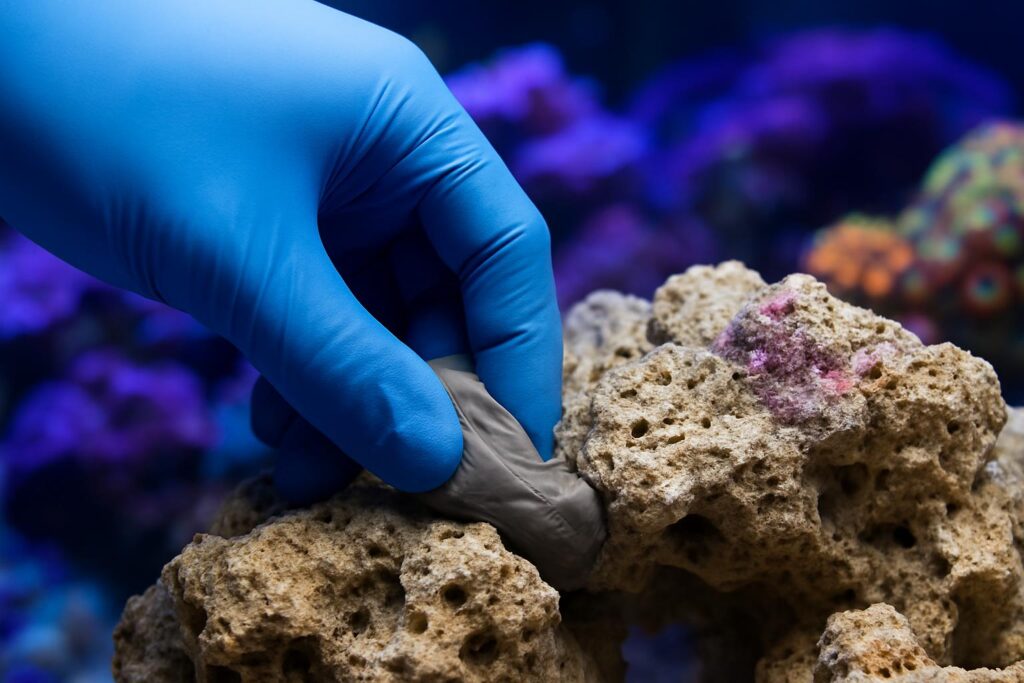
This staple putty is a workhorse for rock-to-rock bonds and coral mounting. It kneads smoothly, sticks well to porous rock, and cures hard underwater. The stone-grey color blends into most reef scapes, making seams unobtrusive as coralline spreads.
- Why it helps: Reliable underwater cure, easy knead, and natural grey finish simplify stable structures and discreet frag placement.
- Best for: Locking base rock, bridging small gaps, and mounting medium frags.
- Working time: Moderate; shape and press within several minutes.
- Pro tip: Press firmly into rock pores and rough up glossy spots; pair with a drop of gel glue for instant tack.
- Potential downsides: Can trigger skimmer overactivity; allow a brief skimmer pause and do smaller batches to limit clouding.
2) Instant Ocean HoldFast Epoxy Stick
HoldFast is a dependable stick-style epoxy formulated for aquatic use. It molds fast, cures underwater, and is suitable for both saltwater and freshwater setups. Off-white when cured, it’s a solid choice for frag plugs, shelves, and hidden joints.
- Why it helps: Predictable handling and a firm final cure stabilize rockwork and corals without specialized tools.
- Best for: Quick fixes, securing frag plugs, and reinforcing existing rock structures.
- Working time: Short to moderate; plan placement before kneading.
- Pro tip: Knead thoroughly until color is uniform; incomplete mixing reduces strength.
- Potential downsides: Off-white can be visible on dark rock until coralline covers it; thin layers on smooth surfaces may not hold as well as thicker plugs.
3) D-D Aquascape Aquarium Epoxy Putty, Rock Grey
D-D’s Aquascape epoxy is favored for large, stable builds. It has a slightly longer work time than many stick epoxies, giving you the window needed to shape bridges and custom shelves. The rock-grey tone hides joints well in mature reefscapes.
- Why it helps: Extra handling time supports bigger projects and complex shapes without rushing.
- Best for: Larger aquascapes, multi-rock arches, and structural reinforcement.
- Working time: Moderate to long; ideal for deliberate shaping and fitting.
- Pro tip: Pin rocks mechanically first, then pack epoxy deep into gaps for maximum interlock.
- Potential downsides: Slight clouding if overworked; heavy pieces still need support until fully cured.
4) Oceans Wonders Coralline Purple Epoxy
Designed for reef aesthetics, this purple epoxy blends into coralline-coated rock from day one. It cures underwater, grips porous surfaces well, and is popular for mounting frags where joints would otherwise be obvious.
- Why it helps: Purple color masks joints from the start, keeping the scape clean while real coralline grows.
- Best for: Visible areas, frag shelves, and cosmetic touch-ups on seams.
- Working time: Moderate; enough time to place and blend edges.
- Pro tip: Feather the epoxy edge thinly over surrounding rock for seamless transitions.
- Potential downsides: Color may look lighter or darker depending on lighting; as with others, expect short-term skimmer activity.
5) Milliput Superfine White Epoxy Putty
Though not aquarium-branded, Milliput is a widely used two-part putty that cures rock-hard and inert, making it useful for reef applications after full cure. It’s smooth, easy to sculpt, and excels at detailed work and gap filling.
- Why it helps: Ultra-fine texture lets you shape precise joints and neat mounts that finish cleanly.
- Best for: Frag disks, small detail joints, and cosmetic fills that need sanding or shaving after cure.
- Working time: Moderate; workable enough for detailed shaping.
- Pro tip: Wet your fingers to smooth edges; keep joints compact to avoid bright white patches.
- Potential downsides: White color is visible until coralline grows; as with all putties, knead well to ensure a proper cure.
Setup Tips for a Clean, Strong Bond
Prep the surfaces
Brush off slime and detritus. Roughen smooth areas. Dry-fit pieces before mixing epoxy so you know the exact points of contact.
Use the glue-plus-epoxy method
For frags and small joints, put a small dab of thick cyanoacrylate gel on the frag or rock, then wrap or press epoxy around it. The glue grabs instantly; the epoxy locks the geometry after cure.
Manage equipment smartly
Turn off the skimmer and strong mechanical filtration for 1–2 hours. Keep return, circulation, and aeration running. Resume skimming once the water clears and foaming settles.
Let it cure properly
Most epoxies handle lightly within 30–60 minutes but take up to 24 hours to reach full strength. Avoid heavy loads or major rock shifts during that window.
Conclusion
In 2026, you have reliable, reef-tested epoxy options for every task. Use grey or purple putties to blend seams, select longer work times for bigger builds, and pair epoxy with gel glue for the strongest small mounts. Control your skimmer during the job and give each joint a full day to reach maximum strength. Do this, and your aquascape will be stable, tidy, and ready for growth.
FAQ
Q: Is marine epoxy safe for reef tanks?
A: Yes, reef epoxies cure inert in saltwater. Expect temporary skimmer overactivity during use and plan short equipment adjustments.
Q: Do I need to turn off my skimmer when using epoxy?
A: Yes. Turn off the skimmer and strong mechanical filtration for 1–2 hours while you work, then resume once foaming settles.
Q: Which epoxy color blends best in a reef tank?
A: Grey blends into live rock, purple hides joints in coralline-heavy tanks, and white stands out initially but disappears as coralline grows.
Q: Can epoxy cure underwater and how long until full strength?
A: These putties cure underwater. Most handle lightly within 30–60 minutes and reach full strength in about 24 hours.
Q: How do I get the strongest hold for frags?
A: Use a drop of thick cyanoacrylate gel for instant tack and wrap or press epoxy around it to lock the joint long term.