
We are reader supported. When you purchase through links on our site, we may earn an affiliate commission. Also, as an Amazon affiliate, we earn from qualifying purchases.
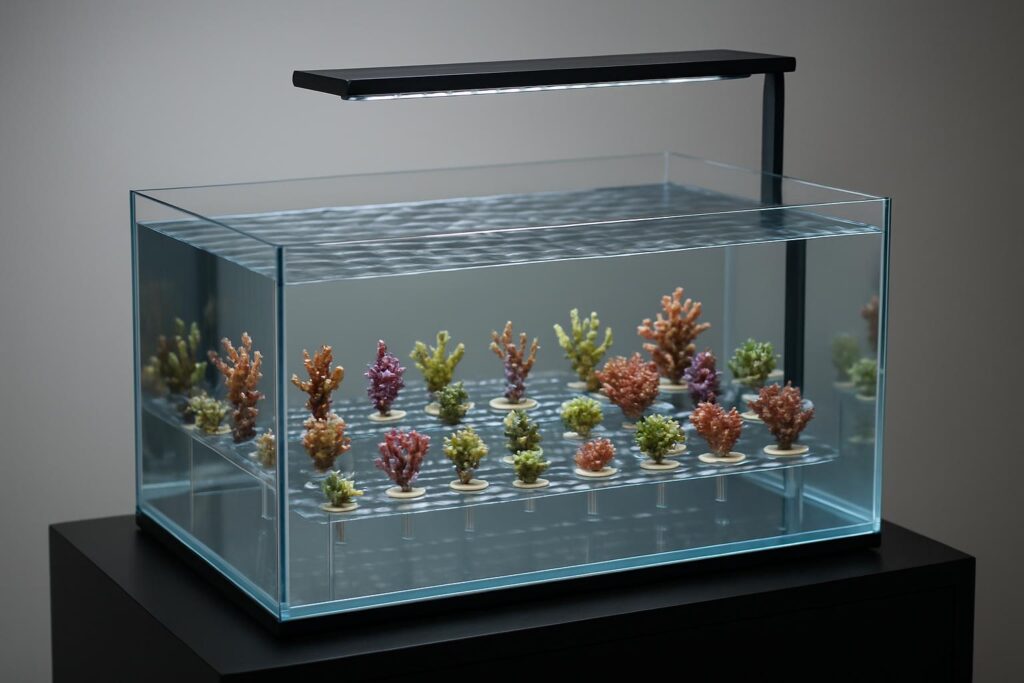
Frag tanks make coral propagation faster, cleaner, and more predictable. The right system offers a shallow footprint for light coverage, easy access for maintenance, and stable filtration. This guide walks you through what matters in 2026 and reviews five proven frag tanks that keep coral growth steady and day-to-day care simple.
How to Choose a Reef Frag Tank in 2026
Footprint and Height
Corals prefer spread-out space and strong, even light. A wide, shallow footprint gives better PAR distribution and makes frag work easier. Low water depth also reduces shadowing and hot spots.
Glass and Build
Low-iron, rimless glass improves clarity for monitoring polyp extension and tissue health. Sturdy seams and a leveling mat add safety and reduce stress on the glass during maintenance.
AIO vs. Plumbed
All-in-one systems are fast to start, with rear filtration hiding gear. Plumbed or bare tanks offer more flexibility and volume but need planning. Choose based on your comfort with drilling, sumps, and custom plumbing.
Lighting Coverage
Frag tanks thrive under wide-spread LED bars or multiple LED pucks. Aim for even PAR and minimal color shading. Shallow tanks make it easier to maintain uniform intensity across racks.
Stability and Maintenance
Smaller volumes swing faster. Use an auto top-off to control salinity. AIOs simplify filtration but may benefit from a small skimmer or macroalgae chamber. Keep flow strong and adjustable for different coral types.
Beginner-Friendly Size
For most new fraggers, 20–30 gallons with an AIO design is the smoothest route. It balances stability, cost, and ease of use.
5 Best Reef Tank Frag Tanks for 2026
1) Innovative Marine Nuvo Fusion Pro 2 20 Gallon Long AIO
The 20 Long format is ideal for frags thanks to its shallow profile and long footprint. Innovative Marine’s Pro 2 package adds thoughtful gear that reduces startup friction.
Why it helps: Wide surface area for rack layout, even lighting, and easy access for cutting and gluing.
Highlights:
- Low-iron, rimless glass for clean viewing.
- Rear filtration with media caddies for rapid nutrient control.
- DC return pump for adjustable flow and quiet operation.
- Screen lid and leveling mat included.
Setup notes: Pair with a wide-spread LED bar or two compact pucks for coverage. Use one powerhead on each end for laminar crossflow. Start with a simple media stack: mechanical, carbon, and a small amount of phosphate media if needed.
Best for: New fraggers wanting a polished AIO that is easy to maintain yet scalable.
Potential downsides: Rear chambers limit skimmer size. High light can spill outside the shallow tank, so plan your mounting height carefully.
2) Aqueon 50 Gallon Lowboy Frag Tank
This classic shallow, wide tank gives massive rack real estate. It is a bare tank, which means freedom to build your dream frag system.
Why it helps: Huge footprint and low depth make light uniformity easy and maintenance fast.
Highlights:
- Approx. 48 x 24 inches of workspace with shallow water column.
- Sturdy glass designed for shallow applications.
- Ideal for large-scale LPS or zoanthid farming.
Setup notes: Plan a sump and overflow or a large AIO insert. Two to three LED bars span the width well. Use a strong stand that supports the full base and a foam mat to spread weight evenly.
Best for: Intermediate to advanced users scaling up coral production or consolidating multiple nano frag systems.
Potential downsides: Requires plumbing, stand planning, and external filtration. Evaporation is faster due to surface area, so an auto top-off is essential.
3) Fiji Cube 22 Gallon All-in-One Rimless Aquarium
Compact, clean, and ready to work. This AIO strikes a balance between space and simplicity, making it a smart entry point for a dedicated frag system.
Why it helps: Enough water volume for stability plus integrated filtration to keep clutter out of sight.
Highlights:
- Low-iron rimless glass with smooth silicone work.
- Rear filtration with media racks and return sections for customization.
- Modern footprint that fits common frag rack sizes.
Setup notes: Choose a controllable return and one additional powerhead to shape flow across racks. A thin substrate or bare bottom both work; bare bottom simplifies cleanup of cuttings and plugs.
Best for: Beginners who want an AIO that feels premium and grows with their skill.
Potential downsides: Rear chambers limit refugium space. For SPS-heavy loads, consider adding a micro skimmer or increasing water change frequency.
4) Ultum Nature Systems 60S Shallow Aquarium
A refined, low-iron shallow tank that excels as a compact workstation. Its proportions make it simple to light and effortless to reach anywhere in the tank.
Why it helps: Very shallow depth improves coral inspection and trimming while ensuring even PAR.
Highlights:
- Ultra-clear glass with precise mitered edges.
- Shallow profile for uniform light and quick access.
- Clean aesthetic that complements a minimalist frag setup.
Setup notes: Pair with a hang-on-back filter or a small external canister converted for reef use. One LED bar typically covers the full footprint. An ATO remains important even at this size.
Best for: Hobbyists with limited space who still want a dedicated coral workstation.
Potential downsides: Lower water volume requires disciplined top-off and temperature control. Equipment must be chosen to fit the compact format.
5) JBJ 25 Gallon Rimless Flat Panel AIO
A reliable AIO with a proven track record. The flat panel design and rear filtration make this a strong plug-and-play frag platform.
Why it helps: Balanced size for stability and accessible maintenance without major customization.
Highlights:
- Rimless glass and rear overflow for a neat, cable-free display.
- Multiple rear chambers for media, heater, and optional micro skimmer.
- Silent return pathway to keep the workspace calm.
Setup notes: Mount lighting to maximize edge-to-edge spread. Use a media basket with mechanical filtration up front and carbon below. Add a controllable powerhead to fine-tune flow for different coral groups.
Best for: Users who want a dependable daily driver frag tank with straightforward upkeep.
Potential downsides: Less horizontal area than a dedicated lowboy; plan rack layout carefully to avoid shading.
Dialing In Your Frag Tank for Success
Lighting and PAR
Use broad-beam LEDs or bars for consistent coverage across racks. In shallow tanks, mount slightly higher and reduce intensity to prevent hotspots. Verify PAR at plug height, not just at the surface.
Flow and Cleanliness
Set a crossflow pattern that keeps detritus suspended and frags steady. Keep plugs and racks clean to reduce algae. A turkey baster and small siphon make fast work of debris between water changes.
Nutrients and Stability
An auto top-off controls salinity swings. Start with regular water changes, mechanical filtration, and carbon. Add a small skimmer or refugium if nutrient export lags. Stability beats chasing numbers.
Safety and Access
Use a leveling mat. Secure cords, keep salt creep off light lenses, and maintain a stable stand. Shallow systems make tool access easy; use coral-friendly gel glue and allow full cure before strong flow resumes.
Conclusion
Shallow, wide, and simple wins. For most beginners, a 20–30 gallon AIO like the Innovative Marine 20 Long or the JBJ 25 smooths the learning curve. If you need a large platform, the Aqueon Lowboy delivers unmatched space. Compact shallow options like the Fiji Cube 22 AIO and UNS 60S shine when space is tight. Choose the footprint that fits your room and lighting, lock in stable filtration with an ATO, and keep maintenance consistent. Your frags will show you the result with faster encrustment and steady growth.
FAQ
Q: What tank size is easiest for beginners starting a frag system?
A: For most new fraggers, 20–30 gallons with an AIO design is the smoothest route because it balances stability, cost, and ease of use.
Q: Why do shallow, wide tanks work so well for frags?
A: A wide, shallow footprint gives better PAR distribution, reduces shadowing, and makes frag work and maintenance easier.
Q: Should I choose an all-in-one system or a plumbed setup?
A: All-in-one systems are fast to start and hide gear, while plumbed or bare tanks offer more flexibility and volume but require more planning.
Q: What lighting approach helps avoid hotspots in shallow frag tanks?
A: Use broad-beam LEDs or LED bars, mount them slightly higher, and verify PAR at plug height for even coverage.
Q: How do I keep a small frag tank stable day to day?
A: Use an auto top-off to control salinity, rely on mechanical filtration and carbon, perform regular water changes, and add a small skimmer or refugium if nutrient export lags.