
We are reader supported. When you purchase through links on our site, we may earn an affiliate commission. Also, as an Amazon affiliate, we earn from qualifying purchases.
Artificial plants and decorations make aquariums easy to shape and easy to care for. They do not rot, they do not need fertilizer, and they keep their shape. But they still collect algae, biofilm, and hard water stains. If you let grime build up, your tank looks dull, smells stale, and can even stress your fish. Cleaning is simple when you know what to use, what to avoid, and how to work in a smart order. This guide gives you a clear plan that is safe for your fish and safe for your decorations.
Why cleaning matters
Dirty ornaments trap waste and feed algae. The result is green fuzz, brown dust, or black tufts that never seem to go away. Debris can clog flow around the tank and create dead spots. All this pushes water quality in the wrong direction. Your nitrate creeps up. Your pH may drift. Fish breathe harder and colors fade. A clean setup keeps oxygen higher, waste lower, and your tank bright and stable.
Know your materials before you clean
Plastic plants
Plastic plants are sturdy. They handle scrubbing and short bleach dips. They can warp with very hot water. Brightly dyed plastics can fade if bleach is too strong or the soak is too long. Test a hidden area if colors matter.
Silk plants
Silk plants look soft and natural. They tear if you scrub too hard. They can fade with bleach. Use gentle brushes and avoid strong chemicals. Hydrogen peroxide and vinegar are safer choices for silk.
Resin and ceramic ornaments
Resin figurines, caves, and ships are common. They are hard, but the paint can be thin. Most handle short bleach dips if you rinse and neutralize well. Ceramic items are usually safe with bleach, vinegar, or peroxide. Do not use anything scented or soapy.
Fake rocks and caves
Many fake rocks are resin. Some are plastic blends. Treat them like resin ornaments. Avoid metal tools that can scratch or expose inner layers.
What to avoid with any artificial decor
Do not use soap or detergent. Do not use scented cleaners. Do not mix chemicals. Do not boil plastic or resin. Do not use steel wool or wire brushes. Residues and scratches cause problems later.
Tools and supplies that work
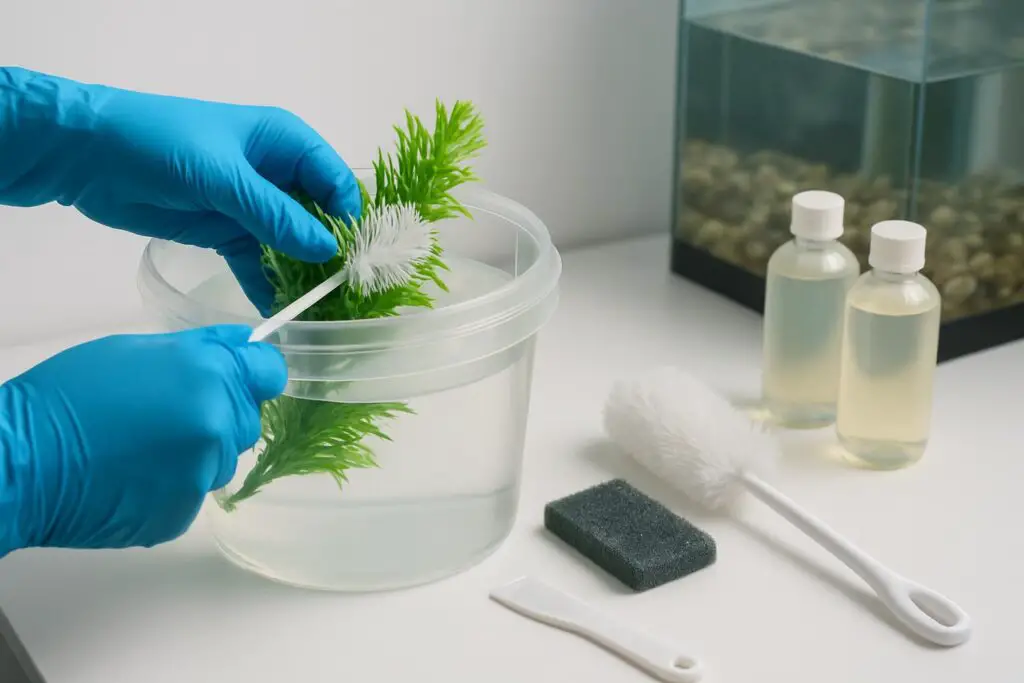
Use a soft toothbrush, small bottle brush, and a non-scratch algae pad. Keep a dedicated bucket for aquarium use only. Have white vinegar, 3 percent hydrogen peroxide, and plain unscented household bleach on hand. Use a good water conditioner that removes chlorine and chloramine. Keep nitrile gloves to protect your skin. A plastic scraper or old bank card helps with hard deposits. Optional items include citric acid powder, chlorine test strips, and microfiber cloths for drying.
Safety rules you should follow
Work in a ventilated area. Wear gloves. Never mix bleach with vinegar or peroxide. Use only plain unscented bleach. Mix chemicals with water, not the other way around. Keep children and pets away from buckets. Rinse tools after use and store them for aquarium tasks only. If a decoration keeps a bleach smell after cleaning, do not rush to put it back. Soak longer in dechlorinated water and dry it until the smell is gone.
Quick clean between water changes
This routine removes soft algae and slime without strong chemicals.
Step 1. Prepare a bucket with tank water during your water change. This prevents temperature shock to your decor.
Step 2. Remove a few decorations at a time. Leave some items inside the tank so fish keep their territory and stress stays low.
Step 3. Scrub with a soft brush or algae pad. Focus on crevices and undersides where waste collects. Use warm tap water to help lift oils, but not hot water for plastics.
Step 4. For small patches that resist scrubbing, spray or dab 3 percent hydrogen peroxide directly on the spot. Wait two to three minutes. Scrub again and rinse well in tap water, then in dechlorinated water.
Step 5. Return the items to the tank. Place them in the same general layout so fish feel secure.
Deep clean for stubborn algae and odors
Use this when you see black beard algae, green hair algae, or a thick coat of biofilm. Choose one method below based on the material.
Hydrogen peroxide method
Best for silk plants, dyed plastics, and resin when you want a safer chemical.
Step 1. Rinse the item under running water to remove loose debris.
Step 2. Soak in 3 percent hydrogen peroxide for 3 to 10 minutes. For silk, keep it short at 3 to 5 minutes. Agitate the bucket a few times.
Step 3. Scrub gently to lift dying algae. Peroxide oxidizes algae so it releases easier.
Step 4. Rinse under tap water for at least one minute. Then soak in dechlorinated water for 10 minutes to neutralize any residue. Peroxide breaks down to water and oxygen, but the rinse step removes decay and foam.
Bleach dip method
Best for tough resin ornaments and plastic plants with heavy growth. Avoid on silk and on delicate paint.
Step 1. Mix a mild bleach solution. Use one part plain unscented bleach to twenty parts water. As examples, mix 50 milliliters of bleach into one liter of water, or about three tablespoons of bleach into one quart of water.
Step 2. Submerge the item for 5 to 10 minutes. Watch it. Do not exceed 15 minutes. Do not leave the bucket unattended.
Step 3. Scrub while submerged to help the solution reach crevices. Lift out and scrub again.
Step 4. Rinse under running water thoroughly. Then soak in fresh water with a full dose of dechlorinator for at least 15 minutes. Change the water and dechlorinate a second time if you still smell chlorine.
Step 5. Air dry until there is no chlorine odor at all. Use chlorine test strips if you want certainty. Only return the item when the test reads zero.
Vinegar or citric acid method
Best for hard water deposits, white crust, and mineral films. Safe for most materials.
Step 1. Mix equal parts white vinegar and water. For a stronger mix, dissolve one tablespoon of citric acid per cup of warm water.
Step 2. Soak for 15 to 30 minutes. For heavy scale, extend to one to two hours.
Step 3. Scrub with a plastic scraper or brush. The crust should flake off cleanly.
Step 4. Rinse thoroughly. Soak in dechlorinated water for 10 minutes before returning to the tank.
Removing specific algae types
Black beard algae
Black beard algae forms dense black or dark gray tufts on edges and textured surfaces. Scrubbing alone rarely works. Use a peroxide soak for 10 minutes on plastic or resin, then scrub while the algae is still weakened. Repeat if needed. For very tough spots on nonporous resin, a short bleach dip of 5 minutes can finish it. Avoid bleach on silk.
Green hair algae
Green hair algae makes long green threads that trap debris. Pull long strands by hand first. Soak in peroxide for 5 to 10 minutes and brush out the roots. If the item is resin or sturdy plastic, a short bleach dip removes base holdfasts.
Diatoms and brown film
Diatoms smear easily and look brown or rust colored. They wipe off with a sponge. If they return fast, reduce excess silicates and feed less. A vinegar wipe helps remove the sticky base.
Protect your fish and your biofilter
Do not sterilize everything at once. Fish rely on familiar spaces and stable bacteria. Clean half the decorations one week and the rest the next week. Never deep clean the filter on the same day you deep clean decor. Rinse filter media only in tank water and only when flow drops. Keep a normal water change schedule so waste does not rebound after cleaning.
Check before you return items to the tank
Make sure there is no chemical smell. If you detect chlorine, soak again with dechlorinator and air dry longer. Check for loose paint or cracks. If a piece is flaking, retire it. Rinse one last time with dechlorinated water. Match temperature to the tank so you do not chill fish. Place items back slowly so you do not stir up the substrate too much.
How often to clean
Weekly. During your water change, wipe visible algae from the easiest surfaces. Brush two or three plants or ornaments. Rotate which ones you clean so you do a little each week.
Monthly. Pick a set of decor with heavier buildup. Do a peroxide soak or a vinegar soak for mineral films. Rinse and return.
Every three to six months. Do a deeper refresh. Use a bleach dip on sturdy resin and plastic if algae is entrenched. Replace any items that show wear, cuts, or trapped dirt you cannot reach.
Prevent algae and gunk from bouncing back
Control light
Keep lights on for 6 to 8 hours per day for low to medium setups. Use a timer. Reduce sunlight on the tank. If algae grows fast, cut an hour and review in two weeks.
Balance nutrients
Do not overfeed. Most fish do well with only what they finish in 30 to 60 seconds. Vacuum the substrate each week. Keep nitrate under 20 parts per million for most community fish. If you have high phosphates, use a phosphate remover in your filter.
Improve flow and filtration
Dead spots allow debris to settle on decor. Aim your filter output to move water across the mid and low levels. Clean the filter intake strainer monthly. Replace clogged fine pads. Do not replace all media at once.
Consider a UV clarifier if water goes green
Green water is free floating algae. It coats decor once it settles. A UV unit kills it in the water column. This does not clean decorations directly, but it reduces new growth.
Rinse new decorations before use
New items often have dust and residue. Rinse well, soak in dechlorinated water, and do a short peroxide soak if needed. This keeps your tank from starting dirty.
Special notes for silk plants
Handle silk gently. Avoid hard scrubbing. Use peroxide or a mild vinegar soak only. Short soaks work best. Let them air dry flat so the shape holds. If the fabric frays, trim loose fibers so fish do not snag their fins.
Special notes for brightly painted resin
Test a hidden area with your chosen cleaner. If color leaches into the water or the surface becomes tacky, stop and switch to a milder method. Keep bleach dips short. Always dechlorinate and air dry completely.
Troubleshooting common problems
Bleach smell will not go away
Soak in fresh water with an overdose of dechlorinator for 30 minutes. Repeat with fresh water. Air dry for 24 to 48 hours. Use chlorine test strips. If it still registers, repeat. If the smell remains after several cycles, retire the piece.
Decoration looks dull after cleaning
Bleach can fade dyes. Next time, use peroxide and gentle scrubbing. To restore look, sometimes a light coat of aquarium safe sealant works, but only if the product is certified for submerged use. Most hobbyists choose to replace faded items.
Plastic warped
Hot water causes warping. Rinse only in warm or cool water. If a plant stem bends, try gentle reshaping under warm water. Severe warps rarely reverse.
Fish gasping after you put decor back
This can be chlorine or stirred up waste. Remove the items. Add extra dechlorinator. Increase surface agitation. Test chlorine and ammonia. Do a partial water change. Review your rinse steps before trying again.
Slime returns within days
Check feeding. Check light hours. Check flow. Clean the filter intake and adjust the outlet. Consider a larger weekly water change. If your tap water has high phosphates or silicates, pre-filter it with appropriate media.
Frequently asked questions
Can I use baking soda?
Baking soda helps with odors but does not kill algae. It can leave residue. Peroxide and vinegar are better choices.
Can I use household soap?
No. Soap leaves films that harm fish and invertebrates. Even a trace can irritate gills.
Can I clean decor in the dishwasher?
No. Detergent residue and high heat are unsafe for aquarium use.
Can I pressure wash ornaments?
A gentle rinse is fine outdoors, but high pressure can strip paint and drive debris into crevices. Use brushes instead.
Can I spot treat algae in the tank with peroxide?
Yes, but it must be controlled. Turn off filters, apply a small amount to the target while avoiding fish, wait a few minutes, then resume flow. This is advanced and not needed if you clean decor outside the tank. When in doubt, remove the item and treat in a bucket.
Can I reuse bleach solution?
No. Make fresh solution each time. Bleach breaks down and becomes unreliable. Dispose of used solution safely with lots of water down a drain, never into the yard.
Is cleaning safe for shrimp and snails?
Yes, if you rinse and neutralize completely. Invertebrates are sensitive to chlorine and residues. Use peroxide or vinegar methods for extra safety, and always dechlorinate well.
Step by step example routine
Here is a simple plan that works for most tanks.
Week 1. During your water change, remove two plastic plants and one resin cave. Scrub in warm tap water. Peroxide spot treat any stubborn patches. Rinse, soak in dechlorinated water, and return.
Week 2. Do the same with a different set of items. Add a vinegar soak for any with white crust.
Week 3. If algae persists on one tough piece, do a bleach dip for 5 to 10 minutes. Rinse very well, dechlorinate twice, and dry overnight. Replace the next day after a smell check.
Week 4. Review your light schedule and feeding. Adjust one notch if algae is still strong. Keep repeating the cycle so nothing gets out of hand.
Pro tips that save time
Clean in batches
Keep two buckets. One for dirty items and one for rinse and neutralize. Move items in order so you do not mix stages.
Label your brushes
Mark brushes for bleach, for vinegar, and for general use. This prevents cross contamination.
Use a timer
Set a phone timer for soaks. Over soaking causes fading and does not improve results.
Dry completely after bleach
Drying helps off gas any stray chlorine. This adds a layer of safety beyond dechlorinator.
When to replace instead of clean
Replace decor that has deep cracks, lifting paint, or bad odors that do not rinse out. Replace silk that is frayed or leaves fibers in the water. Replace items that keep leaching color. New decorations are cheaper than a fish loss.
Conclusion
Cleaning artificial aquarium decorations and plants is straightforward when you match the method to the material. Use brushes and warm water for routine care. Use peroxide for safe deep cleaning on silk and dyed items. Use a mild bleach dip for sturdy resin and plastic when algae gets stubborn. Use vinegar or citric acid for hard water deposits. Always rinse and dechlorinate thoroughly, and never rush a piece back if you smell chemicals. Clean in small batches, keep your light and feeding in check, and do not disturb the filter on the same day. Follow this plan and your artificial scape will stay bright, your water will stay clear, and your fish will stay calm.