
We are reader supported. When you purchase through links on our site, we may earn an affiliate commission. Also, as an Amazon affiliate, we earn from qualifying purchases.
CO2 injection can turn a planted aquarium into a fast-growing garden, but it is not a requirement for a beautiful tank. Many aquarists keep lush, healthy, and stable aquascapes without adding CO2. The key is matching plants, light, and nutrients to the level of carbon available in your water. This guide helps you decide if you need CO2 and shows exactly how to build a balanced, beginner-friendly planted tank with or without it.
Introduction
CO2 systems are everywhere in aquascaping videos. They deliver rapid growth and allow demanding plant choices. But they add cost, equipment, tuning, and risk if misused. New hobbyists often ask a simple question. Do I really need CO2 to enjoy a planted aquarium that looks great and stays stable?
The short answer is no. You can grow many plants without injected CO2 and still achieve a clean, green, and inviting layout. The long answer depends on goals, lighting, plant selection, and maintenance habits. Read on to understand how CO2 works, when it is optional, when it is worth it, and how to succeed either way.
What CO2 Does in a Planted Aquarium
Photosynthesis in simple terms
Plants use light, CO2, and nutrients to build new tissue. Light provides energy. CO2 is the main carbon source for growth. Nutrients like nitrogen, phosphorus, potassium, and trace elements support cellular functions. If any one of these is limited, growth slows or stops. When these three are balanced, plants thrive and algae pressure drops.
Natural CO2 sources in tanks
Even without injection, your aquarium has CO2. Fish and bacteria respire CO2. Organic matter breaking down releases CO2. Tap water holds some dissolved CO2 before it degasses. In low light tanks with hardy plants, that natural CO2 can be enough for healthy growth.
What injected CO2 changes
Pressurized CO2 raises carbon availability, typically to 20–30 ppm during the photoperiod. This supports faster growth, stronger color in some species, tighter leaf spacing, and success with demanding carpets and stems. It also increases the need for higher nutrients, consistent flow, stable pH, and careful tuning to avoid stressing fish.
Do You Need CO2 for a Beautiful Tank
When you can skip CO2
You can skip CO2 if you choose undemanding plants, keep light moderate or low, and feed nutrients in a measured way. Aim for slow but steady growth, gentle pruning, and stability. This approach is ideal for beginners, busy aquarists, and those who prefer long-term ease over fast results.
When CO2 is worth it
CO2 is worth it if you want dense carpets fast, compact high-end stems, intense reds in difficult species, or competition-level layouts with strict timelines. It is also helpful in tall tanks where light intensity varies with depth and carbon demand can spike near the surface.
The Three Levers: Light, CO2, Nutrients
Balance beats power
Light drives demand for CO2 and nutrients. If you raise light without raising CO2 and fertilizers, plants starve and algae blooms. If you keep light modest, natural CO2 and light fertilizing often suffice. Think balance first, power second.
Light guidelines without CO2
Use low to moderate light. At the substrate, aim for roughly 20–40 PAR. If you lack a PAR meter, default to a quality LED at 30–50 percent intensity and a 6–7 hour photoperiod at start. Extend to 7–8 hours only after algae remains controlled for several weeks. Avoid intense beams and long days that force plants to demand more carbon than the tank can provide.
Fertilizing a no-CO2 tank
Use a complete all-in-one fertilizer at a lean dose, one to two times per week, and adjust based on plant response and algae presence. Rooted plants benefit from nutrient-rich substrate or root tabs every 1–3 months. Keep nitrogen and phosphorus available, not zero. Include potassium and traces like iron. Stability matters more than big numbers. Skip heavy dosing unless you also raise light and carbon.
Flow and filtration
Consistent circulation delivers CO2 and nutrients to leaves. Target a filter and flow total of about 5–10 times the tank volume per hour. Create gentle surface ripple to maintain oxygen without driving off all CO2. Avoid dead spots where debris collects and algae anchors.
Choosing Plants for Low-Tech Tanks
Reliable choices that thrive without CO2
Rhizome plants like Anubias, Java fern, and Bolbitis grow slowly and reliably attached to wood or rock. Rosette and bulb plants such as Cryptocoryne, Echinodorus, Aponogeton, and Nymphaea do well in enriched substrates. Easy stems including Hygrophila polysperma, Bacopa caroliniana, and Rotala rotundifolia adapt to modest light with slower growth. Mosses like Taxiphyllum and Vesicularia attach easily and stay compact under low demand. Floaters such as Salvinia and frogbit thrive on ambient CO2 at the surface and help shade the tank to control algae.
Carpets that can work without CO2
Dwarf sagittaria, helanthium tenellum, and some marsilea species can carpet over time with moderate light and good substrate. Growth is slow but steady if nutrients and flow are adequate. Trim runners to guide coverage and prevent shading.
Plants to avoid without CO2
Very fine high-demand stems, most toninas and eriocaulons, and many red species that need intense light and strong carbon tend to struggle. Monte Carlo and dwarf hairgrass may survive but often stay sparse without added CO2 in lower light setups.
Substrate and Hardscape Choices
Active soil vs inert substrate
Nutrient-rich aquasoils feed heavy root feeders and buffer nutrients for months. They lower pH and KH slightly in many cases, which can help plant uptake. Inert substrates like sand or plain gravel need root tabs and more water column fertilizing. Both can work. Choose soil for easier growth early on, or inert if you prefer full control with tabs and dosing.
Root feeders and leaf feeders
Swords, crypts, and bulb plants respond strongly to a nutritious root zone. Stems, mosses, rhizomes, and floaters rely more on water column nutrients. Mixed layouts benefit from both a decent substrate and regular liquid fertilizing at lean levels.
Wood and rock effects
Driftwood can leach tannins that lower pH slightly and is harmless. Some rocks like limestone raise KH and pH, which can affect nutrient availability and CO2 equilibrium. Know your rock type and match it to plant preferences. Most easy plants tolerate a wide range if other factors are balanced.
Setting Up a No-CO2 Planted Tank: Step by Step
Plan the system
Pick a tank size you can maintain. Medium tanks like 20–40 gallons are forgiving. Choose a reliable LED with dimming and a timer. Select a filter with stable flow and quiet operation. Decide on substrate based on your plant list. Pre-rinse inert substrates.
Layout and planting
Place hardscape, then add substrate slopes for depth. Plant heavy from day one using easy species. Combine rhizomes on wood, stems in groups of 5–10 cuttings, and rosettes in open areas. Add floaters to buffer light if your LED is strong. Spray plants to keep them moist during scape building.
Initial schedule
Set light to 6 hours daily. Keep intensity modest. Start with a lean all-in-one fertilizer once per week. For aquasoil, go lighter on liquid fertilizer at first because soil leaches nutrients. Perform 30–50 percent water changes two times per week for the first two weeks if using fresh aquasoil, then weekly for the first month. With inert substrate, one weekly change is usually enough.
Stocking and feeding
Cycle the tank fully before adding fish. Start with a light bioload and add slowly. Fish respiration adds CO2 and their waste provides plant-available nitrogen after filtration. Feed fish modestly to avoid nutrient spikes and algae. Add a cleanup crew such as amano shrimp and nerite snails once the system is stable and there is visible biofilm or algae.
Tuning after the first month
Watch plant tips and new leaves. Pale new growth suggests more micros or iron. Stalled growth with clean leaves may need a slight bump in light or fertilizer. Hair algae points to too much light or not enough nutrients relative to light. Adjust one thing at a time. Increase photoperiod by 30 minutes and wait a week before further changes. Keep weekly water changes at 30–50 percent for steady conditions.
Algae Control Without CO2
Common issues and quick fixes
Green dust algae on glass often clears with patience and regular scraping, then a large water change after a full week of growth. Green hair algae signals excess light or poor nutrient balance. Reduce intensity, shorten the photoperiod, and ensure some nitrate and phosphate are present. Black beard algae often arises from unstable CO2 and weak flow. Even without injection, keep flow steady and avoid big swings in surface agitation. Remove affected leaves, improve circulation, and hold settings stable.
Biological helpers
Amano shrimp pick at soft algae and leftover food. Nerite snails clean film and diatoms on hard surfaces. Otocinclus graze on soft film algae once the tank is mature. Do not over-rely on animals; they assist but do not fix imbalance. Balance light, nutrients, and maintenance first.
Pressurized CO2 Overview for Those Considering It
Equipment essentials
A basic system includes a CO2 cylinder, a dual-stage regulator with a solenoid, a needle valve for fine control, tubing, a check valve, and a diffuser or reactor. A timer turns CO2 on 1 hour before lights and off 1 hour before lights off. A drop checker or pH monitoring helps track levels. Consistent flow and even distribution are critical.
Tuning and safety
Target 20–30 ppm CO2 during the photoperiod. A 1.0 pH drop from fully degassed water is a common indicator of this range. Increase CO2 slowly over days while watching fish for stress at the surface. Ensure good surface ripple for oxygen. Clean diffusers regularly. Stable levels beat chasing small numbers.
Nutrient and light with CO2
As growth accelerates, raise macro and micro dosing and ensure adequate potassium. Extend photoperiod to 7–8 hours only when algae is under control. Prune plants often to keep flow paths open and prevent shading.
Costs and Time Commitment
No-CO2 low-tech
Startup is lower and maintenance is steady but simple. You spend time on weekly water changes, light dosing, and occasional trimming. Growth is slower, so rescapes and heavy pruning are infrequent. Electricity use stays modest.
CO2 high-tech
Startup costs include cylinder, regulator, solenoid, and diffusion gear. Ongoing costs include refills and more fertilizer. Maintenance includes tuning, frequent pruning, and tighter schedules. The reward is faster results and a wider plant palette, at the price of more attention and precision.
Realistic Outcomes Without CO2
What beauty looks like in low-tech
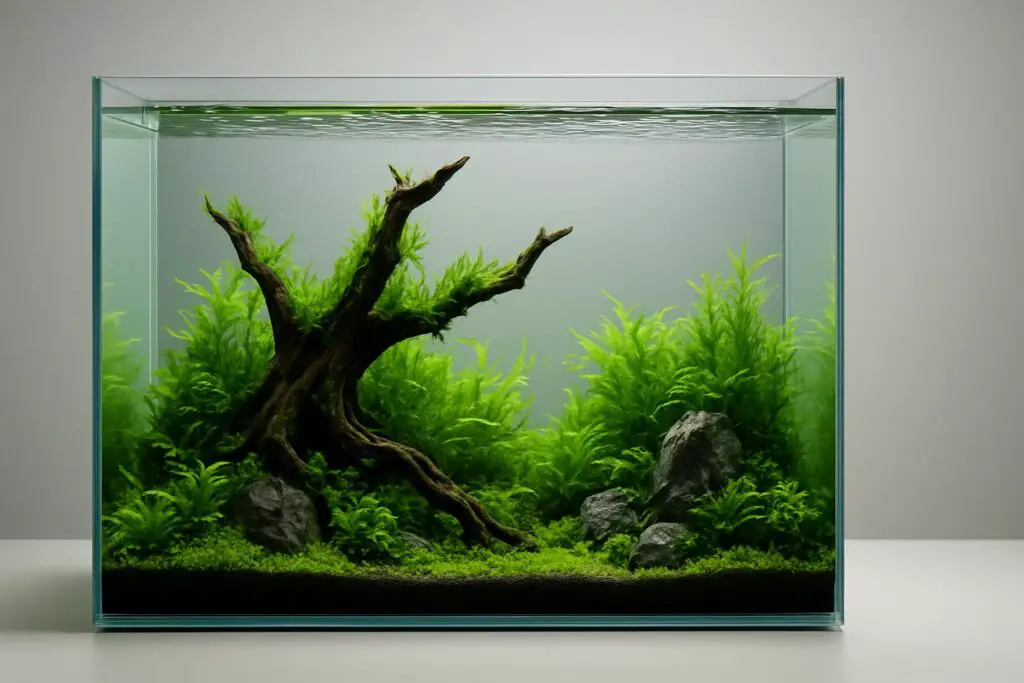
Expect clean lines, healthy leaves, and gradual growth. Rhizomes on wood, crypt groups, a few hardy stems, and a simple background plant create depth. Floaters soften light and add texture. Fish behavior stands out because plants do not overrun the scape. You get a calm, stable display that matures over months and stays predictable.
Setting expectations
Low-tech will not create a dense carpet in a few weeks. Red species often stay greenish and less intense. Trimming sessions are shorter but less frequent. The trade-off is reliability and a low-risk learning curve. Many aquarists prefer this style long term.
When to Upgrade to CO2
Clear signals to add carbon
Consider CO2 if you have mastered algae control, understand your light and nutrient routine, and want to push plant variety or density. If you crave fast carpets, compact internodes, or advanced stems, CO2 helps deliver. Make sure your budget, time, and interest in tuning match the commitment. Upgrade lighting and nutrients to match the new demand.
Practical Tips for Success Without CO2
Simple rules that work
Plant heavy at the start. Keep light modest and timed. Dose lean and consistent. Water change weekly. Maintain steady flow with gentle surface ripple. Choose easy plants first and add new species one at a time. Prune before plants choke each other. Keep hands out of the tank unless you have a clear task. Track changes in a small log so you can reverse a step if algae appears.
Conclusion
You do not need injected CO2 to create a beautiful planted aquarium. Many hardy plants thrive under modest light with steady nutrients and good maintenance. Focus on balance, not speed. If your goals later demand faster growth or advanced plants, add CO2 with intent and proper tuning. Either path can lead to a healthy, eye-catching aquascape if you match light, carbon, and nutrients to your plan and keep conditions stable.
FAQ
Q: Do I need CO2 to grow aquarium plants?
A: No. Many hardy plants grow well without injected CO2 if you keep light modest, fertilize steadily, and maintain good flow and water changes. You can achieve a lush, stable tank with slow to moderate growth.
Q: What plants grow well without CO2 injection?
A: Anubias, Java fern, Bolbitis, crypts, swords, bacopa, hygrophila polysperma, mosses, dwarf sagittaria, helanthium tenellum, marsilea species, and floaters like salvinia do well under low to moderate light with lean fertilizing.
Q: How should I set light and fertilizing in a no-CO2 tank?
A: Keep light low to moderate with a 6–7 hour photoperiod at start, then extend to 7–8 hours if algae stays controlled. Dose a complete all-in-one fertilizer at a lean rate one to two times per week and use root tabs for heavy root feeders as needed.
Q: When is pressurized CO2 worth it?
A: It is worth it if you want fast carpets, compact high-demand stems, stronger coloration in difficult species, or if you aim for competitive layouts and are ready for the added cost, tuning, and maintenance.