
We are reader supported. When you purchase through links on our site, we may earn an affiliate commission. Also, as an Amazon affiliate, we earn from qualifying purchases.
Stress is the silent problem that weakens fish, opens the door to disease, and shortens lifespans. The good news is that most stress has clear signs and simple fixes. Learn the eight most common signs of stress, how to diagnose the cause, and exactly what to do. Keep reading, because fast action in the first 24 hours often makes the difference.
Why Fish Get Stressed
Water Quality Spikes
Poor water quality is the biggest stress trigger. Ammonia and nitrite burn gills and damage organs. High nitrate over days or weeks weakens immunity. Sudden pH shifts shock the body. These problems build quietly until your fish shows obvious distress. Your first move whenever a fish looks off is to test the water.
Temperature Swings
Even a few degrees up or down can stress fish, especially sensitive species like bettas and some tetras. A heater without a thermostat, a tank near a window, or a strong draft can swing temperatures. Stable beats perfect. Keep it steady within the preferred range for your species.
Aggression and Overcrowding
Too many fish or the wrong mix creates conflict. Chasing, fin nipping, and blocked access to food or hiding spots leave weaker fish exhausted and stressed. This can happen suddenly when one fish matures or when a new fish changes the social balance.
Poor Diet and Feeding Habits
Overfeeding pollutes the water. Underfeeding weakens fish. Low-quality foods cause digestive stress. An irregular feeding schedule also raises anxiety. Small, consistent portions with a varied diet lowers stress levels.
Noise, Light, and Handling
Loud vibrations, tapping glass, sudden bright lights, and constant netting elevate stress. Fish need stable light cycles, places to hide, and gentle handling. Aim for calm surroundings and predictable routines.
The 8 Signs and What You Can Do
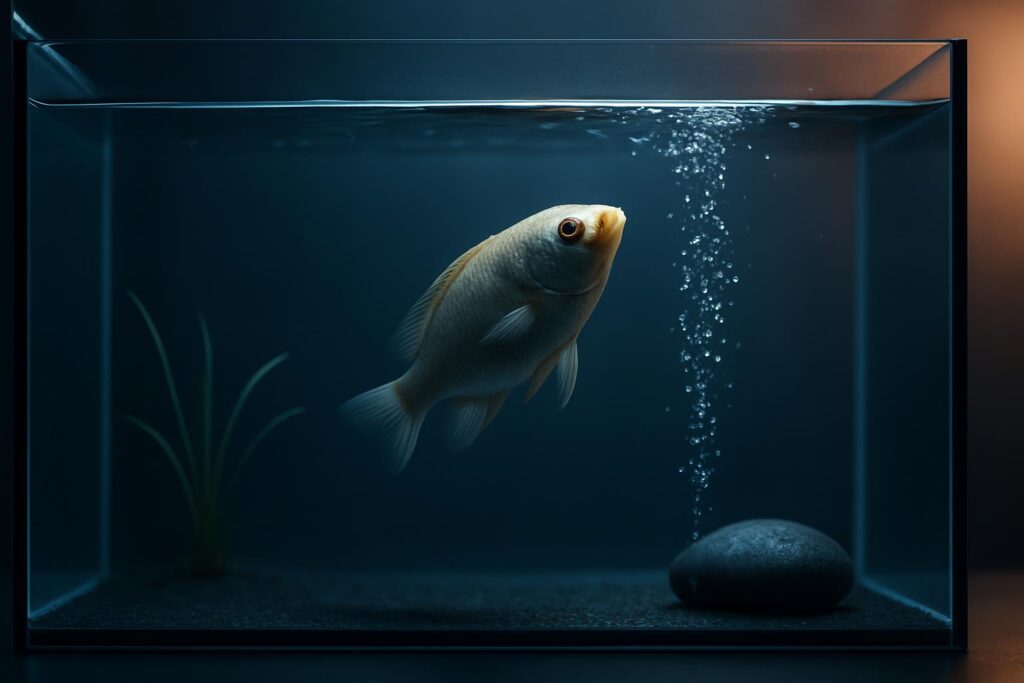
Sign 1: Gasping at the Surface
What you see: fish hanging near the surface, taking frequent gulps of air. This often means low oxygen or irritated gills.
Immediate checks: test ammonia, nitrite, nitrate. Check temperature. Look for a weak filter flow or film on the surface that blocks gas exchange.
Do this now: increase surface agitation by pointing the filter outlet up or adding an air stone. Perform a 30 to 50 percent water change with dechlorinated, temperature-matched water. Stop feeding for 24 hours to reduce waste. If ammonia or nitrite is above zero, do daily partial changes until they read zero.
Prevent it: avoid overstocking, clean filters on schedule, and ensure the filter disturbs the surface. In warm tanks, add extra aeration because warm water holds less oxygen.
Sign 2: Rapid Gill Movement or Labored Breathing
What you see: gills pumping fast, fish hovering in place and working hard to breathe, sometimes with flared gill covers.
Immediate checks: full water test, especially ammonia and nitrite. Inspect for inflamed gills or parasites. Review temperature and recent changes.
Do this now: if ammonia or nitrite is detectable, do a 50 percent water change and add extra aeration. If water is perfect but breathing remains hard, move the fish to a calm, well-aerated quarantine tank for observation and possible treatment after identifying the cause.
Prevent it: maintain a fully cycled filter, avoid sudden pH or temperature swings, and quarantine new fish to reduce parasite introduction.
Sign 3: Clamped Fins
What you see: fins held close to the body instead of open and relaxed. This is a classic stress signal.
Immediate checks: test water, confirm temperature stability, and watch for bullying. Check for sharp decor or filters that shred fins.
Do this now: fix water problems first. Reduce flow if it is too strong for the species, especially for bettas and fancy guppies. Add more hiding spots so fish can rest out of sight.
Prevent it: keep consistent parameters, select tank mates that are compatible, and use decor to break up lines of sight. Good diet and clean water help fins look normal again within days.
Sign 4: Hiding All Day or Lethargy
What you see: fish staying in corners, behind filters, or on the bottom, moving only when startled. Normal rest periods are fine, but all-day hiding is not.
Immediate checks: test water and temperature. Review tank layout. A bare tank with bright light and no cover makes fish feel exposed. Watch for nighttime bullying.
Do this now: add plants, caves, driftwood, or rock to create shelter and sight breaks. Dim harsh lighting or use floating plants to diffuse it. If a fish is being chased, separate the aggressor or the victim.
Prevent it: plan the aquascape around your species. Schooling fish need groups. Shy fish need dense cover. Provide a stable day and night light cycle of about 8 to 10 hours of light.
Sign 5: Erratic Swimming or Flashing
What you see: sudden darting, crashing into glass, rubbing the body on decorations, or swimming in tight circles. Flashing is a sign of irritation.
Immediate checks: test water, especially pH and ammonia. Inspect for external parasites or injuries. Consider whether anything changed, like a new décor item or cleaning chemical exposure.
Do this now: perform a partial water change and run fresh activated carbon for a few days if you suspect contamination. Observe closely in a separate tank if the behavior is severe or constant. Identify parasites before using any treatment.
Prevent it: rinse new decor before adding. Do not spray chemicals near the aquarium. Always match temperature and dechlorinate new water. Quarantine new fish to avoid bringing in parasites.
Sign 6: Loss of Appetite or Spitting Food
What you see: fish ignore food, chew then spit, or eat less than normal. This indicates stress, illness, or poor water.
Immediate checks: test water first. Confirm temperature is correct for the species. Check for bullying at feeding time.
Do this now: fix water issues and reduce stress before pushing more food. Offer a small amount of high-quality food the fish normally accepts. For herbivores, add blanched vegetables. For carnivores, try thawed frozen foods. Remove uneaten food after a few minutes.
Prevent it: feed small portions once or twice daily, only what they eat in under two minutes. Rotate foods to cover nutrition gaps. Include a weekly fasting day for omnivores and carnivores to aid digestion.
Sign 7: Color Fading or Darkening
What you see: dull colors, washed-out patterns, or sudden darkening. Stress hormones change pigmentation.
Immediate checks: water parameters, tank mates, and lighting. Constant stress from aggression, bright light, or unstable water causes color shifts.
Do this now: correct the stress source. Improve water quality, add hiding spots, stabilize the light cycle, and separate bullies. With stable conditions, color usually returns within days to weeks.
Prevent it: keep a predictable routine. Use lights on a timer. Choose peaceful community fish and stock at safe levels. Feed carotenoid-rich foods for species that benefit from color support.
Sign 8: Frayed Fins, Torn Tails, or Bite Marks
What you see: ragged edges on fins, missing pieces, or visible nips. This usually means aggression or high stress due to poor habitat layout.
Immediate checks: watch the tank quietly from a distance for a few minutes. Identify the aggressor. Check flow strength and hiding spots. Recheck water quality since dirty water slows healing.
Do this now: separate the aggressor or the injured fish. Rearrange decor to reset territories. Add more cover and break sight lines. Keep water pristine to support regrowth.
Prevent it: research compatibility before buying. Avoid mixing fin nippers with long-finned species. Stock groups of schooling fish in adequate numbers so aggression spreads out. Keep each fish in a suitable tank size for adult dimensions.
How to Test and Correct Water Parameters Quickly
Test Kit Basics
Use a liquid test kit for ammonia, nitrite, nitrate, and pH. Strips can work for quick checks but are less precise. Test weekly and any time fish act unusual. Keep a log of readings to spot trends before they become a problem.
Safe Ranges for Common Fish
Ammonia 0 ppm. Nitrite 0 ppm. Nitrate under 20 ppm for sensitive species and under 40 ppm for hardy community fish. pH stable within the normal range for your fish; stability matters more than chasing a specific number. Tropical community temperature 24 to 26 C. Betta 26 to 28 C with gentle flow. Goldfish 20 to 23 C with strong filtration and high oxygen.
Emergency Water Change Protocol
If ammonia or nitrite is above zero, or fish show severe stress, change 30 to 50 percent of the water right away. Match temperature carefully and always dechlorinate. Repeat daily until readings are safe. Do not deep clean the filter during an ammonia spike because you might remove beneficial bacteria. Instead, rinse filter media gently in tank water.
Aeration and Oxygen Quick Boosts
Increase surface agitation by raising the filter output toward the surface. Add an air stone or a powerhead aimed upward. Remove oily surface films with a paper towel lightly skimmed across the surface. Lower the water temperature by one degree if it is high and safe to do so, since cooler water holds more oxygen for most community fish.
Habitat Fixes That Reduce Stress
Stocking and Compatibility
Research adult size and temperament before buying. Avoid overstocking. A common rule of thumb based on inches per gallon is not reliable for all species. Base your plan on adult size, activity level, and waste production. Keep schooling fish in proper groups. Avoid mixing slow, long-finned fish with known nippers.
Aquascape and Territories
Provide multiple hides and sight breaks using plants, wood, and rock. Aim for at least one hide per shy or territorial fish. Create zones with different flow levels. Bettas and other calm fish need low-flow resting areas. Cichlids and some barbs benefit from structured territories to reduce fighting.
Lighting and Noise Control
Use a timer for 8 to 10 hours of light daily. Provide gradual on and off using a dim room light before and after the main light if your fixture does not ramp. Keep the tank away from speakers, slamming doors, and high foot traffic. Do not tap the glass or startle fish during maintenance.
Feeding Routine and Diet
Feed small amounts that fish finish in under two minutes. Remove leftovers. Rotate high-quality pellets or flakes with frozen or live foods as appropriate. Include plant matter for omnivores and herbivores. A stable feeding time lowers anxiety and improves color and activity.
Maintenance Schedule
Change 25 to 35 percent of the water weekly for most tanks. Vacuum the substrate lightly to remove waste. Rinse filter media in old tank water, not under the tap. Replace only part of the media at a time to preserve beneficial bacteria. Wipe algae from glass but leave some biofilm on decor for grazing species.
When Stress Turns Into Illness
Red Flags to Act Fast
Watch for white spots, fuzzy growths, ulcers, pineconing scales, severe bloating, red streaks in fins, or constant gasping despite perfect water. These are signs that disease has taken hold and need targeted care.
Quarantine Steps
Move sick or bullied fish to a separate, cycled quarantine tank. Use a heater and a simple sponge filter with mature media. Keep the setup bare bottom for easy cleaning. Test water daily and change water as needed to keep parameters perfect. Observe behavior and symptoms closely. Treat based on a confirmed diagnosis, not on guesswork.
When to Seek Professional Help
If symptoms escalate, breathing remains labored after water corrections, or you see ulcers, severe weight loss, or repeated deaths, consult a fish veterinarian or a reputable local store with experienced staff. Bring water test results and clear photos to speed up advice.
Step by Step Recovery Plan for a Stressed Tank
Step 1: Stabilize Water and Oxygen
Test all parameters. Correct ammonia and nitrite with large partial water changes. Increase surface agitation. Keep feeding light or pause for 24 hours while fish recover.
Step 2: Remove Immediate Stressors
Separate aggressive fish or the injured fish. Reduce strong flow for species that need calm water. Dim lights and provide cover to lower anxiety.
Step 3: Set a Predictable Routine
Feed at the same times daily. Keep the light schedule consistent. Avoid hands in the tank unless necessary. Perform maintenance on the same weekly day.
Step 4: Monitor and Adjust
Log behavior changes and test results. If a sign improves, continue the plan. If a sign worsens or new symptoms appear, reassess the cause and consider quarantine or treatment.
Quick Reference Checklist
When You See Stress
Test ammonia, nitrite, nitrate, pH, and temperature. Increase aeration. Do a 30 to 50 percent water change if any parameter is off. Reduce feeding for 24 hours. Add cover and check for aggression. Observe quietly for 10 minutes to identify triggers.
Weekly Prevention
Water change of 25 to 35 percent. Substrate vacuum. Filter media rinse in tank water. Parameter test and log. Equipment check for heaters and filters. Review stocking and behavior to catch issues early.
Beginner Mistakes to Avoid
Rushing the Cycle
Adding fish before the filter builds bacteria causes ammonia spikes and severe stress. Cycle the tank first or use seeded media from a mature filter. Add fish slowly.
Cleaning Too Much
Overcleaning removes beneficial bacteria and causes instability. Avoid replacing all filter media at once. Rinse gently and stagger changes.
Chasing pH
Constantly adjusting pH causes swings and stress. Stability matters most. Choose fish that fit your tap water rather than forcing a different pH.
Ignoring Compatibility
Mixing species with different needs leads to conflict and stress. Research temperament, adult size, and environmental requirements before purchase.
Realistic Timeline for Recovery
First 24 Hours
Correct water issues, boost oxygen, reduce light and disturbances. Many fish bounce back quickly once the environment stabilizes.
Days 2 to 7
Behavior and appetite usually improve. Fins begin to unclamp, and color starts to return. Keep up with small water changes and consistent feeding.
Weeks 2 to 4
Fin damage heals and color deepens as stress hormones drop. If problems persist, reassess stocking, compatibility, and filtration capacity.
Species Notes That Matter
Bettas
Prefer low flow, warm water, and plenty of resting spots near the surface. Stress shows as clamped fins, sulking, and torn tails from strong currents or nipping tank mates.
Goldfish
Produce heavy waste and need powerful filtration and high oxygen. Stress shows fast when oxygen is low or nitrate creeps up. Keep them cool and give them space.
Tetras and Rasboras
Schooling fish that need groups to feel secure. Small groups hide and fade. Correct schooling numbers reduce stress and bring out natural behavior.
Cichlids
Territorial and sensitive to layout. Provide clear territories and broken sight lines. Overcrowding without structure leads to chronic stress and injuries.
Putting It All Together
Detect
Spot the sign. Gasping, clamped fins, hiding, erratic swimming, not eating, color changes, and fin damage all point to stress. Do not wait to test.
Diagnose
Test water, check temperature, watch behavior, and scan for aggression or parasites. One clear cause is more likely than many small ones. Fix the largest problem first.
Correct
Water change, aerate, stabilize temperature, add cover, and separate bullies. Feed lightly with quality food. Restore routine and reduce handling.
Prevent
Follow a weekly maintenance schedule, keep stocking reasonable, research compatibility, and maintain stable parameters. Quarantine new fish to protect the main tank.
Conclusion
Stress does not start as a mystery. It shows up in predictable ways, and the fixes are direct. Test the water first, stabilize oxygen and temperature, remove aggression, and create a secure habitat with cover and routine. Address the root cause early and most fish recover fast. Keep tools ready, keep records, and act the same day you notice a sign. Your fish will reward you with steady color, normal appetite, calm behavior, and a long, healthy life in your care.