
We are reader supported. When you purchase through links on our site, we may earn an affiliate commission. Also, as an Amazon affiliate, we earn from qualifying purchases.
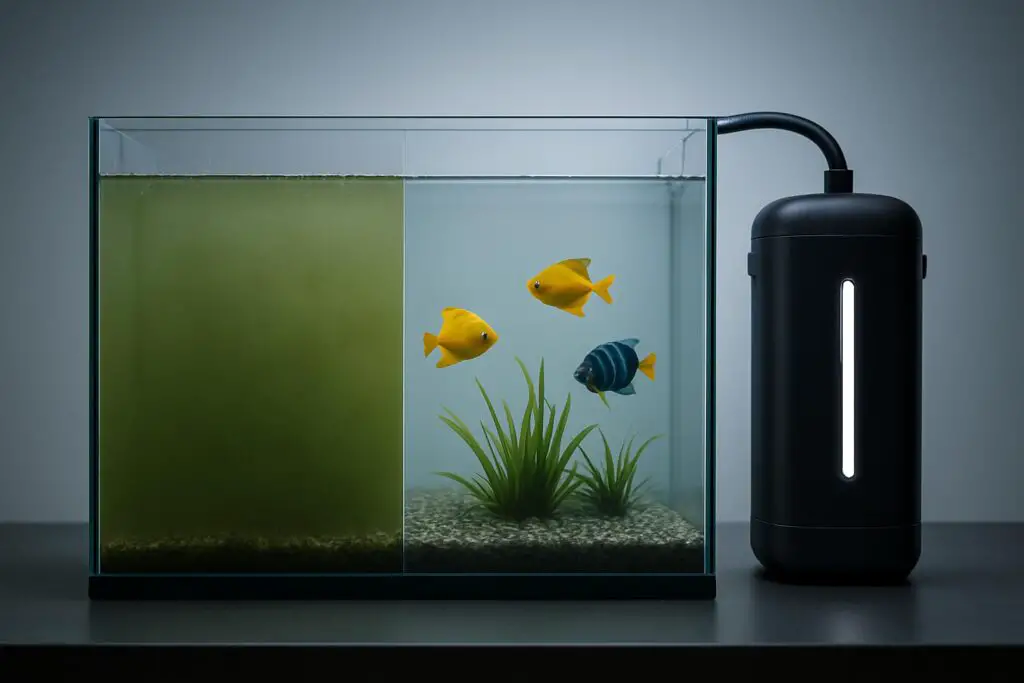
Green water makes your aquarium look like pea soup. The good news is you can clear it fast and keep it from coming back. This guide shows you what causes green water, the fastest ways to remove it, and how to prevent it for the long term. You will get simple steps you can start today, plus a one-week plan that works even if you are new to fishkeeping.
Introduction
Green water is a bloom of tiny free-floating algae. It spreads quickly and turns the whole tank cloudy green. It is not the same as algae on glass. Because the algae are suspended, scrapers and snails cannot fix it. You need to remove the algae from the water and stop what is feeding it. With the right approach, you can clear green water in days, not weeks.
What Green Water Is and Why It Happens
Green water is caused by single-celled algae called phytoplankton. When they get excess light and nutrients, they multiply fast and the water turns opaque. New tanks are prone to this because the biology is not stable yet.
Common triggers include long or intense lighting, direct sunlight on the tank, overfeeding, decaying organic waste, and high nitrate or phosphate. Old bulbs and unstable CO2 in planted tanks can also push algae. Poor mechanical filtration lets fine particles and algae stay in the water column. Any ammonia or nitrite can make things worse by stressing fish and disrupting the biofilter.
Is green water harmful to fish. It is usually not immediately deadly, but it reduces light, can lower oxygen at night, and often signals excess nutrients or ammonia issues. It also blocks light to your plants, which weakens them and gives algae an advantage.
Decide on Your Fast-Clear Method
You have several options. Pick one primary method to clear the bloom quickly, then follow the prevention steps to keep it from returning.
UV Sterilizer: The Reliable Quick Fix
A UV sterilizer pumps water past a UV-C lamp that damages algae cells so they cannot reproduce. It does not add chemicals and is safe for fish, shrimp, and plants when used correctly. A UV sterilizer is the most reliable fast fix because it kills the free-floating algae as water passes the lamp.
How to use it fast and safely:
- Choose a unit rated for your tank size. As a rule of thumb for green water, aim for 1 to 2 watts of UV per 10 gallons of water.
- Set the flow through the UV to about 1 to 2 times your tank volume per hour for best contact time. If your filter runs faster, use a bypass or a separate pump.
- Run the UV 24 hours a day until the water clears, typically 24 to 72 hours.
- Maintain the unit. Clean the quartz sleeve monthly and replace the bulb every 6 to 12 months.
With a properly sized UV sterilizer, most tanks clear in 24 to 72 hours. If it takes longer, reduce the flow and confirm the bulb is fresh and the sleeve is clean.
Blackout: Zero-Cost Method
A full blackout deprives the algae of light so it crashes. It costs nothing but requires a few careful steps.
- Turn off the aquarium light and cover the tank completely so no light enters. Avoid opening it for feeding.
- Keep the filter running. Add an airstone to boost oxygen because plants and algae use oxygen in the dark.
- Do not feed or feed very lightly every other day to reduce waste.
- Continue for 3 to 4 full days. Check fish briefly each day without letting in room light.
- At the end, uncover the tank and do a 30 to 50 percent water change. Clean the glass and rinse mechanical media in removed tank water.
A 3 to 4 day blackout is safe for fish and most plants; keep filtration running, add aeration, and do a 30 to 50 percent water change at the end. If the bloom returns, fix the root causes below and consider adding UV.
Micron Polishing and Diatom Filters
If you want fast mechanical removal without UV, use very fine filtration to trap the algae cells.
- Pack your hang-on-back or canister filter with 50 to 100 micron filter floss or pads.
- Rinse or replace the pads every few hours at first because they clog quickly.
- A diatom filter, if you have one, polishes water extremely fast. Run it for a few hours and monitor closely.
Micron polishing works best when paired with the prevention steps in this guide so the bloom does not rebound.
Water Changes and Clarifiers
Water changes can reduce nutrients, but they may not clear green water alone. If your tap water has phosphate or the tank still has excess light, the bloom can return. Use a dechlorinator for every change to protect beneficial bacteria. Consider a phosphate-removing media if your source water tests high.
Flocculants and clarifiers bind small particles so your filter can catch them. They can temporarily improve clarity but do not fix the cause. If you use one, follow the label, remove carbon if instructed, and monitor oxygen with added aeration.
What Not to Do
- Do not deep clean bio media in tap water. Chlorine kills your beneficial bacteria. Rinse media in a bucket of tank water.
- Do not use algaecides as the first choice. They can harm plants, invertebrates, and biofilters if misused.
- Do not stop the filter during blackout or treatment. You need circulation and oxygen.
- Do not place the tank in direct sunlight. Prevent light from windows hitting the glass.
Stop the Bloom Feeding Itself Today
Even before you set up UV or blackout, make these quick adjustments. They cut off the algae supply lines.
- Reduce light to 6 hours per day using a timer. If possible, lower intensity to 30 to 50 percent.
- Move the tank away from windows or block stray daylight.
- Feed less. Offer what fish eat in 30 seconds, once or twice daily. Remove leftovers.
- Pause fertilizer and iron dosing for 3 to 5 days in planted tanks. Resume at lower doses after the water clears.
- Add aeration. A sponge filter or airstone stabilizes oxygen while algae die off.
- Clean the glass and prefilter sponge. Replace or rinse fine mechanical pads in removed tank water.
Test and Correct the Water
Testing shows whether you have an underlying imbalance or a cycle problem. Use liquid test kits.
- Ammonia: 0 ppm target
- Nitrite: 0 ppm target
- Nitrate: 5 to 20 ppm in planted tanks, 10 to 30 ppm in non-planted tanks
- Phosphate: keep under about 0.5 to 1 ppm
If you detect ammonia or nitrite, treat it as urgent. Do 30 to 50 percent water changes daily until both are zero. Always use a dechlorinator. Feed lightly and add a trusted bottled bacteria product to support the biofilter.
If nitrate and phosphate are high, reduce feeding, increase plant mass, and perform 30 to 40 percent weekly water changes. Rinse frozen foods to remove excess juices. If your tap has high phosphate, use a phosphate-removing media or consider mixing in RO or DI water.
Fix the Root Causes This Week
Control Light
- Set a timer for a consistent 6 to 8 hours per day.
- Avoid direct sun. Use blackout curtains if needed.
- Replace old fluorescent or compact fluorescent bulbs every 9 to 12 months. LEDs last longer but still clean and maintain them.
Balance Nutrients and Feeding
- Feed sparingly with quality food. Small portions reduce waste.
- Rinse frozen foods in a net under running water before feeding.
- In planted tanks, resume ferts at half dose when the water clears and increase slowly while monitoring algae.
Strengthen Filtration
- Ensure your filter is properly sized for your tank. Confirm good flow across the whole aquarium.
- Use layered media: coarse sponge for big debris, then fine floss you replace or rinse weekly.
- Clean filter sponges and pads in tank water during water changes. Do not touch bio media with tap water.
Boost Plant Competition
- Add fast growers such as stem plants and floating plants to absorb extra nutrients.
- Keep CO2 stable during the photoperiod if you use it. Avoid large swings.
- Trim and replant tops to maintain dense, healthy growth.
Manage Stocking and Maintenance
- Avoid overcrowding. Higher bioload raises nutrients.
- Siphon detritus from the substrate during water changes.
- Set a weekly routine: 30 to 40 percent water change, glass wipe, prefilter rinse, and quick test.
Step-by-Step 7-Day Action Plan
Day 1
- Test ammonia, nitrite, nitrate, and phosphate.
- Reduce light to 6 hours. Block sunlight.
- Pick one fast-clear method: UV sterilizer, blackout, or micron polishing. Start it now.
- Add an airstone for stable oxygen.
- Feed very lightly.
Days 2 to 3
- Keep the chosen method running. For UV, verify slow flow and 24-hour operation. For blackout, keep the tank fully covered. For micron pads, rinse them as they clog.
- Retest ammonia and nitrite. If either is above zero, do a 30 to 50 percent water change with dechlorinator and repeat daily until zero.
- Clean prefilter sponges and swap fine floss as needed.
Day 4
- If using blackout, uncover the tank. Do a 30 to 50 percent water change and vacuum detritus.
- Set your light to 6 hours on a timer. Keep intensity modest.
- If using UV, continue until the water is clear, then switch to a lower flow maintenance setting or turn it off and keep it ready for future blooms.
Days 5 to 7
- Resume plant fertilization at half dose.
- Keep feedings small. Rinse frozen foods.
- Install or maintain extra fast-growing plants to soak up nutrients.
- Plan your weekly maintenance routine and stick to it.
Special Cases and Tips
New Tank Bloom
New tanks often get green water while the biofilter matures. Use a UV sterilizer or a short blackout to clear the water, but keep stocking modest and feeding light. Be patient while beneficial bacteria establish.
Planted Aquascapes
Do not starve your plants too long. Use blackout for 3 to 4 days only and keep CO2 on during the photoperiod once lights resume. After clearing, rebuild nutrients slowly and increase plant mass to outcompete algae.
Shrimp and Sensitive Fish
UV and blackout are safe for shrimp and sensitive species. Avoid copper-based algaecides and sudden large changes in pH or temperature.
Algae Eaters
Do not rely on algae eaters to fix green water. The algae are microscopic and suspended, so fish and snails cannot make a dent. Focus on UV, blackout, or micron polishing plus prevention.
How to Keep It From Coming Back
- Use a timer for consistent photoperiods. Keep 6 to 8 hours.
- Maintain your filter and replace fine floss weekly.
- Feed less than you think you need. Consider an auto-feeder for consistency.
- Do weekly water changes of 30 to 40 percent with dechlorinator.
- Test monthly for nitrate and phosphate to catch trends early.
- Keep a UV sterilizer ready. Run it at low flow for a few days if you see early haze.
No. Green water is made of microscopic algae suspended in the water, so algae eaters cannot clear it; use UV, blackout, or micron polishing instead.
When to Seek Help
If water stays green after 72 hours of UV or 4 days of blackout, review the basics. Test ammonia, nitrite, nitrate, and phosphate. Reduce light further, slow UV flow, and clean the UV sleeve. Consider that your source water may be high in phosphate and use a remover or RO or DI mixing.
If fish are gasping, increase aeration immediately, test for ammonia, and do a large dechlorinated water change. Stabilize oxygen and the nitrogen cycle first, then resume algae control.
Conclusion
You can fix green water in days with a focused plan. For the fastest clear, use a UV sterilizer with proper sizing and slow flow. If you want a free option, a complete 3 to 4 day blackout works well. In all cases, cut light, feed less, improve mechanical filtration, and test the water. Address the root causes within a week and set a simple maintenance routine to keep your aquarium clear and healthy long term.
FAQ
Q: How fast can I clear green water
A: With a properly sized UV sterilizer, most tanks clear in 24 to 72 hours; a 3 to 4 day blackout also works if you fix the causes.
Q: Is green water harmful to fish
A: It is usually not immediately deadly, but it reduces light, can lower oxygen at night, and often signals excess nutrients or ammonia issues.
Q: What is the best quick fix for green water
A: A UV sterilizer is the most reliable fast fix because it kills the free-floating algae as water passes the lamp.
Q: Will a blackout harm my plants or fish
A: A 3 to 4 day blackout is safe for fish and most plants; keep filtration running, add aeration, and do a 30 to 50 percent water change at the end.
Q: Do algae eaters fix green water
A: No. Green water is made of microscopic algae suspended in the water, so algae eaters cannot clear it; use UV, blackout, or micron polishing instead.