
We are reader supported. When you purchase through links on our site, we may earn an affiliate commission. Also, as an Amazon affiliate, we earn from qualifying purchases.
A bad smell from your fish tank is a warning sign. The water is carrying too much waste, not enough oxygen, or both. The good news is that most odors have simple causes and clear fixes. This guide helps you find the cause, stop the smell fast, and set up habits that keep your aquarium clean and stable.
Introduction
New and experienced fish keepers face smells at some point. Strong odor is not normal. It often comes from decaying food, dead organisms, dirty filters, trapped waste in the substrate, or a stalled nitrogen cycle. You can clear it without tearing down the tank if you follow a focused plan. Start by identifying the type of smell, take a few quick actions to protect your fish, then fix the root cause so the problem does not return.
What a Healthy Aquarium Should and Should Not Smell Like
A healthy freshwater aquarium may have a faint earthy or pond-like scent when you open the lid. It should never be strong or unpleasant across the room. A strong fishy, sour, rotten egg, or sewage-like smell means too much organic waste or an oxygen problem. Saltwater tanks can have a mild ocean scent. Strong odor in marine systems also points to buildup, die-off, or equipment issues.
The Real Reasons Your Fish Tank Smells Bad
Overfeeding and Leftover Waste
Extra food sinks, breaks down, and feeds bacteria. This process releases foul compounds and uses up oxygen. Overfeeding is the most common cause of smell in new tanks.
Dead Fish, Snails, or Plant Matter
Anything dead rots fast in warm water. A small snail or hidden fish can sour a tank within hours. Dying plant leaves can do the same if they collect in a corner or under decor.
Inadequate Filtration and Clogged Media
Filters that are too small, dirty, or low on flow cannot process waste. If the filter is packed with sludge, it becomes a source of odor rather than a solution.
Dirty Substrate and Trapped Detritus
Gravel and sand collect fish waste, uneaten food, and plant bits. Without regular vacuuming, this material decays and smells.
Bacterial Blooms and Uncycled Tanks
New tanks or disrupted filters often have bacteria imbalances. Ammonia and nitrite spikes lead to stress, fish loss, and smells.
Anaerobic Zones and Rotten Egg Odor
Deep, compacted pockets in the substrate can go oxygen-free. They produce hydrogen sulfide, which smells like rotten eggs. This is common in deep sand beds without good water movement.
Overcrowding and High Bioload
Too many fish or messy species overload your system. The filter and bacteria cannot keep up, and the water carries a heavy organic load that smells.
Algae Die-Off
When algae suddenly die after a blackout, chemical treatment, or light change, they rot and foul the water.
Wood and Decor Issues
New driftwood can release tannins that tint water like tea. Tannins have an earthy scent that is not foul. However, a white biofilm on new wood can collect debris and smell if not managed. Uncured live rock or dead sponges in marine tanks can also create strong odors.
Marine Equipment Off or Undersized
In saltwater tanks, a protein skimmer removes dissolved organics. If the skimmer is off or weak, organics build up and cause odors.
Diagnose the Odor First
Different smells point to different problems. Use your nose, eyes, and simple tests.
Rotten Egg Smell
This suggests anaerobic pockets and hydrogen sulfide from deep, stagnant areas. It can happen under rocks, in thick sand, or inside clogged filters. Act with care and avoid deep stirring all at once.
Sewage or Sour Smell
Usually heavy organic decay from leftover food, dead tankmates, or a filthy filter. Expect cloudy water and visible debris in the substrate.
Strong Fishy Smell
Often a sign of protein buildup and poor gas exchange. Check surface agitation, filter flow, and feeding amounts.
Musty or Pondy Smell
Common with algae growth or tannins. Usually mild, but if it is strong, there is likely excess nutrient buildup.
Run Basic Water Tests
Test ammonia, nitrite, and nitrate. Ammonia and nitrite should be zero in a stable, cycled tank. Nitrate should stay under about 40 ppm for most community fish and better under 20 ppm. If ammonia or nitrite are above zero, your biofilter is strained or disrupted. Also check temperature and make sure the filter is running quietly and moving water.
Fast Odor Control Steps You Can Do Today
Follow these steps in order. They protect your fish, remove the smell, and prepare your tank for long-term fixes.
Increase Oxygen and Surface Movement
Point your filter outlet to ripple the surface, add an air stone, or raise the skimmer in marine tanks. Better gas exchange helps bacteria work and reduces odor compounds.
Physically Remove What Is Rotting
Use tongs or a net to remove any dead fish, snails, or plant debris. Lift ornaments and check for trapped food. Wipe off driftwood biofilm with a clean sponge used only for the tank.
Do a 30 to 50 Percent Water Change
Match temperature and add dechlorinator before the new water enters the tank. A large partial change quickly reduces odor, ammonia, nitrite, and dissolved organics. Never use soap or household cleaners.
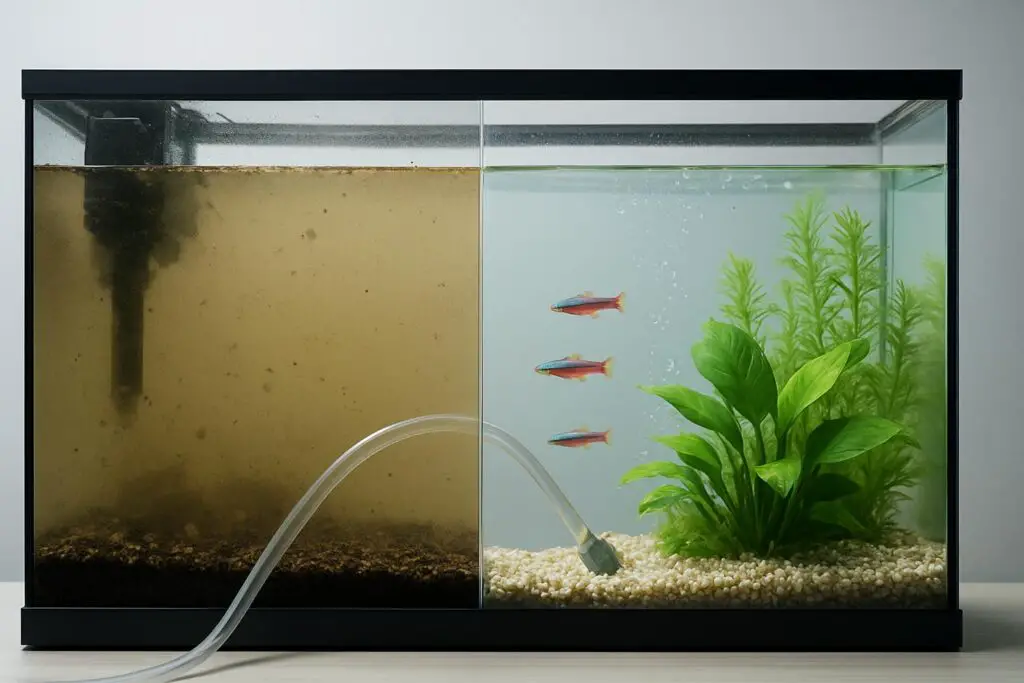
Vacuum the Substrate
Gravel vacuum half the bottom during this change. Focus on areas with visible waste. If you suspect anaerobic pockets, avoid deep stirring all at once. Clean gradually over several sessions.
Clean the Filter the Right Way
Rinse sponges and media in removed tank water, not under the tap, to protect beneficial bacteria. Squeeze until the worst debris is gone. Do not replace all media at once. Replace only one type at a time if needed.
If flow is weak, clear the impeller and intake. Restore strong, steady output.
Add Fresh Chemical Media If Needed
Use fresh activated carbon to absorb odor-causing compounds. Zeolite can help bind ammonia in emergencies for freshwater tanks. Replace or remove temporary media once the tank is stable.
Cut Feeding to Light Portions
Feed very small amounts once per day or skip a day. Only give what fish finish in under two minutes. Remove leftovers with a net.
Ventilate the Tank Area
Open the lid briefly during maintenance and let the stand and room air out. Do not spray air fresheners near the tank.
Fix the Root Cause So the Smell Does Not Return
Right-Size and Maintain Your Filter
Aim for a total turnover of 5 to 10 times the tank volume per hour for most freshwater community tanks. Use mechanical media to trap debris, biological media for bacteria, and optional chemical media for polish. Clean sponges and pads every 2 to 4 weeks in tank water. Replace carbon monthly if you use it. Keep the impeller and intake free of gunk.
Feed Less and Smarter
Most fish do well on small meals once or twice daily. One skip day each week helps prevent buildup. Use sinking foods sparingly to avoid buried leftovers. Target feed bottom dwellers so food is not scattered everywhere.
Balance Stocking and Bioload
Undercrowd your tank, especially if you are new. Research adult size and waste production. Avoid adding many fish at once. Add slowly to let bacteria catch up. Quarantine new fish to prevent loss and decay in the display tank.
Vacuum on a Schedule
Vacuum a different section of substrate each week. Over a month, you will cover the whole bottom without shocking the system. For sand, lightly hover the siphon to lift debris without digging deep. If you keep a deep sand bed for specific species, plan maintenance carefully and avoid random deep stirring.
Eliminate Dead Spots and Improve Flow
Use the filter outlet, a spray bar, or a small powerhead to eliminate corners where waste settles. Good circulation helps oxygen reach bacteria and prevents anaerobic zones.
Support the Biofilter
Keep ammonia and nitrite at zero. If your tank is new or the filter was disrupted, use a bottled bacteria starter after water changes. Do not overclean all media or the entire substrate in one day.
Manage Light and Nutrients
Keep lights on 6 to 8 hours per day for low-tech freshwater setups. Avoid long photoperiods that drive algae growth. Use live plants to consume nitrate and improve water quality. Prune dying leaves before they rot.
Know Your Water Source
Condition all tap water to remove chlorine and chloramine. If your well water has a sulfur smell, aerate it and use carbon before adding it to the tank. Always match temperature to avoid shocking fish and bacteria.
Handle Driftwood and Decor Correctly
Pre-soak new driftwood for days to weeks, changing the water until it runs clearer. Boil small pieces if safe to do so. The white biofilm that appears on new wood is common. Wipe it off during water changes. Tannins can tint water and cause a slight earthy scent, which is normal. A sour or rotten smell means trapped debris or poor maintenance, not tannins alone.
Marine and Brackish Notes
Run a properly sized protein skimmer at all times. Cure live rock fully before adding it to displays. Keep filter socks and skimmer cups clean. Ensure strong surface agitation and gas exchange. Remove any dead invertebrates quickly.
When a Full Tear-Down Is and Is Not Needed
A complete tear-down is rarely needed and can crash your cycle. Avoid it in most cases. Use staged deep cleaning over several weeks instead.
Consider a full reset only if the tank was contaminated with soap, pesticides, or other household chemicals, if there is severe anaerobic substrate throughout with continuous rotten egg gas release, or after a mass die-off with uncontrollable ammonia. Plan resets carefully, move fish to safe holding with heated, filtered water, and preserve some seeded media if it is not contaminated.
A Simple Maintenance Routine That Keeps Odors Away
Daily: check fish behavior, temperature, and equipment. Remove any visible debris. Smell the tank area. Short checks prevent surprises.
Weekly: test ammonia, nitrite, and nitrate. Change 25 to 35 percent of the water. Vacuum a section of the substrate. Wipe the glass. Trim dying plant leaves. Lightly clean driftwood biofilm if present.
Every 2 to 4 weeks: rinse filter sponges and mechanical pads in tank water. Gently swish biological media in tank water only if flow is restricted. Replace carbon if used. Check hoses and intakes for clogs.
Feeding plan: small portions, fast cleanup, and one no-food day per week. This routine stops odor before it starts.
Timelines and Expectations
After you improve aeration, remove decaying matter, clean the filter, vacuum, and change water, most tanks smell better within hours and continue to improve over 24 to 48 hours. If the smell remains strong after two days, look again for hidden dead fish, clogged filters, or deep anaerobic pockets. Keep up partial water changes every few days until tests show zero ammonia and nitrite and a moderate nitrate level. Add beneficial bacteria after each change if the biofilter was stressed.
Safety Notes You Should Not Skip
Do not use soap, detergents, or household cleaners on anything that goes in the tank. Unplug electrical equipment before working in the water. Wash and rinse your hands before and after tank work. Avoid hand lotions and fragrances. Always dechlorinate new water and match temperature. Ventilate the room during maintenance.
Conclusion
Odor is a simple signal that something in your tank is overloaded or out of balance. Find the source, boost oxygen, remove the waste, and refresh the water. Then correct habits that lead to buildup: feed less, vacuum on schedule, keep the filter clean, maintain good flow, and stock lightly. With these steps, your tank runs clear, your fish stay healthy, and the air around your aquarium stays fresh.
FAQ
Q: What causes a rotten egg smell in a fish tank
A: Deep, oxygen-poor pockets in the substrate or inside clogged filters can produce hydrogen sulfide, which smells like rotten eggs. Avoid stirring the entire substrate at once and clean problem areas gradually with water changes and improved flow.
Q: How do I quickly remove bad odor from my aquarium
A: Increase aeration, remove any dead fish or decaying plant matter, perform a 30 to 50 percent water change with dechlorinated, temperature-matched water, vacuum the substrate, gently clean the filter media in removed tank water, and add fresh activated carbon.
Q: Should I do a full tear-down when my tank smells
A: No. Most odor problems resolve with targeted cleaning and water changes. Consider a full reset only if the tank was exposed to soap or chemicals, has severe anaerobic substrate throughout, or after a mass die-off with uncontrollable ammonia.
Q: How often should I clean the filter to prevent smells
A: Rinse mechanical media like sponges every 2 to 4 weeks in removed tank water, keep the impeller and intake clear, and replace carbon monthly if you use it. Do not clean all media at once to protect beneficial bacteria.
Q: Why does my tank smell after a water change
A: If odor returns quickly, the root cause remains. Common issues include overfeeding, trapped waste in the substrate, clogged filters, poor surface agitation, or an incomplete nitrogen cycle. Address these areas, not just the water itself.