
We are reader supported. When you purchase through links on our site, we may earn an affiliate commission. Also, as an Amazon affiliate, we earn from qualifying purchases.
Power can fail without warning. Your fish still breathe, waste still builds, and temperature still drifts. You have minutes to act, not hours. This guide shows clear steps to keep fish alive during a power outage, in order of urgency, with simple tools you can prepare today.
What Fails First In A Power Outage
Oxygen drops fast
Your filter and air pump stop. Surface movement stops. Oxygen transfer slows immediately. In a stocked tank, oxygen can become limiting within a few hours. Fish begin to breathe faster at the surface. Some species and large fish are affected sooner.
Temperature drifts sooner than you think
Heaters and chillers shut off. Glass and water lose or gain heat based on room conditions. Small tanks and rimless tanks change faster. Cold rooms drop heat steadily. Hot rooms push tanks upward, especially with covers that trap heat.
Filtration stalls and toxins rise
Beneficial bacteria need oxygen. When the flow stops, their activity drops within hours. Ammonia from fish waste and leftover food accumulates. After a longer stall, bacteria in sealed filters can die and produce foul water. If that water is dumped back into the tank, it can spike toxins.
The First 10 Minutes: Do This Now
Stabilize, do not feed, reduce waste
Stop feeding immediately. Food becomes ammonia without filtration. Healthy adult fish can go several days without food. Calmer fish use less oxygen. Keep hands out of the tank unless necessary.
Add oxygen immediately
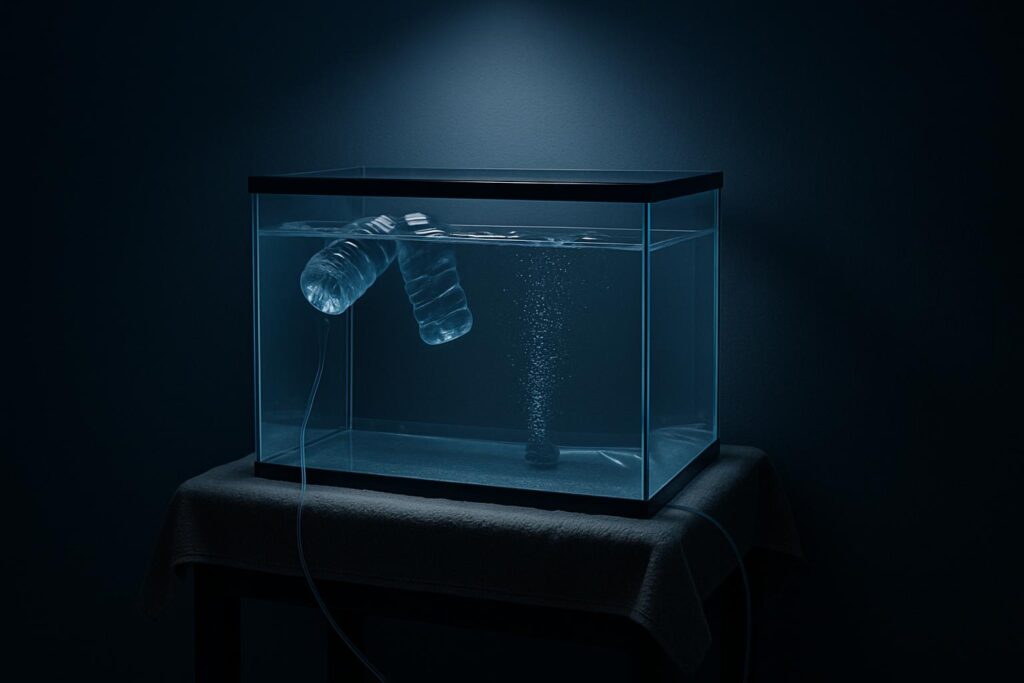
Install a battery air pump with an airstone if you have one. Place the airstone near the surface to create strong ripples. If you do not have a battery air pump, start manual aeration. Use a clean cup or pitcher to scoop tank water and pour it back from a height to churn the surface for one to two minutes. Repeat every 30 to 60 minutes.
Protect the temperature
Close the lid to limit heat loss if the room is cold. Wrap the tank sides with towels or a blanket, leaving a gap at the top for some gas exchange. If the room is hot, open the lid partially to let heat escape and keep the room shaded. Do not let the tank sit in direct sun.
Keeping Oxygen Up Without Power
Battery air pump and power bank options
A simple battery air pump is the most effective emergency tool. Keep spare batteries. USB air pumps can run from a charged power bank. Use fine airstones for more bubbles, but any vigorous surface movement helps. One airstone in the main tank often does more for fish survival than trying to run a dead filter with no flow.
Manual aeration that actually works
Manual aeration is work, but it buys time. Pour water from a height to break the surface and drive off carbon dioxide. Stir the surface strongly with a clean object. Do one to two minutes of agitation every 30 to 60 minutes. If fish gasp, increase frequency. If stocking is heavy, do it more often.
Reduce oxygen demand
Keep lights off to reduce activity and plant respiration swings. Do not add new fish. Avoid chasing or netting unless you must separate bullies. If the tank is very crowded, consider moving a few large fish or sensitive species to a separate container with its own battery airstone to split the demand.
Managing Temperature Safely
If the room is cold
Wrap the tank in blankets, towels, or foam panels. Insulate the back and sides first, then the front if fish are calm. Keep the room door closed. Float sealed hot water bottles to slow the drop. Use water from a kettle or tap heated on a safe heat source, sealed in bottles so tank water stays clean. Replace bottles as they cool. Aim for gradual changes, not swings. Avoid direct contact between heaters or heat packs and glass.
If the room is hot
Keep the tank away from sun. Open the lid slightly for passive cooling and gas exchange. Float sealed bottles of ice to bring temperature down slowly. Rotate bottles as they melt. Cooling should be steady, not abrupt. Keep the room shaded and limit ambient heat sources.
When to move fish temporarily
If temperature drifts beyond the safe range and you cannot correct it, move the most heat sensitive species to a smaller insulated container you can control more easily with bottles of warm or cool water and a dedicated airstone. Match water chemistry, and keep changes gradual.
Protecting Beneficial Bacteria
Keep media wet and oxygenated
Beneficial bacteria die faster if media dries out or stays sealed without oxygen. Keep filter media wet in tank water, not tap water. If your filter stops, move a bag of media into the tank near the airstone so water flows through it. This maintains some biological activity.
Canister and HOB filters
For canister filters without power, do not leave them sealed for long periods. After several hours, water inside can go foul. When power returns, disconnect and discard the stagnant water, rinse the canister body with tank water, and then restart with fresh tank water over the existing media. For hang on back filters, keep the intake and media submerged in the tank to prevent drying. Prime them carefully before restarting.
Sumps and reef systems
In reef tanks, live rock carries a lot of bacteria. Keep strong aeration in the display. If the sump is separate and stagnant, keep the return off until you can remove stagnant water or aerate it. Move a small powerhead to a battery inverter only if safe. If you cannot, place air stones in the display near the surface. Keep media and sponges underwater and oxygenated.
Water Quality During An Outage
Test and change water
Test ammonia and nitrite if you have a kit. If either rises, do a partial water change of 20 to 30 percent with temperature matched, dechlorinated water. Smaller, more frequent changes are safer than one large change during instability. Siphon visible waste to reduce ammonia sources.
Detoxify ammonia if needed
If ammonia or nitrite is present and you cannot change enough water, use a water conditioner that detoxifies ammonia and nitrite temporarily. This buys time but does not replace aeration or filtration. Re dose as directed only after water changes if levels remain elevated.
Plants and live rock help
Healthy live plants and live rock process some waste and improve oxygen dynamics. During outages, keep plants on a normal light cycle only if you can balance oxygen at night. If oxygen is limited, keep lights dim or off to prioritize gas balance for fish. Do not add new plants during an emergency.
Outage Length: A Practical Timeline
0 to 2 hours
Start aeration by battery or manual methods. Stop feeding. Insulate or vent for temperature based on room conditions. Keep fish calm. Prepare water for changes. Gather supplies.
2 to 12 hours
Continue aeration on a schedule. Rotate hot or cold bottles as needed. Test ammonia and nitrite. Do partial water changes if levels rise or if water smells stale. Keep filter media wet and in the tank with flow from the airstone. Reduce bioload in the main tank if it is crowded.
12 to 24 hours
Expect rising waste if stocking is heavy. Maintain strict aeration intervals. Limit light to reduce oxygen demand. If using a canister, plan to service it before restart. Consider relocating the most delicate fish to a separate, well aerated container you can insulate more easily.
24 to 72 hours and beyond
Plan for ongoing water changes each day or as tests indicate. Continue detoxifier if needed. Watch for stress signs such as clamped fins, surface gasping, or unusual color changes. If you have a safe generator, run aeration and a heater or chiller in short cycles to stabilize conditions. Operate generators outdoors only and route cords safely. Keep the emergency routine steady and predictable.
When Power Returns: Safe Restart
Restart in the right order
Restore strong aeration and heat or cooling first. Get the tank back into the safe temperature range gradually. Service filters before running them if they sat for many hours. For canisters, discard stagnant water and refill with tank water over the existing media. For hang on back filters, ensure media is wet and the pump is primed. For sumps, avoid sending any foul sump water into the display. Aerate stagnant sections or remove and replace that water.
Check parameters and fish behavior
Test ammonia and nitrite. Do a partial water change of 20 to 30 percent if levels are up or if water smells off. Watch fish for heavy breathing, erratic swimming, or fin damage. Keep lights dim for a day to reduce stress. Feed lightly once, only after parameters are safe and fish act normally.
Rebuild stability
If filtration was offline long enough to lose bacteria, expect a mini cycle. Keep testing daily for a week. Do small water changes to control spikes. Consider seeding with mature media from another tank if available. Keep stocking stable until parameters hold steady.
Prepare Now So You Do Not Panic Later
Core emergency kit
Store a battery air pump with spare batteries or a USB air pump with a charged power bank. Keep at least one fine airstone and spare airline. Have clean bottles for hot or cold water. Keep towels or foam panels for insulation. Stock dechlorinator that detoxifies ammonia and nitrite. Keep a thermometer and liquid test kits. Keep a dedicated container or bucket for moving fish if needed.
Setup choices that add resilience
Avoid overstocking. Use larger tanks when possible, as they change temperature slower and hold oxygen better. Add surface agitation during normal times so fish are used to strong gas exchange. Keep an extra bag of bio media in your filter or sump so you can move it into the tank during an outage. Choose hardy species for community tanks if your area has frequent outages.
A simple written plan
Write a one page plan and tape it in your stand. List the first steps, where the battery pump is, the aeration schedule, how to insulate, and safe water change volumes. Add emergency contact info for a neighbor who can help if you are away. Practice setting up your battery pump and priming your filter so it is easy under stress.
Special Notes For Different Setups
Freshwater tropical
Most tropical fish do best between stable mid range temperatures. Prioritize insulation in cool rooms and aeration at all times. Stop feeding until power returns and parameters are safe. Expect some species to become quiet during stress; that is normal.
Goldfish and large cichlids
These fish produce more waste and consume more oxygen. Aerate aggressively and change water sooner if tests rise. Consider splitting large individuals into separate, aerated containers to reduce demand on the main tank.
Betta and labyrinth fish
They can gulp air but still benefit from strong surface movement for stable gas exchange and to control toxins. Temperature stability remains critical for health.
Planted tanks
Plants can help with waste but also respire at night. Keep lights low or off if oxygen is marginal. Maintain the same emergency routine. Avoid large trims or uprooting during an outage.
Saltwater and reef
Reef organisms are sensitive to oxygen and temperature swings. Prioritize strong aeration in the display. Keep live rock submerged and oxygenated. Be careful restarting skimmers to avoid sudden overflows after downtime. Top off evaporated water manually to keep salinity stable once power returns.
Common Mistakes To Avoid
Feeding during the outage
Do not feed. Food converts to ammonia quickly without full filtration. Fish can go several days without food.
Forgetting the filter media
Do not let media dry. Do not dump foul canister water into the tank. Keep media in tank water with flow from an airstone and service canisters before restart.
Overheating or overcooling
Do not swing temperature rapidly. Use insulated wraps and sealed hot or cold bottles to adjust gradually. Keep changes steady.
Running generators indoors
Never run a generator indoors. Operate outdoors only and route cords safely to the tank area. Power the highest impact devices first, which are aeration and temperature control.
Conclusion
Survival in a power outage comes down to oxygen first, temperature second, and water quality third. Act in the first 10 minutes, keep a steady routine, and prevent secondary damage when power returns. With a simple kit and a written plan, you can turn a stressful blackout into a manageable event and protect your fish.
FAQ
Q: How long can fish go without food during a power outage
A: Healthy adult fish can go several days without food, so do not feed during the outage to reduce waste and oxygen demand.
Q: What is the fastest way to add oxygen when the power goes out
A: Use a battery powered air pump with an airstone; if you do not have one, agitate the surface by pouring tank water from a height for one to two minutes every 30 to 60 minutes.
Q: How do I keep my filter bacteria alive
A: Keep the media wet and oxygenated by placing it in the tank near an airstone, never let it dry, and if a canister sat for many hours discard the stagnant water and restart with fresh tank water over the existing media.
Q: How can I keep a tropical tank warm without power
A: Wrap the tank with towels or blankets, close the lid to limit heat loss, and float sealed hot water bottles to slow the temperature drop.
Q: What should I do first when power returns
A: Restore strong aeration and temperature control first, service filters before running them, test ammonia and nitrite, do a partial water change if needed, and feed lightly only after parameters are safe.