
We are reader supported. When you purchase through links on our site, we may earn an affiliate commission. Also, as an Amazon affiliate, we earn from qualifying purchases.
Snails appear in planted tanks fast, and new keepers often panic. Do not reach for chemicals first. A clear plan will stop outbreaks, protect plants and shrimp, and keep your tank stable. This guide shows you how to identify pest snails, why they boom, and how to remove and prevent them using methods that actually work.
Why Pest Snails Appear
Snails are not random. They arrive as hitchhikers on plants and hardscape, then multiply when food is abundant. If you see a boom, your tank is telling you there is excess food or decaying organics. Fix the root cause and their numbers will drop.
Main drivers of snail explosions:
– Overfeeding and leftover fish food trapped in plants and substrate
– Dead plant leaves and mulm building up in low flow zones
– New plants introduced without quarantine or dip
– High light and long photoperiod that fuel algae and biofilm
– No natural predators in small community tanks
Quick Identification: Common Pest Snails
Bladder or Pond Snails
Small, fast, and everywhere. Shell is oval and thin, often amber to brown, with the opening on the left when the tip points up. They breathe air and glide to the surface often. Look for clear jelly egg clutches on glass and leaves. They multiply quickly when food is abundant.
Ramshorn Snails
Shell is flat and coiled like a spiral. Colors range from brown and black to blue or red in some strains. Eggs appear as clear gelatinous discs containing multiple embryos. They are good algae and detritus grazers, but high numbers can be messy.
Malaysian Trumpet Snails
Shell is long and conical. They burrow in substrate during the day and rise at night. They are livebearers, so you will not see egg clutches. They aerate substrate and help prevent gas pockets, but can overrun tanks with abundant food.
Limpets
Tiny, oval, hat-shaped gastropods that stick firmly to glass and hardscape. Usually pale or translucent. They are harmless grazers but stubborn to remove. They often arrive on plants as eggs.
Not Pests: A Quick Contrast
– Nerite snails: excellent algae eaters that do not reproduce in freshwater
– Mystery or apple snails: large snails that lay pink egg clutches above waterline; heavy bio-load
– Assassin snails: predatory snail that hunts pest snails; useful for control, slow to breed
Assess the Situation Before Acting
Count what you see at lights on. If fewer than 10 small snails on the glass of a 20 to 40 gallon tank, simple prevention and manual trapping is enough. If the glass and plants are peppered and you see waves of Malaysian trumpet snails at night, plan a multi-pronged approach. Check livestock. If you keep shrimp or delicate snails like nerites, avoid copper-based chemicals. If the tank is new, expect some fluctuation as the system matures.
Prevention First: Keep Snails Out and Food Down
Quarantine New Plants and Hardscape
Hold new plants in a separate container for 1 to 2 weeks. Observe for hitchhikers and egg clutches. Scrape eggs off leaves and pots. Rinse hardscape and inspect crevices.
Plant Dips That Work
Use dips to dislodge snails and eggs. Test any method on a spare stem first and avoid dipping sensitive plants like mosses, liverworts, Vallisneria, and fine-leaved species.
– Alum dip: 1 tablespoon alum per gallon of water. Soak 6 to 24 hours. Rinse well in dechlorinated water. Gentle and effective on eggs.
– Bleach dip for hardy plants only: 1 part unscented household bleach 5 to 6 percent to 19 parts water. Submerge for 60 to 90 seconds. Immediately neutralize in water with extra dechlorinator, then rinse thoroughly. Do not use on delicate plants.
– Potassium permanganate dip: 10 mg per liter. Soak 10 to 20 minutes until water remains light pink. Rinse in dechlorinated water.
After any dip, rinse plants thoroughly and recondition in clean, dechlorinated water for an hour before planting.
Prepare Hardscape Safely
Pour boiling water over rocks and inert decor and brush crevices. For driftwood, scald and scrub; do not boil if the piece is large or fragile. For tools and plastic items, soak in a mild bleach solution then neutralize with dechlorinator and rinse well.
Control Food and Organics
– Feed fish only what they finish in 30 to 60 seconds for small fish, 2 to 3 minutes for larger fish
– Remove uneaten vegetables within 6 to 8 hours
– Vacuum detritus lightly each week, especially under hardscape and plant clusters
– Trim and remove decaying leaves promptly
– Rinse filter sponges in old tank water to maintain flow and biofiltration
– Keep lighting to 6 to 8 hours per day in new tanks to limit algae and biofilm
Removal Methods Ranked From Safest to Strongest
Manual Removal and Traps
Manual removal works if done consistently for 2 to 3 weeks as eggs hatch.
– Pick snails daily at lights on, when they congregate on glass
– Scrape egg clutches with a plastic card; rinse the card and dispose of eggs
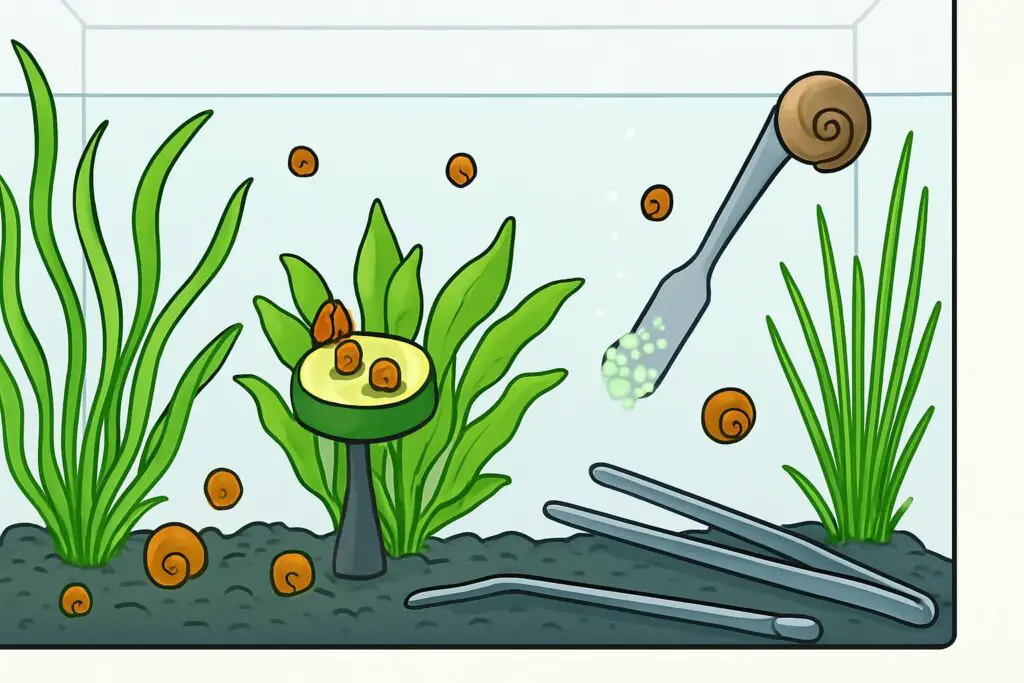
– Night trapping for Malaysian trumpet snails: place a thin slice of blanched zucchini or cucumber on a fork or plant weight after lights out. Lift out with attached snails at dawn. Repeat nightly for a week
– Bottle trap: cut the top off a plastic bottle, invert it as a funnel, and bait with algae wafer or blanched vegetable. Weight it down. Empty and rebait nightly
Record nightly catches to confirm a downward trend. If numbers plateau, add the next method.
Reduce the Food Budget for Snails
Snails thrive on leftovers. Tighten feeding, improve cleaning, and their reproduction slows. Algae wafers and heavy protein foods fuel booms. Dose fertilizers based on plant uptake and avoid letting leaves decay in the tank.
Biological Control With Livestock
– Assassin snails: safe for plants and fish. They hunt pest snails and will also scavenge. Start with 1 to 2 assassins per 10 gallons. They breed slowly and usually do not overrun tanks. Do not use if you want to keep ornamental snails
– Loaches: many loaches eat snails but have strict requirements. Clown loaches need large groups and large tanks above 75 gallons. Yoyo loaches need active setups above 40 gallons. Most loaches dig and can disturb aquascapes. Avoid in nano planted tanks
– Pea puffers: effective snail hunters but nippy and best kept in species-only setups. Sensitive to water quality. Not ideal for community planted tanks
Choose predators only if they fit the tank size, water parameters, and stocking plan long term. Do not add a fish you cannot house properly just to solve snails.
Chemical Control and When to Use It
Use chemicals only if manual and biological methods fail or the tank is overrun. Treat with caution.
– Copper-based snail killers: effective, but copper is dangerous to shrimp and other invertebrates and can linger in silicone and media. Remove shrimp and ornamental snails before treatment. After treatment, complete large water changes and run fresh carbon or Cuprisorb to reduce residual copper
– Non-copper molluscicides: read the label carefully. Many products still harm shrimp or other invertebrates
– Localized seltzer water flush for hardscape: remove rock or decor, submerge in carbonated water for a few minutes, then rinse and return. Do not pour carbonated water into the tank
Any mass die-off can spike ammonia. Siphon bodies promptly, increase aeration, and do extra water changes for several days. Test ammonia and nitrite daily during and after treatment.
Targeted Strategies for Each Snail Type
Bladder and Pond Snails
– Focus on egg removal from glass and plant leaves
– Reduce leftover food and gel food residues
– Lettuce or zucchini traps are very effective
– If numbers persist, add assassin snails
Ramshorn Snails
– Scrape egg discs from hard surfaces every few days
– Bait and trap nightly for one week, then every other night for two more weeks
– Avoid overfeeding algae wafers and protein-rich pellets
– Assassin snails help control medium and large individuals
Malaysian Trumpet Snails
– Night trapping is key since they emerge after dark
– Gently stir the top layer of substrate before lights out to bring them up for trapping
– Improve substrate hygiene with light, frequent vacuuming that avoids destroying rooted plants
– Assassin snails help, but expect a longer timeline due to MTS livebearing
Limpets
– Manual scraping and reduced feeding
– Roughen biofilm control with consistent algae management
– Chemical control is often the only quick fix, but use it only if numbers are severe and you can protect shrimp
Step-by-Step Plans You Can Use
Plan A: Shrimp-Heavy Planted Nano
Goal: Preserve shrimp, remove snails without chemicals.
Day 1 to 7
– Reduce feeding by 30 to 50 percent
– Remove visible eggs daily
– Set vegetable traps nightly and empty at dawn
– Lightly vacuum mulm around hardscape without disturbing plant roots
– Clean prefilter sponge and ensure good flow
Day 8 to 21
– Continue traps every other night
– Trim decaying leaves promptly
– Add 1 assassin snail per 5 to 10 gallons if you do not keep decorative snails
– Track counts on front glass at lights on; aim for a steady decline
Plan B: Community 20 to 40 Gallon
Goal: Quick reduction with balanced methods.
Week 1
– Two nights of heavy bait trapping
– Manual egg removal on glass and hardscape
– Siphon detritus and clean filter sponge
Week 2
– Add 2 to 4 assassin snails depending on tank size
– Tight feeding and shorter light period
Week 3 to 4
– Trap every third night
– Maintain weekly gravel vac and large water change of 30 to 50 percent
Plan C: Severe Infestation With Low-Risk Livestock
Goal: Reset without dismantling the cycle.
– Move any shrimp and ornamental snails to a temporary holding tank
– Use a labeled snail treatment per instructions
– Increase aeration and watch ammonia and nitrite daily
– Siphon dead snails twice a day for 2 to 3 days
– Perform 50 percent water changes on day 2 and day 4
– Run fresh carbon or specific copper removers if you used copper
– Reintroduce invertebrates only after stable parameters and a week of observation
Avoid These Common Mistakes
– Dosing chemicals with shrimp in the tank
– Leaving dead snails to rot and spike ammonia
– Adding loaches to small tanks or single loaches to community setups
– Bleach dipping delicate plants and melting them
– Overfeeding while trapping snails, which cancels progress
– Skipping egg removal; egg clutches repopulate the tank fast
Maintenance Habits That Keep Snails in Check
– Feed accurately: adjust portions so no food hits the substrate
– Weekly trim and remove dying leaves
– Light vacuum under wood and behind stones where mulm collects
– Clean prefilter sponges and maintain strong, steady flow
– Keep light duration reasonable and match to plant demands
– Quarantine and dip new plants and inspect decor
How to Monitor Progress
– Glass count: at lights on, count snails on the front glass within a 12 by 12 cm square. Record daily for two weeks. You want a steady decline
– Trap yield: log how many snails you remove nightly. Numbers should drop after the first week
– Egg watch: fewer new egg clutches on glass and leaves means reproduction is slowing
Frequently Asked Quick Answers
Do pest snails eat healthy plants
Most pest snails focus on algae, biofilm, and decaying leaves. Large ramshorns may nibble tender leaves if food is scarce. If you see leaf damage, increase feeding control and remove decaying plant matter quickly.
Are a few snails bad
No. A small number helps with cleanup. They become a problem when they blanket glass and hardscape or when you see nightly swarms.
Will adding nerites solve pest snails
No. Nerites are excellent algae grazers but do not eat other snails.
Will salt kill snails in a planted tank
Yes, but it also harms many plants and some fish. Do not use salt in planted tanks for snail control.
Can shrimp control pest snails
No. Shrimp may pick at eggs or carrion but will not control a snail population.
Do snail killers harm the filter
The chemicals do not usually harm beneficial bacteria, but dead snails can overload the biofilter. Remove bodies and do extra water changes.
Troubleshooting Stubborn Cases
Eggs Keep Reappearing
Increase frequency of egg scraping and combine with trapping. Inspect underside of leaves, filter intakes, and airline tubing. Eggs can hide in moss and dense carpets; gently swish and siphon debris during water changes.
Malaysian Trumpet Snails Survive Everything
They hide in substrate and are livebearers. Use repeated night traps and moderate substrate stirring before lights out. Keep feeding strict. Add assassin snails for long-term control.
Limpets Ignore Traps
They graze on biofilm and often ignore bait. Manual scraping, improved hygiene, and time reduce numbers. Chemical control is an option only if you can protect sensitive invertebrates.
Advanced Tips That Make a Difference
Focus Trapping Around Feeding Zones
Place traps where fish are fed and where mulm accumulates. Snails follow the food.
Use Two Traps
Run one trap near the front for counts and one near dense plants for removal. Alternate sides every night.
Rotate Foods During Control Period
Switch to smaller pellet sizes that are fully eaten mid-water. Avoid gel foods and wafers until the population drops.
Protect Your Biofilter During Heavy Removal
When removing many snails, increase aeration and avoid deep substrate vacuuming all at once. Stagger maintenance to keep bacteria safe.
Sample Weekly Routine for Long-Term Control
– Sunday: 30 to 50 percent water change, trim plants, siphon debris, clean prefilter sponge
– Tuesday: Egg check and scrape, quick glass clean
– Thursday: Night trap, remove at dawn
– Daily: Feed small portions and observe glass count at lights on
When a Full Reset Makes Sense
Consider a reset if the tank is small, heavily overrun, and has no sensitive livestock. Move fish to a cycled temporary tank with established media. Rinse substrate in dechlorinated water, scald decor, and restart with dipped plants. Seed with mature filter media to preserve the cycle. This is rarely needed if you follow the layered approach above.
Conclusion
Pest snails are a symptom. They reveal extra food, decaying leaves, and missed maintenance. Identification helps you target methods that work. Start with prevention and manual removal, use traps consistently, tighten feeding and cleaning, and add biological control only if it fits your stocking plan. Keep chemicals as a last resort and manage the aftermath carefully. With a clear plan and steady habits, you can keep snails at a small, useful presence and enjoy a healthy planted tank without constant battles.