
We are reader supported. When you purchase through links on our site, we may earn an affiliate commission. Also, as an Amazon affiliate, we earn from qualifying purchases.
Walk into any pet store and you will see filter cartridges packed with activated carbon. Many hobbyists buy it by habit, swap it monthly, and never ask if it is still essential. Modern freshwater filtration has improved a lot in the last decade. Do you actually need activated carbon every day, or is it just a sometimes tool. This guide breaks down what carbon does, what it cannot do, where it shines, and when you can skip it without risking fish health.
Introduction
Activated carbon is popular because it makes water look and smell clean. It adsorbs dissolved organics, yellow tint from tannins, and leftover medications. But biological filtration, pre filters, plants, and regular water changes can achieve stable water quality without constant carbon use. The key is to match the tool to the job. By the end, you will know if carbon fits your system, how to use it correctly, and what to do instead if you choose to run a carbon free setup.
What Activated Carbon Actually Is
How Activated Carbon Works
Activated carbon is a highly porous material with enormous surface area. It removes substances from water through adsorption, which means molecules stick to its surface. The pores range from micro to meso scale, giving it many binding sites for organic compounds and dyes.
Manufacturers start with materials like coconut shell, bituminous coal, or lignite, then heat treat and activate them to open pores. The product can be granular or pelletized. Granular activated carbon is common in aquarium filters because it packs easily and allows water flow through a mesh bag or cartridge.
What Carbon Removes
Activated carbon is best at removing dissolved organic compounds that cause yellow or tea colored water, odors from decaying organics, colorants and many medications after treatment ends. It can also reduce some residual chlorine or chloramine, though aquarists usually rely on a water conditioner for that job during water changes.
What Carbon Does Not Remove Well
Carbon is not a reliable solution for ammonia, nitrite, or nitrate. These are handled by biological filtration and water changes. Carbon also does not meaningfully buffer pH. Some low grade carbons may raise pH slightly due to ash content, but high quality, acid washed carbon is largely inert. It is not a substitute for dechlorinators, biofiltration, or good maintenance.
The Foundation of Modern Freshwater Filtration
Mechanical, Biological, Chemical
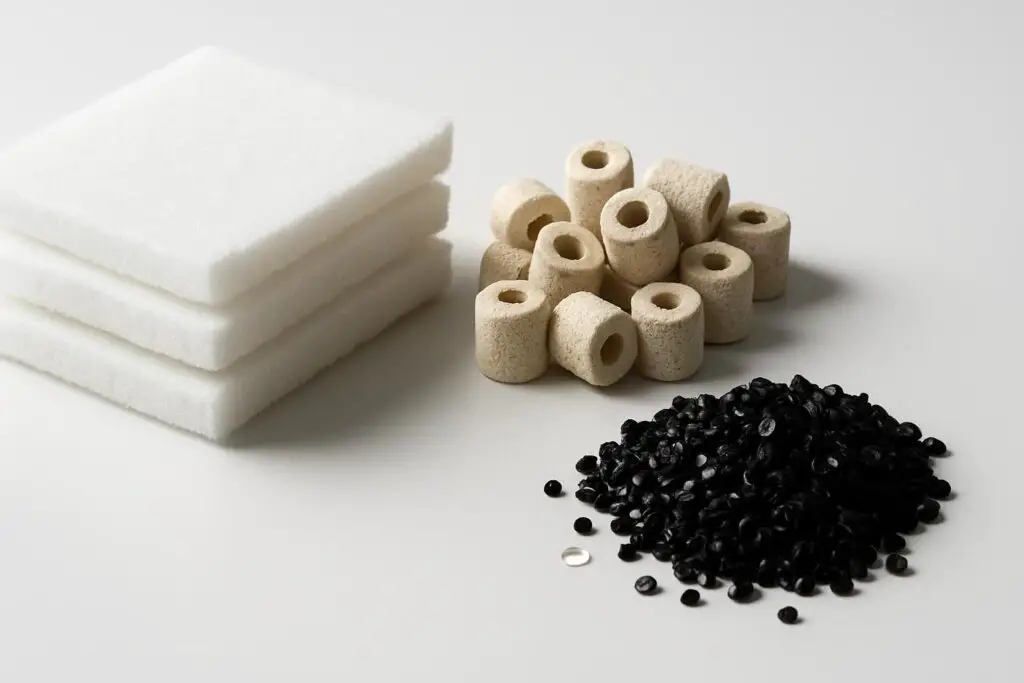
Every aquarium filter should deliver three functions. Mechanical media trap particles so they do not break down in the water. Biological media provide surface area for nitrifying bacteria that convert toxic ammonia to nitrite and then to much safer nitrate. Chemical media target specific dissolved substances. Activated carbon is one type of chemical media among many choices.
Biological Stability Is King
Long term health depends on a mature biofilter and consistent maintenance. If the mechanical and biological sides are strong, many tanks look and smell great without constant carbon use. A stable cycle, proper feeding, and routine water changes keep toxins down more effectively than any chemical media can.
Where Activated Carbon Shines
After Medication
Use carbon to pull out residual medications and dyes once you finish treatment and have carried out a large water change. It helps restore clarity, reduce lingering residues, and protect the biofilter after dosing is complete. Remember to remove carbon before you dose medication or it may adsorb the treatment and reduce effectiveness.
Clearing Discoloration and Odors
If your water has a yellow tint from driftwood tannins or smells earthy from dissolved organics, carbon is fast and effective. It improves clarity in a day or two and keeps the water sparkling for a few weeks. This is helpful in living room display tanks where appearance matters.
Polishing for Events or Photos
Run carbon temporarily to polish the water before guests arrive or before you take photos. Use it for a short window, then remove it and go back to your usual maintenance routine.
When Activated Carbon Is Not Necessary
Stable Cycled Tanks With Routine Water Changes
In a properly stocked, cycled aquarium with decent mechanical filtration and a strong biofilter, weekly or biweekly water changes keep dissolved organics and odors under control. Many experienced aquarists run no carbon for years with no issues.
Planted Tanks Focused on Nutrients
Heavily planted aquariums often skip carbon because it may reduce the availability of some trace elements and organics. Plants, bacterial biofilms, and regular water changes already keep water clear. If you dose fertilizers, skipping constant carbon use helps keep nutrients available to plants.
Blackwater and Shrimp Systems
If you want natural tannins and humic substances in a blackwater setup, carbon works against your goal by actively removing them. Many shrimp keepers also avoid constant carbon to maintain a stable microbiofilm and consistent trace elements.
Downsides, Costs, and Risks
It Exhausts and Becomes Inactive
Carbon fills up. Once saturated, it stops adsorbing. Most hobby setups exhaust carbon in three to four weeks. After that it mostly functions like an inert mechanical or biological medium. It does not reliably leach toxins back into the tank under normal aquarium conditions, but it also no longer provides chemical filtration.
Ongoing Cost and Space Trade Off
Replacing carbon every few weeks costs money and takes up filter space that could hold more biomedia or finer mechanical pads. In small filters, that space can be precious. Many aquarists prefer to invest that space in bio or pre filter upgrades for long term stability.
Dust, Low Grade Additives, and Minor pH Effects
Poorly rinsed carbon releases black fines that cloud water temporarily. Rinse until the rinse water runs clear. Low grade carbons may contain ash or phosphate that can slightly raise pH or contribute nutrients you do not want. Choose acid washed, low ash, phosphate free carbon to avoid these issues.
Medication Interference
Carbon can remove medications while you are dosing, which lowers treatment effectiveness. Always remove carbon before treatment and put it back only after you are done and have performed a large water change.
Alternatives and Complements to Carbon
Stronger Mechanical Filtration
Use layered mechanical media from coarse to fine. A fine polishing pad or filter floss captures small particles that cause haze. Replace or rinse pads regularly. Clear water often starts with better particle removal rather than chemical media.
More Biomedia and Better Flow
Upgrade biomedia to high surface area ceramics or sintered glass and ensure good water contact. Stable nitrification reduces dissolved organics and improves overall water quality. Even flow through the filter prevents dead zones and bypass that allow waste to circulate.
Regular Water Changes and Sensible Feeding
Nothing replaces water changes. Fresh water dilutes nitrate and dissolved organics. Combine that with moderate feeding and routine gravel vacuuming to keep the system clean at its source. Good husbandry makes chemical media optional in many tanks.
Plants as Natural Polishing
Live plants export nutrients, support beneficial microbes, and improve water clarity over time. Fast growers like stem plants help reduce organics while stabilizing the environment.
Synthetic Adsorbent Resins
Synthetic resins can target dissolved organics like carbon does and are often regenerable. They are optional, not required, and useful for specific goals such as very high clarity with reduced ongoing cost. For many beginners, better mechanical and biological filtration plus water changes will do enough.
A Practical Framework to Decide
Start With a Few Questions
Ask yourself these questions and follow the answers to a decision.
Do you see yellow tint or notice odor. If yes, use carbon for two to four weeks to restore clarity, then reassess.
Are you finishing a medication course. If yes, run carbon after a large water change to remove residues.
Is your tank stable, not overstocked, and maintained weekly. If yes, consider skipping constant carbon and rely on mechanical and biological filtration.
Do you run a heavily planted or blackwater setup. If yes, skip carbon or use it only temporarily to avoid stripping beneficial tannins or reducing nutrient availability.
Is budget or filter space tight. If yes, prioritize biomedia and mechanical pads over constant carbon.
Simple Decision Flow
If you need short term polishing or medication cleanup, use carbon temporarily. If your goal is long term stability and you already have clear water and no odor, put the space into better mechanical and biological media and skip carbon.
If You Choose to Run Carbon
Choose the Right Product
Look for acid washed, low ash, phosphate free carbon. Granular or pelletized both work. Coconut shell and bituminous sources are common for aquarium use. Avoid perfumed or treated carbons meant for air filtration.
Placement and Flow
Place carbon after mechanical filtration so trapped debris does not clog its pores. In most hang on back and canister filters, the exact order relative to biomedia is flexible as long as carbon receives steady flow and clean water. Use a fine mesh bag so granules do not escape.
Rinsing and Maintenance
Rinse carbon under tap water until the water runs clear to remove dust. Replace carbon every three to four weeks or when discoloration and odors return. Do not attempt to bake or recharge carbon at home because it is unsafe and ineffective.
During Treatments
Remove carbon before dosing any medication or water clarifier. Return fresh carbon only after treatment is complete and you have done a large water change.
If You Choose Not to Run Carbon
Dial In Mechanical Filtration
Use a pre filter sponge on the intake and layer coarse, medium, and fine pads in the filter. Rinse sponges and pads weekly to prevent debris breakdown. Change fine floss often to maintain high clarity.
Strengthen Biological Filtration
Increase high surface area biomedia and ensure good flow through it. Keep feeding modest to avoid waste spikes. Let the biofilter mature and avoid over cleaning it.
Stay Consistent With Water Changes
Do weekly or biweekly water changes and gravel vacuum the substrate. This controls dissolved organics, nitrate, and odor better than relying on chemical media.
Use Tannins Intentionally
If you want soft tea stained blackwater, add botanicals like leaves or cones and skip carbon so the look stays. Monitor pH and hardness, and keep up with maintenance to prevent organic buildup.
Myths and Clarifications
Carbon and the Nitrogen Cycle
Carbon does not manage the nitrogen cycle. It does not reliably remove ammonia, nitrite, or nitrate. You need biological filtration for that. Carbon may provide extra surface area for bacteria, but that is not its primary role.
Carbon and Plants
Carbon does not remove carbon dioxide or stunt growth directly. It may reduce the availability of some trace elements and organics, which is why many planted tank keepers skip constant use. If you run a planted tank and want to maximize nutrient availability, avoid using carbon all the time.
Leaching Back Into the Water
Under normal aquarium conditions, saturated carbon does not dump absorbed substances back into the water. It simply becomes inactive. Replace it when performance drops.
Carbon and Fish Health
Carbon is safe for fish and invertebrates when used correctly. The main risk is indirect, such as removing medication while dosing or slightly altering parameters with low grade, high ash carbons. Choose quality products and follow maintenance best practices.
Realistic Use Cases
New Hobbyist With Cloudy Water
Before reaching for carbon, check mechanical filtration. Add or replace a fine polishing pad, rinse the filter, reduce feeding, and do a couple of back to back water changes. If clarity still lags due to dissolved organics, run carbon for a few weeks, then remove it once water stays clear.
Showcase Tank Before an Event
Install fresh carbon for one to two weeks before your event. Place it after mechanical media, keep flow high, and replace fine pads as needed. Remove carbon after the event and return to your standard routine.
Post Medication Cleanup
Do a large water change at the end of treatment. Add fresh carbon and run it for one to two weeks to remove residues. Then remove it and continue normal filtration.
Putting It All Together
Short Version for Busy Keepers
Activated carbon is not required for a healthy freshwater tank. It is a situational tool that you can deploy for clarity, odor control, and after medication. In a stable, well maintained aquarium, you can skip carbon and rely on mechanical and biological filtration plus regular water changes.
Conclusion
Activated carbon earned its place in the hobby by delivering fast, visible results. It clears yellow tint, removes odors, and cleans up after treatments. But modern filtration and maintenance make constant carbon use optional, not mandatory. If you value maximum clarity all the time or need to remove specific dissolved compounds, use carbon in short, targeted runs and replace it every three to four weeks. If your tank is stable and clean with good mechanical and biological filtration, feel confident skipping carbon. Choose the tool that matches your goal, and let routine care do the heavy lifting.
FAQ
Q: Is activated carbon necessary in modern freshwater filtration
A: Activated carbon is not required for a healthy freshwater tank, and in a stable, well maintained aquarium you can skip carbon and rely on mechanical and biological filtration plus regular water changes.
Q: What does activated carbon remove and what does it not remove
A: Activated carbon removes dissolved organics, yellow tint from tannins, odors, colorants, and many medications after treatment, but it does not reliably remove ammonia, nitrite, or nitrate.
Q: When should I definitely use activated carbon
A: Use carbon after finishing medication to pull out residues, and use it temporarily to clear discoloration, remove odors, or polish water for events or photos.
Q: How often should I replace activated carbon
A: Replace carbon every three to four weeks or when discoloration and odors return because once saturated it stops adsorbing and becomes inactive.
Q: Where should I place activated carbon in the filter
A: Place carbon after mechanical filtration so trapped debris does not clog its pores, and the exact order relative to biomedia is flexible as long as carbon receives steady flow and clean water.