
We are reader supported. When you purchase through links on our site, we may earn an affiliate commission. Also, as an Amazon affiliate, we earn from qualifying purchases.
Herons and other predators can empty a pond in days if you do nothing. The good news is you can stop losses with a practical plan that is safe, legal, and friendly to wildlife. This guide shows you how to design your pond, add defenses, and build daily habits that keep fish safe. Follow the steps, layer a few tactics, and you will shift the odds in your favor fast.
Introduction
Every yard and every predator is different. That is why a single gadget rarely works for long. The answer is layered protection. You make fish hard to see, hard to reach, and easy to hide. You also make the predator’s approach awkward and unpredictable. Start with the basics you can do today, then add structure and barriers as time and budget allow. If you already lost fish, begin with quick fixes, then lock in a long term plan. Keep reading, pick what fits, and stack defenses.
Understand the Threat
How herons hunt
Herons prefer to stalk in shallow water. They step from a stable edge, wait motionless, then spear fish with a fast strike. They love shelves 10 to 25 cm deep where fish cruise. They avoid deep drop-offs and unstable footing. They visit at dawn, dusk, and on overcast days, and may return for several mornings if they found food once.
Other predators to expect
Raccoons and cats reach from the edge. Mink and otters swim and hunt underwater. Kingfishers and hawks strike from above. Each type tests a different weakness. Build defenses with all of them in mind so you do not fix one gap and open another.
Core Principles of Pond Protection
Make fish hard to see
Predators target what they can see. Cover from plants, shade, and dark refuges breaks line of sight. Reduce reflective open water where fish linger.
Make fish hard to reach
Steep sides, deep water, raised edges, netting, or lines keep beaks and paws out. A barrier that pauses a predator for a few seconds can be enough for fish to escape.
Make approach uncomfortable
Motion sprinklers, unstable edging, and perimeter lines disrupt stalking. Uncertainty deters repeat visits.
Give fish escape routes
Caves, tunnels, and overhangs give instant cover. Fish should never be more than a quick dash away from safety.
Use layered defenses
Combine design, plants, shelters, and active deterrents. Do not rely on one product. Rotate or move devices so predators do not adapt.
Design and Build Defenses Into the Pond
Depth and shelves
Target a deepest point of 75 to 90 cm or more, especially for koi. Avoid broad shallow shelves. If you need plant ledges, keep them narrow, around 15 to 20 cm wide, and place them behind rocks or mesh so fish do not cruise there. Steeper sides reduce wading access. A vertical or near vertical wall for the top 30 cm makes footing unreliable for herons and raccoons.
Hiding structure
Add at least two secure hideouts per square meter in fish zones. Use fish caves, stacked slates, or tunnel tubes that start in open water and exit under a rock or planter. Make entrances 10 to 15 cm tall so adult fish fit but paws do not. Place shelters at different depths so fish can pick a safe temperature and oxygen level.
Planting for cover
Use a mixed canopy. Hardy lilies give shade and cover at the surface. Aim for 50 to 70 percent surface coverage in summer. Add floating plants where allowed. Use emergent and marginal plants to break up sight lines along the edge. Group tall marginals so they form light overhangs. Avoid planting a neat open shelf that becomes a hunting lane.
Edging and overhangs
A raised lip of 10 to 20 cm above water level blocks easy steps in. Overhanging coping stones make footing tricky and put the strike zone out of reach. If you have soft ground, add a narrow gravel trench or loose river rocks along the edge so it shifts under weight. Unstable footing discourages stalking.
Physical Barriers That Work
Pond netting
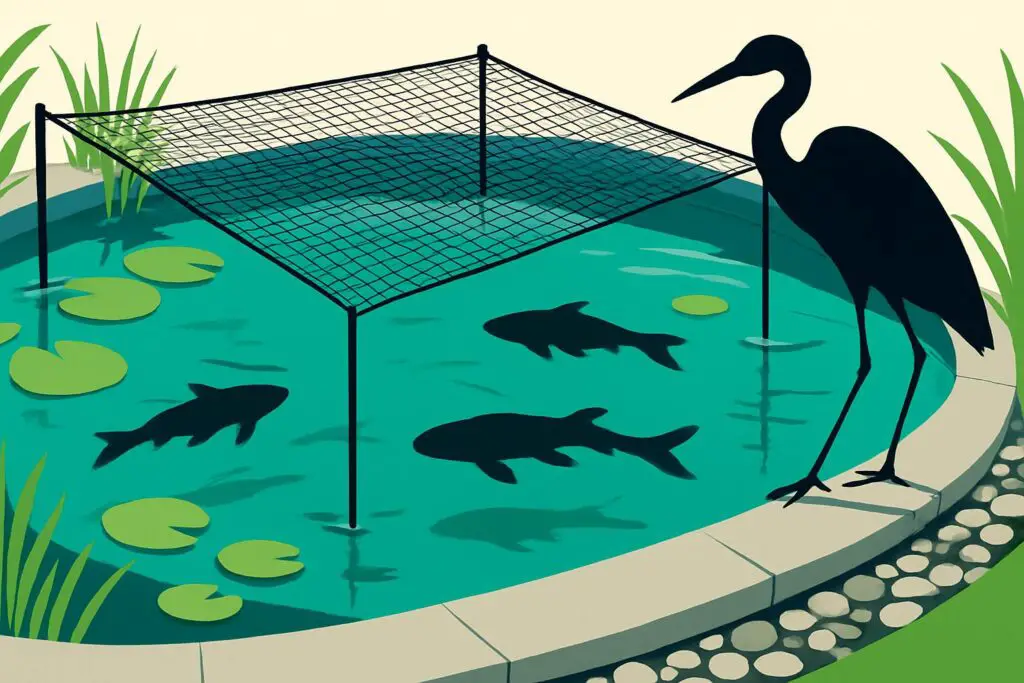
Netting is the most reliable protection when installed right. Choose a strong, UV stable net with mesh no larger than 2 to 4 cm. Stretch it tight on a frame or pegs so it sits above the water, not on it. A taut net stops beaks and keeps fish from tangling. Use support poles to avoid sag. Remove leaves to prevent collapse. In regions with snow, switch to a rigid frame in winter or remove netting before heavy snowfall to avoid damage.
Pond wires and overhead grid
Clear nylon line or black cord in a crisscross grid deters landing and wading. For the edge, run one or two perimeter lines 10 to 20 cm above the ground, 10 to 20 cm back from the water. Add a second row 5 to 10 cm higher if raccoons are common. Across the pond, run lines 30 to 60 cm above the surface in a 30 to 50 cm grid. Space lines tighter for small ponds. Keep knots outside the water and check tension monthly. This setup is discreet and still blocks the glide path of herons and hawks.
Shade sails and pergolas
Partial overhead cover stops aerial hunters and breaks sight lines. A simple pergola, lattice, or shade sail over key zones works well. Aim to cover 30 to 60 percent of the surface, more if birds of prey are common. Leave enough open area for gas exchange and viewing. Combine with lilies for a natural mix of shade and open water.
Fish shelters and floating islands
Place rock caves, ceramic arches, or PVC tunnels on the bottom near feeding spots. Add a floating island with trailing roots to form an instant refuge. Anchor it so wind does not push it to one side. Check shelters after big storms to be sure they did not shift.
Motion and Sensory Deterrents
Motion activated sprinklers
These devices detect movement and shoot a short burst of water. They are effective on herons, raccoons, and cats. Position the sensor to cover the approach path and set it to medium sensitivity to avoid false triggers. Angle the spray across the bank, not into the pond. Use at least two units for larger ponds and stagger them to cover blind spots. In winter, drain and store them to avoid freeze damage.
Lights and alarms
A motion light can startle a night visitor. Do not leave bright lights on all night, since fish rest better with a natural cycle. Use warm white or amber motion lights aimed at the bank. Place units so they do not shine into neighbors windows.
Decoys and visual aids
Heron decoys can help in early season if moved often. They lose effect fast if left in one place. Owl or hawk decoys have limited value. Reflective tape and spinning spinners also fade in effect once predators learn the pattern. Use these only as part of a mix and relocate them weekly.
Ultrasonic devices
Evidence for ultrasonic deterrents is mixed. Some users report short term relief, others see no change. If you try one, combine it with physical barriers and motion sprinklers rather than relying on it alone.
Routine Habits That Reduce Risk
Feeding discipline
Feed at set times, ideally midday when herons are less active. Feed small amounts that fish finish within a few minutes. Do not feed at dawn or dusk if predators are visiting. Avoid hand feeding at the edge. Use a feeding ring away from the shore so fish do not learn to cruise the bank.
Daily checks and simple monitoring
Look for tracks, droppings, or trampled plants each morning. A simple battery camera aimed at the approach path confirms what is visiting and when. Once you know the pattern, you can place sprinklers and lines with precision.
Seasonal tactics
Spring and autumn migration bring more herons. Step up deterrents during these weeks. In winter, keep a hole in the ice for gas exchange but avoid large open, shallow areas that invite wading. In summer, add shade and plants to limit clear open zones.
Manage water clarity with balance
Crystal clear water helps viewing but can expose fish in open zones. Use plant cover and structures to break sight lines so you keep clarity without offering a clear target. Pond dyes can reduce visibility, but use only products labeled safe for fish and plants and follow the label exactly.
Predator Specific Tactics
For herons
Focus on depth, steep sides, and an overhead grid. Add a motion sprinkler at the main approach point. Keep narrow plant shelves or shield them with rocks or mesh so fish do not use them as highways. Use lilies and shade to cut sight lines. If a heron lands on a roof or fence to scout, move deterrents weekly so the approach is never the same.
For raccoons and cats
Make the bank unstable and the water edge steep. A raised lip or vertical wall at the perimeter stops easy reach. Use a perimeter line 10 to 20 cm high and a motion sprinkler. Store fish food indoors to avoid attracting scavengers.
For mink and otters
These hunters are agile and persistent. Use strong netting or a rigid frame cover if they are present in your area. A secure fence with buried skirt around a wildlife corridor helps. If you see repeated signs of mink or otter, consider a full seasonal enclosure until activity drops. Always follow local wildlife rules.
For birds of prey and kingfishers
Add overhead lines, a pergola, and lilies. Reduce long, bright open lanes. Keep fish shelters near the middle so fish can dive into cover fast.
If You Just Suffered a Loss
Stabilize the situation in 24 hours
Stop feeding for a day or two so fish do not gather near the surface. Install a temporary net or line grid immediately. Add at least one large fish cave or a floating island. Place a motion sprinkler at the main approach path. Check water quality so stressed fish recover well.
Investigate and upgrade
Review tracks and camera clips to confirm the predator. Adjust depth and shelves if needed. Plan a permanent barrier that fits your space, like a framed net, pergola with lines, or a raised edge remodel. Use plants and shelters to add instant cover while you build long term fixes.
Common Mistakes to Avoid
Leaving a wide shallow shelf that invites wading. Relying on one gadget and never moving it. Letting netting sag onto the water. Feeding at dawn or dusk during active visits. Keeping all viewing areas open and bright with no cover. Skipping maintenance on lines, frames, and sprinklers. Forgetting winter adjustments that remove key defenses.
Budget Friendly Step by Step Plans
Quick plan under 1 hour
Run one perimeter line 15 cm high and 15 cm back from the edge. Add a second line 5 to 10 cm higher if raccoons are common. Place one motion sprinkler at the primary approach path. Drop in a floating island or a large planter on bricks to create instant refuge. Stop feeding at risky hours. This quick stack reduces losses fast.
Weekend upgrade plan
Build a simple PVC or wood frame and stretch a UV stable net with 2 to 4 cm mesh. Add support poles so the net sits 10 to 20 cm above the water. Install lilies or floating plants to bring surface cover to 50 to 70 percent. Add two to three bottom caves and a midwater arch. Run an overhead line grid at 40 cm height with 40 cm spacing. Set two motion sprinklers to cover both approach paths. This balances strong physical defense with good viewing.
New pond build checklist
Plan for a deepest point of 75 to 90 cm or more. Keep plant shelves narrow and shielded. Design a raised edge or vertical wall for the top 30 cm. Pre install anchor points for net frames and overhead lines. Build in at least four permanent shelters in different zones. Route power or hose access for future sprinklers and lights. Choose plant zones that create layered cover. This puts protection in from day one.
Maintenance and Review
Monthly checks
Retension lines and repair knots. Inspect net frames, poles, and pegs. Clean motion sensor lenses and reset angles after storms. Trim plants so they give cover without trapping debris.
Seasonal refresh
Move decoys and shift sprinkler positions. Change grid spacing in late spring when birds are active. Swap to rigid covers if heavy snow is expected. Thin lilies so 30 to 50 percent of the surface stays open for gas exchange while keeping good shade.
Fish health focus
Stress from predation attempts can weaken fish. Keep water quality steady with regular testing for ammonia, nitrite, nitrate, pH, KH, and temperature. Do partial water changes as needed. Feed a balanced diet on a schedule that avoids risky hours. Healthy fish react faster and recover better after scares.
Realistic Expectations
No deterrent works forever if used alone. Predators learn. That is normal. Your job is to make your pond the hardest buffet on the block. When the approach is awkward, the view is broken, and a spray or barrier interrupts the stalk, most predators move on. Layer tactics, rotate positions, and keep edges steep and covered. This approach keeps fish safe long term.
Conclusion
Protecting pond fish from herons and predators is achievable with a clear, layered plan. Shape the pond to remove easy hunting shelves. Add solid shelters and plant cover. Use netting, lines, and overhead structures to block access. Back them up with motion sprinklers and smart lighting. Keep steady habits with feeding and inspection. Start with quick fixes today, then build in permanent defenses that fit your space. With these steps, your fish stay safe and you keep the peaceful pond you set out to enjoy.
FAQ
Q: What is the single most effective way to stop herons from taking pond fish
A: A taut, UV stable pond net on a raised frame is the most reliable physical barrier. Combine it with motion sprinklers and plant cover for a layered defense.
Q: How deep should my pond be to deter herons
A: Aim for a deepest point of 75 to 90 cm or more, with steep or vertical sides for the top 30 cm and narrow plant shelves.
Q: Do motion activated sprinklers really work
A: Yes, when placed on the main approach paths and set to medium sensitivity. Use at least two for larger ponds and move them occasionally so predators do not adapt.
Q: Are decoys enough to protect my fish
A: No. Decoys can help briefly if moved often, but they lose effect. Use them only as part of a layered plan with barriers, cover, and motion deterrents.
Q: What should I do right after a predator attack
A: Stop feeding for a day or two, add a temporary net or line grid, place at least one large fish cave or floating island, set a motion sprinkler, and then plan a permanent upgrade.