
We are reader supported. When you purchase through links on our site, we may earn an affiliate commission. Also, as an Amazon affiliate, we earn from qualifying purchases.
A noisy air pump can make a calm tank feel like a machine room. The good news is that most air pump noise has simple causes and simple fixes. In this guide, you will learn how to diagnose the exact source of the sound and apply targeted solutions that work. You will also see how to set up, maintain, and upgrade your gear so the aquarium stays aerated and your home stays quiet.
Introduction
Air pumps make noise for a few main reasons. Vibration resonates through hard surfaces. Backpressure forces the pump to work harder. Bubbles and splashes are louder than they need to be. Worn parts rattle and hum. The result is a constant buzz, rattle, hiss, or gurgle that travels through furniture and rooms.
The fix begins with identification. Once you know whether the sound is vibration, airflow, water noise, or wear, you can address the root cause. This step-by-step process keeps things simple for beginners and effective for experienced keepers.
Find the noise type first
Quick diagnostic steps
1. Lift the running pump off its surface by hand. If the noise drops, you have vibration and resonance.
2. Disconnect the airstone temporarily. If the noise drops and flow increases, you have backpressure or a clogged airstone.
3. Hold the airline away from glass and wood. If the buzz fades, the tube is transmitting vibration to a hard surface.
4. Watch and listen at the tank. If you hear splashing or crackling, the noise is water movement or large bubbles breaking.
5. Touch the pump housing. If it is hot and the hum is harsh, the pump is fighting resistance or needs maintenance.
What each sound usually means
Buzz through furniture means vibration and contact with hard surfaces. Hiss at the line means high airflow or a valve whistling. Rattle or ticking means loose screws or worn diaphragms. Gurgle or slosh means bubbles are too large or outlets are too close to the surface. A droning hum that changes with airline routing means resonance in the cabinet or stand.
Fix vibration at the source
Place the pump correctly
Move the pump off the aquarium lid and off thin shelves that act like a soundboard. Place it on a stable surface that does not touch the tank or cabinet walls. Keep the pump above the water line with a check valve in the airline for safety. Distance from glass and wood reduces transmitted vibration.
Decouple and damp
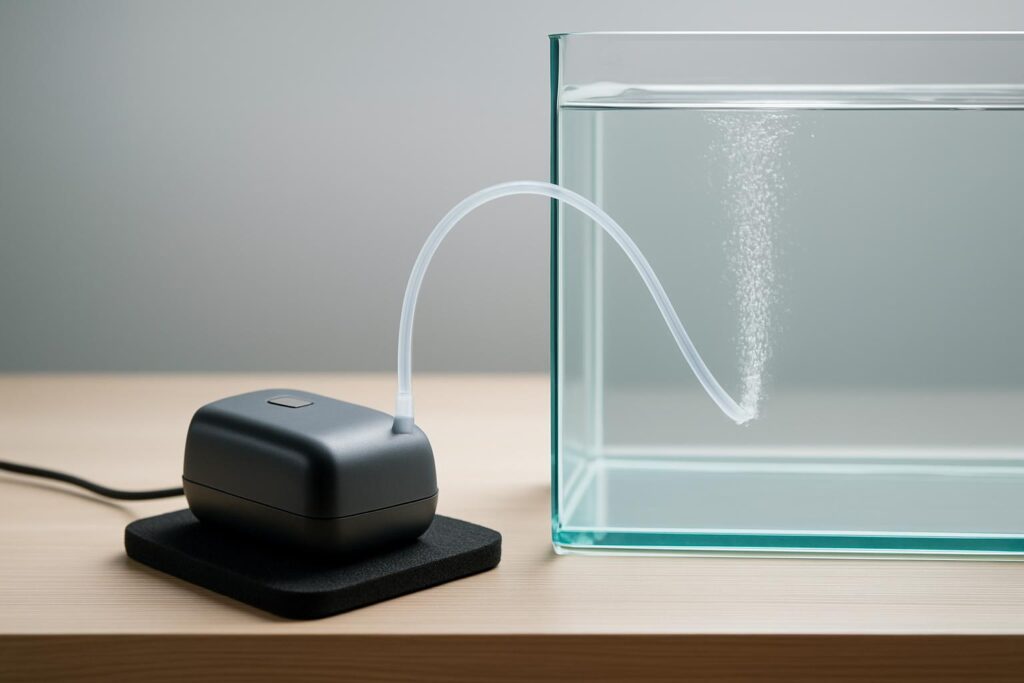
Put the pump on a soft pad. A mouse pad, yoga mat, cork tile, dense foam, or sorbothane feet all work. The goal is to break the rigid link between the pump and the furniture. If your pump has hard plastic feet, add rubber feet or a pad under all corners. A pad that is too thin or too hard will not help. Use a pad thick and soft enough to compress slightly under the pump.
Make sure the airline itself does not touch glass, walls, or the stand. Suspend it or use adhesive clips to keep it floating free. A loose airline that taps the stand will create a buzz even if the pump is isolated.
Isolate the cabinet or stand
If your pump is inside a cabinet, the box can amplify noise. Line the shelf under the pump with a soft mat. Add thin acoustic foam to cabinet walls, but do not block airflow. Leave vents or gaps for cooling. Put rubber washers under screws that attach shelves to the cabinet frame. The goal is to stop vibration from spreading into large panels that resonate.
Reduce backpressure and airflow turbulence
Match output to needs
An over-restricted pump gets loud because it works against resistance. Use a pump that can move the air your setup needs without strain. If your pump has adjustable flow, turn it down until you get steady, fine bubbles and quiet operation. If it does not, use an in-line valve to control flow while avoiding too much restriction.
Bleed excess air safely
If you have more air than you need or a pump without fine control, add a gang valve or T connector and vent a small amount of air back to the room. Put a short piece of airline on the vent port with a small airstone to muffle hiss. This reduces backpressure, cuts noise, and protects the pump.
Keep airstones and filters clean
Clogged airstones and sponge filter intakes create resistance. Soak ceramic or silica airstones in a mild peroxide or bleach solution, rinse well, and air dry before reuse. Replace cheap stones instead of fighting long cleanings. Rinse sponge filters in old tank water to remove debris without killing beneficial bacteria. Clear uplift tubes of algae and biofilm. A clean pathway lowers pressure and noise.
Shorten and tidy airline routing
Long runs of airline add friction. Use the shortest path that avoids tight kinks. Replace stiff or cracked tubing. Keep gentle curves, not sharp bends. Avoid pinch points under doors or equipment. Smooth airflow is quieter and reduces load on the pump.
Quiet the bubbles and splashes
Adjust bubble size and depth
Large bubbles are loud when they break the surface. Use a finer airstone to create smaller bubbles. Place the airstone deep enough so bubbles have time to break up, but not so deep that backpressure spikes. Aim for consistent, fine bubbling that looks like champagne rather than large bursts.
Tame sponge filters and outflows
If a sponge filter crackles, the outlet may be above the surface or too close to it. Extend the uplift tube so water exits below the surface and away from the glass. Add a small piece of sponge over the outlet to diffuse splashes. Level the filter so air does not burp in bursts. Avoid letting the uplift tube touch the lid or rim.
Maintain and repair the pump
Replace diaphragms and valves
Most small aquarium air pumps use diaphragms that wear and harden. As they age, noise increases and airflow drops. Many models have inexpensive rebuild kits with diaphragms and check valves. Opening the case is simple on most pumps. Unplug the pump, remove screws, replace parts, and reassemble. After replacement, the pump often runs cooler and quieter.
Clean intake filters
Dust on the intake screen makes the pump work harder and whine. Vacuum or brush the intake regularly. Keep the pump off carpet and away from litter or dust sources. Simple cleaning extends lifespan and reduces noise.
Manage heat and ventilation
Heat increases noise because rubber parts soften and strain. Do not wrap the pump in cloth or seal it in a box. If you use a cabinet, add vents so warm air escapes. If the pump feels hot during normal use, lower backpressure by cleaning airstones, shortening airlines, or venting excess air.
When to retire the pump
If the pump rattles even after a rebuild, or if the case vibrates with a metallic buzz, bearings or internal weights may be worn. Replace the pump with a quieter model rather than chasing minor fixes.
Choosing a quieter air pump
Diaphragm, piston, or DC
Small diaphragm pumps are common and affordable. They can be quiet when mounted well and not over-restricted. Piston pumps move more air but are usually louder and are better for large fish rooms. DC brushless pumps with adjustable controllers are often the quietest at low to medium flows because you can dial them in precisely. Choose based on tank size, number of devices, and need for control.
Size up slightly and run slower
A pump with a bit of headroom run at a lower setting is often quieter than a small pump at full load. Extra capacity lets you reduce speed and backpressure. Do not overshoot by a large margin. You want smooth control, not wasted airflow.
Features that matter
Look for soft rubber feet, a solid heavy base, adjustable flow, a quiet intake path, and a known supply of replacement diaphragms. If a model lists noise levels in decibels, compare those across similar flow rates. Reviews that mention resonance or rattling at certain speeds can guide your choice.
Night mode strategies
Timer scheduling
Use a timer to reduce air flow at night if your setup allows. For example, keep a sponge filter running but lower the air to fine bubbles. Do not shut off all aeration overnight in stocked tanks. Gentle but continuous aeration is safer than cycles of on and off in tanks with limited surface agitation.
Redundant aeration for safety
Run two smaller air sources instead of one loud source. At night, lower one source and keep the other steady. Redundancy protects fish if one line clogs and lets you balance noise and oxygen supply.
Safety and placement essentials
Keep the pump above the water line to prevent back siphon. If the pump must sit below the water line, install a check valve in the airline with the arrow pointing toward the aquarium. Always create a drip loop in the power cord. Keep the pump on a ventilated surface, away from splashes, and not stacked under heavy equipment. Secure airlines so they cannot be pulled accidentally.
Step by step checklist
1. Identify the noise
Listen for vibration, airflow hiss, water splash, or rattle. Use the quick diagnostic steps. Note any change when lifting the pump, disconnecting the airstone, or moving the airline.
2. Place and isolate
Move the pump to a stable, ventilated shelf above the water line. Put it on a soft pad. Ensure the airline does not touch glass or wood. Add rubber feet if needed.
3. Reduce resistance
Clean or replace airstones. Rinse sponge filters. Shorten airlines and remove kinks. Vent excess air using a gang valve and muffle the vent with a small airstone.
4. Quiet the water
Use fine airstones. Adjust depth to balance bubble size and pressure. Extend or angle outlets to avoid splashing. Add a small sponge baffle if needed.
5. Maintain the pump
Clean the intake. Replace diaphragms and internal check valves if performance drops or noise rises. Ensure screws are snug but not overtightened.
6. Evaluate upgrades
If noise persists, consider a DC adjustable pump with soft feet. Size up slightly so you can run slower. Choose models with available rebuild kits.
Practical examples
Single nano tank with airstone
Place a small adjustable diaphragm pump on a mouse pad on a shelf above the tank. Use a short airline with one check valve. Install a fine airstone deep enough for small bubbles. Turn flow down until bubbling is steady and quiet. Clean or replace the stone monthly.
Medium tank with sponge filter
Mount a mid-size pump on cork. Clip the airline so it hangs free. Extend the sponge filter uplift so the outlet stays below the surface. Rinse the sponge every water change. Use a T and valve to bleed excess air if the pump hums or runs warm. Add a small vent airstone to reduce hiss.
Cabinet setup with multiple devices
Install the pump on a dense foam pad inside the cabinet. Add small vent holes to the cabinet back. Use a gang valve to balance lines to two sponge filters and one decor bubbler. Replace stiff lines with new silicone tubing. Line the cabinet sides near the pump with thin acoustic foam, leaving the intake clear.
Common mistakes to avoid
Clamping the pump in place
Do not clamp or tape the pump rigidly to furniture. Rigid mounting increases resonance. Let the pad and soft feet do the work.
Overrestricting airflow
Do not close valves too much to force small bubbles. Clean the airstone or use a finer one rather than choking the pump.
Blocking ventilation
Do not enclose the pump without vents. Heat raises noise and shortens life.
Ignoring worn parts
If noise creeps up over months, inspect diaphragms and internal valves. Small parts wear and are meant to be replaced.
Conclusion
Quieting an aquarium air pump is a process you can complete in minutes. Isolate the pump from hard surfaces. Reduce backpressure by cleaning pathways and venting excess air. Tidy the airline and quiet water movement at the outlet. Maintain the pump with clean intakes and new diaphragms when needed. If all else fails, choose a slightly larger, adjustable model with soft feet and run it at a lower setting. Done together, these steps deliver the same oxygen your fish need without the constant noise you do not want.
FAQ
Q: What is the fastest way to cut air pump vibration noise
A: Place the pump on a soft pad and move it off hard surfaces, add rubber feet or a foam mat, and make sure no airline or the pump touches tank glass or cabinet walls.
Q: How do I know if backpressure is the reason my pump is loud
A: The pump feels warm, the tone is a harsh buzz, bubbles are weak, and the noise drops when you remove the airstone; fix it by cleaning or replacing the airstone and bleeding excess air with a gang valve.
Q: Where should I place an air pump for both quiet and safety
A: Above the water line with a check valve in the airline, on a soft pad, away from the tank glass and cabinet walls, and in a ventilated spot.
Q: What maintenance lowers air pump noise over time
A: Clean or replace clogged airstones, replace worn diaphragms and check valves, vacuum dust from the intake, and keep airlines short and untangled.
Q: Is a bigger air pump quieter
A: Often yes if it has adjustable flow because you can run it slower with less backpressure, but do not overshoot airflow beyond what your tank needs.