
We are reader supported. When you purchase through links on our site, we may earn an affiliate commission. Also, as an Amazon affiliate, we earn from qualifying purchases.
Black beard algae can turn a beautiful aquascape into a tired mess. The good news is that you can remove it and stop it from coming back. This guide gives you a clear, step by step plan that works in real tanks. Follow it in order, keep changes consistent, and you will see black beard algae fade, turn pink or white, and then disappear.
Introduction
Black beard algae, also called BBA, shows up as dark, fuzzy tufts on plant edges, rocks, wood, and even filter pipes. It thrives in planted tanks where light is strong but CO2 and flow are unstable. Many hobbyists try to starve it by cutting nutrients, but that often hurts plants and makes the algae worse. The winning plan is simple. Stabilize CO2 and flow, control light, keep nutrients steady, remove what you can by hand, then spot treat the rest. Add the right cleanup crew to finish the job. Keep reading and apply each step. Do not skip ahead.
What Black Beard Algae Is and Why It Spreads
BBA is a type of red algae that looks black or dark gray in freshwater tanks. It grips hard to surfaces. On leaves, it starts on slow growers and edges where flow is weak. It spreads when plants are stressed by unstable CO2, poor circulation, heavy light, and buildup of organics from overfeeding or dirty filters.
The main driver is instability. Sudden changes in CO2, big swings in light, or inconsistent maintenance all give BBA a foothold. Fix the root causes, then remove the algae you see. If you only remove what you see but leave the cause, it comes back.
Quick Diagnosis Checklist
Appearance. Short, dark tufts that look like a beard. Turns pink or white after successful treatment.
Common triggers. Strong light, inconsistent CO2, weak flow, dirty filter, lots of leftover food, new tank instability.
Where it grows. Plant edges, slow growers like Anubias and Bucephalandra, wood, rocks, filter outlets, heater guards.
Step 1: Stabilize CO2
Targets for a planted tank
Aim for stable CO2 during the entire photoperiod. Most planted tanks do well with about 20 to 30 ppm. Stability matters more than chasing an exact number.
How to hit stable CO2
Start CO2 1 to 2 hours before lights on so the level is ready when light starts. Keep the same bubble rate every day. Do not change it often. Watch plant response. Healthy plants will pearl and show steady growth after a few days of stable CO2.
If you track pH, aim for about a 1.0 pH drop from the degassed baseline by the time lights come on. Hold that drop steady during the entire photoperiod. Keep surface movement gentle. You want gas exchange, not aggressive turbulence that drives off CO2.
Safety for fish and shrimp
Increase CO2 slowly over several days. Watch fish at lights on and mid photoperiod. Gasping at the surface means CO2 is too high or surface agitation is too low. Make small adjustments and wait a day to reassess.
Step 2: Fix Flow and Filtration
Flow goals
Good flow moves CO2 and nutrients to every leaf. You want all leaves to sway gently, with no dead spots. Point your filter outlet or add a small powerhead to push water across the front glass and back through plants. Keep a soft ripple at the surface for oxygen and stability.
Filter care
Rinse filter media in old tank water when flow drops or about once a month. Do not overclean. Keep sponges and bio media healthy. A clogged filter raises organics and weakens flow, both of which help BBA.
Step 3: Tame the Light
Photoperiod
Set the photoperiod to 6 hours for the next 2 to 3 weeks while you fix CO2 and flow. After the algae recedes and plants grow strongly, increase to 7 to 8 hours if needed. Keep a strict schedule.
Intensity
Lower intensity to a moderate level. Dim the light to around 50 to 60 percent, raise the fixture, or add floating plants for shade. Strong light without stable CO2 is the fastest path to BBA.
Step 4: Keep Nutrients Consistent
Healthy plants resist algae. Dose a complete fertilizer on a steady routine. Do not starve the tank. Plants need macros and micros to repair damaged tissue. Keep weekly water changes at 30 to 50 percent to reset the system and remove excess organics. Feed fish lightly and remove leftovers.
Step 5: Manual Removal and Deep Clean
Trim and prune
Cut off leaves that are covered in BBA. Plants use energy to maintain leaves. If a leaf is overrun, trimming is faster and cleaner. New growth will be algae free once the tank is balanced.
Hardscape cleaning
Remove rocks, wood, and equipment if possible. Scrub with a brush under running water. For stubborn patches outside the tank, pour boiling water over rocks or soak in a mild bleach mix, then rinse and dechlorinate well. Let items dry before returning them.
Siphon and housekeeping
During water changes, siphon debris from the substrate and around hardscape. Remove loose tufts and dead algae. Clean filter intake sponges. The less decaying matter in the tank, the fewer nutrients for algae.
Step 6: Targeted Treatments That Work
Hydrogen peroxide spot treatment
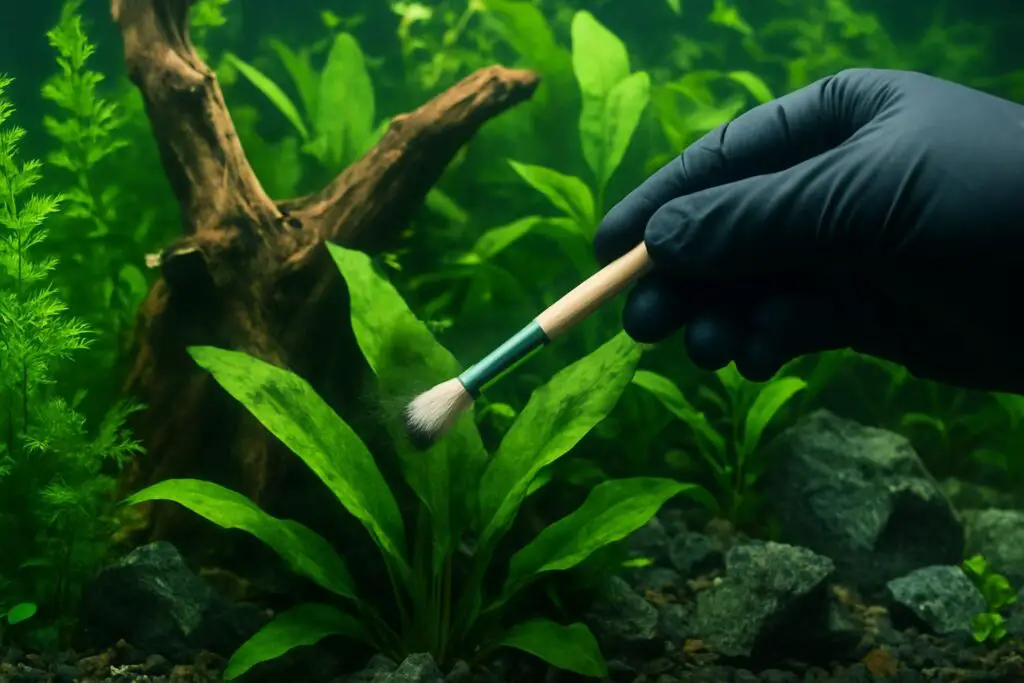
Hydrogen peroxide at 3 percent can weaken BBA so your crew and plants can finish it. Turn off the filter and powerheads. Use a syringe to slowly apply peroxide directly onto the algae, as close as you can without blasting plants. Limit the total amount to about 1 milliliter per 5 liters of tank water per session. Wait 10 minutes, then restore flow. Over the next days, treated BBA will turn pink or white. Gently brush or siphon it out during water changes.
Peroxide can stress shrimp, sensitive fish, mosses, and liverworts. Keep doses conservative and avoid direct contact with delicate plants.
Liquid carbon spot treatment
Liquid carbon products based on glutaraldehyde are effective on BBA when used carefully. Turn off the filter, apply with a syringe directly onto the algae, and stay within the maximum daily dose on the product label. Wait 10 to 15 minutes before restoring flow. Avoid contact with mosses and liverworts, which can be damaged.
Bleach dips and outside tank methods
For rocks, equipment, and some hardy plants outside the tank, use a bleach dip of 1 part unscented bleach to 20 parts water for 2 to 3 minutes, then rinse and soak in dechlorinated water until all bleach smell is gone. Do not dip mosses or liverworts. Many delicate plants do not tolerate bleach. When in doubt, scrub and rinse instead. Boiling water pours are safe for rocks and can be enough to kill BBA.
Step 7: Algae Eaters as Helpers
Use algae eaters to clean up weakened or dying BBA. Do not rely on them to fix the root cause.
Siamese algae eaters are known to eat BBA, especially when it has turned pink or white after treatment. Keep a suitable group only if your tank size and stocking plan allow it.
Amano shrimp are excellent cleaners. They often ignore live BBA but will pick at it after you weaken it with peroxide or liquid carbon.
Nerite snails and many common algae eaters do not target BBA. Some fish like Florida flagfish may nibble but can nip plants. Choose livestock that suits your tank and do not overcrowd.
Low Tech Tanks Without CO2
You can beat BBA without injected CO2. Focus on stability and light control. Set a short, strict photoperiod of 6 hours and use moderate to low intensity. Improve flow with a small powerhead if needed. Keep the filter clean and perform weekly water changes. Dose a complete fertilizer lightly but consistently. Spot treat BBA with conservative doses of peroxide or liquid carbon, then add Amano shrimp or a suitable algae eater to finish the job.
Aftercare and Prevention
Once BBA begins to fade, keep your routine steady. Stay with weekly water changes of 30 to 50 percent. Dose fertilizer on schedule. Keep the same CO2 start time and bubble rate. Clean the filter before flow drops. Feed less rather than more.
Quarantine and pre treat new plants and hardscape. A quick scrub and a mild peroxide rinse, followed by a thorough dechlorinated rinse, helps prevent hitchhikers. Place new items where flow is good and light is not excessive.
Timeline and Signs of Success
You should see early signs within 7 to 10 days after stabilizing CO2, improving flow, and reducing light. Spot treated patches will turn pink or white. Amano shrimp and Siamese algae eaters will begin to pick at the dying tufts. Over 2 to 4 weeks, new plant growth should appear clean, older leaves will look better, and hardscape will stay clear after cleanings.
If you see no change after two weeks, reassess CO2 timing and stability, reduce light further, and clean the filter. Stay patient and make small, steady adjustments.
Common Mistakes to Avoid
Starving nutrients. Cutting fertilizers harms plants and helps algae. Keep a consistent, complete dosing plan.
Chasing quick fixes. Spot treatments help, but without stable CO2, proper flow, and controlled light, BBA returns.
Overdosing treatments. Too much peroxide or liquid carbon can damage livestock and plants. Stay conservative and targeted.
Neglecting maintenance. Dirty filters, leftover food, and decaying leaves fuel algae. Keep a clean routine.
Big swings. Frequent changes to CO2 or light create instability. Make one change at a time and hold it steady.
Putting It All Together: A Simple Weekly Plan
Daily. Keep CO2 start time fixed. Watch fish behavior and plant response. Keep photoperiod at 6 hours until algae recedes.
Twice per week. Dose a complete fertilizer. Check that leaves sway gently and adjust flow if you see dead spots.
Weekly. Do a 30 to 50 percent water change. Trim affected leaves. Siphon debris and remove dead algae. Clean the glass and brush equipment. Spot treat small remaining patches with peroxide or liquid carbon, within safe limits.
Monthly. Rinse filter media in old tank water. Check and clean the filter intake and pipes. Review light intensity and consider a small increase only after several weeks of clean growth.
Conclusion
Black beard algae is a symptom of imbalance, not a life sentence for your aquascape. Stabilize CO2, improve flow, and dial back light. Keep nutrients and maintenance consistent. Remove what you can, spot treat the rest, and let the right cleanup crew finish the job. Follow the steps, resist the urge to make big swings, and your tank will recover. As BBA turns pink or white and disappears, new plant growth will come in clean and strong. Stay steady and you will win.
FAQ
Q: What kills black beard algae fastest in a planted tank
A: Stabilize CO2 and flow, reduce light to 6 hours, then spot treat with hydrogen peroxide or liquid carbon within safe limits. This combination weakens BBA quickly and lets livestock clean up the rest.
Q: Will reducing light alone remove black beard algae
A: Reducing light helps, but it will not solve BBA without stable CO2, good flow, and consistent nutrients. Light control is one part of the full plan.
Q: Is hydrogen peroxide safe for shrimp and plants
A: Yes when used carefully. Turn off flow, spot apply 3 percent peroxide, and limit to about 1 milliliter per 5 liters of tank water per session. Avoid direct contact with mosses and liverworts, and restore flow after 10 minutes.
Q: Do algae eaters remove black beard algae
A: Siamese algae eaters and Amano shrimp help most after you weaken BBA with spot treatments. They are helpers, not a full solution, and you still need to fix CO2, flow, and light.
Q: How long until I see results
A: Expect signs within 7 to 10 days. Treated BBA turns pink or white, and cleanup crews pick at it. Over 2 to 4 weeks, new growth should be clean and old patches will fade.