
We are reader supported. When you purchase through links on our site, we may earn an affiliate commission. Also, as an Amazon affiliate, we earn from qualifying purchases.
Blanket weed turns a clear pond into a tangled mess fast. It wraps around pumps, chokes lilies, traps debris, and starves the water of oxygen. You want it gone now, without risking fish, frogs, or plants. This guide gives you a fast, safe plan used by pond professionals. You will see quick wins in 24 to 72 hours and long-term stability in the following weeks. Follow the steps in order. Do not skip the prevention phase, or the weed will return.
Introduction
Blanket weed, also called filamentous algae, forms long, stringy green strands that mat together at the surface or cling to rocks. It thrives on sunlight, nutrients, and still water. You can remove it quickly with the right tools and a safe treatment, then keep it away by reducing nutrients, improving circulation, and adding shade and plant competition. This article walks you through an action plan that protects fish and wildlife while restoring clear, healthy water.
Know Your Target
Blanket weed is different from green water algae. Green water makes water look like pea soup and is controlled well by a UV clarifier. Blanket weed forms visible strings that you can grab by hand. UV lights do not reliably clear filamentous algae once it is attached to surfaces. That is why your plan must include physical removal and direct spot treatment at the mats.
Safety First and Quick Check
Before you start, make sure the pond is well aerated. When blanket weed dies, it consumes oxygen. Fish stress or loss happens when oxygen drops, especially in warm weather. Run an air pump with stones, a waterfall, or a fountain to keep the surface moving. If fish are gasping at the surface, increase aeration immediately and pause any chemical treatment.
Test water if possible. Ammonia should be zero. Nitrite should be zero. Nitrate should be low to moderate. Phosphate should be as low as possible. If ammonia or nitrite are present, add extra aeration and a partial water change before any treatment. Healthy biofiltration helps the pond recover faster after algae removal.
The Two-Phase Plan
Your strategy has two parts. Phase 1 is rapid knockdown in 24 to 72 hours using safe manual removal and an oxygen-based spot treatment. Phase 2 is long-term control over 2 to 6 weeks using nutrient reduction, shade, plant competition, beneficial bacteria, and proper flow. Both phases are required for lasting results.
Phase 1 Step 1: Manual Removal
Start by physically removing as much blanket weed as you can. This instantly raises oxygen and reduces debris.
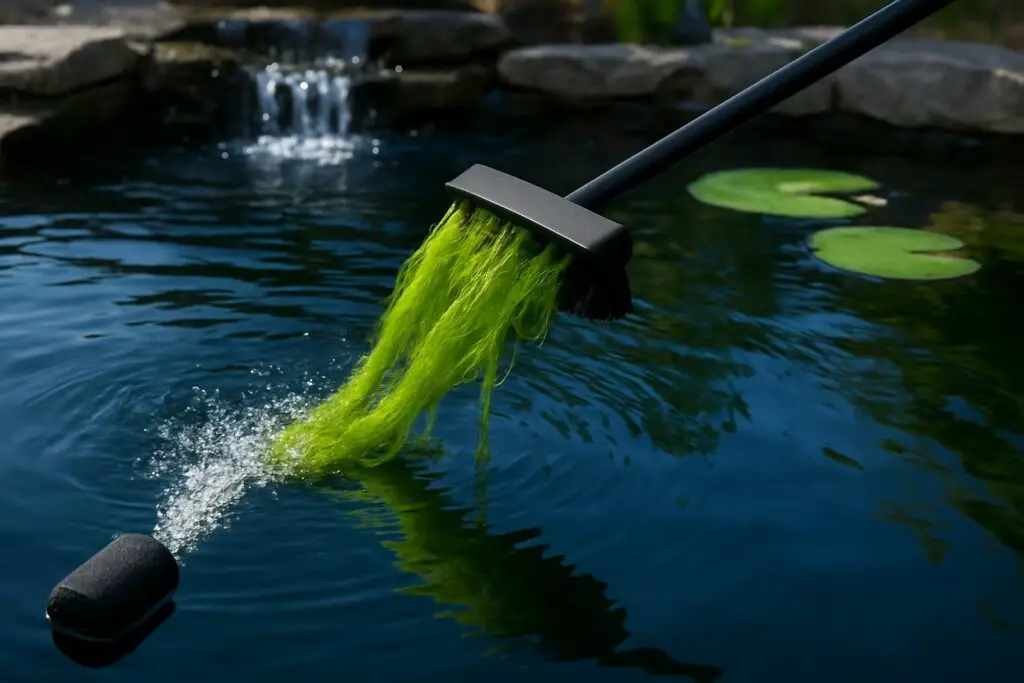
Use a weed twister, a clean toilet brush on a pole, or a fine pond net. Twist slowly so strands wrap around the tool, then lift out the bundles. Move methodically around the pond edges and shallows. Avoid tearing plant leaves and do not drag across lily crowns.
Rinse captured frogs, snails, or insects back into the pond. Do not leave algae on the shore, or rain will wash nutrients back in. Compost it away from runoff or add to a garden bed as green mulch.
Remove no more than one third of the surface cover per day if the pond is small or the fish are already stressed. Large oxygen swings can shock fish. Watch behavior and increase aeration as needed.
Phase 1 Step 2: Oxygen-Based Spot Treatment
After manual removal, treat the remaining mats with an oxygen-based algaecide or a peroxide-based spot product designed for ponds. These products release active oxygen that breaks down filamentous algae quickly without leaving copper residues. Many ponds show visible reduction in a day or two when used correctly.
How to apply safely:
Calculate your pond volume so you use the correct amount. A simple estimate for gallons is length times width times average depth times 7.5. For liters multiply length times width times depth in meters and then by 1000. Start with the lower end of the label dose, especially in hot weather or if fish load is high.
Turn off pumps that would immediately carry granules to the filter. Gently broadcast granules over remaining algae mats or apply a liquid spot treatment directly to the growth. Keep aeration running the entire time.
Let the product work per label guidance. Avoid treating the entire pond at once if it is heavily infested. Treat sections a day apart to prevent large oxygen drops. Skim out dead or loosened algae within a few hours to a day to keep it from decomposing in the pond.
Do not use swimming pool chlorine products or household cleaners. Stick to pond-specific, fish-safe treatments with clear instructions.
Phase 1 Step 3: Emergency Oxygen Management
If fish gather near waterfalls, gulp at the surface, or seem listless, increase aeration. Add more air stones or raise waterfall flow. Pause further treatments until fish behavior returns to normal. A partial water change with dechlorinated water at similar temperature can also help stabilize oxygen and dilute organics.
Phase 1 Note: UV Clarifiers
UV clarifiers are excellent for green water but will not remove established blanket weed from rocks and margins. Keep UV running for overall clarity if you have one, but do not rely on it as your only solution for filamentous algae.
Phase 2: Lock In Long-Term Control
Fast removal without prevention is temporary. Blanket weed thrives when sunlight and nutrients are abundant and water is still. Remove the causes and the weed has little to feed on.
Cut Excess Nutrients
Feed fish less. Most ponds are overfed. Only feed what they eat in thirty to sixty seconds, once or twice a day in warm weather, less in cool weather. Skip feeding on very hot days when oxygen is lower.
Limit fish load. Too many fish create constant fertilizer. Rehome extra fish or upgrade filtration if water tests show rising nitrate or phosphate.
Clean filters on a schedule. Rinse mechanical pads in a bucket of pond water, not tap water, to preserve beneficial bacteria. Do this weekly during heavy feeding seasons. Do not let sludge rot in the filter box.
Vacuum debris. Net out leaves and sludge from the bottom in spring and fall. Decomposing organics release nutrients that feed algae.
Block fertilizer runoff. Divert lawn and bed fertilizers away from the pond. A rain garden or border of gravel can intercept nutrients before they enter the water.
Use phosphate remover media if tests show elevated phosphate. Place it in a high flow area of the filter and replace per product guidance until levels drop.
Add Shade and Plant Competition
Target a mix of surface and marginal plants that cover thirty to fifty percent of the surface in summer. Water lilies, floating islands, and dense marginals compete for nutrients and reduce light, both of which slow blanket weed.
Pond dye can provide temporary shade in fish-only ponds or where lilies are not practical. Choose a fish-safe dye and dose lightly to avoid an unnatural look. Dyes are a tool, not a cure. Combine with nutrient control for best results.
Boost Beneficial Bacteria and Enzymes
Beneficial bacteria products help break down dissolved organics and sludge that feed algae. Dose in spring as water warms and after major cleanouts. If you used an oxygen-based algaecide, wait at least a day before adding bacteria so the oxidative action has passed. Re-dose weekly for a few weeks, then monthly.
Improve Circulation and Aeration
Circulation reduces dead zones where algae thrives. Aim to turn the pond volume over about once per hour in fish ponds and at least every two hours in planted garden ponds. Place return jets or air stones to move water through coves and corners. Keep a gentle surface ripple across most of the pond.
Inspect and clean the pump intake and skimmer basket weekly. Blanket weed strands often clog intakes, cutting flow and creating a feedback loop of low oxygen and more algae.
Seasonal Tips
Spring Startup
Net out winter debris before water warms. Restart filtration and aeration early. Begin with a small fish feeding schedule and increase slowly as temperatures rise. Dose beneficial bacteria and consider a preventive, light spot treatment if you see early strands in shallow sunlit zones.
Summer Heat
Warm water holds less oxygen. Increase aeration and shade. Feed less on very hot days. If you plan a treatment, work in the morning when oxygen is highest. Treat smaller sections at a time and watch fish closely.
Autumn and Natural Ponds
In wildlife and natural ponds, balance is the goal. Allow some algae for habitat but keep it from covering the surface. Remove excess growth, limit nutrient inputs, add emergent plants, and maintain flow where possible. In autumn, net out falling leaves to reduce future nutrient spikes.
Common Mistakes to Avoid
Do not dump chemical treatments without calculating pond volume. Overdosing stresses fish and filters. Start low and follow the label.
Do not kill a massive infestation all at once in hot weather. Treat in sections with strong aeration to prevent oxygen crashes.
Do not leave removed algae on the shore. Compost it well away from the pond so nutrients do not wash back.
Do not overfeed fish. Extra feed becomes algae fuel.
Do not rely on UV alone for blanket weed. It helps green water but not attached filamentous algae.
A Simple Weekly Routine
Skim or twist out any new strands you see. Five minutes a week beats a full day later.
Rinse mechanical filter pads in pond water. Check pump intakes and skimmer baskets.
Feed lightly and watch fish finish in under a minute.
Check that waterfalls or air stones make a steady surface ripple. Add an extra air stone in hot spells.
Top up evaporation with dechlorinated water. Avoid large, cold top-ups that shock fish.
Troubleshooting Stubborn Cases
If blanket weed returns within a week, look for hidden nutrient sources. Overcrowded fish, dirty filters, sludge buildup, or fertilizer runoff are typical triggers. Increase mechanical cleaning, add phosphate remover, and trim back feeding.
If algae only grows in shallow sunny zones, add lilies, marginal plant groupings, or floating islands in those areas. Light drives growth. Shade stops it.
If you see constant growth at a waterfall or stream, improve flow patterns, remove trapped debris under rocks, and consider a small, frequent spot treatment schedule while you adjust filtration and plant cover.
Conclusion
Fast and safe blanket weed removal is simple when you pair quick action with prevention. Manually remove bulk growth, use an oxygen-based spot treatment with strong aeration, and then fix the causes by cutting nutrients, adding shade and plants, and improving flow. Follow the weekly routine to catch new strands early. Do this, and your pond stays clear, oxygen rich, and easy to enjoy.
FAQ
Q: What removes blanket weed fast without harming fish
A: Manual removal plus an oxygen-based spot treatment works quickly when paired with strong aeration and section-by-section application.
Q: Should I remove blanket weed manually or use chemicals first
A: Start with manual removal to raise oxygen and reduce bulk, then apply an oxygen-based spot treatment to remaining mats.
Q: Why does blanket weed keep coming back
A: It returns when sunlight, nutrients, and still water remain high. Reduce feeding, clean filters, remove sludge, block runoff, add plant cover and shade, and improve circulation.
Q: Is a UV clarifier effective for blanket weed
A: UV clarifiers help green water but do not reliably remove attached filamentous algae, so do not rely on UV alone.
Q: How do I prevent blanket weed in the long term
A: Cut nutrients, add shade and plant competition, use beneficial bacteria, keep good circulation and aeration, and follow a simple weekly maintenance routine.