
We are reader supported. When you purchase through links on our site, we may earn an affiliate commission. Also, as an Amazon affiliate, we earn from qualifying purchases.
Healthy aquariums run on biology, not gadgets. At the center of that biology are beneficial bacteria that process fish waste and keep toxins under control. When you understand how these microbes work and how to support them, you avoid most beginner problems and keep fish safe. This guide explains the nitrogen cycle in clear steps, shows you how to build a strong biofilter, and gives practical routines that protect your bacteria day after day.
What The Nitrogen Cycle Is
The nitrogen cycle is the natural process that turns toxic waste into less harmful compounds. Fish release ammonia through gills and waste. Uneaten food and plant debris also break down into ammonia. In a new tank, ammonia rises fast. Beneficial bacteria colonize surfaces and convert ammonia to nitrite, then other bacteria convert nitrite to nitrate. Ammonia and nitrite are dangerous even at low levels. Nitrate is far less toxic but still needs control through water changes and plants.
Why It Matters For Every Tank
Without an established nitrogen cycle, toxins spike and fish suffer. With a mature cycle, toxins stay at zero for ammonia and nitrite, and nitrate climbs slowly. That stability is the foundation of a reliable aquarium. Cycling is not optional. It is the baseline for any freshwater, brackish, or marine system.
The Three Steps In Simple Terms
Step 1. Ammonia is produced by fish, food, and decay.
Step 2. Ammonia oxidizing bacteria convert ammonia to nitrite.
Step 3. Nitrite oxidizing bacteria convert nitrite to nitrate.
End result. Keep ammonia at 0 ppm, nitrite at 0 ppm, and manage nitrate with regular water changes and plants. Many keepers aim to keep nitrate under 20 to 40 ppm, lower for sensitive species.
Meet The Beneficial Bacteria
Two main groups do the heavy lifting in most aquariums. The first group uses oxygen to consume ammonia and produce nitrite. The second group consumes nitrite and produces nitrate. These bacteria are slow growers, sensitive to oxygen, pH, and temperature, and they live on surfaces, not floating freely in the water.
Where They Live In Your Tank
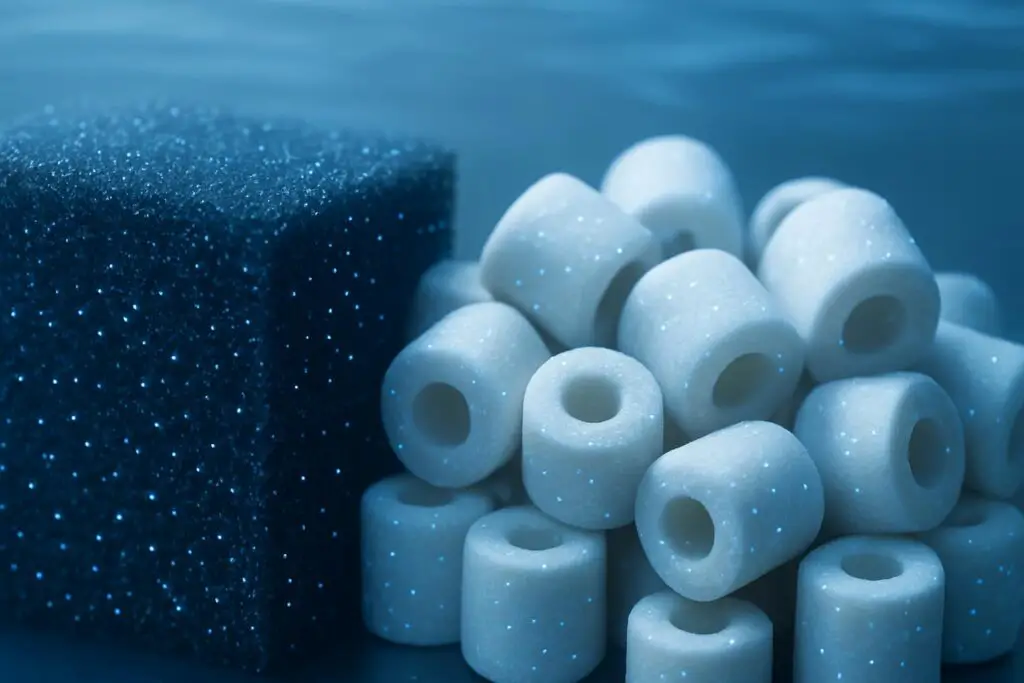
The largest colonies live on high surface area materials that get steady flow and oxygen. This includes sponge and ceramic media inside filters, bio balls, coarse sponges, and the first few millimeters of substrate. They also colonize hardscape and glass. The water column contains far fewer bacteria. That is why rinsing or replacing filter media can cause setbacks if done poorly.
What They Need To Thrive
They need a continuous source of ammonia and nitrite, strong oxygenation, stable pH and temperature, and surfaces to cling to. They do not need light. They do not benefit from strong chemical filtration that strips all dissolved organics at the expense of flow and oxygen.
How Bacteria Keep Fish Safe
Ammonia damages gills and reduces oxygen uptake. Nitrite interferes with oxygen transport in blood. Both can stress or kill fish. Even short spikes matter. Beneficial bacteria keep both at 0 ppm by processing waste as it is produced. When the biofilter is established and maintained, fish experience steady, low stress water conditions, better appetite, and stronger immunity. Nitrate builds slowly and is removed with water changes and plant uptake.
Target Numbers For Beginners
Ammonia 0 ppm. Nitrite 0 ppm. Nitrate under 20 to 40 ppm, with lower better for sensitive fish and in low nutrient setups. These simple targets guide all your actions during cycling and routine care.
Starting A New Tank The Right Way
Cycling is the process of building enough beneficial bacteria to handle the waste your future fish will produce. There are two main approaches. Fishless cycling is preferred because it protects fish from toxins during the process. Fish in cycling is possible but requires strict care to prevent harm.
Fishless Cycle Step By Step
Set up the tank with filter, heater if needed, and dechlorinated water. Add your chosen filter media. Start strong aeration.
Add a pure ammonia source to reach about 2 ppm. If using fish food, it will decay to produce ammonia more slowly, but pure ammonia gives better control.
Test ammonia and nitrite daily. At first, ammonia will drop and nitrite will rise. Later, nitrite will also start to drop and nitrate will rise.
When the tank can process a 2 ppm dose of ammonia to 0 ppm ammonia and 0 ppm nitrite within 24 hours, your biofilter is ready for a starter stock of fish.
Do a large water change to reduce nitrate before adding fish. Keep testing for the first week after stocking to confirm stability.
Typical timeline is 2 to 6 weeks. Seeding can shorten this.
Seeding Bacteria To Speed Up
Move established filter media, a chunk of sponge, or a handful of clean substrate from a healthy, disease free tank. Keep seeded media wet and oxygenated during transfer and place it where water flows through it. You can also use reputable bottled bacteria and follow the product directions. Avoid dirty sources. Never let seeded media dry out or sit without oxygen.
Fish In Cycling If You Must
If fish are already in the tank, keep feeding very light, test daily, and change water as needed to keep ammonia and nitrite near zero. Use a conditioner that detoxifies ammonia and nitrite during spikes. Add bottled bacteria. Increase surface agitation for oxygen. This approach is stressful for fish and requires discipline.
Building A Strong Biofilter
Your filter is a housing and oxygen delivery system for bacteria. Good design gives them surface area, steady flow, and air saturated water. Poor design starves or smothers them.
Media That Works
Coarse sponge and ceramic rings offer high surface area and resist clogging. Bio balls work well in wet dry or high oxygen systems. Activated carbon is optional and is not a substitute for biological media. Arrange filtration in the order of mechanical first to catch debris, then biological media for colonization, then any chemical media if used.
Flow And Oxygen
Nitrifying bacteria require oxygen. Keep filter flow steady, prevent clogging, and maintain good surface agitation. Aim for a turnover of about 5 to 10 times the tank volume per hour, adjusted for fish species and aquascape. Add an air stone if oxygen demand is high.
pH, Temperature, And Stability
These bacteria work faster in neutral to mildly alkaline water. They slow down in acidic water. A pH between 7.0 and 8.0 supports strong activity in most community tanks. Temperature between 24 and 28 C is a good range for many tropical species and for bacterial growth. Keep parameters stable and avoid sudden swings. In soft, low pH planted tanks, the biofilter still works but may be slower, so stock and feed more conservatively.
Light Is Not Required
Nitrifying bacteria do not need light. Strong lighting is only for plants or viewing. Do not confuse algae growth with beneficial bacterial growth.
Daily And Weekly Habits That Support Bacteria
Consistency builds a resilient biofilter. Small actions prevent big problems. Follow a simple routine and stick to it.
Feed With Control
Only feed what fish consume within a couple of minutes. Excess food breaks down to ammonia and overwhelms the biofilter. Small, frequent feedings are easier on bacteria than rare, heavy feedings.
Stock Slowly
Add new fish in stages, then wait a week or two to let bacteria catch up. Each new fish adds waste and increases demand on the biofilter. Gradual changes maintain zero ammonia and nitrite.
Test On A Schedule
During cycling, test ammonia and nitrite daily, and nitrate every few days. After cycling, test ammonia, nitrite, and nitrate weekly. Keep a simple log. Follow test kit directions carefully and shake reagents as instructed. Quick trend tracking helps you act before problems escalate.
Smart Water Changes
Change 25 to 50 percent weekly based on nitrate level and stocking. Always treat new water with a conditioner that neutralizes chlorine and chloramine before it contacts your tank or filter. Chlorine and chloramine harm beneficial bacteria. Match temperature to avoid shocking fish. Some conditioners convert chloramine into chloride and bound ammonia. That bound ammonia can still appear on some tests but is temporarily detoxified until bacteria process it.
Maintenance Mistakes To Avoid
Most crashes come from over cleaning or killing the biofilter by accident. Avoid these common pitfalls.
Do Not Overclean Filters
Rinse sponges and biological media in a bucket of removed tank water, not in tap water, to avoid chlorine damage. Clean only enough to restore flow. Never replace all biological media at once. Stagger changes over weeks so colonies have time to spread. Keep filters running continuously and do not let media dry out.
Clean Substrate Without Sterilizing It
Use a gravel vacuum to remove debris from the top layer. Avoid deep, aggressive stirring that collapses bacterial zones. If you use undergravel filtration, steady, gentle maintenance works best.
Use Medication Carefully
Many medications, especially those containing copper or strong antibacterials, can harm your biofilter. Treat sick fish in a separate hospital tank when possible. After any treatment, monitor ammonia and nitrite closely and be ready for water changes and bacteria supplementation.
Plan For Power Outages
During outages, oxygen drops first. Beneficial bacteria begin to die back in low oxygen. Reduce feeding, keep filter media wet, and use a battery air pump if available. After power returns, test for ammonia and nitrite and respond quickly if levels rise.
Live Plants And The Nitrogen Cycle
Live plants absorb ammonia, ammonium, and nitrate. Fast growing stems and floating plants remove nutrients quickly and can stabilize a tank by reducing nitrate between water changes. Plants also provide surfaces for bacteria. However, plants do not replace the need for a strong biofilter, especially in new tanks or with heavy stocking. Balance plant growth, fish load, and maintenance.
Choosing Plants For Nutrient Control
Use fast growers and floaters early to buffer nutrient swings. Trim often to keep growth active. As the tank matures, you can adjust plant mass to match fish load and feeding.
Advanced Note Denitrification
In low oxygen zones such as deep sand beds and specialized media, anaerobic bacteria can convert nitrate to nitrogen gas. This can reduce nitrate in mature systems. It is sensitive to flow and oxygen levels and is easy to disrupt. Beginners should not rely on denitrification as the primary nitrate control. Poorly managed anaerobic zones can produce toxic pockets. For most new setups, water changes and plants are simpler and safer.
Saltwater And Brackish Considerations
The nitrogen cycle principles are the same in saltwater and brackish tanks. Live rock and porous marine media host large bacterial populations. Protein skimmers remove waste before it breaks down, reducing ammonia input, but they do not replace biological filtration. Avoid using freshwater media to seed marine systems. Cycle fully before adding sensitive marine livestock and stock slowly.
Troubleshooting Common Problems
Even with care, issues can occur. Respond early and you prevent losses.
New Tank Syndrome
Symptoms include rising ammonia and nitrite, stressed fish, and cloudy water in the first weeks. Act with large water changes using dechlorinator, reduce feeding, add bottled bacteria or seeded media, and increase aeration. Keep testing daily until stable.
Mini Cycle After Big Maintenance
If you replaced too much media or deep cleaned, you may see low but persistent ammonia or nitrite. Add bacteria, keep feeding light, and change water as needed. Rinse remaining media gently in tank water and restore good flow and oxygen.
Nitrite Stuck High With Low Nitrate
Sometimes the ammonia stage progresses but nitrite persists. Improve aeration, confirm pH is not too low, add nitrite oxidizing bacteria via seeding or bottled products, and keep testing. Water changes prevent nitrite stress during this period.
High Nitrate Despite Changes
If nitrate stays high, increase water change volume or frequency, reduce feeding, add or grow more fast plants, and review stocking levels. Remove trapped debris from filters and substrate to lower waste production.
Bacterial Bloom And Cloudy Water
White cloudy water often indicates a heterotrophic bacterial bloom. It is common in new tanks or after large changes. Maintain strong aeration, avoid overfeeding, and be patient. The bloom usually clears as the system stabilizes. Keep testing ammonia and nitrite to ensure the cycle remains intact.
Practical Checklist For Long Term Success
Keep ammonia at 0 ppm, nitrite at 0 ppm, nitrate under 20 to 40 ppm. Test weekly. Perform steady water changes and always dechlorinate new water. Rinse bio media in tank water, never tap. Add fish slowly. Feed lightly and consistently. Maintain strong flow and oxygen. Treat illnesses in a hospital tank when possible. Keep a simple log for trends and actions. These habits protect your beneficial bacteria and keep fish safe.
Conclusion
Beneficial bacteria are the engine of a stable aquarium. They convert ammonia to nitrite and then to nitrate, preventing toxic spikes and giving you time to manage nutrients with water changes and plants. Build them a good home with proper media and oxygen, cycle the tank before heavy stocking, test on a schedule, and avoid actions that strip colonies. With these clear steps, your biofilter becomes dependable, your fish stay healthier, and your aquarium becomes easy to care for.
FAQ
Q: Where do beneficial bacteria live in an aquarium
A: They live on surfaces with good flow and oxygen, mainly filter sponges and ceramic media, as well as substrate, decorations, and glass, not floating in the water.
Q: How long does a fishless cycle take
A: It typically takes 2 to 6 weeks and is complete when the tank can process about 2 ppm of added ammonia to 0 ppm ammonia and 0 ppm nitrite within 24 hours.
Q: What water parameters help nitrifying bacteria work best
A: A pH between 7.0 and 8.0, temperature around 24 to 28 C, and strong oxygenation with steady flow support fast and stable processing.
Q: How should I clean my filter without harming bacteria
A: Rinse sponges and bio media in removed tank water, avoid tap water with chlorine, never replace all media at once, and keep the filter running so media stays wet and oxygenated.
Q: What should I do during an ammonia or nitrite spike
A: Reduce feeding, perform large dechlorinated water changes, add bottled bacteria or seeded media, increase aeration, and test daily until levels return to zero.