
We are reader supported. When you purchase through links on our site, we may earn an affiliate commission. Also, as an Amazon affiliate, we earn from qualifying purchases.
Power outages surprise even careful aquarists. Filters stop, heaters go quiet, and the water surface barely moves. Fish can survive, but only if you act with a clear plan. This guide gives you simple, step‑by‑step actions to keep oxygen stable, control temperature, protect your filter bacteria, and bring the tank back safely when power returns.
Introduction
Your fish need two things during an outage: oxygen and stable temperature. Everything in this article flows from those two facts. You will learn what to do minute by minute, how to bring in oxygen without electricity, how to manage heat or cold, how to handle filters and water quality, and how to recover without losing livestock. The steps are beginner friendly and work for freshwater, marine, and planted tanks.
The Two Immediate Threats: Oxygen and Temperature
When the power cuts, surface agitation stops. Oxygen starts dropping fast, especially in warm, stocked tanks. Fish show stress by breathing fast, hanging near the surface, or crowding around any slight water movement. Warm water holds less oxygen, so tropical tanks risk hypoxia sooner than cool tanks.
Temperature change is the second threat. Most tropical fish like 24 to 26 C. Coldwater species prefer 18 to 20 C. Reef tanks are stable near 24 to 26 C. Rapid swings are worse than mild drift. Your goal is to slow the change and keep day to night shifts small.
Know Your Timeline
First 0 to 30 Minutes
Stay calm and reduce demand. Stop feeding at once. Unplug equipment to protect it from surges when power returns. Close curtains and reduce room drafts. Prepare a battery air pump if you have one. If the room air is stuffy, improve ventilation if it is safe and weather allows.
30 to 120 Minutes
Start oxygen support. Run a battery air pump with an airstone. If you do not have one, begin manual aeration by gently pouring tank water from a clean container held high to break the surface. Insulate the tank to slow heat loss or gain. Keep the hood closed to reduce evaporation and temperature swing, but allow a small gap for gas exchange if the room air is good.
2 to 6 Hours
Maintain oxygen and watch fish. Continue battery aeration or manual pouring. Keep the surface moving. Do not feed. If temperature drifts, use insulation and safe hot or cold packs as described below. Prepare water for a partial change if fish show stress or if the outage will be long.
6 to 24 Hours
Oxygen and water quality become more critical. Increase aeration efforts. Consider a 20 to 30 percent partial water change using dechlorinated, temperature matched water to dilute waste. Keep the filter media wet, but do not run a dead filter that might dump foul water into the tank when power returns.
More Than 24 Hours
Long outages need consistent routines. Keep steady aeration, maintain temperature with insulation and packs, and do small partial water changes as needed. If you have a generator or an inverter, prioritize running an air pump and, if cold, the heater. Restart the main filter only after you handle the media safely.
Immediate Actions Checklist
Stop feeding. Food increases waste and oxygen demand. Most healthy fish can fast for 24 to 48 hours without harm.
Unplug gear. Protect heaters, filters, and lights from power surge when electricity returns.
Insulate the tank. Wrap the sides and back with blankets, towels, or foam. Leave a small gap for air exchange if the room air is good.
Prepare oxygen support. Set up a battery air pump or get a clean container ready for manual pouring.
Reduce stress. Keep the room quiet. Avoid tapping glass or moving decorations.
How to Keep Oxygen Stable
Battery Air Pump Setup
Attach an airstone and place it shallow, near the surface. Shallow bubbles improve gas exchange without wasting battery power. One small battery pump can support a lightly stocked tank by keeping the surface disturbed. Keep spare batteries on hand.
Manual Aeration by Pouring
Use a clean pitcher or container. Scoop water from the tank and pour it back from a height to break the surface. Do this gently to avoid stressing fish. Repeat in cycles, such as a few pours every 5 to 10 minutes during the first hours, then as needed. This is simple, cheap, and effective.
Gentle Surface Stirring
With a clean, dedicated spoon or gloved hand, make slow circles at the surface. The goal is to increase gas exchange, not to kick up debris. This is a supplement to pouring when you need a quiet method.
Reduce Oxygen Demand
Stop feeding. Remove any uneaten food. Avoid unnecessary netting or chasing fish. If you keep high biomass species, give extra attention to aeration and consider a small water change to dilute waste.
Temperature Control Without Power
Insulate First
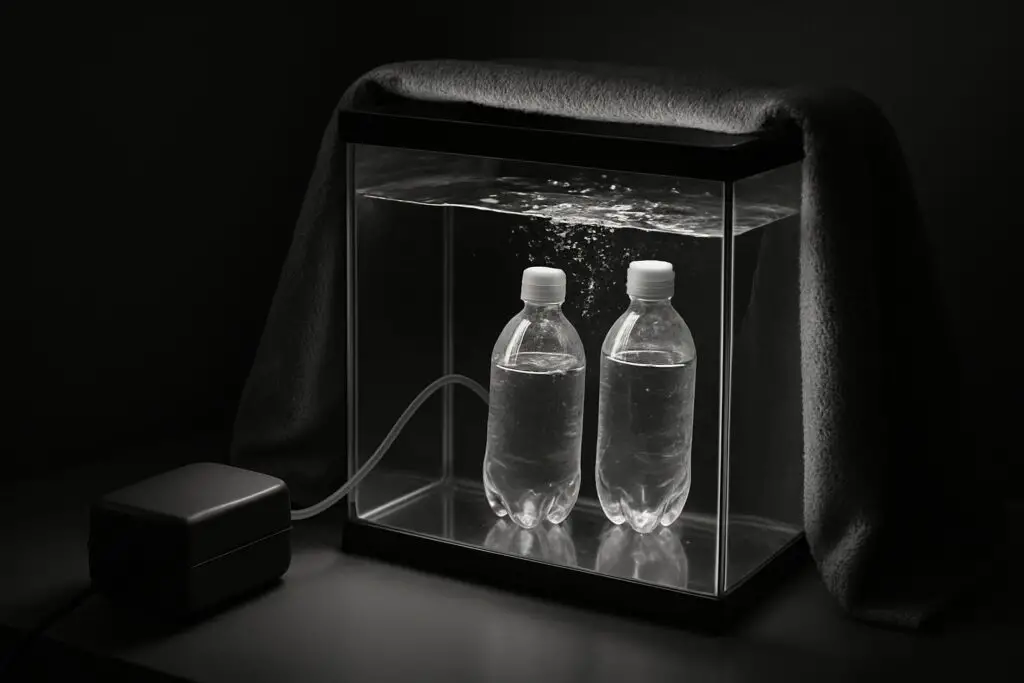
Wrap the tank sides and back with blankets, towels, or foam board. Insulation slows both cooling in winter and heating in summer. Cover the top with a towel but leave a small gap if room air quality is good to maintain gas exchange.
Trap Heat or Cold
Keep the room closed to limit drafts in winter. In heat waves, close blinds and reduce indoor heat sources. Stability is the priority. Avoid frequent lid opening, which speeds heat loss and drops oxygen in cold rooms.
Add Heat Safely
Fill clean, sealable bottles with warm water and cap them tightly. Float them in the tank or the sump. Replace as they cool. Do not add hot water directly to the aquarium. Monitor the temperature with a reliable thermometer and aim for slow adjustments.
Cool the Tank Safely
Float sealed bags or bottles of cold water. Ice must be in sealed bags to keep chlorine and contaminants out. Swap packs as they warm. Avoid rapid temperature drops. Keep the room shaded to assist cooling.
Species Notes
Tropical fish handle brief dips to 22 to 23 C better than sudden drops of several degrees. Coldwater fish tolerate cooler water but still need oxygen support. Reef tanks dislike swings; insulate early and maintain surface agitation with a battery airstone to protect oxygen levels.
Filtration and Beneficial Bacteria
Beneficial bacteria in filter media need oxygenated water. When the filter stops, water inside turns stagnant. If starved of oxygen for long, bacteria die and release foul compounds. Plan around this.
Canister Filters
Do not let the canister sit for many hours then restart it without checks. When power returns, carry the canister to a sink. Discard the stagnant water. Rinse the media gently in old tank water, not tap water, to preserve remaining bacteria. Refill the canister with clean, dechlorinated water before restarting.
Hang On Back and Internal Filters
Keep the media wet in tank water. If the outage is long, swish sponges or cartridges gently in a bucket of old tank water to remove sludge. Place them back in flowing water once power returns. Avoid drying the media.
While Power Is Out
Do not run a powered filter off a small UPS unless you can keep it running continuously. Short starts and stops can trap waste and stress bacteria. Focus limited backup on aeration. Once stable, restore filtration after the water is oxygenated and not foul.
Water Quality Management During the Outage
Feed nothing. Fish waste and uneaten food drive ammonia. Lower bioload buys time and oxygen. Watch for stress signs: gulping at the surface, rapid gill movement, clamped fins, or erratic swimming.
Test if you can. Ammonia and nitrite rise faster without filtration. If tests are not available, rely on small, temperature matched partial water changes to dilute waste.
Emergency Partial Water Change
Change 15 to 30 percent with dechlorinated, temperature matched water. Pour slowly to avoid chilling or stirring the substrate. If the room is cold, warm the new water to within 1 C of the tank. If hot, keep it slightly cooler than the tank to counter heat. Stable steps prevent shock.
Dechlorinator and Tap Water
Always treat tap water with a reliable dechlorinator. Chlorine and chloramine harm fish and bacteria. Do not rinse media in untreated tap water. Rinse in old tank water to preserve what bacteria remain.
Marine and Planted Tank Notes
Marine and Reef Tanks
Marine fish and corals use oxygen quickly. Prioritize aeration with a battery airstone near the surface. Insulate the sump and display. Keep hands clean of soaps and chemicals. Stability is key; avoid sudden changes. Do not expose corals to air during maintenance. When power returns, restart circulation and skimming after temperature is within range.
Planted Tanks
Plants help in daylight but consume oxygen in the dark. You still need aeration. If you inject CO2, turn the system off during an outage to avoid compounding low oxygen. Insulate and manage temperature like any tank.
Backup Power Options
Battery Air Pumps
These are the best low cost tool. Keep at least one per tank or one strong unit with a gang valve. Stock spare batteries. Shallow placement of the airstone improves efficiency.
UPS Units
Use a UPS to run only an air pump for many hours. Do not waste UPS capacity on lights. Heaters drain UPS fast; reserve them for short, critical boosts if temperatures crash.
Generators and Inverters
A small generator can run air pumps, heaters, and filters. Operate generators outdoors only, never in enclosed spaces. A car inverter can power a small air pump in a pinch. Prioritize air first, then heat if cold, then filtration.
What to Power First
Air pump is first. Heater is second if the temperature is dropping fast. Main filter is last and only after you have handled media and confirmed the water is not foul.
When Power Returns
Do not rush. Keep tank lights off for a few hours to reduce stress. Check temperature and adjust the heater setpoint if needed. Ensure aeration resumes. Before starting a canister, discard stagnant water and rinse media in old tank water. For hang on back or sponge filters, swish media in tank water and restart flow.
Test ammonia and nitrite if you can. If either is above zero, do a 20 to 30 percent partial water change and add extra aeration. Resume feeding lightly for the next few days. Watch fish for any breathing distress or lethargy. If the filter bacteria were hit hard, be ready for a short mini cycle with small, frequent water changes.
Quick Prep Checklist for Next Time
Battery air pump with spare batteries. Clean pitcher for manual aeration. Blankets or foam to insulate. Dechlorinator and test kits. Thermometer you trust. Clean, sealable bottles for hot or cold packs. A plan for discarding canister water before restart. Notes on your tank temperature range and stocking level.
Common Mistakes to Avoid
Feeding during the outage. Restarting a canister without cleaning stagnant water. Adding hot or cold water directly to the tank. Overhandling fish or decorations. Running lights when fish are already stressed. Forgetting to unplug equipment before power returns.
Simple Decision Guide
If oxygen is the issue, focus on surface agitation by battery pump, pouring, or stirring. If temperature is the issue, insulate and use sealed hot or cold packs. If water quality is the issue, do small, temperature matched partial water changes with dechlorinator. Handle filter media gently and restart only when the water is safe.
Conclusion
A clear plan saves fish during a power outage. Keep oxygen moving, slow temperature drift, protect your filter bacteria, and recover with measured steps. Most tanks ride out outages with these basics. Prepare simple tools now, and practice the sequence so you can act fast when the lights go out.
FAQ
Q: What should I do in the first 30 minutes of a power outage to protect my fish?
A: Keep calm, stop feeding, insulate the tank, unplug equipment to prevent surges, improve room air if safe, and set up a battery air pump or prepare for manual aeration.
Q: How can I add oxygen without electricity?
A: Use a battery air pump with a shallow airstone, pour tank water from a clean container held high to break the surface, and gently stir the surface without disturbing the substrate.
Q: How do I keep the tank warm without a heater?
A: Wrap the tank with towels or foam, keep the lid mostly closed, and float sealed warm water bottles, replacing them as they cool while monitoring temperature for slow, steady changes.
Q: Should I feed my fish during a long outage?
A: Do not feed for 24 to 48 hours to reduce waste and oxygen demand; most healthy fish tolerate a short fast well.
Q: What should I do with my filter before turning it back on after power returns?
A: Discard stagnant water from canisters, rinse media gently in old tank water, keep media wet, and restart only after the tank is oxygenated and a partial water change is done if needed.