
We are reader supported. When you purchase through links on our site, we may earn an affiliate commission. Also, as an Amazon affiliate, we earn from qualifying purchases.
You add a beautiful piece of driftwood to your tank. A few days later the water turns tea brown. The fish look fine, but the color keeps getting darker. You wonder if something went wrong and how to make the water clear again. The short answer is that driftwood releases natural tannins that tint the water. This is normal, often safe, and easy to manage with the right steps.
Introduction
This guide explains why driftwood stains water, what it does to water chemistry, and how to clear the tint fast or prevent it entirely. You will learn simple routines that work for any tank size, which woods release the most color, and the safest ways to pre-treat driftwood. By the end, you will know exactly what to do today and how to avoid the same problem in the future.
What that brown color really is
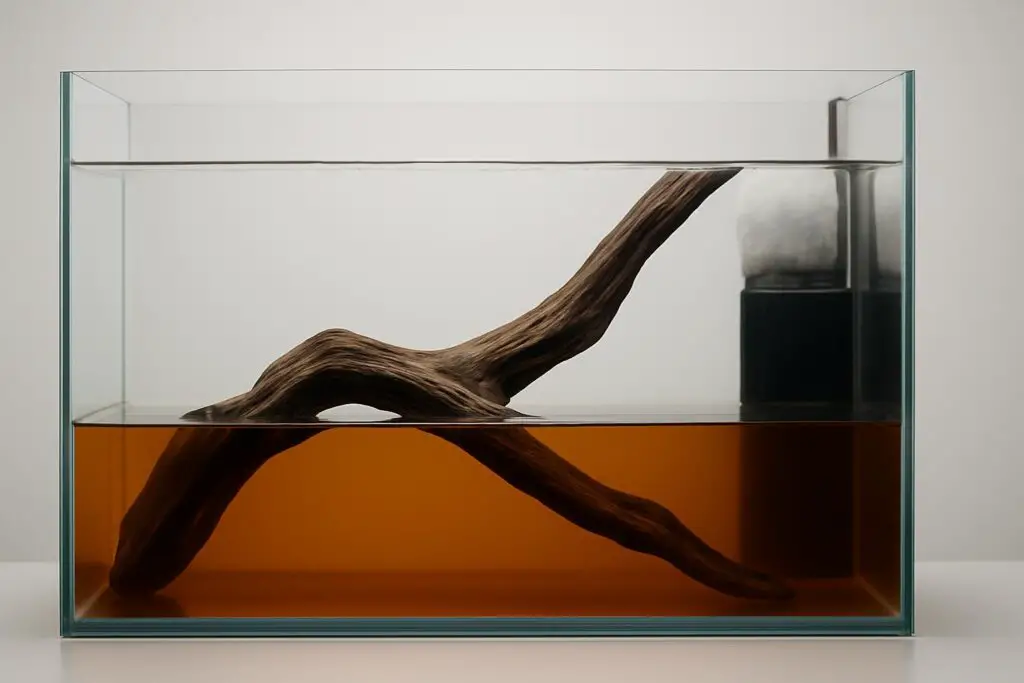
The brown or yellow tint comes from tannins and other humic substances inside the wood. When wood touches water, these compounds dissolve and spread through the tank. Tannins are natural plant chemicals found in bark, leaves, seed pods, and wood. They are also what gives blackwater rivers their color.
In an aquarium, tannins act like a natural dye. The result can range from a light tea tint to a strong coffee color, depending on the wood, the amount used, and how often you change water. Fresh driftwood and dense hardwoods usually release more tannins than old, weathered pieces.
Is brown water safe for fish
In most cases, yes. The color is not dirt or rot. Many fish from rainforest streams live in tannin stained water in nature. Tannins can even be mildly antibacterial and can reduce stress in species that prefer dim, soft conditions. Shrimp tanks and blackwater setups often aim for a light to medium tint on purpose.
The only real caution is pH. Tannins are weak acids and can lower pH, especially in water with very low buffering. For soft water species, that shift can be helpful. For hard water species like African rift lake cichlids or livebearers, a drop in pH may not be welcome. Testing removes the guesswork, which you will learn below.
How tannins change water chemistry
Tannins are acidic. When they leach out, they can push pH downward. How far depends on your water’s buffering capacity, also called KH. High KH resists pH change. Low KH allows pH to move more easily.
If your tap water has moderate to high KH, the pH change may be small even with a lot of tannins. If you use very soft water or reverse osmosis water with little buffering, tannins can lower pH more quickly. That does not make tannins dangerous, but it does mean you should monitor pH and KH while the wood is still fresh.
Which driftwood types leach more tannins
Not all woods stain the same. General trends are consistent in home tanks.
Mopani wood often leaches heavy tannins and can stain for months. Malaysian driftwood usually releases a moderate amount, especially at first. Spiderwood often releases a light to moderate tint and commonly grows a harmless white biofilm in the first weeks. Manzanita tends to be low leaching and clears up faster. Cholla wood releases mild tannins at first but tends to settle down quickly. Bogwood from peat rich sources can be very strong and slow to clear.
Even within one category, individual pieces vary. Dense, fresh, or darker wood tends to leach more than old, weathered, or sandblasted wood.
Pre treating driftwood before it enters the tank
Step 1 Inspect and scrub
Rinse the wood under running water. Use a stiff brush to remove loose bark, dirt, and soft rotted spots. Stripping bark reduces debris and rust colored slime later.
Step 2 Soak in a separate container
Place the wood in a container or bucket filled with tap water. Weight it down so it stays submerged. Change the soak water daily or every other day until it runs much lighter. This can take one to three weeks for many pieces and longer for dense woods. The more often you change water, the faster the tannins flush out.
Step 3 Boil small or medium pieces
If the wood fits in a pot, boil it for one to two hours. Replace the water and boil again if it is very dark. Boiling drives tannins out faster and also helps the wood sink by saturating it. Never bake wood in an oven and do not use chemicals. Keep this step simple and safe.
Step 4 Final soak
After boiling, give the wood a final soak in fresh water for a day or two. Check the color. Light yellow is normal and usually fades faster in the tank. If the water is still very dark, extend the soak with regular water changes.
Clearing brown water in an established aquarium
Start with water changes
Do a large water change to dilute the color. A change of 25 to 50 percent works well. Repeat two or three times per week at first if the color is strong. Always treat tap water with a dechlorinator before adding it to the tank. Regular partial changes are the simplest way to clear tint while keeping fish safe.
Use chemical filtration that targets tannins
Activated carbon removes tannins well and is easy to use. Place a bag of carbon in your filter where water flows through it. Replace the carbon when the tint stops improving or after two to four weeks. You can also use specialty resins designed to remove dissolved organics, such as Purigen or Poly Filter. Follow the product directions and maintain good flow through the media.
Add fine mechanical polishing
Filter floss or fine pads trap small particles that make water look dull. While tannins are dissolved and not particles, improving mechanical clarity makes the water look brighter as the color fades. Rinse or replace the floss often so it does not clog.
Keep the filter clean and oxygen high
Rinse prefilters and sponges in tank water during maintenance. Good flow and oxygen help your biofilter work well, which keeps the tank stable while you clear the tint. You can add an airstone for extra gas exchange during this period.
Consider temporary removal of the wood
If the water stays dark after several changes and fresh carbon, remove the driftwood and continue soaking or boiling it in a separate container. Keep doing large water changes in the display tank to clear the remaining color. Reintroduce the wood after the soak water is only lightly stained.
Testing and monitoring while the water is brown
Use a liquid test kit to check pH and KH once or twice per week during the first month with new driftwood. Keep a record. If KH is very low and you see steady pH decline, add a small bag of crushed coral or aragonite to the filter to raise buffering gradually. Start with a small amount, then test and adjust. Aim for stability over speed.
Also test ammonia, nitrite, and nitrate as usual. The color does not cause these to spike, but it is smart to confirm that water quality is solid while you are changing filter media and doing frequent water changes.
Special cases blackwater and shrimp tanks
Sometimes the goal is a light to medium tint. Many tetras, rasboras, gouramis, pencilfish, and dwarf cichlids show better color and calmer behavior in darker water. Caridina shrimp and many Neocaridina also do well with mild tannins. If you like the tint, you can still use mechanical polishing and routine water changes while skipping carbon or resins. The key is to keep parameters stable and the tint consistent rather than crystal clear.
If you keep hard water species that prefer high pH and mineral content, avoid strong tannin loads. Choose low leaching woods, pre soak thoroughly, and maintain buffering with crushed coral or a higher KH base. This keeps the look you want without pushing pH downward.
How long tannins last
Tannin release is strongest in the beginning and drops over time. Expect weeks to months of slow leaching from fresh pieces. Mopani can take months to settle. Malaysian wood is often moderate for a few weeks. Spiderwood usually calms down sooner. Manzanita tends to clear the fastest. Pre soaking and boiling shorten this timeline a lot. Even if the water tints again after a change, each cycle is usually lighter than the last.
White fuzz on new wood is normal
Many tanks with new driftwood grow a white, slimy biofilm on the surface in the first weeks. It is a mix of fungus and bacteria. It looks bad but is harmless and usually disappears on its own. Fish, snails, and shrimp often eat it. If it bothers you, siphon or brush it off during water changes. It fades as the wood stabilizes.
Troubleshooting when brown water keeps coming back
If the tint returns fast after every water change, the wood is still leaching heavily and your filter media may be saturated. Replace or regenerate the media, increase change frequency, and extend pre soaking outside the tank if possible. Check that you are not adding other tannin sources like catappa leaves, alder cones, or peat at the same time unless you want the tint.
Make sure your substrate is not peat based if your goal is clear water. Confirm that your filter pads are not overdue for replacement and that flow is strong. Do not rely on ultraviolet sterilizers for color removal. UV can clear green water caused by algae but does not remove dissolved tannins.
Myths and mistakes to avoid
Do not bleach driftwood to remove tannins. Bleach is risky to neutralize inside porous wood and is unnecessary for color control. Do not bake wood in an oven. It can crack, scorch, or create fumes. Skip salt baths, which do little for tannins and can damage some woods or wrongfully end up in the tank. Avoid softwoods like pine and cedar that contain resins. Choose aquarium safe hardwoods from reputable sources.
A simple routine that works
Before adding wood
Scrub the wood. Soak it in a separate tub with daily water changes for one to three weeks. Boil small pieces for one to two hours with a water change in between. Soak again until the water is only lightly stained. Then place it in the aquarium.
After adding wood
Do large partial water changes two or three times in the first week. Add fresh activated carbon or a suitable resin to the filter. Use fine filter floss for water polishing. Test pH and KH once or twice per week and keep notes. Rinse filter sponges in tank water during maintenance. Reduce water change frequency as the tint fades.
Choosing wood for clear water goals
If your goal is minimal tint, start with manzanita or well weathered spiderwood. Pre soak and boil even these. Use less total wood mass and avoid stacking many large pieces in small tanks. For maximum tint control, run carbon or a resin by default and change it on a schedule. Keep up with weekly water changes and gravel vacuuming to reduce dissolved organics overall.
When to embrace the tint
Sometimes the slight tea color looks natural and makes fish feel secure. A light tint can cut glare, soften light, and bring out the colors of fish from forest streams. If you like this look, keep water changes regular but not aggressive, skip color removing media, and maintain stable parameters. The goal becomes clear water quality, not clear color.
Conclusion
Driftwood turns water brown because it releases natural tannins. This is normal, often beneficial, and safe for most fish. To clear it, combine large partial water changes with activated carbon or a suitable resin, use fine filter floss, and keep the filter clean. Pre soak and boil new wood to reduce staining before it reaches your tank. Test pH and KH so changes are controlled, not surprising. Over time, tannin release slows and the water stabilizes. With a steady routine, you can keep driftwood, protect your fish, and choose exactly how clear you want your water to be.
FAQ
Q Why does driftwood turn aquarium water brown
A Because driftwood releases natural tannins and humic substances that dissolve into the water, acting like a dye. These compounds come from the wood itself and can also lower pH slightly, especially in water with low buffering.
Q Is brown water from driftwood harmful to fish
A Usually not. The tint is normal and many fish and shrimp from forest streams prefer it. The main concern is that tannins can lower pH, so monitor pH and KH, especially if you keep hard water species that prefer higher pH.
Q How can I clear brown water quickly
A Do large partial water changes of 25 to 50 percent several times in the first week, run activated carbon or a suitable resin like Purigen or Poly Filter in the filter, add fine filter floss for polishing, and if needed remove the wood to boil or pre soak it further in a separate container.
Q How long will driftwood leach tannins
A Expect weeks to months, depending on the wood. Mopani often leaches heavily for months, Malaysian is moderate for a few weeks, spiderwood is usually light to moderate, and manzanita tends to clear fastest. Pre soaking and boiling shorten this timeline.
Q Which driftwood types stain water the most
A Mopani is usually the strongest, Malaysian is moderate, spiderwood is light to moderate, manzanita is low, and cholla is mild and tends to settle down quickly. Bogwood from peat rich sources can also be very strong and slow to clear.