
We are reader supported. When you purchase through links on our site, we may earn an affiliate commission. Also, as an Amazon affiliate, we earn from qualifying purchases.
Seeing fish rush to the top and gulp at the surface is a red flag. It usually means the water cannot supply enough oxygen, or something is irritating their gills so badly they cannot breathe normally. The fix is urgent but simple when you act in the right order. This guide shows you how to stabilize the tank fast, find the cause, and build a setup that prevents surface gasping from returning.
What Surface Gasping Looks Like vs Normal Breathing
Normal surface visits that are not emergencies
Some species naturally visit the surface. Labyrinth fish such as bettas and gouramis can breathe air and often take calm sips at the top. Corydoras may dart up to gulp air and quickly return to the bottom. Certain plecos sometimes break the surface when startled or to swallow a bubble that helps buoyancy. If the fish are active, colored normally, and not congregating at the top, this can be normal.
Clear warning signs of distress
Look for clusters of fish staying at the surface, rapid gill movement, flared gill covers, hanging near filter outflows, lack of response to food, pale or darkened color, and inflamed or very bright red gills. These behaviors indicate low oxygen, toxic water, or gill damage. The response must be immediate.
The Short Answer: Low Oxygen or Bad Water
Most surface gasping comes from one of two problems. First, the water is oxygen poor because of high temperature, weak surface agitation, crowding, heavy waste, or nighttime drops in planted tanks. Second, the water is chemically unsafe. Ammonia, nitrite, chlorine, chloramine, and some medications burn or disable gills. In both cases, the fish go to the surface where oxygen is highest, but this is a last resort and cannot last long.
Immediate Triage: What to Do Right Now
Add strong surface agitation immediately, then perform a large partial water change with dechlorinated, temperature-matched water. This one line is the emergency plan. The details below show how to execute it safely.
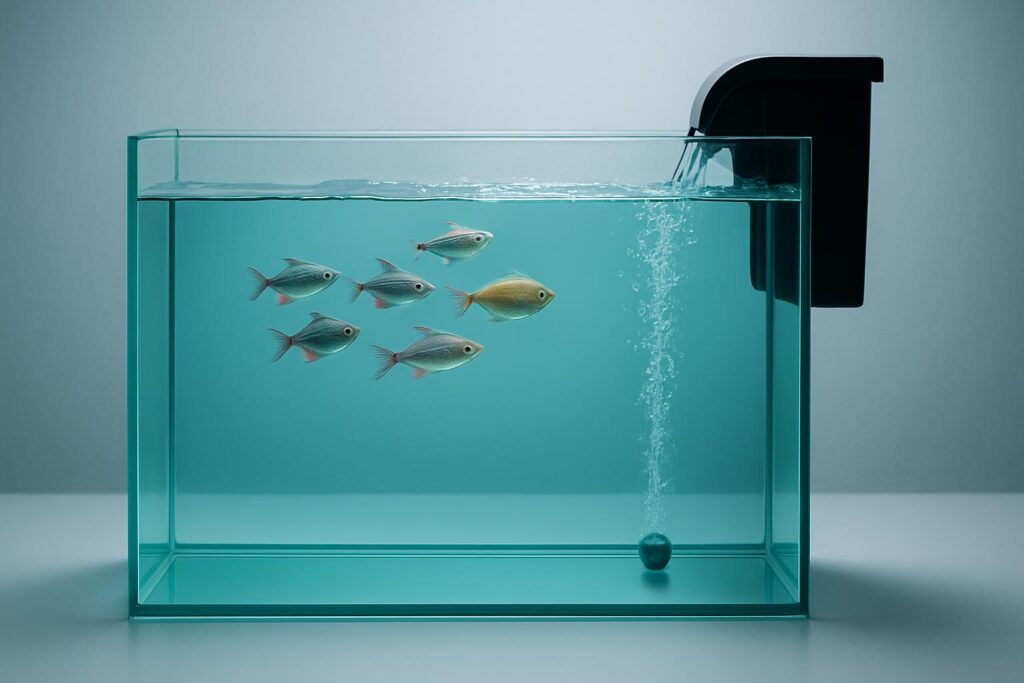
1. Push oxygen into the water. Lower the water level a few centimeters to increase the waterfall from a hang-on-back filter. Point filter returns up so they break the surface. Plug in an air pump and airstone if you have one. Even a sponge filter or Venturi nozzle helps. If you have none of these, gently swirl the surface by hand to break any film, and run a small fan across the surface to promote gas exchange.
2. Do a 30 to 50 percent water change. Use a conditioner that treats chlorine and chloramine and binds ammonia. Dose the conditioner for the full tank volume before or as the new water enters. Match the new water within 1 to 2 C of the tank to avoid shock. Vacuum debris while you siphon to remove decaying organics that steal oxygen.
3. Turn off CO2 injection if you use it. Keep the lid cracked open for more exchange. In planted tanks, keep an air pump on until fish are fully recovered.
4. Cool hot water safely. If the tank is at or above 28 C, aim a fan at the surface, dim or turn off lights, and float sealed bags or bottles of cold water. Let temperatures drop gradually, not more than 1 C per hour.
5. Pause medications that reduce oxygen. Many treatments, especially formalin and oxidizers, depress oxygen or irritate gills. Increase aeration heavily before resuming any treatment after the tank stabilizes.
6. Concentrate fish by the strongest flow. If one spot has best aeration, gently guide the weakest fish there while you work. Keep handling minimal.
Diagnose the Cause After Fish Stabilize
Test the water
Use reliable liquid tests. Keep ammonia and nitrite at 0 ppm, nitrate below 20 to 40 ppm, stable pH in your species range, and temperature appropriate for the fish. If ammonia or nitrite is present, the biofilter is overloaded or damaged. If nitrate is high, maintenance or stocking needs attention. If pH is unstable, check carbonate hardness. A KH of 3 to 8 dKH gives most freshwater tanks decent buffering.
Inspect the surface and filter flow
A dull, oily film blocks gas exchange. Aim returns to wrinkle the entire surface. A canister spray bar should face slightly up, not straight across. A hang-on-back filter should produce a visible ripple. Check that prefilters and sponges are not clogged. Clean mechanical media in siphoned tank water, not tap water.
Check equipment sizing
Undersized filters and air pumps cannot keep up with heavy stocking. Aim for 5 to 10 times the tank volume per hour in a freshwater community tank, with visible ripples across the entire surface. Ensure heater and cooling measures keep temperatures in range.
Review stocking and feeding
Too many fish or fast-growing species like goldfish flood the tank with waste. Overfeeding leaves organics to rot and consume oxygen. Reduce the stock or upgrade the filter. Feed small amounts the fish clear in under two minutes. Remove uneaten food.
Consider your water source
Municipal water often contains chloramine, which persists longer than chlorine and burns gills unless neutralized. Well water can be low in oxygen right out of the tap. Always treat city water with a conditioner that handles both chlorine and chloramine, and aerate new water before adding if you draw from a well.
Screen for disease
Gill flukes, heavy parasite loads, and bacterial gill infections cause gasping even when oxygen looks fine. Signs include flashing, thick gill mucus, very bright red or ragged gills, and fish isolating while breathing hard. Fix water quality first, then treat based on a clear diagnosis. Support every treatment with strong aeration.
Oxygen Basics for Aquariums
How oxygen enters the water
Oxygen dissolves at the surface. Agitation replaces water at the top with water from below and breaks surface films that block exchange. More ripple means faster gas exchange without needing a raging current underwater.
Temperature and oxygen
Warm water holds less oxygen. A tank at 30 C can hold far less oxygen than at 24 C. Combine heat with crowding and a calm surface and fish will pant. Yes, warm water holds less oxygen, so temperatures above 28 C can trigger surface gasping, especially in crowded tanks.
Nighttime dips in planted tanks
Plants switch to consuming oxygen at night. If CO2 runs too long or flow is weak after lights out, fish may gasp before dawn. Run a timed air pump or surface skimmer at night and shut CO2 with a solenoid when lights go off. Keep a gentle surface ripple 24 or 7.
Salinity and altitude effects
Salt and dissolved minerals reduce oxygen solubility. Tanks at higher altitude also hold less oxygen. Counter this with extra surface agitation and appropriate flow. Avoid heavy salt use in freshwater unless you have a clear reason and understand the tradeoffs.
Filtration and Aeration Setup That Prevents Gasping
Choose and maintain the filter
Use a filter rated for at least the tank volume, often one size up for messy fish. Rinse mechanical media weekly or biweekly in tank water. Do not overpack fine floss that chokes flow. Keep impellers and intake strainers clean.
Add dedicated aeration
An air pump with an airstone or a sponge filter is cheap insurance. Air bubbles are less important than the rising column of water they lift, which turns the surface. A battery backup air pump keeps fish alive during power cuts.
Position returns for maximum exchange
Angle spray bars upward. Raise hang-on-back filter levels to spill water with a gentle fall. Use a small surface skimmer to remove films. Keep a small gap at the lid or mesh tops to avoid sealing the tank off from room air.
Balance flow with fish comfort
Create zones of calmer water using plants, wood, or rocks, but always keep the surface moving. Fish should be able to rest without being blasted while the surface still ripples end to end.
Temperature Control and Seasonal Spikes
Prevent heat-driven oxygen crashes
During heat waves, room temperature can push tanks into the danger zone. Keep the tank away from windows, reduce photoperiod, and run a fan across the surface for evaporative cooling. Top off evaporated water with conditioned water of similar temperature.
Safe cooling targets
Most tropical community fish are comfortable at 24 to 26 C. Goldfish and other coldwater fish prefer 18 to 22 C. Lower temperature slowly, no more than 1 C per hour, to avoid stress.
Water Changes and Conditioning Without Oxygen Crashes
Conditioning the new water
Always add a conditioner that neutralizes chlorine and chloramine before or during refills. Chlorine and chloramine burn gills and trigger gasping within minutes. Chloramine also releases ammonia when neutralized, so use a conditioner that binds ammonia until your biofilter processes it.
Match temperature and prevent pH shock
Match the new water temperature to within 1 to 2 C. Large swings make stressed fish breathe harder. Keep pH changes small and controlled. If your tap pH differs from the tank by more than 0.3, blend water or precondition it to avoid shock.
Aerate stored water
If you store water in barrels or use well water, run an air stone inside the container for at least an hour before use. Pre-aeration saturates oxygen and drives off gases that could irritate fish.
Stocking, Feeding, and Maintenance Habits
Right fish, right load
Plan stock for the filter you have, not the gallon number on the glass. Large goldfish, plecos, and cichlids produce far more waste than small tetras or rasboras. Avoid crowding. Understocked tanks are easier to keep oxygen rich and stable.
Feeding that supports oxygen balance
Feed small amounts that fish finish in under two minutes. Skip feeding on days when fish show stress. Remove leftovers and dead plant matter. Uneaten protein quickly becomes ammonia and devours oxygen as it decomposes.
Maintenance rhythm
Vacuum detritus weekly, rinse mechanical media, and trim decaying leaves. Replace or rinse clogged prefilters before flow drops. Keep a consistent 25 to 50 percent water change schedule based on nitrate growth and stock level.
When Gasping Is Not Only Oxygen
Ammonia and nitrite poisoning
Ammonia burns gills and causes swelling and excess mucus. Nitrite interferes with oxygen transport in blood. Fish may gasp even if dissolved oxygen is fine because their gills and blood cannot carry enough oxygen. The fix is immediate large water changes, adding a conditioner that binds ammonia and nitrite, cutting feeding, and reinforcing the biofilter. Keep ammonia and nitrite at 0 ppm.
Chemical contaminants
Household sprays, paint fumes, and cleaning agents can dissolve into the tank. If you suspect contamination, run fresh activated carbon, do large water changes, and increase aeration. Prevent future exposure by covering the tank during room treatments and ventilating well.
CO2 imbalances
Excess CO2 from injection or poor ventilation can displace oxygen and lower pH. Turn off CO2, increase surface agitation, and stabilize KH to buffer pH. Resume CO2 only when you can maintain daytime pH stability and nighttime aeration.
pH crash from low KH
Without buffering, bacterial activity can drive pH sharply down. Fish will gasp and appear stunned. Raise KH slowly with partial water changes or suitable buffers, and improve maintenance to reduce organic load.
Species Notes
Labyrinth fish
Bettas and gouramis regularly take air at the surface. No, labyrinth fish like bettas and gouramis naturally gulp air from the surface, but persistent clustering at the surface with rapid gill movement still signals distress.
Catfish and loaches
Corydoras make quick trips to the surface. Occasional gulps are normal. Continuous top-dwelling and panting are not. Loaches may crowd outflows when oxygen is low.
Goldfish and koi
These species demand high oxygen and excellent filtration. Heavy feeding and warm rooms push them into trouble quickly. Provide strong aeration and large, frequent water changes.
Plecos and other large-bodied fish
Big biomass equals big oxygen demand. Ensure oversized filtration and constant surface movement. Wood chewing and heavy waste make maintenance vital.
Step-by-Step Permanent Fix Plan
1. Stabilize oxygen every day
Set returns or spray bars to ripple the full surface. Run an air stone in the opposite corner to circulate dead zones. Keep lids vented. In planted tanks, automate a nighttime air pump.
2. Control temperature
Dial in the heater, add a small fan for summer, and shorten photoperiod in heat waves. Keep the tank away from direct sun and electronics that radiate heat.
3. Right-size flow and filtration
Choose filters that meet or exceed your target turnover and maintain them before flow drops. Add a sponge filter as backup and biological support.
4. Fix water chemistry at the source
Use a conditioner for chlorine and chloramine at every refill. Pre-aerate stored or well water. Keep KH sufficient for stable pH. Track nitrate to tune your change schedule.
5. Adjust stock and feeding
Rehome or reduce fish if the biofilter and oxygen demand are consistently at the limit. Feed modestly and remove leftovers. Grow plants for nutrient uptake but keep surface movement at all times.
6. Build an outage plan
Have a battery air pump or UPS for aeration during power cuts. Know how to drop temperature with fans and cold packs safely. Keep extra conditioner on hand.
Conclusion
Surface gasping tells you the tank is failing to support normal respiration. The fix starts with oxygen and clean, conditioned water, then moves to stable temperature, strong and well-aimed flow, and disciplined maintenance. When you pair good gear placement with practical routines, fish stop racing to the surface and return to calm, natural breathing throughout the tank.
FAQ
Q: What is the first thing to do when fish are gasping at the surface?
A: Add strong surface agitation immediately, then perform a large partial water change with dechlorinated, temperature-matched water.
Q: Can warm water cause fish to gasp at the surface?
A: Yes, warm water holds less oxygen, so temperatures above 28 C can trigger surface gasping, especially in crowded tanks.
Q: Are bettas and gouramis always in trouble when they breathe air at the top?
A: No, labyrinth fish like bettas and gouramis naturally gulp air from the surface, but persistent clustering at the surface with rapid gill movement still signals distress.
Q: What water parameters should I aim for after a gasping event?
A: Keep ammonia and nitrite at 0 ppm, nitrate below 20 to 40 ppm, stable pH in your species range, and temperature appropriate for the fish.
Q: How much filter flow do I need to prevent low oxygen?
A: Aim for 5 to 10 times the tank volume per hour in a freshwater community tank, with visible ripples across the entire surface.