
We are reader supported. When you purchase through links on our site, we may earn an affiliate commission. Also, as an Amazon affiliate, we earn from qualifying purchases.
Fish gasping at the surface is a warning that your tank is low on dissolved oxygen. It can happen fast, and fish can decline within hours if you do nothing. The good news is that you can fix it with clear steps and prevent it from coming back. This guide explains what surface gasping means, why it happens, what to do right now, and how to keep oxygen stable long term.
What Surface Gasping Really Means
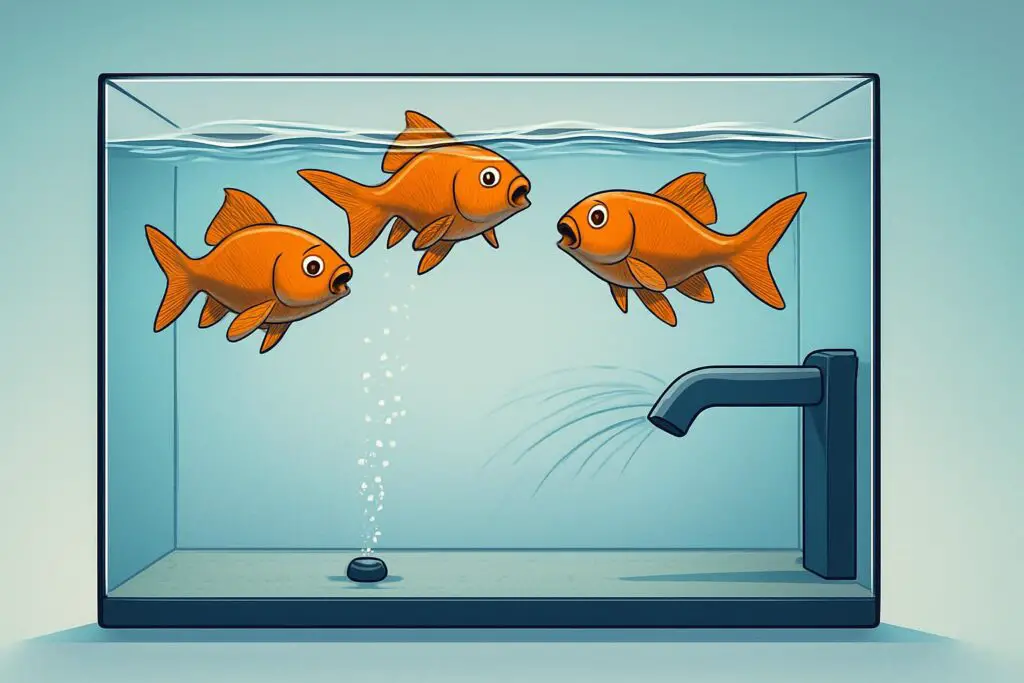
Healthy fish draw oxygen from water through their gills. When dissolved oxygen drops too low, fish move to the surface where the water has more oxygen from contact with air. They breathe rapidly and appear to sip at the surface. This is not normal and needs action.
Do not confuse gasping with normal surface behavior. Some fish rise to the top during feeding or explore the surface calmly without rapid gill movement. Labyrinth fish such as bettas and gouramis can take occasional gulps of air with a slow, deliberate motion. That is normal air breathing, not desperate gasping.
Watch for stress signs that point to low oxygen. Fish breathe fast, hold fins tight, gather near the filter outflow, lose color, or become sluggish. Bottom dwellers that rarely surface will rise up. Snails or shrimp may climb higher in the tank. If more than one fish shows these signs at the same time, assume oxygen is the issue.
Why Oxygen Runs Low
Overstocking and High Bioload
Too many fish use more oxygen and produce more waste. Bacteria that break down waste also consume oxygen. The combination lowers dissolved oxygen and raises the risk of surface gasping, especially at night and after large feedings.
Heat and Seasonal Spikes
Warm water holds less oxygen. A sudden heat wave or a heater set too high can push oxygen below safe levels. Even a few degrees matter, because saturation drops as temperature rises.
Poor Surface Agitation
Oxygen enters water at the surface. A flat, still surface slows gas exchange. A protein film can form and block oxygen diffusion. Gentle ripples or splashing break the film and increase contact with air.
Excess Organics and Dirty Substrate
Leftover food, fish waste, decaying plants, and mulm all raise oxygen demand. When organics build up in the substrate and filter, bacteria work harder and consume more oxygen, especially overnight.
Plants and Nighttime Oxygen Dips
In light, plants produce oxygen. In darkness, plants consume oxygen just like fish. Heavily planted tanks can experience a nighttime oxygen dip. This often shows as early morning gasping that improves after the lights come on.
Medication and Chemical Oxygen Demand
Some treatments reduce oxygen or increase the oxygen demand of the system. Fish under medication often have a lower safety margin, so ensure extra aeration during treatment.
Power Outages and Equipment Failure
When filters and pumps stop, water stops moving. Oxygen drops quickly, especially in stocked tanks. A clogged filter or broken impeller can produce the same effect without warning.
CO2 Misuse in Planted Tanks
Too much CO2 can stress fish and suppress oxygen availability. CO2 should turn off at night and should never be pushed so high that fish breathe fast or gather at the surface.
What To Do Right Now When Fish Are Gasping
Act fast. Every minute counts when oxygen is low. Use these steps in order, and do as many as you can at the same time.
Increase Aeration and Surface Movement
Add or raise the airflow on an airstone. Point your filter output to ripple the surface. Lower the water level slightly so the return splashes. If you have a spray bar, angle it up to churn the surface.
Do a Large Water Change
Change 30 to 50 percent of the water right away. Match temperature closely and use a full dose of dechlorinator. Slightly cooler water within the safe range holds more oxygen, so aim for a drop of one to two degrees if your tank was warm.
Stop Feeding and Pause CO2
Feeding increases oxygen demand. Skip feeding for 24 hours. Turn off CO2 and keep it off until fish are stable. Keep lights on for planted tanks during the daytime to support oxygen production.
Clean Flow Paths
Rinse the filter intake sponge and prefilter in tank water to restore flow. Clear any debris at the surface. Remove dead leaves and visible waste with a net.
Power Outage Backup
Use a battery air pump if you have one. If you do not, aerate by repeatedly scooping water from the tank and pouring it back from a height to break the surface. Repeat every few minutes until power returns or a battery pump is running.
After these steps, observe for 30 to 60 minutes. Breathing should slow, fish should return to midwater, and color should improve. If not, repeat the water change and increase aeration further.
Measure and Track Oxygen
Dissolved oxygen is measured in mg per liter. Aim for 6 to 8 mg per liter for community tanks. Below 4 mg per liter, fish become stressed and gasping begins. Below 2 mg per liter, fish are at risk of death. Use a dissolved oxygen test kit or meter if possible. If you cannot measure, watch behavior as a guide and err on the side of more aeration.
Track temperature alongside oxygen. Warmer water holds less oxygen, so stable temperature control helps keep oxygen stable.
Fix the Root Cause
Stocking and Bioload
Stock conservatively, based on adult size and activity. Large and active fish use more oxygen. Goldfish, cichlids, and fast swimmers need more space and more flow. Avoid adding multiple new fish at once. Give your filter time to catch up.
Surface Exchange and Flow
Maintain a consistent surface ripple without blasting fish. Angle your spray bar up. Raise a return nozzle to skim the top. Consider a surface skimmer if you see film. For bettas and other calm water species, keep the surface moving gently and add an airstone to one side where flow is mild.
Filter Care and Flow Recovery
Rinse mechanical media weekly to biweekly in tank water. Do not let floss or sponges clog. Do not overclean biological media. The goal is strong, steady flow with preserved beneficial bacteria.
Control Organics
Vacuum the substrate during weekly water changes. Remove uneaten food within a few minutes. Rinse frozen foods to reduce excess juice. Trim decaying plant leaves before they rot.
Plant Management
Keep a stable photoperiod. Six to eight hours is a good start for new tanks. In heavily planted tanks, run gentle aeration at night. Avoid sudden multi day blackouts that can drop oxygen too far.
Temperature Management
Target a stable range that suits your fish. For most tropical community fish, 24 to 26 degrees Celsius is a safe range. For cooler water species, 20 to 22 degrees Celsius helps. During heat waves, use a fan across the surface, float ice bags in an emergency, and dim lights to limit heat input.
Algae and Blooms
Green water or sudden algae blooms can swing oxygen levels. Control light intensity and duration. Keep nutrients stable with regular maintenance. Avoid overfeeding and large nutrient spikes.
Medication Practices
Increase aeration before and during treatment. Follow dosage and do not stack multiple medications unless directed. If possible, treat sick fish in a hospital tank so the display tank remains stable.
CO2 Practices
Use a timer and a solenoid so CO2 turns off at night. Keep visible surface movement while maintaining adequate CO2 for plants. If fish breathe fast or gather near the surface during the day, reduce CO2 and raise aeration until fish are stable.
Species Notes
Labyrinth Fish
Bettas and gouramis can breathe air through a labyrinth organ. Occasional surface gulps with normal behavior are fine. Rapid, repeated gasping, color loss, or clamped fins still indicate low oxygen or stress and require action.
Goldfish and High Waste Fish
Goldfish produce heavy waste and use more oxygen. They need strong filtration, frequent maintenance, and ample surface movement. Surface gasping in goldfish is often a sign of a dirty tank or clogged filter.
Bottom Dwellers
Corydoras, loaches, and many catfish rarely go to the surface. If they rise up and breathe fast, oxygen is low. Fix aeration and flow immediately and clean the substrate well.
Shrimp and Snails
Shrimp and snails climb to the surface when oxygen dips. They can alert you before fish gasp. Respond with aeration and maintenance.
Prevention Checklist
Keep stocking moderate for the volume and filter capacity. Maintain a steady surface ripple. Clean prefilters and mechanical media before flow drops. Vacuum debris and remove decay. Stabilize temperature within the species range. Add gentle night aeration in planted or heavily stocked tanks. Increase aeration during medication and heat waves. Test dissolved oxygen if you can, and always watch behavior.
Common Myths and Mistakes
Plants do not always fix oxygen issues. Plants add oxygen in light and consume oxygen in darkness. A blackout can worsen oxygen problems. Aeration does not ruin a planted tank. Gentle surface movement provides enough oxygen without stripping all CO2. Massive deep cleaning can remove too much beneficial bacteria and cause instability. Clean in sections and maintain flow paths first.
Putting It All Together
If fish are gasping, treat it as an oxygen emergency. Increase aeration, churn the surface, and do a large, temperature matched water change. Stop feeding, pause CO2, clear flow paths, and stabilize temperature. Then find and fix the cause. Balance stocking, maintain the filter, control organics, adjust plant and CO2 routines, and plan for outages.
A stable, oxygen rich tank looks calm and active. Fish breathe easily, explore the full water column, and return to the surface only to feed or for normal species behavior. With the right steps, you can turn a crisis into a stable system that runs smoothly day and night.
Conclusion
Surface gasping is a clear signal of low dissolved oxygen. The fix starts with fast aeration and a large water change, followed by steady prevention. Keep surface movement, manage heat, clean wisely, and avoid oxygen shocks at night or during treatment. Most oxygen problems are avoidable with consistent care and attention to flow, temperature, and bioload. When in doubt, add air and improve surface exchange. Your fish will tell you with their breathing and behavior when you have it right.
FAQ
Q: Why are my fish gasping at the surface
A: Fish gasp at the surface when dissolved oxygen is too low, often due to overstocking, high temperature, poor surface agitation, excess organics, nighttime plant respiration, medication effects, CO2 misuse, or a power outage.
Q: What should I do immediately when fish are gasping
A: Add or raise the airflow on an airstone, point your filter output to ripple the surface, and lower the water level slightly so the return splashes. Change 30 to 50 percent of the water right away with dechlorinated, temperature matched water that is one to two degrees cooler if the tank was warm. Stop feeding, turn off CO2, clean the prefilter to restore flow, remove decaying matter, and in a power outage use a battery air pump or manually aerate by scooping and pouring water from a height.
Q: What dissolved oxygen levels are safe
A: Aim for 6 to 8 mg per liter. Below 4 mg per liter, fish become stressed and gasping begins. Below 2 mg per liter, fish are at risk of death.
Q: How can I prevent low oxygen in my aquarium
A: Keep stocking moderate, maintain a steady surface ripple, clean mechanical media and prefilters to preserve flow, vacuum debris, stabilize temperature, add gentle night aeration in planted or heavily stocked tanks, and increase aeration during medication and heat waves.
Q: Do aquarium plants fix oxygen problems on their own
A: In light, plants produce oxygen. In darkness, plants consume oxygen just like fish, so heavily planted tanks can have a nighttime oxygen dip and benefit from gentle night aeration.