
We are reader supported. When you purchase through links on our site, we may earn an affiliate commission. Also, as an Amazon affiliate, we earn from qualifying purchases.
Seeing a goldfish turn black can be alarming. Sometimes it is harmless and even expected. Other times it is a warning that water quality or care needs urgent attention. This guide explains every common cause, how to tell them apart, and the exact steps to fix the problem. Read through, compare each sign to your fish, and act quickly where needed. Clear actions make color return more likely and keep your goldfish safe.
Introduction
Goldfish change color throughout life. They can fade, brighten, or develop new patches. Black is a special case because it often links to melanin, the pigment that appears during healing or due to genetics. The challenge is telling normal color development from damage recovery or disease. This article breaks down causes, diagnosis, and fixes, using simple steps that beginners can follow.
Quick answer first
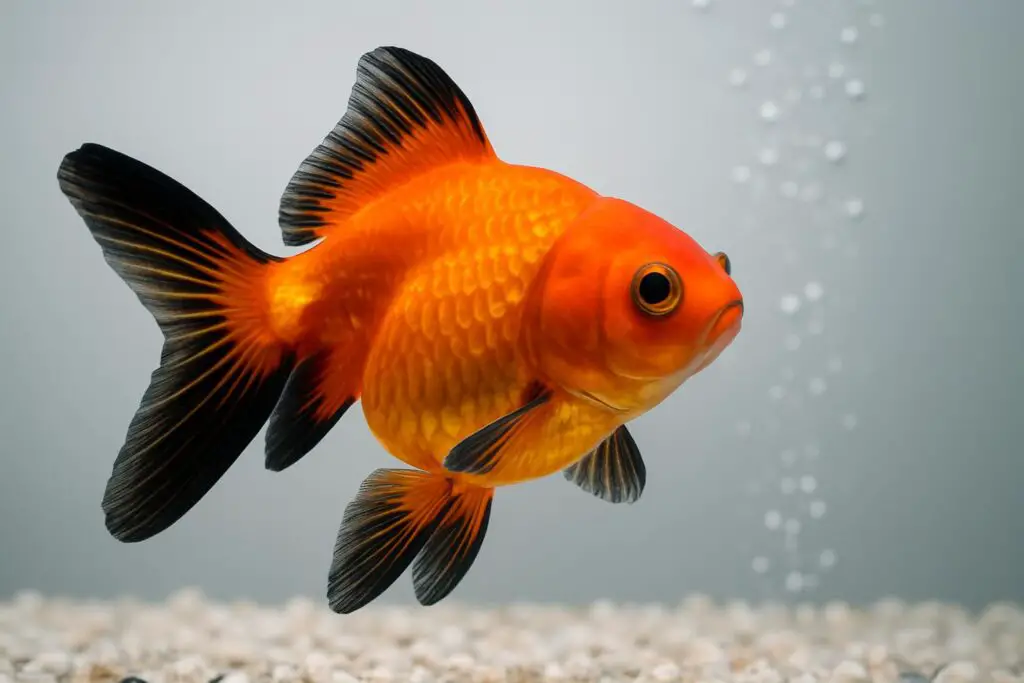
Black patches on goldfish can be normal if the fish is healthy and water parameters are good. Black edging on fins or scales after a water quality issue often signals healing from past ammonia burns. If the fish also shows gasping, clamped fins, flashing, red streaks, or white fuzz, take action. Test water now. Ammonia and nitrite must be zero. Nitrate should stay under 20 to 40 ppm. Large, regular water changes and strong filtration solve most cases.
How goldfish color works
Goldfish color comes from specialized cells in the skin. Orange and red depend on pigments from the diet. Black comes from melanin. Melanin often increases where the skin is recovering from damage. Genetics sets the base pattern. Environment, nutrition, lighting, age, and stress can shift how much pigment shows. Some black marks fade over months. Others are permanent.
Main reasons goldfish turn black
1. Genetics and natural maturation
Many goldfish change color as they mature. Juveniles often start dull and develop deeper hues later. Some lines form black patches or deepen existing dark areas over months or years. If your water is clean and the fish acts normal, genetic change is likely. These changes are gradual and even. They do not cause frayed fins, sores, or breathing issues.
2. Ammonia burn and healing
Ammonia irritates and burns skin and gills. After the burn, black edges or patches can appear as the tissue heals. This black is melanin. It is a common sign seen on fins, along the back, or around gill covers, especially after a spike. If you recently cycled a tank, added new fish, changed filter media, or missed water changes, suspect this cause. Fix the water and the black may fade in weeks to months as new scales grow.
3. Ongoing poor water quality
Continued exposure to ammonia or nitrite keeps damaging tissue. You may see new black areas forming over time, along with lethargy, fin clamping, or rapid gill movement. Dirty gravel, clogged filters, and too many fish in a small tank are common roots. Test results will show nonzero ammonia or nitrite, or nitrate staying high. This needs immediate correction.
4. Temperature or lighting shifts
Cooler water can slow metabolism and sometimes deepen dark colors. Lighting intensity and duration affect pigment display in some fish. Moving a fish from dim to bright light can change how black looks, but this is usually subtle. If behavior and water tests are normal, small color shifts from environment are not harmful.
5. Physical injury and fin regrowth
Nips, scrapes, or torn fins can heal with a thin black edge. This is common when mixing nippy tankmates or after netting and transport. Provide calm tankmates and clean water so tissue can mend. New fin growth often first appears clear or white, then may show a dark outline as it matures.
6. Disease and parasites
True black spot disease is caused by parasites that use snails and birds to complete their life cycle and is more common in outdoor ponds. It looks like distinct, pinpoint black cysts. Indoor aquariums rarely see this. If you keep a pond with snails and visiting birds, address the parasite cycle and improve overall hygiene. Fungal or bacterial infections are not black by nature, but darkening can appear around healing edges after treatment.
7. Stress and overcrowding
Stress from small tanks, aggressive tankmates, poor diet, or unstable parameters can dull colors or trigger unusual pigment expression. Combined with spikes in waste, this sets up repeated tissue damage and healing, which shows as black margins. Reducing stress and improving care usually stabilizes color.
How to diagnose the cause step by step
Step 1: Observe pattern and speed
Slow, even darkening without other symptoms points to genetics or maturation. Sudden black edges after a known water issue indicate healing from ammonia burns. Dot-like, pepper-sized spots in a pond environment suggest parasites.
Step 2: Test water now
Use a liquid test kit. Targets for goldfish are:
– Ammonia 0 ppm
– Nitrite 0 ppm
– Nitrate under 20 to 40 ppm
– pH 7.0 to 8.4
– KH 5 to 12 dKH
If ammonia or nitrite are above zero, treat water quality first. If nitrate stays high, increase water changes and reduce waste.
Step 3: Watch behavior
Warning signs include gasping at the surface, listless hovering, rapid or labored breathing, clamped fins, rubbing against objects, red streaks in fins, or cotton-like growths. These point to ongoing irritation, poor oxygen, or infection risk.
Step 4: Review recent changes
New fish, skipped maintenance, overfeeding, power outages, filter cleanings with tap water, or replacing all filter media at once can crash the biofilter and cause ammonia spikes. Note dates and link them to when black marks appeared.
Step 5: Consider the setting
Indoor tank with no snails or wildlife exposure makes true black spot disease unlikely. Outdoor ponds with snails and birds make it more plausible. Confirm by looking for tiny, crisp black dots rather than patches or smudges.
Step 6: Photograph and track
Take weekly photos under the same light. Healing black margins should stabilize or fade over time once water is corrected. Spreading black with ongoing bad tests means the root cause is not fixed.
Fixes that work
1. Stabilize water quality
– Do an immediate 50 percent water change if ammonia or nitrite are detectable. Match temperature and dechlorinate thoroughly.
– Add a conditioner that detoxifies ammonia and nitrite for 24 to 48 hours, but still do water changes and filtration.
– Vacuum the substrate to remove trapped waste and leftover food.
– Clean the filter intake and prefilter sponges in old tank water. Do not rinse biomedia under tap water.
2. Cycle and maintain the biofilter
– Ensure the tank is fully cycled. Beneficial bacteria convert ammonia to nitrite, then to nitrate.
– If the filter is new or was over-cleaned, expect a mini cycle. Test daily and change water to keep ammonia and nitrite at zero.
– Never replace all filter media at once. Stagger changes. Preserve biomedia.
3. Right tank size and stocking
– Goldfish are heavy waste producers. Use at least 20 gallons for the first fancy goldfish and 10 more gallons for each additional fancy. Commons and comets need larger systems, often 30 to 40 gallons or more per fish, or a pond.
– Avoid mixing with fin nippers. Keep groups compatible in size and temperament.
4. Strong filtration and flow
– Aim for a filter turnover of 5 to 10 times the tank volume per hour for goldfish.
– Use large biomedia capacity. Add a prefilter sponge to capture debris and protect gills.
– Increase surface agitation for oxygen exchange using spray bars or air stones.
5. Water change routine
– Do 30 to 50 percent weekly water changes. In crowded tanks, increase frequency.
– Always dechlorinate tap water. Match temperature to avoid shock.
– Test nitrate to set your schedule. If nitrate rises above 20 to 40 ppm before the week ends, change more water or reduce feeding.
6. Feeding and waste control
– Feed small amounts two to three times per day, only what they can finish in under one minute.
– Use quality goldfish pellets with balanced protein and fiber. Supplement with blanched vegetables and occasional frozen foods.
– Remove uneaten food after a few minutes. Overfeeding is a leading cause of ammonia spikes.
7. Injury prevention
– Remove sharp decor. Smooth edges on rocks or ornaments.
– Provide enough space so fish do not collide when startled.
– Avoid rough netting. Use a container or soft net for transfers.
8. Parasite management in ponds
– If you identify true black spot disease, break the snail and bird cycle. Reduce snail populations and limit bird access.
– Improve filtration and water movement. Clean debris regularly.
– Quarantine new fish before adding them to the pond.
9. Lighting and temperature
– Keep temperature stable. Fancy goldfish do well around 18 to 23 degrees Celsius. Avoid sudden swings.
– Maintain a consistent light schedule. About 8 to 10 hours of light supports normal pigment display without stress.
10. Patience with genetic change
– If water is perfect and behavior is normal, accept that some black is genetic or age related.
– Document changes. If the new pattern stabilizes, it is likely permanent or long lasting.
When to seek veterinary help
– Black patches continue to spread despite zero ammonia and nitrite and stable nitrate.
– The fish shows breathing distress, rapid decline, ulcers, or heavy slime coat production.
– You suspect multiple infections or parasites beyond simple water quality issues.
A vet can examine gill health, perform skin scrapes, and prescribe targeted treatments safely.
How long does black take to fade
Healing black from ammonia burn or injury can begin fading in weeks but may take months to fully clear as new scales form. Some areas remain dark if the damage was deep or if genetics support darker pigment. Consistent, clean water speeds recovery. There is no instant fix.
Common mistakes to avoid
– Ignoring testing and guessing the cause.
– Doing large filter cleanings under tap water that kill the biofilter.
– Overfeeding and forgetting to remove leftovers.
– Relying only on conditioners instead of doing water changes.
– Adding more fish to an unstable tank.
– Chasing color with random additives or dyes. Focus on water and husbandry.
Myths and facts
– Myth: Black always means disease. Fact: Healing from ammonia burn is a leading cause and is not an infection by itself.
– Myth: Salt or medication will remove black color. Fact: Black from healing is pigment and fades only as new tissue replaces old.
– Myth: All black marks are permanent. Fact: Genetic black is often lasting, but healing black can fade over time.
Simple maintenance checklist
– Test ammonia, nitrite, nitrate, and pH weekly.
– Change 30 to 50 percent of water weekly. Vacuum substrate.
– Keep ammonia and nitrite at zero. Keep nitrate under 20 to 40 ppm.
– Maintain robust filtration and surface agitation.
– Feed lightly and remove leftovers.
– Quarantine new fish and avoid overcrowding.
– Track color changes with photos to spot trends.
Putting it all together
Identify the pattern, test the water, and correct husbandry first. In many cases the black you see is the skin healing from ammonia exposure. Good water keeps that healing on track and prevents new damage. If everything is stable and your fish acts normal, genetic color change is a likely and harmless explanation. If you keep a pond with snails and bird visitors, evaluate for black spot disease. When in doubt, document, improve water quality, and seek a vet if symptoms escalate.
Conclusion
Black on a goldfish can mean either progress or a problem. The difference lies in water tests, behavior, and context. Zero ammonia and nitrite, controlled nitrate, solid filtration, and steady care prevent most issues. Healing black will often fade with time. Genetic black will settle into a stable pattern. Act fast on water quality, keep stocking and feeding sensible, and your goldfish will reward you with stable color and long life.
FAQ
Q: Why is my goldfish turning black
A: The most common reasons are genetic color change, healing from ammonia burns, ongoing poor water quality, injury recovery, or in ponds a parasite called black spot disease.
Q: How do I know if black is from healing or genetics
A: Healing black often appears as edges on fins or scales after a water quality issue and may fade over time. Genetic black develops slowly, is more even, and the fish otherwise acts normal with clean water tests.
Q: What water parameters should I keep for goldfish
A: Keep ammonia at 0 ppm, nitrite at 0 ppm, nitrate under 20 to 40 ppm, pH 7.0 to 8.4, and KH 5 to 12 dKH.
Q: How do I fix black patches caused by water quality
A: Do large water changes, detoxify ammonia and nitrite temporarily, maintain a strong biofilter, increase filtration and aeration, reduce feeding, and establish a weekly 30 to 50 percent water change routine.
Q: How long will it take for black to fade
A: Healing related black can start fading in weeks but may take months to clear as new tissue replaces old. Some areas may remain dark depending on depth of damage and genetics.