
We are reader supported. When you purchase through links on our site, we may earn an affiliate commission. Also, as an Amazon affiliate, we earn from qualifying purchases.
New fish die while old ones stay fine. It happens to beginners and experienced keepers. It feels random, but it is not. New fish fail because many small stressors stack up fast. Each stressor is survivable alone. Together, they push a fragile newcomer past its limit. Once you learn where this stack comes from, you can break it. This guide shows why it happens and gives simple steps to prevent it on your very next purchase.
Why established fish survive while newcomers do not
Established fish are already adapted to your tank. They understand the current, the food, the light, and the routine. Their immune systems have adjusted to the microbes in your water. They hold territory and reach food first. New fish start with none of these advantages. They arrive stressed, immunosuppressed, and often injured at a microscopic level. Then they meet your water chemistry, your microbes, your resident fish, and your maintenance habits. If even two or three factors go wrong, mortality follows.
Transport stress and hidden ammonia damage
During bagging and transport, fish breathe and excrete in a small volume. Carbon dioxide builds up and drops pH. Ammonia builds up but stays less toxic while pH is low. When you open the bag, oxygen rushes in and pH rises. Suddenly, a portion of the ammonia converts to the more toxic form. Gills burn, and damage may not be obvious at first. A fish can seem fine and then decline over the next day. Longer transport, warmer bags, and crowded packing worsen this effect.
Acclimation mistakes that magnify harm
Two common mistakes make bag ammonia damage worse. The first is leaving the bag open and floating for a long time. This raises pH in the bag and spikes toxicity before the fish is moved. The second is pouring store water into your tank. This adds ammonia, pathogens, and medication residue to your system. Either mistake stacks with transport stress and raises the risk of a quick loss.
Temperature and oxygen mismatch
Even a few degrees of temperature difference can shock a fish that is already stressed. If your tank has low surface agitation, oxygen can be near the limit at night. New fish with irritated gills will fail first in low oxygen. Old fish, adjusted and less stressed, ride it out. The result looks like only the new fish were weak, but the root cause is marginal oxygen and unstable temperature.
pH, KH, GH, and TDS mismatch
Fish regulate internal salts and fluids through their gills. Big changes in pH, hardness, or total dissolved solids force an osmotic adjustment. That adjustment uses energy and increases stress. Differences over about 0.3 to 0.5 pH units, 2 to 3 degrees KH or GH, or 50 to 100 ppm TDS raise risk for sensitive species. Many hardy fish can handle more, but not when combined with transport and ammonia burn. Stability matters more than chasing an ideal number.
Ammonia, nitrite, and the mini cycle
Adding new fish increases bioload. Your filter bacteria need time to multiply to match the new waste. This lag is a mini cycle. Ammonia or nitrite may bump up for a day or two. Old fish that are acclimated tolerate brief spikes better than new fish with damaged gills. A small spike that looks harmless on a test strip can be fatal to a newcomer.
Immune gap and pathogen mix
Every tank and store system has its own set of microbes. Healthy fish live with them. When you mix two systems, fish meet microbes they have not seen before. Resident fish often have immunity. New fish do not. If quarantine is skipped, disease can break out. Sometimes only the newcomers die. Other times, the whole tank is affected later.
Territory and aggression
Established fish treat newcomers as intruders. Chasing, fin nipping, and blocking feeding spots all raise stress. Some species tolerate groups only when added in numbers and at the same time. Others need clear boundaries and sight breaks. Aggression may be brief and still be enough to push a new fish over the edge.
Feeding and gut transition
New fish may not recognize your foods. They could be used to live or frozen prey, or a different pellet. A few days without calories is common. With stress already high, a missed feeding window leads to weakness and secondary infections. Certain fish also have specific needs, like constant grazing for algae eaters. Failure to meet those needs during the first week increases losses.
Maintenance shocks and chemical hits
Large filter cleanings, deep gravel vacuums, or a big water change with untreated tap can damage your biofilter or irritate gills. Chloramine in city water is stable and will pass through if a proper conditioner is not used. Sprays, aerosols, soaps, and metals near the tank add another layer of harm. Old fish may survive these slips. New fish often do not.
Medication and salt misuse
Medication poured into a display tank can harm the biofilter. Copper hurts invertebrates and can linger in silicone. Many dyes and antibiotics reduce nitrifying bacteria temporarily. Salt can help in some situations but harms plants and sensitive species. Using these tools without a plan often creates new problems right when new fish arrive.
Source water differences between store and home
Many stores use reverse osmosis water and reconstitute it with salts. Many homes use hard tap water. Moving between these systems without a careful acclimation and quarantine is a large jump. The fish might look fine for a few hours and then crash late that night.
A prevention plan that works
Prevention begins before you buy the fish. It continues through transport, acclimation, quarantine, and the first weeks of care. The plan below breaks the stress stack at each step.
Before you buy: verify readiness
Test your tank with a liquid kit. Ammonia should be zero. Nitrite should be zero. Nitrate should be under 20 to 40 ppm depending on species. Temperature should be steady day and night. pH should be stable. Do not add fish if you changed filter media or performed a deep clean within the last week. Have a quarantine tank cycled or seeded and ready. Review species compatibility and mature size. Plan feeding for the new species.
Choose healthy fish at the store
Watch the fish you want for several minutes. Look for clear eyes, intact fins, smooth breathing, and a fish that holds position and eats. Avoid fish in tanks with dead or gasping neighbors. Ask the store how long the fish have been there. Fish that arrived that day are not ideal. Ask for the store water pH and temperature if possible, and write it down for acclimation planning.
Transport with minimal stress
Go straight home. Keep the bag out of sun and cold. Do not squeeze the bag or play with it. Dim room lights before opening the bag. Prepare your quarantine tank in advance with matched temperature and good aeration.
Acclimation that avoids ammonia burn
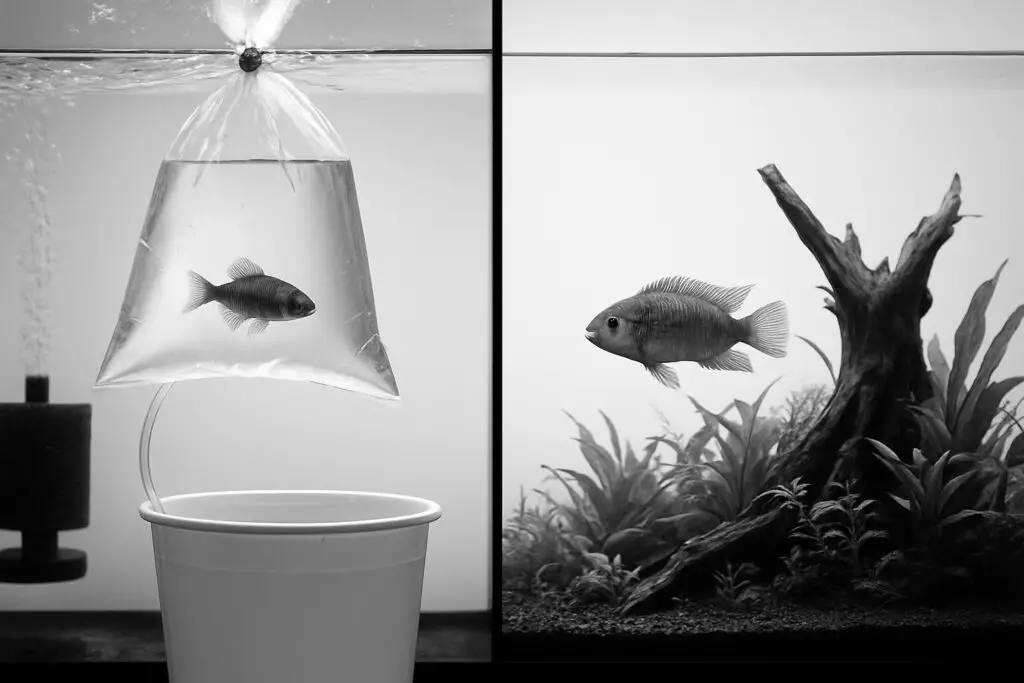
If transit was short and store water is similar to yours, float the sealed bag for 15 to 20 minutes for temperature only, then net the fish into quarantine. Do not pour store water into your tank. If transit was long or chemistry is different, use a drip acclimation into a clean bucket. Add a water conditioner that binds ammonia to the bucket before you start. Drip your tank water into the bucket for 30 to 45 minutes. Keep the drip gentle. Net the fish into quarantine at the end. Discard all water in the bucket.
Quarantine setup that increases survival
Use a bare-bottom tank with a tight lid. A sponge filter seeded from your main tank gives instant biofiltration and gentle flow. Add a heater, thermometer, and small hiding spots like PVC elbows. Match pH, temperature, and hardness to your display tank. Keep lights dim for the first day. Observe the fish closely at feeding time and one hour after lights out. Quarantine for two to four weeks. This protects your display and lets the new fish recover fully.
Quarantine routine and care
Feed small portions two to three times daily for the first week. Offer the food they recognize if you know it, then transition slowly. Use high oxygen and steady heat. Test ammonia and nitrite daily for the first week, then every few days. Change 25 to 50 percent of the water as needed to keep ammonia and nitrite at zero. Siphon waste daily. Do not overclean the sponge filter; squeeze it in removed tank water only if flow drops.
Medication strategy
Observe first. Treat only what you see unless you follow a proven prophylactic protocol in quarantine. Parasite signs include flashing, clamped fins, and fine dust on the skin. Bacterial signs include frayed fins, ulcers, and cloudy patches. If you medicate, keep oxygen high and monitor ammonia. Avoid medicating the display tank unless there is no choice. Do not mix medications without a clear reason.
Increase oxygen and surface agitation
Run an airstone in quarantine and in the display if surface agitation is weak. Aim filter outflow to break the surface. Oxygen is consumed more at night when plants and algae respire. Keep gases stable while new fish recover.
Stocking schedule that avoids a mini cycle
Add new fish in small groups rather than all at once. If the species needs a group for confidence, add a cohesive group but be ready with extra biofiltration. After each addition, test daily for a few days. If ammonia or nitrite appears, pause new additions and increase water changes until readings return to zero.
Manage aggression from day one
Before moving fish from quarantine to the display, rearrange decor to reset territories. Add new fish after lights go out. Provide extra hiding spots and line-of-sight breaks using plants, wood, or rock. Feed a small snack soon after introduction to distract and reduce chasing. If one fish is a constant aggressor, use a divider or a breeder box temporarily, or rehome the aggressor.
Water change discipline
Change 25 to 50 percent weekly depending on stocking and feeding. Match temperature within 1 to 2 degrees. Always use a conditioner that neutralizes chlorine and chloramine. Never use soaps or cleaning sprays near the tank. Wash hands and arms with water only before work. Rinse equipment in tank water, not tap.
Parameter targets and stability
Keep ammonia at zero and nitrite at zero at all times. Keep nitrate under 20 to 40 ppm for most community fish. Hold temperature steady within a 1 to 2 degree window. Keep pH stable. Do not chase pH with random additives. If your tap is very soft or very hard, accept stability, choose compatible species, or learn careful remineralization. Stability reduces mortality far more than hitting a specific number.
Feeding new fish for resilience
Offer easy, high-quality foods in small amounts. Use a mix of pellets, flakes, and frozen if appropriate for the species. Soak dry foods briefly so they sink. Remove uneaten food after a few minutes. Feed a little more often rather than large meals. Add a vitamin supplement to frozen foods during quarantine if appetite is weak.
Seeding and protecting your biofilter
Keep a spare sponge filter running in your display tank at all times. Move it to the quarantine tank when needed. This gives you instant, mature filtration. Never replace all filter media at once. Clean media gently in removed tank water to preserve bacteria. Avoid overuse of medications that harm nitrifiers unless treatment is essential.
Step-by-step quick start for your next addition
One day before purchase, test your tank. Prepare quarantine with a seeded sponge, heater, and an airstone. On purchase day, pick healthy fish that have been at the store for a few days. Go straight home. Dim the lights. Float for temperature or drip acclimate based on differences. Net fish into quarantine. Feed lightly after they settle. Test daily for a week. Change water as needed. Observe behavior and appetite. After two to four weeks, move to the display at lights out and with a small layout change.
Troubleshooting if new fish start failing
Check oxygen and temperature first
Increase surface agitation and add an airstone. Verify temperature with a reliable thermometer. Correct any swing quickly but gently.
Test ammonia, nitrite, and nitrate
If ammonia or nitrite is above zero, perform an immediate partial water change and dose conditioner that detoxifies ammonia and nitrite. Reduce feeding. Consider adding a seeded sponge or bottled nitrifiers. Continue daily testing until stable.
Review acclimation and store water differences
If you suspect a large difference in pH or hardness, future fish should be drip acclimated with ammonia-binding conditioner, then quarantined longer to adjust gradually.
Watch for aggression
Identify bullies and victims. Use a divider, breeder box, or rehome the aggressor. Add decor to break sight lines. Feed small, frequent portions during the first days to reduce competition.
Assess disease signs
Use quarantine to treat. Increase oxygen, keep water pristine, and apply targeted medication only when needed. Do not medicate the display unless disease is widespread and you have no alternative.
Common myths to discard
Old tank water makes a tank cycled
Beneficial bacteria live on surfaces, not in clean water. Old water does not cycle a tank. A seeded filter or media does.
Matching a perfect pH number prevents all issues
Stability beats a specific number. A stable pH that suits your fish is safer than a number forced by chemicals that swings each water change.
New fish died because they were weak stock
Quality varies, but husbandry is the larger factor. With good acclimation, quarantine, oxygen, and stable parameters, even modest stock survives and thrives.
Conclusion
New fish die while old ones live because stress stacks fast on newcomers. Transport ammonia burn, acclimation mistakes, oxygen limits, chemistry gaps, mini cycles, aggression, and disease exposure all add up. Break the chain step by step. Test before you buy. Transport smart. Acclimate without pouring store water into your tank. Quarantine with strong oxygen and seeded filtration. Add fish in stages. Keep parameters stable, not perfect. Handle aggression on day one. With this routine, losses drop sharply and your display becomes steady, predictable, and enjoyable.
FAQ
Q: Why do new fish die while old ones are ok?
A: Because newcomers face stacked stressors such as transport ammonia burn, parameter mismatch, aggression, and a mini cycle, while resident fish are already adapted to the tank and its microbes.
Q: Should I drip acclimate or float new fish?
A: If chemistry is similar and transport was short, float for temperature and net into quarantine; if differences are larger or transit was long, drip acclimate in a bucket with an ammonia-binding conditioner, then net into quarantine.
Q: Do I need to quarantine new fish and for how long?
A: Yes, use a bare-bottom tank with a seeded sponge filter, strong aeration, and matched parameters; observe and stabilize for two to four weeks before moving fish to the display.
Q: How can I prevent a mini cycle when adding fish?
A: Seed a sponge filter in advance, add fish in small groups, test daily after each addition, and perform partial water changes to keep ammonia and nitrite at zero.
Q: Is pH stability more important than hitting a specific number?
A: Yes, stability matters more than chasing an ideal number; keep pH steady and choose species that fit your water rather than forcing swings with additives.