
We are reader supported. When you purchase through links on our site, we may earn an affiliate commission. Also, as an Amazon affiliate, we earn from qualifying purchases.
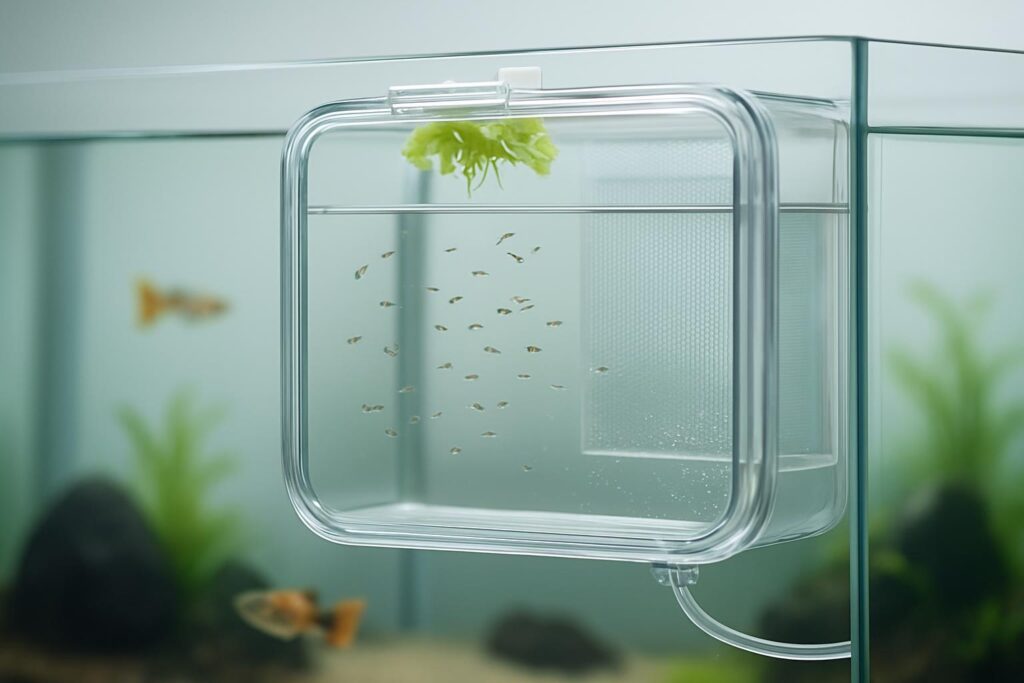
Livebearers like guppies, mollies, platies, and swordtails produce free-swimming fry that are easily eaten by tankmates, including their parents. A good breeding box protects newborns during the most vulnerable days while keeping the mother calm and your display tank orderly. Not all boxes are equal. Flow design, capacity, and build quality decide fry survival rates and how much work you will do to keep water clean. Below you will find four proven breeding boxes that solve common pain points for beginners and intermediate keepers. Each pick includes clear use cases, setup notes, and realistic downsides so you can choose with confidence.
What Makes a Breeding Box Work for Livebearers
Stable water and steady oxygen
Fry cannot handle ammonia spikes or low oxygen. Boxes with active water exchange driven by an air pump or your filter intake hold stable parameters. Static internal traps need extra attention and more frequent small water changes.
Fry-safe slits and mesh
Openings must be fine enough to stop newborns from leaving but large enough to allow water flow. For tiny guppy fry, fine mesh panels or narrow slits are safest.
Room to move and easy cleaning
Crowding stunts growth and increases waste. Smooth corners, removable dividers, and easy-access lids make cleaning and feeding simpler.
Low stress for the mother
Stress can delay birth or cause complications. Opaque side panels, gentle flow, and limited handling time help. Only confine the mother when she is close to dropping fry, then remove her soon after birth.
Quick Picks by Situation
Best set-and-forget water quality: Hang-on boxes that circulate tank water.
Best budget internal trap: Simple floating or suction-cup units for occasional use.
Best for tiny fry survival: Fine-mesh or precision-flow designs.
Best modular grow-out: Multi-chamber systems for sorting sizes.
4 Best Aquarium Fish Breeding Boxes for Livebearers
1) Lee’s Two-Way Guppy Breeder
This classic internal breeder is small, affordable, and easy for first-time users. It floats or mounts with suction cups inside the tank. The V-shaped grate lets fry drop into a lower section away from the mother. A removable divider allows two isolated spaces for separate females or a female and a recovering fish.
Why it stands out
- Simple to set up: No airline or pump required.
- Flexible use: Breeder, nursery, or isolation chamber.
- Compact footprint: Fits in most community tanks without blocking the view.
Setup and use tips
- Pre-rinse all parts. Install the fry grate securely so newborns can drop quickly into the lower section.
- Position near gentle flow but not in a strong current to avoid stress to the mother.
- Add a small clump of floating plants or yarn mops in the top chamber to give the mother cover.
- Feed very lightly and remove leftovers with a pipette. Do a small daily water change inside the box to prevent ammonia spikes.
Why it helps: Newborns drop away from the mother, reducing predation in the first minutes after birth.
Best for: Occasional breeding, budget setups, and small livebearers such as guppies and endlers.
Potential downsides: Static water can foul quickly without daily attention. Capacity is limited for larger mollies or swordtails. Suction cups may loosen over time.
2) Marina Hang-On Breeding Box
This hang-on unit sits outside the tank but uses an airline to draw conditioned water from your aquarium, then returns it via overflow. The constant exchange means fry enjoy the same temperature, pH, and oxygen as the main tank without exposure to hungry adults. It is available in multiple sizes and can be arranged for isolation, birthing, or fry grow-out.
Why it stands out
- Active water exchange: Reduces ammonia concerns common with internal traps.
- Expandable layouts: Dividers allow you to separate a mother from fry or sort fry by size.
- Easy observation: Clear walls make it simple to monitor labor, feeding, and growth.
Setup and use tips
- Use a reliable air pump with a check valve and an adjustable air valve to fine-tune flow.
- Fit the intake at a mid-water level to avoid drawing surface scum or substrate debris.
- Keep the outflow gentle to avoid swirling fry; adjust airline until movement is steady but not turbulent.
- Rinse sponges or pre-filters weekly to maintain smooth siphon function.
Why it helps: Stable, filtered water improves fry survival and reduces maintenance load.
Best for: Continuous breeding, larger broods, and users who want cleaner water with less daily intervention.
Potential downsides: Requires an air pump and airline management. Rim compatibility varies on very thick-rimmed tanks. Bubble noise may be noticeable in quiet rooms.
The Ziss design combines rigid structure with fine mesh panels and an air-driven water exchange that keeps parameters stable while protecting very small fry. The adjustable flow and precise screens reduce the chance of newborns escaping, which is a common frustration with wide-slit plastic boxes. Build quality is solid, and the mounting hardware is more secure than basic suction cups.
Why it stands out
- Fine mesh protection: Excellent for tiny guppy and endler fry.
- Adjustable air-driven flow: Helps dial in just enough circulation without stressing fish.
- Durable hardware: Stable hang-on brackets reduce the risk of tipping or loosening.
Setup and use tips
- Connect to a quiet air pump with a check valve. Begin with a low flow and increase until debris no longer settles on the bottom.
- Place a small piece of seasoned sponge inside to seed biofilm for fry grazing.
- Target-feed powdered or freshly hatched foods at low flow, then slightly raise flow 15 minutes later to clear leftovers.
- Inspect mesh weekly to avoid clogging that can reduce water exchange.
Why it helps: Protects the smallest fry while maintaining oxygen and temperature equal to the main tank.
Best for: High-value fry, frequent drops, and keepers who want precise control over flow.
Potential downsides: Higher cost than basic boxes. Requires air setup and occasional mesh maintenance.
4) Fluval Multi-Chamber Holding and Breeding Box
This modular hang-on system offers multiple compartments that you can configure for a mother, separated males, or different fry sizes. Like other external boxes, it uses an airline to circulate display tank water through each chamber. The extra room allows fry to grow past the bite-size stage before reintroduction to the main tank.
Why it stands out
- Multi-chamber separation: Sort fry by size to reduce bullying and improve growth.
- Main-tank water circulation: Keeps fry in stable, heated, and filtered water.
- Versatility: Works as a hospital box, acclimation chamber, or breeder.
Setup and use tips
- Tune the air flow so that each chamber receives steady exchange. Confirm water turnover in the corners by watching a small flake of food move.
- Use fine dividers for newborns. Move growing fry to a larger chamber as density increases.
- Feed small amounts 3–4 times per day. Siphon debris from each chamber with thin tubing.
- Cover the top gaps to prevent jumpers, especially young swordtails.
Why it helps: Reduces crowding and allows staged grow-out with consistent water quality.
Best for: Ongoing breeding projects, mixed-size fry management, and keepers who want a single solution for breeding and isolation.
Potential downsides: Larger footprint on the tank rim. More parts to clean than a simple internal trap. Needs an air pump.
How to Choose the Right Box for Your Tank
Tank size and rim design
Hang-on boxes need a secure fit on your rim. If your tank has a thick brace, measure before choosing. Internal traps fit any tank but take up swimming space.
Brood size and species
Guppies and endlers produce smaller fry that demand finer openings. Mollies and swordtails drop larger broods that benefit from extra volume and stronger water exchange.
Maintenance style
If you prefer lower daily maintenance, choose a hang-on system with active water exchange. If you are comfortable with daily siphoning and micro water changes, a budget internal trap can work well.
Future use cases
Multi-chamber and mesh designs can double as grow-out, quarantine, or acclimation boxes, adding versatility that may save costs later.
Breeding Box Setup Checklist
- Pre-rinse all parts to remove manufacturing dust.
- Seed with a small piece of cycled sponge or filter floss to introduce beneficial bacteria.
- Install a check valve and control valve on any airline to prevent back-siphon and to fine-tune flow.
- Place the box where you can easily siphon debris and observe the mother without excessive handling.
- Add cover such as floating plants or spawning mops for the mother and fry security.
- Keep feeding tiny and frequent. Remove uneaten food within 15 minutes.
When to Move the Mother and When to Remove Her
Timing the move
Move the mother when she is close to dropping fry to reduce stress time. Signs include a pronounced gravid spot, squarer belly, and reclusive behavior. Avoid long confinement; stress can delay birth.
After birth
Remove the mother as soon as fry are free swimming. Leaving her longer raises predation risk and stress. Maintain the fry in the box until they are too large to be swallowed by adults or until you have a dedicated grow-out tank ready.
Feeding Fry for Fast, Clean Growth
- Start with micro foods: infusoria, vinegar eels, powdered fry food, or finely crushed flakes.
- Increase food size as they grow: baby brine shrimp and micro pellets.
- Feed small portions 3–5 times daily. Overfeeding in a small box spikes ammonia.
- Use a pipette to remove crumbs and waste after each feeding.
Maintenance and Troubleshooting
Water quality checks
In small volumes, ammonia can rise quickly. Test regularly during the first week. If any reading appears, reduce feeding, increase flow in hang-on boxes, or perform small, frequent water changes in internal traps.
Flow problems in hang-on systems
If water stops moving, check airline kinks, clogged pre-filters, and air valve settings. Keep the intake submerged and level. Clean the intake sponge weekly.
Fry escape
If fry slip through slits, add a fine mesh insert or switch to a fine-mesh design. Avoid strong currents that push fry against openings.
Stress management
Dim the light and add cover for the mother. Keep hands out of the box except when necessary. Shorten confinement time by moving her only when near term.
Putting It All Together
If you want the lowest-maintenance route with consistent results, choose a hang-on breeder with active water exchange such as Marina or Fluval. If you breed delicate or very tiny fry, a fine-mesh, air-driven design like Ziss offers superior protection and control. If you are on a tight budget or only breed occasionally, Lee’s Two-Way Guppy Breeder remains a reliable starter box as long as you are disciplined with feeding and small water changes.
Keep the workflow simple. Time the move of the mother well, remove her quickly after birth, feed fry lightly but often, and keep the box clean. With these habits and one of the four proven boxes above, livebearer breeding becomes predictable and rewarding for beginners and experienced aquarists alike.
FAQ
Q: Do I need an air pump for a breeding box?
A: Internal traps like Lee’s Two-Way do not require an air pump but benefit from gentle aeration and daily small water changes, while hang-on boxes such as Marina and Fluval need an air pump to circulate main tank water.
Q: How long should fry stay in the breeder box?
A: Keep fry in the box until they are too large to be swallowed by adults or until you have a dedicated grow-out tank, and avoid crowding by sorting or upgrading space as they grow.
Q: How do I prevent ammonia spikes in a small breeder?
A: Feed tiny portions several times a day, remove leftovers with a pipette, perform small frequent water changes or increase flow in hang-on boxes, and seed the box with a small piece of cycled sponge.
Q: Which design is best for tiny guppy fry?
A: Fine-mesh, air-driven boxes like the Ziss Premium Breeder Box offer the best protection for very small fry while keeping oxygen and temperature stable.
Q: How do I reduce stress for the mother in a breeder box?
A: Move her only when close to dropping fry, add cover such as floating plants, keep flow gentle, minimize handling, and remove her as soon as fry are free swimming.