
We are reader supported. When you purchase through links on our site, we may earn an affiliate commission. Also, as an Amazon affiliate, we earn from qualifying purchases.
Getting biological filtration right is the fastest way to stable, clear, and low-maintenance aquariums. Good bio media gives beneficial bacteria a permanent home, keeps ammonia and nitrite at zero, and builds resilience against sudden changes. The challenge is choosing media that actually does the job in your filter, with your livestock, and with your maintenance routine. This guide breaks down how bio media works, what to look for, and the six best options to grow strong bacterial colonies without guesswork.
How Bio Media Works
Beneficial bacteria convert toxic ammonia from fish waste into nitrite, then into less toxic nitrate. This happens on surfaces that stay wet and oxygenated. The more effective surface area you provide, the more bacteria your system can support. Media with internal pore networks also creates oxygen gradients. Outer layers favor nitrifying bacteria. Slightly deeper zones, where oxygen is lower and flow is slower, can encourage some denitrifying bacteria that help with nitrate. The right balance depends on media structure, placement, and flow.
What Makes a Good Bio Media
High effective surface area that bacteria can actually colonize. Not all surface is equal. Pores must be open, connected, and not easily clogged.
Chemically inert so it does not leach, dissolve, or alter pH under normal aquarium conditions.
Durable to withstand years of use, gentle rinsing, and moving without turning to dust.
Flow friendly so water contacts surfaces instead of channeling around a solid mass. Shapes that space themselves out help.
Maintenance friendly so you can rinse off mulm and restore flow without stripping all bacteria.
How Much Bio Media You Need
Start with the manufacturer’s guidance for your filter size and livestock level. More is not always better if it kills flow. A simple rule: fill the dedicated bio chamber in your filter without packing it tight. If you run heavy stock or feed often, add a second basket or a larger chamber rather than compressing media into a brick. Test regularly for ammonia and nitrite. If both stay at zero and nitrate rises slowly week to week, your bio capacity is adequate.
Placement Tips That Matter
Always place bio media after mechanical filtration. Sponges or floss should catch debris first. This preserves pore space and prevents rapid clogging. Use media bags where needed to keep pieces together while allowing flow. Rinse new media until clear to remove dust. In sumps, raise media off the bottom to keep detritus from settling in.
The 6 Best Aquarium Bio Media for Beneficial Bacteria
1) Seachem Matrix
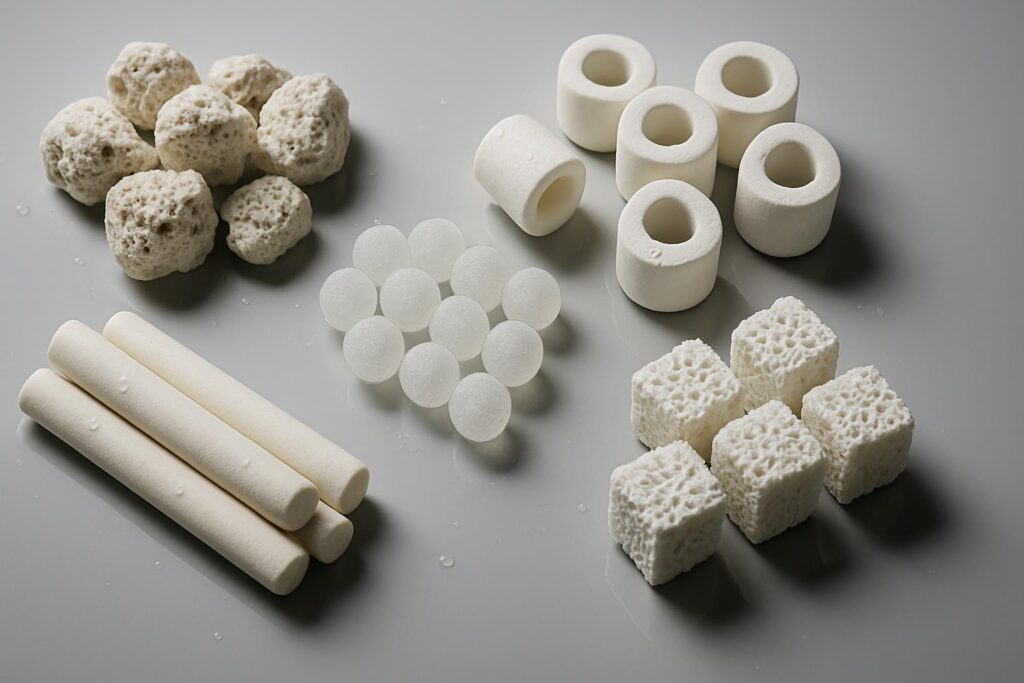
Matrix is a natural, highly porous stone with a maze of internal pathways. It is popular in both freshwater and marine systems because it balances huge surface area with solid durability. Pieces are irregular, which improves water contact and reduces channeling in baskets and sumps.
Why it helps: The mixed pore structure hosts dense nitrifying bacteria on the outside and supports some lower-oxygen zones deeper inside. This gives robust ammonia and nitrite control with potential help on nitrate if placed where flow is not excessive. The material is inert and does not alter pH.
Best for: Canister filters, hang-on-back baskets, and sumps where you want maximum capacity in limited space. Works well for community freshwater, planted tanks, African cichlids, and reef systems with strong prefiltration.
How to use: Rinse thoroughly, then load loosely. Do not compress it into a tight mass. Place after sponges or filter floss. In canisters, reserve the last stage for Matrix so it sees clean water. In sumps, use a media tray or bag and elevate slightly for even flow. Swish gently in tank water during maintenance only when flow drops.
Potential downsides: Pieces can trap mulm if prefiltration is weak. Some batches have mixed sizes, and a few pieces may float until fully saturated. Like all porous media, avoid aggressive scrubbing to prevent abrasion of pore openings.
2) Fluval Biomax Ceramic Rings
Biomax rings are classic ceramic cylinders with surface texture and internal channels. They are simple, cost-effective, and easy to handle. The ring shape naturally spaces media out, reducing flow blockages and improving oxygen delivery to bacteria.
Why it helps: The ring geometry resists compaction and promotes even water distribution. This minimizes dead spots in baskets and trays. The surface supports fast-growing nitrifying bacteria and stabilizes new tanks quickly when used with proper mechanical prefiltration.
Best for: Beginners, small to mid-sized canisters and hang-on-back filters, and any setup where reliable nitrification and straightforward maintenance matter most. Great as a base layer beneath higher-porosity media to even out flow.
How to use: Rinse to remove dust. Fill the basket so rings are snug but not packed tight. Keep a sponge or floss ahead of them. Rinse gently in tank water when flow slows. Replace only a fraction at a time if needed, and never all at once.
Potential downsides: Lower surface area per volume than premium sintered glass or ultra-porous ceramics. Primarily supports nitrification rather than nitrate reduction. Needs consistent prefiltration to avoid mulm buildup.
3) Eheim Substrat Pro
Substrat Pro is a sintered glass media formed as uniform spheres. It offers high porosity and a controlled pore structure while maintaining excellent flow. The spherical shape ensures consistent gaps between pieces, which reduces channeling and compaction.
Why it helps: The combination of high surface area and stable flow contact improves nitrification efficiency. Bacteria colonize the massive microstructure quickly, and the open packing helps oxygen reach all surfaces. It works well over long service intervals without frequent cleaning.
Best for: Premium canister filters and sumps where you want top-tier nitrification and balanced flow. Ideal for heavily stocked freshwater and marine systems that demand steady performance.
How to use: Rinse well. Load in a dedicated basket or media bag after mechanical stages. Avoid overpacking. If you stack multiple trays, place Substrat Pro in the last bio stage where water is cleanest. Gently swish in removed tank water as needed to restore flow.
Potential downsides: Higher cost than basic ceramics. Can chip if handled roughly. As with all fine-pored media, it relies on strong mechanical prefiltration to prevent pore fouling.
4) Sera Siporax
Siporax is a sintered glass ring with very high internal surface area and structured pores. The ring form maintains spacing for even flow, while the microchannels inside provide extensive habitat for bacteria across oxygen gradients.
Why it helps: The interior architecture allows dense colonies of nitrifiers near the surface and supports low-oxygen microzones deeper inside when placed in low to moderate flow. This can stabilize nitrate trends when combined with good husbandry. It is inert and suitable for both freshwater and marine tanks.
Best for: Canisters, trickle towers, and sumps where you want high capacity with predictable flow. Useful for systems that need a compact media with strong performance over time.
How to use: Rinse thoroughly. Place after sponges or floss. Use a bag or rigid tray to prevent crushing. Keep flow moderate. Clean by swishing in tank water only when necessary. Rotate partial cleanings if you run multiple baskets.
Potential downsides: Brittle if squeezed or dropped. Can accumulate fine debris without strong prefiltration. Needs careful handling during maintenance to avoid chipping.
5) Biohome Ultimate Filter Media
Biohome Ultimate is a high-porosity sintered media formed as compact rods. It is designed to maximize usable surface area and support mature colonies across oxygen gradients when placed correctly. Many aquarists value it for long-term stability under heavy bioloads.
Why it helps: The rod shape packs efficiently without blocking flow, and the microstructure invites deep colonization. With consistent prefiltration and moderate flow, it can support robust nitrification and help moderate nitrate accumulation over time.
Best for: Canisters and sumps on tanks with larger fish, messy eaters, or frequent feeding. Good fit for aquarists who want to push bio capacity without adding more filters.
How to use: Rinse gently until the water runs clear. Place in a media bag, loosely filled. Use high-quality mechanical filtration ahead of it. Keep flow steady, not blasting. Clean only when needed by swishing in removed tank water. Do not scrub.
Potential downsides: More expensive than basic ceramics. Brittle under force and can shed fines if rubbed. Demands strong mechanical prefiltration to avoid early clogging.
6) MarinePure High-Performance Ceramic Media
MarinePure uses an open-cell ceramic with extremely high porosity. It is sold as spheres, plates, and blocks, making it ideal for sumps where you can dedicate space to a large, slow-flow bio zone. The structure provides vast surface area while keeping water moving through the media.
Why it helps: The open, interconnected pores deliver high oxygen exposure to outer surfaces with gradual transitions to lower-oxygen microzones deeper inside. This supports strong nitrification and can help moderate nitrate when placed in lower-flow sections. Pieces are inert and very lightweight.
Best for: Sumps on larger freshwater and marine systems. Excellent when you want a long-term bio bed with minimal flow restriction. Works especially well combined with solid mechanical filtration stages and a debris-free chamber.
How to use: Rinse thoroughly to remove fine dust. Place where flow is gentle and uniform, not in high-turbulence zones. Elevate on a tray or egg crate to avoid detritus settling. Vacuum the sump floor during water changes to preserve pores.
Potential downsides: Very brittle and can shed fines if handled roughly. Needs very good prefiltration. Not ideal for small baskets that may crush or chip pieces during maintenance.
How To Maximize Beneficial Bacteria On Any Media
Seed and cycle with patience
Introduce a stable ammonia source and allow bacteria to grow before adding a full stock of fish. Test for ammonia and nitrite. Do not overclean during this period. Avoid swapping all media at once.
Protect flow and oxygen
Use sponges or floss ahead of bio media and service them regularly. Keep pump intakes clean. Good oxygenation supports faster, more resilient nitrification.
Clean the right way
When flow drops, swish bio media in a bucket of tank water you just removed. That clears mulm without killing biofilm. Never rinse bio media under untreated tap water. Clean only as needed, not on a fixed schedule.
Do not overpack baskets
Tight packing starves bacteria of flow. Fill the basket, but leave some space for water to move through. If you need more capacity, add another basket or a larger chamber rather than compressing media.
Rotate changes
If you must replace media, do it in stages. Change one third at a time over several weeks. This preserves core colonies and prevents mini-cycles.
Common Mistakes To Avoid
Replacing all media at once
This removes your entire biofilter and can spike ammonia. Always stagger replacements.
Skipping mechanical filtration
Mulm clogs pores and reduces usable surface. Keep a sponge or floss ahead of bio media and rinse it often.
Over-cleaning
Scrubbing or pressure-rinsing strips biofilm and resets colonies. Gentle swishing is enough.
Starving flow
Stuffing baskets tight or letting debris block screens reduces oxygen to bacteria. Keep water moving evenly through the media.
Expecting nitrate to vanish
Most media focuses on ammonia and nitrite conversion. Nitrate control still depends on water changes, plants, refugiums, and stocking balance. Media with deep pores can help moderate nitrate trends but will not replace maintenance.
Which One Should You Choose
If you want maximum performance in tight spaces, choose a high-porosity option like Seachem Matrix, Eheim Substrat Pro, Sera Siporax, or Biohome Ultimate. If you prefer easy handling and dependable flow, Fluval Biomax is a strong, budget-friendly base. For large sumps and long-term beds, MarinePure delivers huge surface area with minimal restriction, provided you handle it gently and maintain excellent prefiltration.
Match media to your filter space, stocking level, and maintenance habits. Place it after strong mechanical stages, protect flow, and clean gently. With those steps, any of these six options will grow robust bacterial colonies and keep your system stable for the long run.
Conclusion
Good bio media is not just about raw surface area. It is about usable surface, consistent flow, durability, and simple care. The six options above cover every need and budget, from compact canisters to large sumps. Choose the structure that fits your filter, place it after mechanical filtration, and protect it from clogging. Keep oxygen high and cleaning gentle. Do that, and your aquarium will run cleaner, safer, and with fewer surprises.
FAQ
Q: How often should I clean bio media
A: Clean only when flow drops by gently swishing media in removed tank water, and never rinse bio media under untreated tap water.
Q: Can bio media lower nitrates
A: Media with deep internal pores placed in lower to moderate flow can help moderate nitrate trends, but the primary job is converting ammonia and nitrite, so water changes and good husbandry are still required.
Q: How much bio media do I need
A: Start with the manufacturer’s guidance and fill the dedicated bio chamber without packing it tight, then adjust based on testing and bioload.
Q: When should I replace bio media
A: Replace only if media is crumbling or clogged beyond recovery, and always rotate changes by replacing a fraction at a time to preserve colonies.
Q: Where should bio media sit in the filter
A: Always place bio media after mechanical filtration like sponges or floss so debris does not clog pores and flow stays strong.