
We are reader supported. When you purchase through links on our site, we may earn an affiliate commission. Also, as an Amazon affiliate, we earn from qualifying purchases.
If your tank looks hazy or your fish kick up a cloud every time they move, you are likely missing one simple upgrade: filter floss. This low-cost mechanical media traps fine debris before it circulates back into your water column. In this guide, you will learn how filter floss works, how to place it correctly, how to choose the right type, and the five best options that consistently keep aquariums clear. Stay focused on the small changes that produce big results and your water can turn from dull to crystal fast.
What Filter Floss Does and Why It Matters
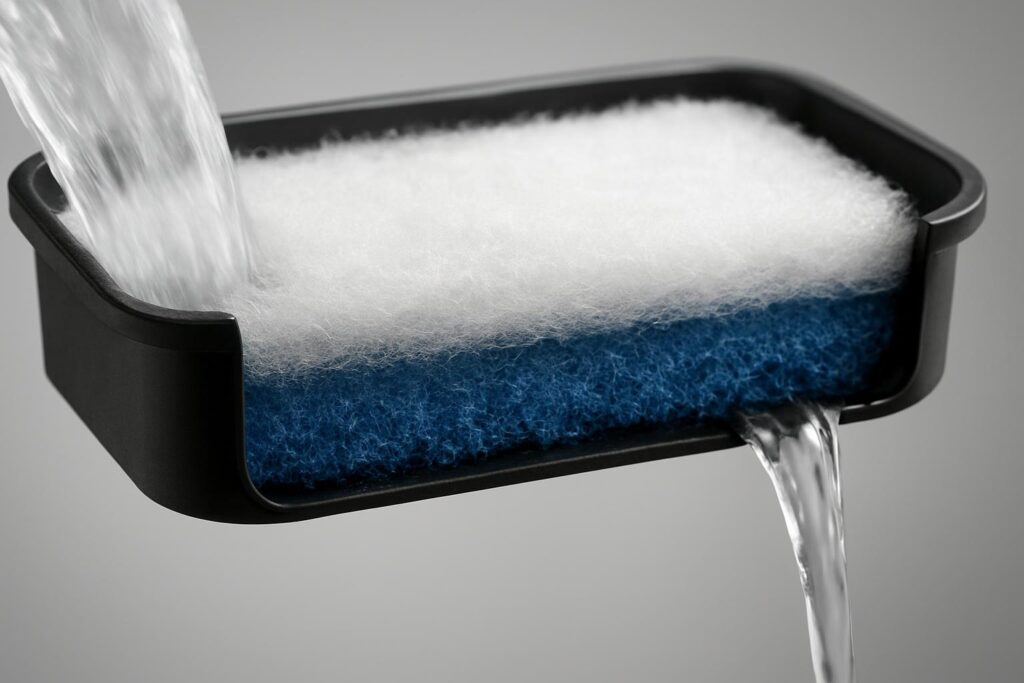
Filter floss is a fine, fibrous mechanical media that physically traps suspended particles. It catches everything from uneaten food to micro detritus that standard sponges and coarse pads often miss. When used in the right place and thickness, floss polishes your water and reduces organic load before it breaks down into nitrate and phosphate. It is not a replacement for biological or chemical media; it is a front-line defense that improves the performance of the entire filtration system.
How to Choose Filter Floss That Actually Works
Fiber density and structure
Finer fibers capture tiny particles and polish water more aggressively, but they clog faster. Coarser or bonded pads maintain flow longer but may let the smallest dust pass. Dual-density pads combine both in a single sheet.
Single-layer vs dual-density
Single-layer white floss is great for polishing but needs frequent changes. Dual-density pads stack a coarse layer with a fine layer. The coarse side grabs big debris and protects the fine side from clogging too quickly.
Thickness and flow
Thicker pads hold more debris but can restrict flow in low-power hang-on-back filters. Thin or medium thickness is safer for small filters. For canisters and sumps, thicker pads are fine as long as you monitor flow.
Cut-to-fit sizing
Rolls and large pads let you trim exact sizes for hang-on-back, canister, or sump trays. Precut brand-specific pads offer convenience but less flexibility.
Safety and materials
Stick to 100 percent polyester filter media designed for aquariums or labeled as plain polyester fiber with no additives. Avoid scented, treated, or fire-retardant batting and any product with additives not suitable for aquariums.
Reusability and replacement
Some bonded pads can be gently rinsed once or twice; fine polishing floss is usually disposable. Plan routine changes to avoid clogging and bypass.
Placement: Where Floss Goes for Best Results
Order of media
Place filter floss first in the flow path so it catches debris before water reaches biological or chemical media. This keeps biomedia cleaner and more efficient.
Hang-on-back filters
Lay a cut-to-fit piece of floss on top of or in front of the stock cartridge, where water enters. Do not pack too tight. A thin layer is enough to polish.
Canister filters
Put floss in the top polishing tray or just before water returns to the tank, after coarse sponges. Use a pad that fits snugly to prevent bypass without compressing it so much that flow stalls.
Sumps and filter socks
Line the top of the media tray or inside a filter cup. Replace frequently to prevent detritus from decomposing in the sump.
Orientation of dual-density pads
Keep the coarse side toward incoming flow and the fine side downstream. This extends service life and reduces sudden clogs.
Rinse before first use
Briefly rinse new floss to remove dust. Do not use soap. A quick swish in dechlorinated water is enough.
5 Best Aquarium Filter Floss Options for Crystal Clear Water
Aquatic Experts FilterFirst Dual-Density Filter Pad
This true dual-density pad stacks a coarse layer with a fine polishing layer to trap both big debris and micro particles. It is a cut-to-fit roll, so you can tailor it to hang-on-back filters, canisters, and sumps.
Key features
- Dual-density construction maintains flow while polishing water
- Cut-to-fit roll works for most filter types and sizes
- Durable fibers resist shredding during trimming and installation
Why it helps
The coarse layer shields the fine layer from rapid clogging, so you get clear water without frequent flow loss. This design improves consistency between maintenance days.
Best for
- General freshwater and planted tanks that need reliable polishing
- Canisters and sumps that benefit from a final mechanical stage
Setup tips
- Orient coarse side to incoming flow, fine side downstream
- Trim to fit snugly without compressing the fibers
- Start with medium coverage; increase area only if water remains hazy
Potential downsides
- Costs more than single-layer floss, though it lasts longer between changes
Marineland Bonded Filter Pad
This bonded blue pad is a classic for stable flow. The coarse matrix resists clogging and is easy to rinse, making it a strong first mechanical layer before finer polishing floss.
Key features
- Coarse, bonded structure holds shape under flow
- Easy to cut, easy to rinse
- Helps prevent bypass by fitting tightly in trays and baskets
Why it helps
As a first line of defense, the coarse fibers catch larger debris and protect finer pads or bio-media downstream. Water stays moving, which protects beneficial bacteria from oxygen deprivation.
Best for
- High-biomass community tanks with lots of debris
- Hobbyists who prefer low-maintenance prefiltration
Setup tips
- Place it before fine floss or polishing pads
- Rinse weekly to remove trapped gunk and extend life
- Use in canister baskets or sump trays as a stable base layer
Potential downsides
- Not a fine polisher on its own; pair with a finer layer for crystal clarity
Aqua-Flo Poly Fiber Filter Media Pad
A versatile white poly fiber pad that excels at polishing. It is easy to cut and effective at catching micro debris. Expect to replace it often for best results.
Key features
- Fine white polyester fibers for high-clarity polishing
- Large cut-to-fit sheets roll out for multiple uses
- Flexible thickness suitable for hang-on-back and canister filters
Why it helps
The fine mesh captures the suspended particles that cloud water. When changed regularly, it provides glass-like clarity even in tanks with active fish.
Best for
- Final stage in canisters or sumps after a coarse layer
- Hang-on-back filters that need a quick clarity boost
Setup tips
- Layer it after a coarse pad to slow clogging
- Use a thinner piece in small HOB filters to protect flow
- Replace rather than scrub when it looks brown or flow drops
Potential downsides
- Clogs faster than coarse pads; set a strict change schedule
AquaNeat Aquarium Filter Media Pad
A budget-friendly, cut-to-fit fine filter pad with consistent fiber density. It is popular for routine polishing and easy customization across filter types.
Key features
- Uniform fine fibers for predictable performance
- Trim-to-size sheets fit baskets, trays, and HOB compartments
- Good balance of polishing and flow when not overpacked
Why it helps
Consistent density means predictable flow and particle capture. It shines in everyday maintenance where you want clear water without micromanaging thickness every week.
Best for
- New hobbyists who want simple, reliable clarity
- Community tanks, shrimp tanks, and planted setups
Setup tips
- Use behind a coarse prefilter pad for longevity
- Do not stuff tightly; give water an even path
- Swap weekly in high-debris tanks; every 1–2 weeks in lighter loads
Potential downsides
- Like most fine pads, it is more disposable than rinseable
Plain 100 percent polyester fiber fill, commonly used as a DIY alternative to filter floss. When used correctly, it is a low-cost, high-polish option for mechanical filtration.
Key features
- Loose polyester fibers conform to baskets and cups
- Excellent polishing when packed lightly
- Very economical for frequent changes
Why it helps
The loose fibers create many contact points to capture fine debris. Frequent replacement prevents buildup and keeps biological media cleaner.
Best for
- Sumps and canisters where you can pack a light, even layer
- Hobbyists who prefer to change floss frequently at low cost
Setup tips
- Use only plain 100 percent polyester with no additives
- Rinse briefly before use to remove dust
- Pack lightly to maintain flow and avoid channeling
Potential downsides
- Density is less uniform than bonded pads; adjust packing to balance flow and polishing
- Needs more frequent changes than structured filter pads
How to Build a Simple Floss Stack That Works
For hang-on-back filters
- Step 1: Place a thin coarse pad or sponge where water first enters.
- Step 2: Add a thin sheet of fine floss downstream for polishing.
- Step 3: Keep biomedia or the stock cartridge behind the floss.
- Step 4: Replace the fine floss weekly or when flow drops noticeably.
For canister filters
- Bottom basket: coarse sponge or bonded pad to intercept big debris
- Middle baskets: biological media kept free of sediment
- Top basket: fine floss as a final polishing stage
- Check after the first week and adjust pad thickness if flow is reduced
For sumps
- Use filter socks or cups with a coarse prefilter
- Line the tray or cup with fine floss for polishing
- Replace floss frequently to prevent nutrient spikes from trapped waste
Maintenance Routine for Crystal Clear Water
- Weekly: Inspect floss. If browned, matted, or flow is down, replace it.
- Rinse reusable coarse pads in old tank water to keep pores open.
- Do not scrub biomedia during the same session; stagger maintenance to protect bacteria.
- Vacuum substrate to reduce debris before it hits the floss.
- Feed modestly. Less waste means longer floss life and clearer water.
Common Mistakes to Avoid
- Packing floss too tightly. This leads to bypass or stalls flow.
- Using fine floss without a coarse prefilter. It will clog too fast.
- Letting dirty floss sit. Trapped organics decompose and raise nutrients.
- Ignoring orientation on dual-density pads. Always face the coarse layer to incoming water.
- Using treated or scented fibers. Only plain 100 percent polyester is suitable.
Conclusion
Clear water is the result of steady mechanical filtration, not expensive gadgets. Choose a floss with the right density for your setup, place it first in the flow path, and replace it before it clogs. Dual-density pads like Aquatic Experts FilterFirst balance flow and polishing well. Marineland Bonded Pad makes a dependable coarse prefilter. Aqua-Flo and AquaNeat pads provide fine polishing at a fair cost. Plain polyester fiber can work when you pack it lightly and change it often. Keep your routine simple and consistent, and the payoff is immediate: bright fish, clean glass, and water that looks as good as it is healthy.
FAQ
Q: What does aquarium filter floss do?
A: Filter floss is a fine, fibrous mechanical media that traps suspended particles before they circulate back into your tank. It polishes water and reduces organic load before it breaks down.
Q: Where should I place filter floss in my filter?
A: Place filter floss first in the flow path so it catches debris before water reaches biological or chemical media. In canisters, use it in the top polishing tray; in hang-on-back filters, place it where water first enters.
Q: How often should I replace filter floss?
A: Replace it when it looks browned or matted or when you notice reduced flow. In most tanks this is weekly, and in lighter bioloads every 1–2 weeks.
Q: Can I use household Poly-Fil as filter floss?
A: Yes, you can use plain 100 percent polyester fiber with no additives. Rinse it briefly before use and pack it lightly to maintain flow.
Q: How do I stop filter floss from slowing my flow?
A: Use a coarse prefilter before fine floss, avoid packing tightly, use thinner pieces in small hang-on-back filters, and replace floss before it clogs.