
We are reader supported. When you purchase through links on our site, we may earn an affiliate commission. Also, as an Amazon affiliate, we earn from qualifying purchases.
Bringing home new fish is exciting, but it also brings risk. A simple quarantine tank protects your main display from parasites, pathogens, and stress-related issues. With the right starter kit, setup is fast, maintenance is easy, and your fish stay safer. This guide walks you through what matters in a quarantine system, how we chose four reliable kits, and how to use them step-by-step. Each recommendation suits beginners and keeps costs reasonable while staying effective.
Why a quarantine tank matters for every new fish
New arrivals often carry invisible problems. A quarantine tank gives you control. You monitor one group of fish closely, maintain stable water, and treat issues without dosing your display tank. You also help fish recover from transport stress in a calm space. The result is higher survival, fewer outbreaks, and a healthier main aquarium long term.
What a quarantine tank actually needs
Size and footprint
A 10 gallon footprint fits most shelves and is ideal for small community fish, shrimp, and juveniles. Larger or very active fish benefit from more room, but 10 gallons is the sweet spot for beginners. It holds stable parameters and is easy to maintain.
Filtration that is simple and dependable
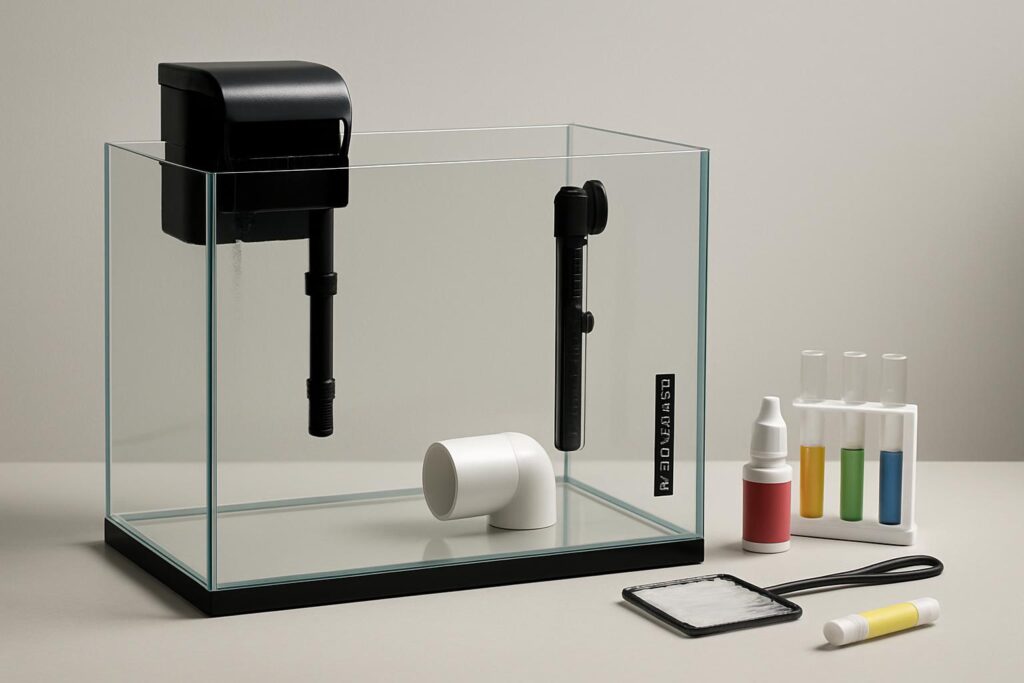
Use proven, low-fuss filtration. Hang-on-back filters and internal filters both work well. Look for quiet operation and replaceable or washable media. Add a seeded sponge or biomedia from your established tank when possible. Stability is the goal, not aggressive polishing. Gentle flow is best for stressed fish.
Heating and a secure lid
Most tropical fish need 24 to 26 Celsius or 75 to 79 Fahrenheit. A preset or adjustable heater sized appropriately for the tank is essential. A lid keeps fish from jumping and reduces evaporation. Light is optional and should be kept low to reduce stress.
Bare bottom and easy-to-clean surfaces
Go bare bottom. It is faster to siphon, easier to spot waste or signs of disease, and safer during medication. Provide simple hides like PVC elbows or inert plastic plants so fish can rest without trapping detritus.
Essential extras for smooth operation
You will also want a dechlorinator, a liquid test kit, a small net, a thermometer, and a dedicated siphon and bucket to avoid cross contamination. Keep a broad-spectrum bacteria starter on hand to stabilize biofiltration if needed. Medications are case dependent, but do not use them unless symptoms or a clear protocol calls for it.
How we chose these kits
We prioritized kits that are beginner friendly, quiet, reasonably priced, and easy to keep clean. We looked for solid filtration, practical lighting, and build quality. Some kits include a heater and extras; others focus on filtration and lighting only. Each pick can run bare bottom and adapts to quick water changes and observation.
4 best aquarium quarantine tank kits for new fish
Aqueon LED 10 Gallon Aquarium Kit
This classic 10 gallon starter kit is a practical quarantine workhorse. It typically includes a 10 gallon glass tank, a low profile LED hood, a QuietFlow power filter with media, a preset heater in many configurations, a stick-on thermometer, a net, and sample water care items. The design is straightforward and friendly to beginners.
Why it helps. The 10 gallon volume keeps parameters more stable than smaller kits. The filter is quiet, easy to prime, and good at gentle mechanical and biological filtration. The hood reduces jump risk and evaporation, and the light is modest, which is ideal for de-stressing new fish.
Best for. Community fish, small livebearers, tetras, rasboras, small barbs, juvenile fish, and invertebrates. It also works as a hospital tank when you need controlled dosing.
Potential downsides. Depending on the exact bundle, the heater may be preset rather than adjustable. If your room temperatures swing, an adjustable heater can give tighter control. The included media can clog if not rinsed regularly; rinse gently in tank water during water changes.
Setup tips. Run the tank bare bottom. Add a seeded sponge or a small bag of biomedia from your main tank to the filter to jump start the cycle. Keep lighting low and cover three sides of the tank with paper to reduce visual stress. Perform small but frequent water changes during the first week.
Quick upgrade ideas. Swap to an adjustable 50 watt heater if your room is cool. Add a spare air-driven sponge filter to provide backup biofiltration and easy aeration during treatments.
Verdict. A balanced 10 gallon kit that checks all the quarantine boxes with minimal fuss. Reliable, quiet, and easy to maintain for new hobbyists.
Tetra 10 Gallon Aquarium Kit with LED Lighting and Heater
This kit is another reliable 10 gallon option. It commonly includes a glass tank, LED hood, a Whisper power filter with cartridges, a 50 watt heater, a thermometer, a fish net, and starter water care samples. The components are time tested and quiet enough for small rooms.
Why it helps. The included adjustable or preset heater variant helps keep temperatures steady for tropical quarantine. The filter provides gentle flow and basic chemical and mechanical filtration. The hood and LED light keep things covered and simple, which is ideal for observation.
Best for. New aquarists who want an all-in-one box to run a predictable quarantine tank for small to medium community fish. Works well for betta intake as long as flow is kept gentle.
Potential downsides. Filter cartridges can become an ongoing cost if you replace them frequently. To avoid losing beneficial bacteria, rinse and reuse cartridges or add a small biomedia bag behind the cartridge for continuity.
Setup tips. Keep the flow modest by baffling the output if needed. Use a bare bottom, add a couple of inert hides, and run the light low. Begin with daily testing for the first week to confirm stability, then shift to every other day.
Quick upgrade ideas. Add a small reusable sponge or ceramic biomedia to the filter to reduce reliance on cartridges. Keep a second spare heater on hand for backup during treatment periods.
Verdict. Simple, consistent, and beginner friendly. It covers the essentials for quarantine without extra complexity.
Marina LED Aquarium Kit 10 Gallon
This kit pairs a clear 10 gallon tank with a Marina Slim hang-on-back filter and integrated LED lighting in the canopy. It commonly includes water conditioner, a biological supplement, and a fish net. The Slim S20 filter is compact, quiet, and respected for practical performance. Note that a heater is typically not included, so plan to add one if you keep tropical fish.
Why it helps. The Slim S20 filter is easy to maintain and gives steady biological support during quarantine. The minimalist LED is adequate for viewing while keeping stress low. The biological starter helps stabilize the filter more quickly during initial setup.
Best for. Hobbyists who value a compact, quiet filter and plan to choose their own heater. Good fit for livebearers and schooling fish, and for shrimp observation with low light.
Potential downsides. No heater in most bundles, so this is an extra purchase. The filter’s flow may be a bit brisk for bettas or very small fry unless you baffle the output.
Setup tips. Add an adjustable 50 watt heater for tropical species. Place a pre-seeded sponge insert or biomedia in the filter from day one. Keep spare filter cartridges or use a combination of foam and ceramic media to reduce long term costs.
Quick upgrade ideas. Add a small air stone for extra oxygen during medication. Use dark paper on three sides of the glass to calm nervous fish.
Verdict. Clean design, quiet filtration, and practical lighting make this a strong quarantine platform. Just add a heater to complete the setup.
Fluval Flex 9 Gallon Aquarium Kit
The Fluval Flex 9 offers a curved front, concealed back chamber, and integrated 3 stage filtration with foam, carbon, and Biomax. Its LED system is capable and adjustable. Although designed as a display nano tank, it also functions as an effective quarantine space thanks to stable filtration and easy access.
Why it helps. The rear chamber keeps equipment hidden and out of the fish space, which reduces snag risks during frequent netting or observation. The filter compartment organizes media logically, and the pump offers consistent flow. The lid helps prevent jumps.
Best for. Aquarists who want a tidy, contained quarantine that can double as a nano display later. Suits small tetras, rasboras, livebearers, dwarf gourami intake, and shrimp. Works for bettas if you diffuse the output.
Potential downsides. No heater included. The light is stronger than needed for quarantine and should be dimmed to reduce stress. Cleaning the rear chamber requires lifting the lid and some reach, which is fine once you get used to it.
Setup tips. Set the light to a low schedule during quarantine. Add an adjustable 50 watt heater in the rear chamber if it fits, or in the main tank area with care. Keep the front area clear for easy observation and avoid heavy decor.
Quick upgrade ideas. Add extra Biomax or a seeded sponge piece to the rear chamber for more biofiltration. Keep a turkey baster handy to spot clean detritus from corners between water changes.
Verdict. A polished kit that remains practical for quarantine. With light dialed down and a heater added, it gives stable, low stress conditions.
Quick comparison and how to pick
If you want a complete package with a heater, the Aqueon 10 Gallon and Tetra 10 Gallon kits are the most turnkey options. If you prefer quiet filtration with room to customize media and plan to source your own heater, the Marina 10 Gallon is a strong value. If you want a kit that can later convert into a stylish nano display, the Fluval Flex is a solid crossover choice. All four support a bare bottom, observation friendly quarantine setup.
Quarantine workflow in 7 clear steps
1. Prepare and decontaminate
Rinse the tank, lid, and filter parts with warm water only. No soap. Set the tank on a level, stable surface. Place a dedicated mat or towel beneath to catch drips.
2. Install filtration and heater
Mount the filter and add media. Install a heater appropriate for your species. Add a thermometer. Keep the lid on to reduce stress and prevent jumping.
3. Add water and condition
Fill with tap water. Dose a dechlorinator per label. If you have seeded media from an established tank, add it now. Start the filter and heater and let the system reach temperature.
4. Create simple cover and hides
Use PVC elbows or inert plastic plants. Keep the bottom bare. Cover the sides and back with dark paper to calm fish.
5. Acclimate new fish
Float the bag to equalize temperature. Gradually add small amounts of tank water to the bag over 15 to 30 minutes. Net the fish gently into the tank and discard bag water.
6. Observe and maintain
Feed lightly. Test ammonia and nitrite daily at first. Perform small water changes as needed to keep ammonia and nitrite at zero and nitrate low. Keep lights dim. Watch for signs of stress or disease.
7. Treat only when needed
Do not medicate blindly. If you see clear symptoms, use targeted treatment and increase aeration. Maintain clean water. Most quarantines last 2 to 4 weeks without issues; extend if symptoms appear.
Common mistakes to avoid
Overdecorating the tank
Quarantine needs to be easy to clean. Use minimal inert hides. Avoid substrate and porous decor that trap waste and complicate treatment.
Skipping a heater for tropical fish
Stable temperature is critical. Add a properly sized heater and confirm with a thermometer.
Replacing filter media too often
Beneficial bacteria live on your media. Rinse gently in tank water. Add extra biomedia to avoid losing your cycle during cleaning.
Feeding too much
New fish are stressed and may not eat well. Feed lightly and remove leftovers. Prioritize water quality over rapid feeding.
Rushing fish into the display
Be patient. Complete the full observation window. Confirm stable behavior, appetite, and clear fins and gills before moving fish.
Conclusion
A reliable quarantine tank is one of the best tools you can add to your fishkeeping routine. Choose a simple, quiet kit, keep the bottom bare, run stable heat and filtration, and observe closely. The four kits above deliver what matters for new arrivals with minimal setup friction. Follow the workflow, avoid common mistakes, and your display tank stays healthier for years to come.
FAQ
Q: What size quarantine tank should a beginner start with?
A: A 10 gallon footprint is ideal for beginners because it keeps parameters stable and fits most small community fish.
Q: Should a quarantine tank have substrate?
A: No. A bare bottom is best because it is easier to clean, helps you spot waste and symptoms, and is safer during medication.
Q: Do I need a heater in a quarantine tank?
A: Yes for tropical species. Keep temperatures around 24 to 26 Celsius or 75 to 79 Fahrenheit with a properly sized heater.
Q: How long should I quarantine new fish?
A: Most quarantines last 2 to 4 weeks without issues, and you should extend if symptoms appear.
Q: Should I medicate all new fish automatically?
A: No. Do not medicate blindly. Treat only when you see clear symptoms or follow a specific, justified protocol.