
We are reader supported. When you purchase through links on our site, we may earn an affiliate commission. Also, as an Amazon affiliate, we earn from qualifying purchases.
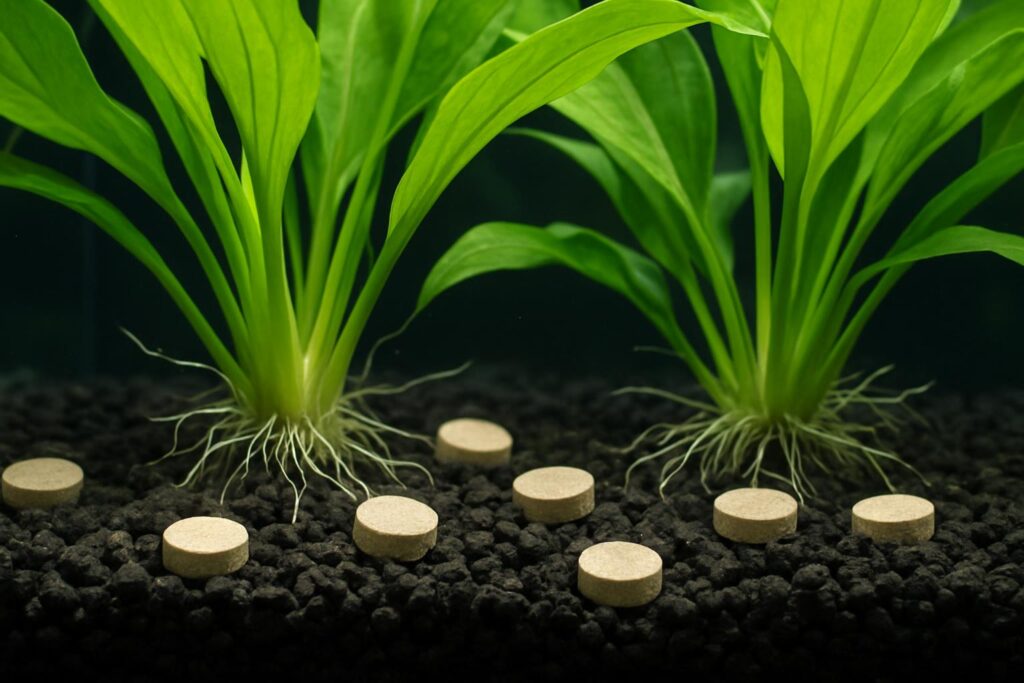
Heavy root feeders like Amazon swords, crypts, vallisneria, and red tiger lotus pull most of their nutrients from the substrate. If your tank uses inert sand or gravel, water column dosing alone often leaves these plants hungry. Root tabs solve this by placing a slow-release fertilizer exactly where roots can use it. Done right, you get thicker leaves, stronger runners, and steady new growth without spiking the water column. Below is a clear guide to choosing and using the best root tabs for heavy root feeders, with four reliable options tested across a range of planted tanks.
What Root Tabs Do and When to Use Them
Why heavy root feeders need substrate nutrition
Heavy root feeders grow large root systems and prefer pulling macronutrients and iron directly from the substrate. In tanks with inert substrates, the root zone remains poor unless you enrich it. Root tabs create a nutrient hot spot under each plant, which drives faster establishment and consistent growth.
When root tabs make the biggest difference
Use root tabs when you have one or more of these situations:
- Inert substrate like plain gravel, sand, or eco-blends low in NPK
- Plants showing smaller leaves, pale new growth, or slow runner production
- Newly planted crowns or bulbs that you want to anchor and feed right away
- Heavier livestock loads where you avoid dosing liquid fertilizers often
Substrate compatibility and layout
Root tabs are most impactful in inert substrates. In rich aquasoils, use fewer tabs and extend intervals because the substrate itself already provides nutrition. Space tabs in a grid under large swords and between crypt groups, and avoid placing tabs directly on exposed roots to prevent floating or leaching into the water.
How We Picked the 4 Best Aquarium Root Tabs
Selection criteria
To help heavy root feeders thrive, the following criteria matter most:
- Nutrient profile: Solid macronutrient support plus iron and trace elements
- Release behavior: Predictable, steady release without cloudy water
- Plant safety: No risky ammonia spikes when used as directed
- Ease of dosing: Capsules or tablets that insert deep and stay put
- Value: Real growth improvements without overcomplication
Based on these factors, the four options below offer dependable performance for new and experienced aquarists.
The 4 Best Aquarium Root Tabs for Heavy Root Feeders
1) API Root Tabs
API Root Tabs are a straightforward, effective choice for fueling swords, crypts, and other substrate feeders in gravel or sand. They deliver essential nutrients in a form the root zone can access easily, and they are simple to place and replace on a schedule.
Nutrient profile and release
API Root Tabs supply key macronutrients and iron with a slow, steady release. Capsules are compact and break down in the root zone without clouding. They tend to show visible results within a few weeks in nutrient-poor substrates.
Why it helps
Heavy root feeders need regular access to nitrogen, phosphorus, potassium, and iron. API Root Tabs feed right where roots are most active and help fill the gaps left by water column dosing, especially in tanks with inert substrate or low fish waste.
Best for
- Gravel or sand tanks with swords, crypts, vallisneria, or dwarf sagittaria
- Beginners who want predictable results with simple dosing
- Mixed tanks combining root feeders with stem plants
How to use effectively
- Push 1 tab deep into the substrate for every 4–6 inches of plant spread
- Re-dose about every 4–6 weeks for heavy feeders
- Place tabs 1–2 inches from the crown to avoid dislodging the plant
- In large swords, use 2–3 tabs arranged around the root ball
Potential downsides
- Can require frequent replacement in fast-growing tanks
- If disturbed during maintenance, localized nutrients may briefly release to the water
2) NilocG ThriveCaps
NilocG ThriveCaps deliver a robust nutrient payload designed to push strong root development and lush leaf growth. They are popular for larger swords, crypt matrices, and nutrient-hungry bulbs that respond well to a richer substrate zone.
Nutrient profile and release
ThriveCaps focus on macronutrients and chelated micros, including iron, to drive sustained growth. Release is gradual, typically stretching for a couple of months under normal conditions. Tanks with strong plant mass often show fast recovery of pale leaves and increased runner activity.
Why it helps
Heavy feeders often fall short on nitrogen and iron in inert substrates. ThriveCaps load the root zone for weeks, allowing plants to build reserves and maintain thicker foliage and faster propagation without relying solely on liquid dosing.
Best for
- Big root feeders like Amazon swords and red tiger lotus
- Crypt-dominant scapes with medium to high planting density
- Low-tech tanks that still aim for robust growth
How to use effectively
- Insert 1 capsule per 5–6 inches of plant spread, 1–2 inches from the crown
- Re-dose every 8–12 weeks, adjusting for plant demand
- Burp the capsule underwater if it traps air, then push fully under the substrate
- Use extra capsules around very large root balls rather than piling them in one spot
Potential downsides
- Strong formula can be too rich if overused in small tanks
- Capsules may float if not inserted deep or if air is trapped
3) Seachem Flourish Tabs
Seachem Flourish Tabs emphasize iron and essential trace elements with a gentle profile that pairs well with regular water column dosing. They support steady root health and are safe to use even in community tanks with sensitive species.
Nutrient profile and release
Flourish Tabs focus on micronutrients, iron, and potassium. They are designed to stimulate the substrate micro-environment and provide consistent availability to roots. While not as macro-heavy as some options, they excel at preventing trace deficiencies like iron and manganese shortages.
Why it helps
Many heavy feeders stall due to iron and trace element gaps, showing pale or yellow new leaves. Flourish Tabs correct these shortages in the root zone and are easy to combine with liquid macros for a complete plan.
Best for
- Inert or semi-enriched substrates where trace support is lacking
- Beginner setups that prefer a gentle, low-risk tab
- Mixed tanks supplemented with liquid NPK fertilizers
How to use effectively
- Place 1 tab per 4–6 inches of spread around the root zone
- Re-dose every 2–3 months or when new growth pales
- Combine with a simple liquid NPK routine to cover macronutrients
Potential downsides
- Not as macro-rich as other options, so may need pairing with water column fertilizer for maximal growth
- Very nutrient-hungry swords could require more frequent placement
4) Aqueon Plant Food Tablets
Aqueon Plant Food Tablets are a budget-friendly, straightforward tab that supports root development with iron and key minerals. They are simple to use and pair well with basic maintenance schedules in community tanks.
Nutrient profile and release
The tablets emphasize iron and supportive minerals, with a slow, predictable release. They lift pale growth and help stabilize leaf color, especially in crypts and swords that have begun to thin due to substrate depletion.
Why it helps
Heavy root feeders respond well to iron-rich root zones, showing stronger coloration and more robust leaf structure. Aqueon’s tablets deliver that iron where plants can access it continually.
Best for
- Root-heavy beginner tanks on gravel or sand
- Shrimp and community setups that benefit from a milder tab
- Supplementing all-in-one liquid dosing with root-focused iron
How to use effectively
- Insert 1 tablet near each heavy feeder every 2–3 months
- Push deep to prevent floaters and avoid stirring during maintenance
- For large plants, use two tablets spaced around the crown
Potential downsides
- Milder macro support than heavy-duty capsules
- May need closer spacing under large plants or thicker carpets
Placement, Dosing, and Maintenance Tips
How many tabs to use and where to put them
Root tabs work best when distributed under the active root zone, not stacked right under the crown. For medium plants, start with one tab every 4–6 inches of spread. For large swords, place 2–3 tabs in a triangle around the root ball. For crypt clusters, insert tabs in a grid pattern so runners and daughter plants can access nutrients without overcrowding any single spot.
How often to re-dose
- API Root Tabs: every 4–6 weeks
- NilocG ThriveCaps: every 8–12 weeks
- Seachem Flourish Tabs: every 2–3 months
- Aqueon Plant Food Tablets: every 2–3 months
Adjust intervals based on growth rate and plant density. Faster growth means faster nutrient drawdown. Monitor new leaves and runner production for signs of improvement or decline.
Signs your plants need more root nutrition
- New leaves are smaller, thinner, or pale
- Rooted plants stop sending runners or daughter plants
- Swords develop translucent patches in new growth
Signs you may be overdoing it
- Localized algae blooms right above the substrate
- Tabs working loose and leaking nutrients into the water
- Unusual water clouding after substrate disturbances
Reduce tab density, push tabs deeper, and extend the replacement interval if you see these signs.
Pairing root tabs with water column dosing
Heavy root feeders still benefit from balanced water column dosing, especially for potassium and micronutrients. Combine a sensible liquid routine with root tabs to keep both rooted and water-column feeders happy. For tanks using a micro-focused tab like Seachem Flourish Tabs, include an all-in-one liquid fertilizer for macronutrients. For macro-strong tabs like NilocG ThriveCaps, keep liquid dosing lighter and watch plant response before increasing.
Common Mistakes With Root Tabs
Placing tabs too shallow
Shallow placement leads to floaters and localized nutrient leaks. Always push tabs a couple of inches beneath the surface and a short distance from the crown. In very fine sand, create a small pilot hole with tweezers to prevent tabs from crumbling at the surface.
Overloading a small tank
It is easy to add too many tabs to a nano tank. Start with fewer tabs, assess plant response for 3–4 weeks, then add more only where needed. Large, strong tabs can be excessive in 5–10 gallon setups when used aggressively.
Ignoring flow and maintenance
Routine gravel vacs and aggressive rescapes can disturb tabs and release nutrients into the water. Vacuum gently around rooted plants and plan rescapes just before your water change. Replenish tabs afterward in known root zones.
Expecting instant results
Most root tabs need a couple of weeks to impact new growth. Look for healthier new leaves and better runner activity rather than immediate changes in old leaves. Persist with consistent intervals before switching brands or doubling the dose.
Putting It Together: A Simple Plan for Heavy Root Feeders
Step-by-step starter plan
- Identify heavy root feeders in your scape and map their positions
- Choose a tab that matches your needs: strong macro support for swords and lotus, or trace-focused support if you already dose liquid NPK
- Insert tabs deep and offset from crowns, spacing based on plant size
- Monitor new growth over 2–4 weeks and adjust intervals as needed
- Maintain gentle substrate vacuuming and stable water parameters
Conclusion
Root tabs are one of the highest-impact upgrades for tanks with heavy root feeders, especially on inert substrates. API Root Tabs deliver reliable all-around results with simple dosing. NilocG ThriveCaps provide stronger macro support for big swords and lotus that need a richer root zone. Seachem Flourish Tabs excel at delivering iron and trace elements when you also maintain a liquid NPK routine. Aqueon Plant Food Tablets offer a budget-friendly iron boost with steady results for beginner tanks. Match the tab to your planting style, insert them deep, and maintain a sensible schedule. The payoff is clear: thicker leaves, better color, stronger runners, and a more stable planted tank.
FAQ
Q: Which root tabs are strongest for big swords and red tiger lotus
A: NilocG ThriveCaps provide stronger macro support and sustained release, making them a solid pick for very heavy root feeders like large swords and red tiger lotus.
Q: How often should I replace root tabs
A: As a general guide, API Root Tabs every 4–6 weeks, NilocG ThriveCaps every 8–12 weeks, Seachem Flourish Tabs every 2–3 months, and Aqueon Plant Food Tablets every 2–3 months, adjusting based on plant response.
Q: Can I use root tabs with nutrient-rich aquasoil
A: Yes, but use fewer tabs and extend intervals because aquasoil already supplies nutrients. In most cases, focus tabs under the hungriest plants only.
Q: Do I still need liquid fertilizers if I use root tabs
A: Often yes. Pairing a simple water column routine with root tabs keeps both heavy root feeders and water column feeders satisfied, especially for balanced potassium and micronutrients.
Q: How do I prevent root tabs from floating or leaking
A: Insert tabs deep, 1–2 inches from the plant crown, and burp capsules underwater if they trap air. Avoid disturbing the substrate right after placement.