
We are reader supported. When you purchase through links on our site, we may earn an affiliate commission. Also, as an Amazon affiliate, we earn from qualifying purchases.
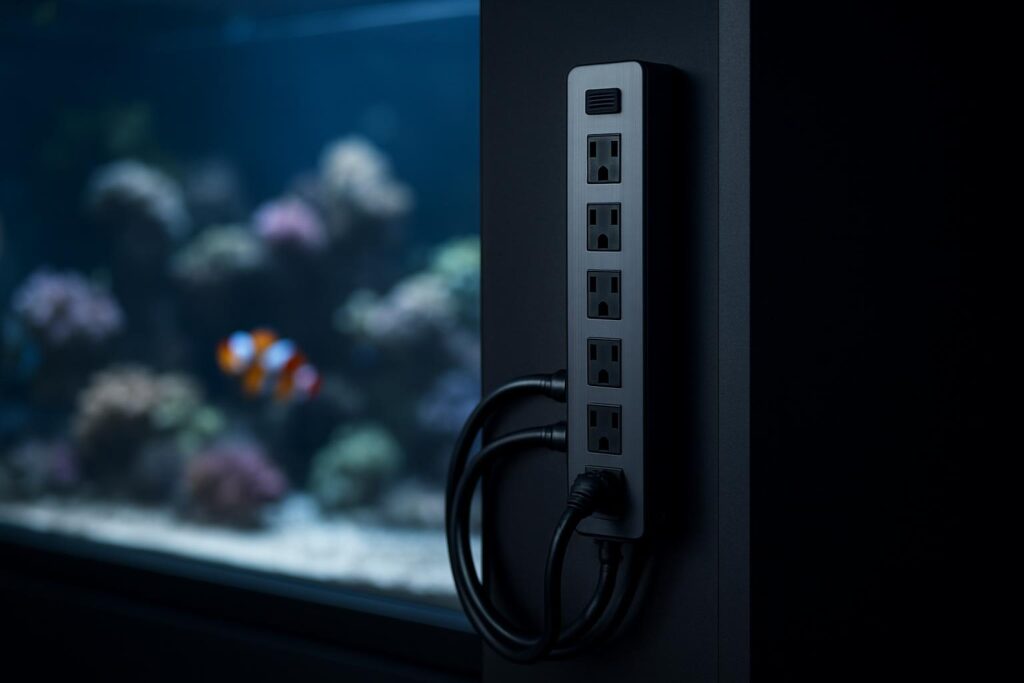
Power outages and voltage spikes rarely give a warning, yet the life support behind your aquarium runs nonstop. Heaters, return pumps, air pumps, skimmers, and controllers rely on stable power to keep fish and corals healthy. A reliable surge protector is your first line of defense against damaging surges and silent electrical noise that can confuse sensitive gear. Choose well, mount it safely, and your system stays protected.
Why your aquarium needs a surge protector
Power spikes harm life support gear
Utility switching, lightning in the area, and high-draw appliances in your home can cause sudden voltage spikes. Those surges can fry heater thermostats, LED power supplies, pump drivers, and controller ports. Even if nothing fails outright, repeated small hits shorten the life of your equipment.
Safety near water
Water, salt creep, and condensation raise the stakes. A good surge protector reduces risk to your gear, and thoughtful placement reduces risk to your home. Use drip loops, elevate connections, and combine surge protection with GFCI protection for human safety.
How to choose a surge protector for an aquarium
Core electrical protections
- Joule rating: Higher is better for absorbing spikes. For most home aquariums, aim for at least 2000 joules. Large or reef systems benefit from 3000 joules or more. Nano tanks can use 1000 to 1500 joules if loads are light.
- UL 1449 listing: Confirms tested surge protection. Look for UL 1449 and a clear clamping voltage spec.
- Clamping voltage: Lower means earlier protection. Many quality strips clamp at around 330 to 400 volts on the hot-to-neutral path.
Outlets and spacing
- Number of outlets: Count your current and near-future devices, then add two. That buffer prevents unsafe daisy-chaining.
- Wide spacing or pivot outlets: Brick-style power supplies for LED lights, dosers, and controllers need room. Pivoting or widely spaced outlets reduce blocking.
Build and cord
- Housing: Metal housings handle heat and physical stress well. Durable plastics are fine if kept dry and out of splash zones.
- Cord length and gauge: A 6 to 8 foot cord usually reaches from a wall outlet to an aquarium stand. A thicker cord resists damage. Avoid using extension cords if possible.
Indicators and noise filtering
- Status lights: A protected light confirms surge components are still active; a grounded light confirms proper outlet wiring.
- EMI and RFI filtering: Reduces electrical noise that can affect pump controllers and LED drivers. Some premium strips isolate banks to limit cross-talk.
Smart control and monitoring
- Individually switched or smart outlets: Helpful for feeding mode, water changes, or energy tracking. Ensure the smart strip still has a proper surge rating.
What surge protectors cannot do
- They are not GFCI: A surge protector guards electronics from voltage spikes, but it does not provide ground-fault protection. Use a GFCI outlet or a plug-in GFCI adapter upstream of the surge protector.
- They are not waterproof: Keep all power gear away from splashes and salt creep. Elevate and mount vertically.
The 4 best aquarium surge protectors for safety
1. Tripp Lite Isobar 6 Outlet Metal Surge Protector
This is a tank of a power strip. The Isobar line is known for robust surge absorption, metal housing, and strong noise filtering with isolated filter banks. For reef tanks running sensitive LED lighting and controllers, it delivers clean power and serious protection.
Standout features
- Approximate surge protection: 3330 joules
- 6 outlets in two isolated filter banks
- Metal housing with keyhole mounts
- 6 foot cord with resettable breaker
- EMI and RFI noise filtering
- Status lights for protection and grounding
Why it helps
Isolated filter banks reduce interference between noisy devices like return pumps and sensitive ones like LED drivers. The metal case tolerates the demanding environment around stands and fish rooms. The high joule rating offers solid headroom against spikes.
Best for
- Reef tanks with LED lighting and multiple controllers
- Mixed systems with pumps, skimmers, and dosing gear
- Hobbyists who want durable, mountable construction
Potential downsides
- Only 6 outlets, so plan your layout
- Bulkier than plastic strips, needs thoughtful mounting
Setup tips for this strip
- Mount vertically on the stand sidewall using the keyholes, above sump splash level
- Group noisy motors on one bank and sensitive electronics on the other
- Label each plug for faster maintenance
2. APC P11U2 11 Outlet Surge Protector with USB
A balanced pick for most aquariums. The APC P11U2 offers a strong surge rating, many outlets, and two USB ports for small accessories. It is a reliable foundation for freshwater and saltwater setups that require plenty of connections without advanced smart control.
Standout features
- Approximate surge protection: 2880 joules
- 11 AC outlets with wider spacing for wall warts
- 2 USB charging ports for low-draw accessories
- 6 foot cord and recessed power switch
- LED indicators for protection and wiring
- Mounting keyholes for wall or stand
Why it helps
The high outlet count fits full ecosystems with heater, return pump, wave pumps, skimmer, ATO, refugium light, and controllers. Wider spaced outlets reduce conflicts when multiple bricks are used. The surge rating covers typical home spikes with margin.
Best for
- Community freshwater tanks and moderate reef systems
- Users who need many outlets but not app-based control
- Tanks where USB power for a meter or fan is handy
Potential downsides
- Plastic housing should be kept further from splash zones
- USB ports are for low-draw devices; avoid high load on them
Setup tips for this strip
- Mount higher on the stand wall to keep all USB and AC ports dry
- Reserve the widest spaced outlets for LED power bricks
- Use colored cable ties to group lighting, pumps, and thermostats
3. Belkin 12 Outlet Pivot Plug Surge Protector
A space solver for tanks with many chunky adapters. Pivoting outlets rotate to accept large power bricks while keeping everything on one strip. The joule rating is high, and the long cord reaches outlets across the room if needed.
Standout features
- Approximate surge protection: 4320 joules
- 12 outlets, several with pivoting action for large plugs
- 8 foot heavy-duty cord
- LED indicators for protection and grounding
- Phone or coax variants exist if needed for controllers with those lines
Why it helps
The pivot design lets you angle large LED drivers or dosing pump adapters so they do not block adjacent sockets. The high joule rating provides strong overhead for homes with frequent minor surges.
Best for
- Systems with many wall-wart style power supplies
- Stands where an 8 foot cord makes routing cleaner
- Users who want one strip to handle most gear
Potential downsides
- Pivot points add bulk; plan your mounting spot
- Less focused noise filtering than isolated bank designs
Setup tips for this strip
- Mount vertically so pivot outlets can angle away from the sump
- Place the heaviest bricks near the bottom to reduce strain
- Confirm each pivot outlet fully seats the plug before powering on
4. Kasa HS300 Smart Wi Fi Power Strip with Surge Protection
For aquarists who want control and insight, the HS300 blends surge protection with individually controllable outlets and basic energy monitoring. Use schedules and voice assistants to automate lights and accessory gear, and switch outlets during maintenance without reaching into the stand.
Standout features
- Approximate surge protection: 1710 joules
- 6 individually controllable AC outlets
- Energy monitoring per outlet in the app
- 3 USB charging ports for small accessories
- Integrates with common smart home platforms
Why it helps
Individually controllable outlets let you pause skimmers during feeding, cut power to ATO pumps for water changes, or cycle refugium lights on a schedule. Monitoring helps you spot a failing pump that draws more or less power than usual.
Best for
- Planted tanks and reefs that benefit from automation
- Users who want app control without a full aquarium controller
- Nano to mid-size systems with moderate loads
Potential downsides
- Lower joule rating than heavy-duty strips; stick to moderate loads
- Relies on Wi Fi; set schedules also function locally but plan for network outages
Setup tips for this strip
- Name each outlet in the app to match the device label on the plug
- Use schedules for lights and a manual scene for maintenance mode
- Keep total draw well below 15 amps; high wattage heaters may be better on a non-smart heavy-duty strip if loads are near limits
Safe setup checklist around water
Placement and mounting
- Mount surge protectors vertically on a stand side panel or nearby wall
- Keep them above the highest possible waterline and splash zone
- Leave a gap behind the strip for airflow and to avoid salt buildup
Cable management
- Create a drip loop on every cord so water drips away from outlets
- Label each plug and device; match labels on both ends
- Bundle cords by function; keep AC adapters off the floor
Electrical safety
- Use a GFCI outlet or a plug-in GFCI adapter upstream of the surge protector
- Do not daisy-chain power strips or surge protectors
- Keep total load under 80 percent of the circuit rating to allow headroom
- Test surge and ground indicator lights after installation
Putting it all together
Choose a surge protector based on your tank size, device count, and need for noise filtering or smart control. The Tripp Lite Isobar 6 offers robust protection and clean power for sensitive reef gear. The APC P11U2 suits most mixed systems that need many outlets and straightforward reliability. The Belkin 12 Outlet Pivot Plug handles bulky adapters and long runs with one high-joule strip. The Kasa HS300 brings useful automation and monitoring for tanks where control matters more than maximum joule rating.
Combine any pick with a proper GFCI upstream, mount it high and dry, make drip loops, and label everything. A solid surge protector and a careful layout protect your livestock, your equipment, and your home.
FAQ
Q: How many joules should a surge protector have for an aquarium
A: For most home aquariums, aim for at least 2000 joules; large or reef systems benefit from 3000 joules or more. Nano tanks can use 1000 to 1500 joules if loads are light.
Q: Do I still need GFCI if I use a surge protector
A: Yes. A surge protector guards electronics from voltage spikes, but it does not provide ground-fault protection. Use a GFCI outlet or a plug-in GFCI adapter upstream of the surge protector.
Q: Can I daisy-chain power strips for my aquarium
A: No. Do not plug a power strip or another surge protector into a surge protector. Use a single, properly rated unit with enough outlets, or add a second unit to a separate wall receptacle on a different circuit if possible.
Q: Where should I mount a surge protector on an aquarium stand
A: Mount it vertically on the inside wall of the stand or on a nearby wall, above the highest possible waterline and splash zone, and create drip loops on every cord.
Q: Which surge protector is best for noisy reef lighting and pumps
A: The Tripp Lite Isobar 6 Outlet Surge Protector stands out due to its metal housing and isolated filter banks that reduce EMI and RFI noise, helping sensitive controllers and LED drivers run more reliably.