
We are reader supported. When you purchase through links on our site, we may earn an affiliate commission. Also, as an Amazon affiliate, we earn from qualifying purchases.
Large tanks look stunning but water changes can be exhausting, messy, and slow if you rely on buckets. A dedicated water change system turns that chore into a quick routine, even if you run multiple big aquariums. This guide breaks down what matters most for large setups, then reviews four proven systems that move water fast, reach long distances, and keep your floors dry. Clear pros, cons, and setup tips help you decide with confidence.
By the end, you will know which model fits your space, faucet, and tank size, plus how to run quicker, safer changes every week.
What Matters Most When Choosing a Water Change System for Large Tanks
Hose Length and Diameter
Big tanks often sit far from a sink. Measure the path, not the straight line, and add slack for routing around furniture. For most homes, 25 to 50 feet covers a living room to kitchen run. If you need to go upstairs or through hallways, 50 to 75 feet is safer.
Hose inner diameter affects speed. Wider hoses move more water per minute, which shortens change time on 75 to 200 gallon systems. If you keep multiple large tanks, prioritize higher flow.
Faucet Compatibility and Adapters
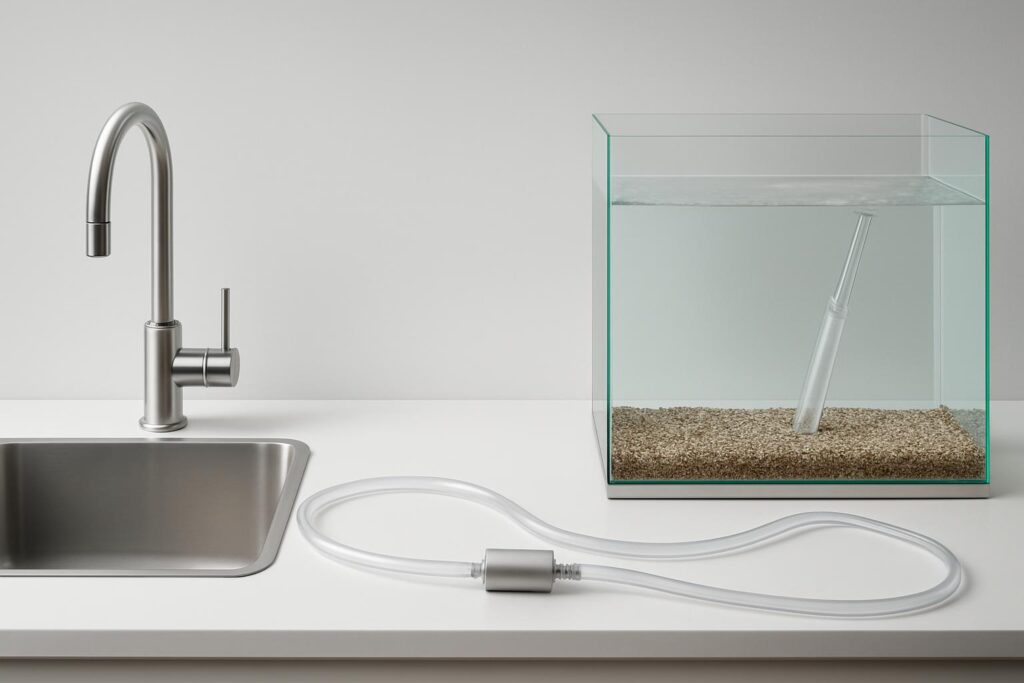
Faucet-driven kits rely on your tap to start the siphon and refill. Check whether your faucet has removable aerators and standard threading. Many kits include a basic adapter, but some modern faucets need an extra adapter. Inline valves near the faucet are vital for clean starts and stops.
Flow Control and Gravel Tube Size
Look for an on or off valve near the gravel tube so you can pause the flow to move decor or switch tanks. A long, rigid gravel tube lets you deep clean without submerging your arm. For deep tanks, a 10 to 12 inch tube keeps your sleeves dry and your reach consistent.
Durability and Spare Parts
Large systems work best when you trust the seals and connectors. Replaceable O-rings, standard hose sizes, and easy-to-find parts help a system last for years. Sturdy valves and crush-resistant tubing prevent mid-change surprises.
The 4 Best Aquarium Water Change Systems for Large Tanks
1) Python No Spill Clean and Fill Aquarium Maintenance System
What stands out: This is the classic no-bucket system built for speed and reach. It connects to your faucet to start the siphon and refill, and it comes in multiple hose lengths that suit apartments and large homes alike.
Why it helps: Large tanks demand repeatable workflow. Python’s inline faucet pump creates strong suction using water pressure, so you do not need to prime with your mouth or run a separate pump. The gravel tube is rigid and long, so you can clean deep sections quickly.
Best for: 75 to 300 gallon setups, multi-tank fish rooms, and anyone who needs 25 to 75 feet of reach with predictable, high flow.
Potential downsides: Flow depends on your tap pressure. Some modern faucets require an additional adapter. The faucet connection must be tightened with the washer seated correctly to prevent drips.
Setup tips: Hand-tighten first, then snug a bit more. Check the black washer inside the faucet adapter before each use. Close the valve at the gravel tube when switching from drain to refill so you avoid turbulence inside the tank. Dose dechlorinator for the full tank volume when refilling directly.
Real-world speed: On a 125 gallon tank with average household pressure, a 30 percent change commonly finishes in about 25 to 40 minutes, including gravel cleaning of open areas.
2) Aqueon Aquarium Water Changer 50 Foot
What stands out: Aqueon’s kit is a direct competitor with a long hose, faucet-driven suction, and an in-hand flow control valve. It includes a tall gravel tube suitable for deeper tanks.
Why it helps: The on or off valve at the handle makes it easy to pause, move to another area, and restart without running back to the tap. That control is useful on long tanks where you move section by section.
Best for: 55 to 180 gallon tanks located a room or two from a sink. Aquarists who like a handle-mounted control for quick pauses.
Potential downsides: Tubing can have more memory and be a bit stiffer when new, which can tug at the gravel tube until it relaxes. Flow speed also depends on your tap pressure and the faucet adapter seal.
Setup tips: Soak the hose in warm water or uncoil it in a straight line for a few hours before first use. Inspect the faucet adapter washer and keep a spare on hand. When refilling, set a moderate flow to avoid blasting substrate or plants.
Real-world speed: Similar to Python on like-for-like pressure and hose length. Expect roughly 30 to 45 minutes for a 30 percent change on a 125 gallon tank if you gravel vac in sections.
3) Lee’s Ultimate GravelVac 50 Foot
What stands out: A durable, faucet-driven system with a robust gravel tube that excels at deep cleaning. It emphasizes solid valves and fittings and is available in long hose configurations.
Why it helps: The long, rigid tube is effective for tall or wide tanks. The system is simple to operate and reliable once the faucet connection is dialed in. It handles routine maintenance on big tanks without fuss.
Best for: 75 to 220 gallon tanks where you want consistent gravel vacuuming power and a sturdier feel at the tube.
Potential downsides: Like other faucet-driven kits, the quality of your faucet adapter seal and water pressure will dictate performance. The hose can be bulkier to store in tight spaces.
Setup tips: Use the included valve to throttle flow when vacuuming sand to prevent pulling fine grains. Coil the hose in large loops after use to reduce kinks and speed up the next setup.
Real-world speed: With average household pressure, expect 25 to 40 minutes for a 30 percent change on a 120 to 150 gallon tank, depending on how much gravel you deep clean each session.
4) JARDLI Aquarium Water Changer 33 Foot
What stands out: A compact faucet-attachment system with quick connectors that is easy to set up and break down in smaller homes. The hose length suits tanks located near the kitchen or bathroom.
Why it helps: If you do not need 50 to 75 feet of reach, a shorter, lighter hose is easier to manage and store. Quick-connect fittings reduce fumbling and let you detach the faucet piece in seconds.
Best for: 55 to 125 gallon tanks within a room or two of a sink. Aquarists who want a lighter kit without sacrificing faucet-driven convenience.
Potential downsides: Shorter reach limits placement in large homes. Flow rate still depends on tap pressure, and tall tanks may benefit from a longer gravel tube than the included size in some kits.
Setup tips: Plan your hose route to avoid sharp bends. Keep a towel under the faucet the first time to confirm a perfect seal. If you need a little more reach later, extension hoses and standard fittings can extend the system.
Real-world speed: On a 90 to 125 gallon aquarium near a sink, a 25 to 35 minute 30 percent change is typical with average pressure, provided you do not deep clean the entire substrate every time.
How to Execute Fast, Safe Water Changes on Large Tanks
Step 1: Prep in Two Minutes
Lay two towels by the faucet and one at the tank. Check the faucet adapter washer. Close the valve at the gravel tube. Dose dechlorinator now if you will refill directly into the tank, and dose for the full tank volume.
Step 2: Start a Clean Siphon
Open the faucet to start the venturi suction at the adapter, then open the gravel tube valve. Keep the gravel tube vertical and work in small sections. For sand, hover the tube slightly above the surface.
Step 3: Drain Target Volume
Use tank markings or a piece of tape to hit a consistent 25 to 40 percent. For heavily stocked tanks, do smaller but more frequent changes rather than pushing one very large change.
Step 4: Refill with Control
Close the gravel tube valve. Flip the faucet adapter to refill mode. Open the gravel tube valve slowly and point the outlet at the glass to break the flow. Keep temperature close to your tank’s set point. For sensitive fish, refill more slowly to limit swings.
Step 5: Aftercare
Turn off the faucet and close the gravel tube valve. Lift the gravel tube upright to drain back into the tank. Disconnect at the faucet and let the hose drain to a tub or sink. Dry fittings and store the hose in large coils.
Advanced Tips for Big Setups
Quiet Operation in Apartments
Crack the faucet only as much as needed for suction during the drain phase. When refilling, lower the flow and aim the stream against a tank wall or a plate to reduce noise and current.
Temperature Matching Without Stress
Use your hand at the stream to check tap temperature. Match within a small range of your tank’s set point. For tanks with sensitive species, consider mixing hot and cold slowly and refilling at a lower rate.
Protecting Floors and Furniture
Route the hose along walls rather than across walkways. Use a silicone mat under the faucet and a small tray at the tank base for drip control. Keep a dedicated towel in easy reach.
Storage and Hose Hygiene
Drain hoses fully after use to discourage biofilm. Coil in large loops to prevent kinks. If a hose picks up an odor over time, flush with warm water and a small amount of aquarium-safe cleaner, then rinse thoroughly.
Conclusion
On large tanks, the right water change system is the difference between a dreaded chore and a short, repeatable routine. Python, Aqueon, Lee’s, and JARDLI each deliver faucet-driven convenience that scales well for 55 to 300 gallon setups. Pick hose length based on your route to a sink, prioritize a sturdy gravel tube and reliable valves, and keep spare washers on hand. With a clear workflow and a dependable kit, weekly maintenance becomes predictable, fast, and clean.
FAQ
Q: Which system is best for very large tanks over 125 gallons
A: Python, Aqueon, and Lee’s with 50 to 75 foot hoses are ideal because they move water quickly and reach across rooms without buckets.
Q: How do I prevent leaks at the faucet connection
A: Inspect the adapter washer before each use, hand-tighten then snug slightly, and keep a spare washer on hand.
Q: What hose length should I choose for a big tank in the living room
A: Measure the actual route to the sink and add slack; 25 to 50 feet usually covers a living room to kitchen run, while long hallways may need 50 to 75 feet.
Q: Do I add dechlorinator before or after refilling directly from the tap
A: Add dechlorinator before refilling and dose for the full tank volume to protect fish as new water enters.
Q: How long should a 30 percent change take on a 125 gallon tank
A: With average tap pressure and a faucet-driven kit, expect about 25 to 45 minutes including basic gravel cleaning.