
We are reader supported. When you purchase through links on our site, we may earn an affiliate commission. Also, as an Amazon affiliate, we earn from qualifying purchases.
Catching a fast, skittish fish without tearing down rockwork or chasing it around the tank is possible when you use the right trap and the right approach. This guide explains how fish traps work, what to look for, and how to set them up so you can remove problem fish, rehome bullies, or isolate sick fish with minimal stress. You will find six proven fish trap tools that hobbyists use every day, plus step-by-step tips to get clean captures in both freshwater and marine tanks.
How to Choose an Aquarium Fish Trap That Actually Works
Match the trap size to your fish
Small traps capture gobies, damsels, and similar fish with ease. Larger traps are better for wrasses, tangs, or cichlids that need elbow room to enter confidently. As a rule, pick a trap that is at least 1.5 times the body length of your target fish.
Look for a door you can control
Manual sliding doors with a line give you timing control. Floating-style traps let the fish enter and rise away from rockwork automatically. Choose the door style that best matches the hiding behavior of your target fish.
Transparent and low-profile helps
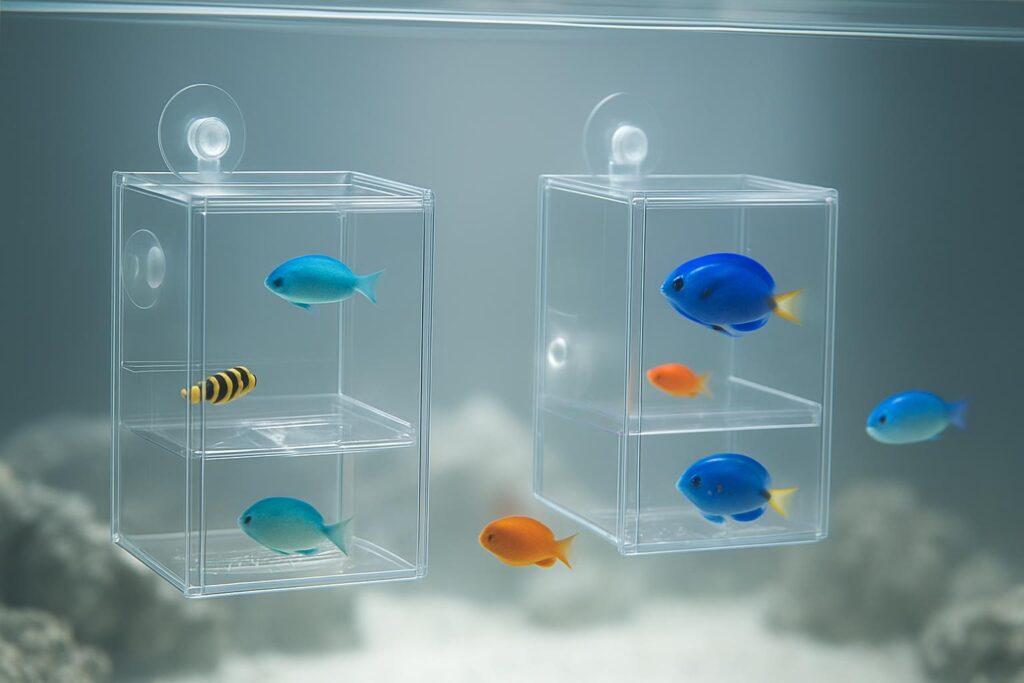
Clear acrylic walls and minimal hardware look less threatening, which gets fish to enter faster.
Magnets and suction cups both work
Magnets are stronger and easier to reposition on thick glass. Suction cups are fine for nano tanks and lighter traps.
Bonus features that save time
- Bait cups to contain food and scent
- Pivoting doors that close silently
- Top handles for easy removal
- Rounded edges to protect fish and panels
The 6 Best Aquarium Fish Trap Tools for Catching Fast Fish
1) KollerCraft TOM Aquarium Fish Trap
This classic box trap is simple, light, and effective in both freshwater and marine tanks. The clear body blends in, the door slides smoothly, and suction cups hold it in place while you feed and wait. It excels with fast but small species that dart to food instantly.
Why it helps: The small, low-visibility design encourages quick entries. The manual door gives you exact control, so you can close at the right second.
Best for: Damsels, chromis, small wrasses, small cichlids, gobies
Potential downsides: Too small for larger fish. Suction cups can lose grip if glass is not clean.
How to set it up:
- Rinse the trap and the cups with tank water
- Mount it near a favorite feeding lane
- Place a small piece of thawed food in the trap, or clip nori to the inside wall
- Wait for your target fish to enter, then slide the door down
Pro tips:
- Pre-feed near the trap for one to two days so fish learn the area is safe
- Use a dimmer light period during trapping to reduce skittishness
2) Aqua Medic Fish Trap
This well-known acrylic trap is spacious, stable, and built for repeated use. The large opening and quiet sliding door suit medium to large fish that will not enter tight spaces. It is a staple in reef tanks where rockwork makes netting impossible.
Why it helps: A large interior and clear walls reduce the sense of confinement. The smooth, low-noise door closure lowers spooking risk.
Best for: Tangs, larger wrasses, angelfish, bigger cichlids
Potential downsides: Bulkier size needs more mounting space. Heavier when full of water.
How to set it up:
- Attach with magnets or suction cups as provided by the model
- Position the opening along a clear swim path
- Bait with algae clip or meaty food in a feeding dish placed at the back
- Practice a few dry runs of door closure so timing is smooth when the fish enters
Pro tips:
- Restrict feeding to the trap area for 24 hours to build motivation
- Angle the opening slightly toward the current so food scent pulls fish in
3) Nyos Floating Fish Trap
This floating-style trap uses buoyancy to lift the fish up and away from rockwork as soon as it enters. You can trigger the ascent manually with a line. The design reduces chase time and prevents the fish from banging into aquascape as you remove it.
Why it helps: Once the fish is inside, the trap rises smoothly, making escape unlikely. Clear panels and a roomy body encourage entry.
Best for: Reef fish that hide deep in rocks, such as wrasses and dwarf angels; quick freshwater cichlids
Potential downsides: Requires overhead clearance for the lift. Slight learning curve for timing the trigger.
How to set it up:
- Attach the trigger line and confirm the float action is smooth
- Bait at the rear and keep the mouth of the trap flush with the glass
- Once your target is fully inside, pull the line to seal and lift
Pro tips:
- Use a feeding schedule so the target fish arrives first and enters with confidence
- Close room doors and reduce foot traffic during trapping to avoid spooking
4) IceCap Fish Trap
Built with strong magnets and clear acrylic, the IceCap trap offers reliable mounting on thicker glass and a wide mouth for larger species. The control line and door mechanism are robust, which helps when you need consistent, repeatable captures.
Why it helps: Strong magnets keep the trap steady so fish are not startled by movement. The wide entrance suits fish that dislike narrow openings.
Best for: Tangs, foxface, larger wrasses, assertive cichlids
Potential downsides: Costs more than basic models. Heavier magnets require careful handling on acrylic tanks.
How to set it up:
- Mount with magnets on clean glass
- Place bait at the back corner to draw fish fully in
- Keep the control line slightly taut so the door responds instantly
Pro tips:
- Turn down flow a notch during trapping so scent pools near the opening
- Pre-stage a transfer container with tank water to move the fish quickly
5) Eshopps FT-1 Fish Trap
Compact, versatile, and easy to deploy, the Eshopps FT-1 is a favorite for mixed reef and planted displays. The acrylic build is sturdy, and the door action is gentle, which keeps stress low during capture.
Why it helps: Balanced size fits many tanks without blocking flow or sight lines. Clear corners and panels help wary fish see an exit, which paradoxically encourages entry.
Best for: Clownfish, dwarf angels, small tangs, gouramis, barbs
Potential downsides: Interior volume is mid-size, so very large fish may still hesitate.
How to set it up:
- Position near a common feeding station
- Use small, frequent bait amounts rather than one large chunk
- Close the door only when the entire body is past the threshold
Pro tips:
- Feed the rest of the tank first, then place bait in the trap so only your target is motivated to enter
- Cover the sides with a bit of dark vinyl if your fish is very shy; remove after a few minutes
6) Generic Acrylic Hang-On Fish Trap with Sliding Door
A budget-friendly, clear acrylic box with a sliding door and suction cups can still perform very well. Many versions include a bait clip and a simple pull-line so you can close the door when your fish commits. This style is accessible for beginners who need a basic, reliable tool for fast species.
Why it helps: Minimalist parts reduce failure points. The clear walls and simple geometry get quick entries when paired with the right bait.
Best for: Rasboras, tetras, small barbs, small wrasses, damsels
Potential downsides: Thinner acrylic can flex if handled roughly. Suction cups must be checked for grip before each use.
How to set it up:
- Clean glass and cups carefully to improve hold
- Mount level, with the opening aligned to a common swim route
- Bait lightly, refresh small amounts every 5 to 10 minutes during attempts
Pro tips:
- Do not overcrowd the trap with food; one or two bites is enough
- Use two traps on opposite sides to split attention in a community tank
How to Set Any Fish Trap for Quick, Low-Stress Captures
1) Pre-condition your fish
Feed near the eventual trap location for one to two days. Use the same food you will bait the trap with. This builds a routine and reduces suspicion.
2) Control feeding windows
Do not overfeed in the 12 hours before trapping. A slightly hungry fish is a decisive fish. Keep other inhabitants satisfied so they do not rush the trap first.
3) Pick calm timing
Trap during a quiet period when room movement is minimal. Dim lights slightly if your fish tends to bolt at silhouettes.
4) Tune flow and scent
Reduce high flow temporarily so food scent pools near the opening. Restore normal circulation after the attempt.
5) Be patient but ready
Wait until the target is fully inside, past the door track. Close the door in one smooth motion. Avoid slamming.
6) Transfer fast and safely
Prepare a lidded specimen container or a bucket with tank water. Move the trap close to the surface, tilt gently, and guide the fish into the container without exposing it to air if possible.
Smart Baiting Tactics That Make Fast Fish Commit
Match bait to species
- Herbivores and omnivores: nori on a clip, spirulina pellets
- Carnivores: thawed mysis, brine shrimp, small clam pieces
- Cichlids and barbs: small sinking pellets or gel food squares
Use small amounts
Place a bite-sized portion at the back of the trap. Replenish as needed. Too much food fuels crowding and chaos.
Stage decoys
If non-target fish keep entering, pre-feed them elsewhere, then place fresher bait in the trap for the target fish.
Tank Layout Adjustments That Increase Your Odds
Align with swim lanes
Position the opening along routes your fish already uses. Most fast fish have habitual patrol paths.
Reduce reflective glare
Clean the trap and glass to cut reflections. Fish are more likely to enter when they see a clear interior.
Stabilize the trap
Confirm suction cups or magnets are well seated. A wobble at the wrong time can spook the fish.
Common Mistakes to Avoid
- Closing too early and clipping fins at the threshold
- Overfeeding the tank before trapping so no one cares about bait
- Letting other fish claim the trap first and chase the target away
- Leaving the trap in nonstop for days, which teaches fish to avoid it
- Moving the trap constantly instead of building a routine at one spot
When to Use Multiple Traps
In busy community tanks, two traps can split attention and prevent crowding. Place one on each end of the display and bait both with small amounts. This also lets you target different species with different foods at the same time.
What to Do Right After the Capture
Minimize handling
Keep the fish in water during transfer if possible. Use a specimen container or soft mesh net only as needed.
Control stress
Move the fish to quarantine, hospital, or rehoming container with stable temperature and aeration. Provide hiding spots immediately.
Check for injuries
Look for frayed fins or scrapes and treat in quarantine if required. Good traps rarely injure fish when used properly.
Maintenance and Care for Your Trap
- Rinse with fresh water after each use to remove food oils
- Inspect door tracks and lines for salt creep or grit
- Replace worn suction cups or clean magnet pads before storage
- Dry completely to prevent biofilm growth between uses
Quick Comparison: Which Trap Fits Your Situation
Small, fast fish in a nano or medium tank
KollerCraft TOM Aquarium Fish Trap or a generic acrylic hang-on trap. They are nimble, clear, and easy to bait lightly.
Medium fish in a mixed reef
Eshopps FT-1 Fish Trap or Nyos Floating Fish Trap for gentle capture with flexible placement.
Large, assertive swimmers
Aqua Medic Fish Trap or IceCap Fish Trap with wide entrances and stronger mounting.
Conclusion
Fast fish are not impossible to catch. With the right trap size, a quiet door mechanism, careful baiting, and a calm routine, you can remove even the quickest damsel, wrasse, or cichlid without tearing down your aquascape. Start with a trap that fits the target species, pre-condition feeding at the chosen spot, and keep each attempt controlled. The six tools above cover nano tanks to large reefs and will help you complete the job with minimal stress and maximum control.
FAQ
Q: How do I choose the right fish trap size
A: Pick a trap at least 1.5 times the body length of your target fish and with an opening that matches its usual swim lane. Larger fish need wider entrances and more interior space to feel safe entering.
Q: What is the best way to bait a trap for fast fish
A: Use a small amount of species-appropriate food placed at the back of the trap. Pre-feed near the trap for one to two days, then restrict feeding before the attempt so the target fish is motivated to commit.
Q: How can I prevent non-target fish from entering first
A: Pre-feed other fish elsewhere, then place fresh bait in the trap. You can also run two traps on opposite sides to split attention and reduce crowding.
Q: Should I reduce water flow when trapping
A: Yes, lower flow slightly so the scent pools near the trap opening and food does not blow out. Return to normal circulation after the attempt.
Q: What should I do immediately after I catch the fish
A: Transfer the fish quickly into a prepared container with tank water, minimize handling, and move it to quarantine or its next home. Check for minor scrapes and provide hiding spots to reduce stress.