
We are reader supported. When you purchase through links on our site, we may earn an affiliate commission. Also, as an Amazon affiliate, we earn from qualifying purchases.
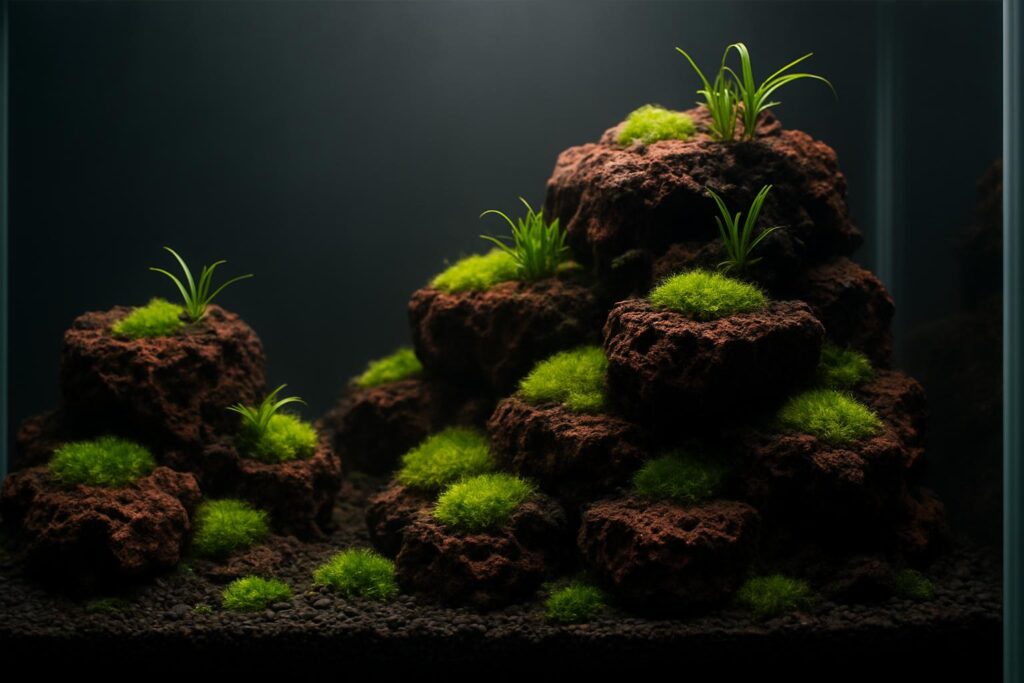
Lava rock is a staple in aquascaping because it is light, porous, and plant friendly. It anchors mosses and epiphytes, builds dramatic height without overloading glass, and offers huge surface area for beneficial bacteria. In 2026, the best picks are those that balance texture, pore size, weight, color consistency, and reliable packaging. This guide narrows the field to four standouts with clear use cases, practical prep notes, and honest downsides, so you can plan a scape that looks clean on day one and stays stable over time.
How to choose lava rock in 2026
Porosity and texture that plants can grip
Look for rock with abundant micro-pores and a rugged surface. This increases bacterial colonization and makes it easier to tie or glue rhizome plants and moss. Too smooth and plants slide off; too crumbly and pieces shed grit in the tank.
Size range and workability
A mix of small, medium, and anchor pieces makes scaping faster. For nano tanks, fist-size or smaller stones with wide, flat faces are easiest to stack. For larger tanks, lightweight medium chunks help you build height and terraces without stressing the glass.
Color that supports the mood
Red lava adds warmth and contrast against green plants. Black lava reads modern and moody, great for high-contrast minimal layouts. Decide the vibe first, then select a color that amplifies it.
Water safety and stability
Quality lava rock is inert and does not raise pH or hardness in freshwater. Avoid pieces with visible metallic flecks or oily residue. Dust is normal and rinses out with prep. Sharp edges can be softened with a quick scrub or light filing where fish might rub.
Prep that prevents cloudy starts
Rinse thoroughly until runoff is clear. For dusty batches, agitate in a bucket, drain, repeat. Boil only if you must sterilize, and let fully cool before use to avoid trapped air and buoyancy issues during planting. Pre-seeding in a cycled filter bucket can speed up tank maturation.
The 4 best lava rocks for aquascaping in 2026
AquaNatural Volcanic Red Lava Small Rock, 10 lb
AquaNatural’s red lava remains a top choice for general aquascaping. The small rock grade offers a balanced mix of palm-size pieces and smaller chocks that lock together with minimal gaps. The surface is coarse enough for thread-tying moss or epiphytes, yet not so friable that it sheds endlessly during rinsing.
Why it helps: Reliable porosity supports fast bacterial establishment and visible plant grip. The warm red-brown tone gives immediate depth, especially in low to medium light tanks where leaf greens need contrast.
Best for: Beginner to intermediate scapers who want predictable shapes for mounds, retaining walls, and naturalistic hill layouts from 10 to 55 gallons.
What stands out in 2026: Packaging consistency has improved, with fewer ultra-tiny fragments, so you get more usable scaping pieces in each box. The pore structure favors capillary action, which helps moss stay moist and spread evenly after initial tie-down.
Potential downsides: Color can skew slightly lighter or darker between batches, which matters if you are expanding an existing layout. The rock edges can be nubby, so consider softening contact points if you keep long-finned fish prone to snagging.
Prep tips: Rinse thoroughly in warm water and swish aggressively to flush dust. If you want instant biological support, soak the stones for a week in tank water with an established filter sponge, then scape.
Lifegard Aquatics Lava Rock, Small 1–2 inch, 25 lb
For larger builds or budget-conscious projects, Lifegard’s small-grade lava in a 25 lb box is strong value. The 1–2 inch average size makes it easy to create risers, terraces, and paths that support heavier feature stones without overloading the tank base. Many pieces are blocky, which stacks cleanly for iwagumi-style backfills and slope reinforcement.
Why it helps: Lightweight bulk moves scaping from flat to three-dimensional quickly. High porosity improves oxygen penetration in elevated substrates, reducing anaerobic pockets in deeper sections.
Best for: Medium to large aquariums, terraced layouts, backfilling under feature stones, and anyone building height with minimal glass stress.
What stands out in 2026: Shape consistency is better than prior years, so walls and mounds require less micro-adjustment. The stone locks together with stable friction, useful if you prefer not to rely on glue for every seam.
Potential downsides: The small grade is not ideal for dramatic standalone features. Expect to combine this with a few larger show pieces, or use it primarily as structural rock under soil and foreground stones.
Prep tips: Because the pack is dense, there is usually more dust. Power rinse outside with a sprayer or rinse in multiple buckets, then finish with a quick pre-soak to release trapped air before placing.
Pisces Volcanic Black Lava Rock, 10 lb
When you want a dark canvas that makes green plants and white sand pop, black lava from Pisces is a smart pick. The color reads deep charcoal to near-black once wet. Surfaces tend to be craggy with large pores, offering plenty of anchor points for Bucephalandra, Anubias, and moss cushions.
Why it helps: Dark rock disappears visually, allowing plant form to take center stage. It also hides algae in early weeks better than lighter stones, which makes maintenance less stressful during the establishment phase.
Best for: Minimal scapes, dramatic contrasts with light substrates, and shrimp-focused layouts where dark backdrops enhance color.
What stands out in 2026: Batches trend toward fewer ultra-sharp edges, so fish damage risk is lower. The pack usually includes a couple of flattish faces ideal for midground focal stones in 10–20 gallon tanks.
Potential downsides: Dust shows clearly during rinse and can look messy on pale sand if not thoroughly cleaned. Color-matching with existing red-toned lava is difficult, so plan a uniform palette from the start.
Prep tips: Rinse until water runs clear, then place stones on a towel to assess exact tone when damp. If mixing with wood, pre-soak both to reduce initial buoyancy mismatches while you set the hardscape.
Uniclife Aquarium Volcanic Lava Rocks, 2 lb Assorted
For nano tanks, shrimp jars, or detail work, the Uniclife assorted pack delivers hand-sized stones with interesting cavities. The pieces are easy to place with forceps, great for precise islands, moss bonsai bases, or creating porous hideouts for shrimp and fry.
Why it helps: Smaller, lighter stones let you fine-tune negative space without compromising flow. Cavities and tunnels increase microhabitat variety, which supports shrimp behavior and biofilm access.
Best for: 2.5 to 10 gallon aquariums, desk aquascapes, and accent detailing in larger layouts. Also useful for tying single rhizome plants neatly while you grow out a scape.
What stands out in 2026: The assortment leans toward sculptural shapes over rubble, so each piece can serve as a mini focal element. Edges are workable with minimal filing.
Potential downsides: Weight per piece is low, so larger fish can nudge them if not anchored by substrate. Quantities are limited for big projects, making this better as a supplement rather than a primary structural choice.
Prep tips: Rinse and lightly scrub with a soft brush to remove micro-grit from pores. If using in shrimp tanks, pre-seed in mature tank water for a week to jump-start biofilm growth.
How to use lava rock for strong, stable layouts
Build elevation without risking glass
Layer lava rock as a lightweight foundation, then cap with substrate. This creates visually tall mounds while keeping weight manageable. Use larger pieces at the base and step up with smaller ones for a stable incline that resists slumping.
Lock joints before adding soil
Where two rocks meet, add a thin bead of cyanoacrylate gel and a pinch of powder from your rinse bucket. The powder acts as a filler so the joint sets quickly. This trick holds slopes through planting and early maintenance.
Anchor plants directly to rock
Rhizome plants and moss grow best when tied or glued to porous faces. Position them where flow is moderate, not blasting, so they adhere while still getting nutrients. Over time, roots crawl into pores for a natural hold.
Plan flow paths and waste capture
Leave deliberate gaps behind mounds for water to circulate. Lava rock’s texture can trap detritus; good flow prevents dead spots while keeping mulm accessible for siphoning.
Maintenance that keeps lava rock looking clean
Vacuum the base of slopes
During water changes, angle the siphon at the foot of lava mounds to pull trapped waste without disturbing plants. This keeps the porous faces from turning into algae magnets.
Brush, do not blast
If algae forms, use a soft toothbrush gently along the surface. Avoid pressure washing in-tank, which dislodges substrate and spreads spores. Spot-dose liquid carbon if compatible with livestock and plants.
Refresh planting ties
After 4–6 weeks, snip and remove visible thread once roots have taken hold. This improves the natural look and reduces debris traps.
Which one should you pick
For first scapes and all-round use
AquaNatural Volcanic Red Lava Small Rock is the safest bet. The mix of sizes and plant-friendly texture helps you get an attractive layout without chasing special pieces.
For big builds and reliable structure
Lifegard Aquatics Lava Rock shines when you need volume and stability. It is effective for risers, retaining shapes, and building heavy-looking scapes with low actual weight.
For dark, modern looks
Pisces Volcanic Black Lava Rock delivers the mood. It makes green plants and pale sands stand out and hides early algae better.
For nanos and fine detailing
Uniclife’s 2 lb assorted pack gives you small sculptural stones that are easy to place precisely and perfect for shrimp microhabitats.
Conclusion
Lava rock earns its place in aquascaping because it solves multiple problems at once. It creates height without mass, anchors plants securely, and powers filtration through vast pore networks. In 2026, the best choices balance texture, size variety, and consistency from box to box. Use red tones when you want warmth and contrast, choose black for a sleek modern mood, and keep a small-pack assortment for nanos and finishing touches. Prep thoroughly, plan flow around your mounds, and your lava rock scape will start clean and stay stable.
FAQ
Is lava rock safe for shrimp and fish
Quality lava rock is inert and safe for shrimp and fish when rinsed thoroughly, and it offers porous shelter that supports biofilm and beneficial bacteria.
Will lava rock change pH or water hardness
Good lava rock is inert and does not raise pH or hardness in freshwater when properly rinsed before use.
How should I prepare lava rock before placing it in the aquarium
Rinse aggressively until water runs clear, optionally pre-soak to release trapped air, and for faster cycling you can pre-seed the rocks in mature tank water with a used filter sponge.
Which lava rock is best for a nano aquarium
For nanos, the Uniclife 2 lb assorted pack is best because its smaller sculptural stones are easy to place precisely and create porous hideouts.
How do I keep lava rock from trapping too much detritus
Plan clear flow paths around mounds and vacuum the base of slopes during water changes, using a soft brush for spot cleaning if algae appears.