
We are reader supported. When you purchase through links on our site, we may earn an affiliate commission. Also, as an Amazon affiliate, we earn from qualifying purchases.
Starting a planted aquarium is exciting, but shaping plants, leveling substrate, and keeping stems tidy can turn frustrating fast without the right tools. A beginner-friendly aquascaping tool kit makes every small task simpler, faster, and more precise. This guide explains what to look for, how to choose, and reviews five reliable kits that help you learn good habits from day one. Stay focused on what matters: cleaner trims, healthier planting, and a layout that stays neat between water changes.
What A Beginner Needs From a Tool Kit
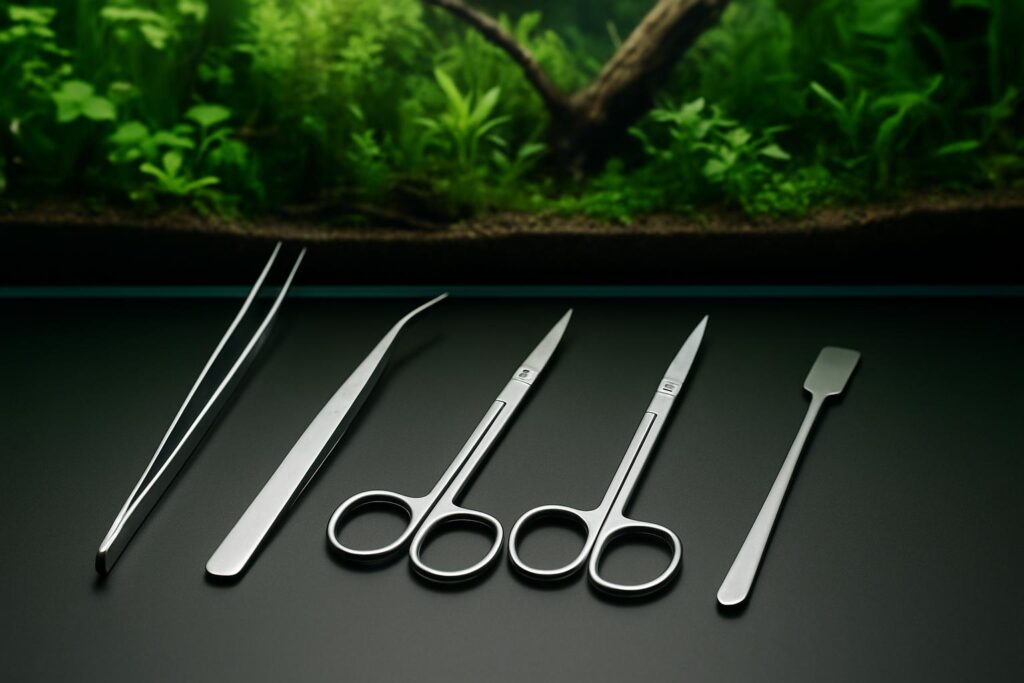
Essential tools and what they do
Straight tweezers push stems deep into the substrate without floating back up. They are also excellent for placing root tabs and moving hardscape details.
Curved tweezers help with tight angles and corners where straight tweezers are awkward. They make planting carpets and foreground plants easier.
Curved trimming scissors cut close to the substrate with a natural wrist angle. They are the go-to for carpeting plants and for shaping mounds smoothly.
Straight trimming scissors are better for tall stems and midground bunches where you need upright precision.
Substrate spatula or sand flattener levels soil and sand, blends slopes, and smooths edges along the glass for a tidy look.
Material and build quality
Stainless steel is the standard. It resists corrosion, keeps an edge longer, and balances well in hand. Kits with a brushed or matte finish reduce glare and improve grip. Coatings can help but are not a replacement for proper rinsing and drying.
Size and ergonomics
Longer tools are safer around fish and help you reach deeper tanks. Shorter tools feel nimble in nano tanks. Smooth spring tension in scissors matters more than raw sharpness for beginners because it reduces hand fatigue and jagged cuts.
Value and replacements
For a first kit, aim for four to six pieces that cover planting, trimming, and leveling. Replacement availability helps over time, but a solid starter kit should last if you rinse, dry, and store it well.
How We Chose
These picks focus on clean cuts, easy handling, and practical tool combinations. Each kit includes the core tools beginners use most. We looked for rust resistance, consistent alignment in tweezers, smooth scissor action, and cases or sleeves that protect edges. Every option balances price, usability, and durability for someone just getting started.
The 5 Best Aquarium Aquascaping Tool Kits for Beginners
Hygger 6-in-1 Aquarium Aquascaping Tools Kit
This versatile set packs the essentials with extra reach and attachments that grow with your skills. It covers planting, trimming, leveling, and fine cleanup without feeling complicated.
Kit highlights: curved scissors for carpets, straight scissors for stems, straight and curved tweezers for planting, plus a sand flattener or rake style head to shape substrate. The longer reach keeps your hands out of the tank and improves visibility while you work.
Why it helps: For a new aquascaper, flexibility matters. This kit lets you try both scissor styles, test different tweezer angles, and dial in how you prefer to level substrate. The pieces feel balanced and give steady control in small spaces.
Best for: Beginners with tanks from nano to mid-size who want one kit that does almost everything. It supports slower, careful work while you build technique.
Potential downsides: Interchangeable heads and multiple parts require careful rinsing and drying. Heavier tools can feel bulky in very small tanks. If you prefer ultra-light scissors, this set may feel substantial.
Beginner tip: Start your planting session with curved tweezers in the foreground, switch to straight tweezers for taller stems, then finish by smoothing the substrate with the flattener so cuttings do not float free.
Aqueon Aquascaping Tools Kit, 3-Piece Stainless Steel Set
Simple, sturdy, and focused on the essentials. This three-piece kit is an easy upgrade over household tools and helps you form clean habits from the start.
Kit highlights: straight tweezers for planting, curved trimming scissors for shaping carpets and midground plants, and a sand flattener to level soil and create clean lines.
Why it helps: The limited tool count keeps you from overthinking. Curved scissors are intuitive and give smooth, low cuts that help carpets spread evenly. The flattener quickly resets slopes after work.
Best for: Small to medium planted tanks where you want reliable control without a crowded toolbox. Great as a first kit if you plan on keeping routine light.
Potential downsides: Fewer pieces mean fewer options. If you want curved tweezers or a second scissor style, you will add them later. The lighter weight can feel less planted in hand for long trimming sessions.
Beginner tip: Trim carpets first with curved scissors, then immediately smooth the front glass line with the flattener. This prevents loose clippings from catching on uneven sand.
UP AQUA Stainless Steel Aquascaping Tools Set, 3 PCS
A precise, compact set for neat planting and clean trims. The finish and edge quality are well suited to smaller tanks and delicate work.
Kit highlights: straight tweezers, curved tweezers, and curved scissors. This trio covers fine planting angles and low, smooth cuts across the foreground.
Why it helps: Two tweezer angles simplify planting in dense stems or tight corners. Curved scissors track naturally along substrate contours, making early carpet maintenance less stressful.
Best for: Nano and small tanks where precision is more important than reach. Ideal if you prefer a light, nimble feel.
Potential downsides: No substrate flattener included, so leveling is slower. The compact size may feel short in deeper aquariums.
Beginner tip: When planting tiny foregound runners, use curved tweezers to angle slightly backward as you insert. This helps lock roots down and reduces floaters after filling the tank.
VIVOSUN 5-in-1 Aquascaping Tools Set
A balanced, value-focused kit that stretches across most beginner tasks. It offers an accessible way to compare scissor and tweezer styles without overspending.
Kit highlights: straight and curved tweezers, straight and curved scissors, and a sand flattener. The included case keeps edges protected and tools organized.
Why it helps: Switching between straight and curved tools helps you learn what suits your tank layout and hand position. The flattener restores clean contours quickly, which keeps the scape tidy after a big trim.
Best for: New hobbyists who want a complete starting set with room to grow, especially if you maintain both a carpet and taller stems.
Potential downsides: Scissor tension may feel firm out of the box and smooth out after a few sessions. Longer tools can feel oversized in very small aquariums.
Beginner tip: Test both scissor types on the same plant group during your first trim. Notice which gives smoother cuts and less plant lift. Use that style as your default for that section of the scape.
Jeeco Aquarium Aquascaping Tools, 5 Pack Stainless Steel
A budget-friendly kit that still covers the right basics. It is a practical entry for a first planted tank, with the key tools to establish routine care.
Kit highlights: straight and curved tweezers, straight and curved scissors, and a substrate spatula. The tool variety supports both initial setup and weekly maintenance.
Why it helps: You get the most-used shapes for planting and trimming, which builds confidence as you learn. The spatula speeds up cleanup after trimming and planting sessions.
Best for: Beginners setting up their first planted tank who want a complete starter set at a modest price.
Potential downsides: Coatings can scuff with rough handling. Alignment can vary slightly between pieces; check tip fit and wipe edges before your first use.
Beginner tip: After each trim, use the spatula to gently push cut leaves toward the front glass for easy net removal. This keeps the filter from clogging with clippings.
Quick How-To: Use Your New Tools Safely
Trimming for plant health and shape
Curved scissors for carpets and low plants. Glide the blades parallel to the substrate and make small, even cuts. Avoid hacking clumps; several light passes are cleaner than one deep cut.
Straight scissors for tall stems. Cut just above a leaf node to promote branching. Keep your non-cutting hand out of the way and work in sections to avoid clouding the whole tank at once.
Planting without floaters
Use straight tweezers for upright stems. Insert deep enough that the plant holds when you release. Angle curved tweezers for carpets and runners so the tips approach from a low angle, then release while twisting slightly to lock roots into the substrate.
Leveling substrate cleanly
Use a substrate spatula or flattener to maintain slopes and tidy edges. Pull substrate away from the front glass by a few millimeters for a crisp look and to stop detritus from building up.
Work safely around livestock
Move slowly and avoid sudden tool motions near fish and shrimp. Keep blades closed while repositioning. If fish are very curious, feed a tiny amount on the opposite side of the tank to redirect attention during trimming.
Maintenance and Rust Prevention
Rinse, dry, protect
Rinse tools in fresh water after each use. Dry completely with a towel, especially at joints and inside scissor pivots. Store in a sleeve or case to protect edges and prevent knocks.
For extra protection in humid rooms, wipe a thin film of mineral oil on scissor pivots and tweezer tips, then buff lightly. Avoid harsh chemicals that can transfer back into the tank.
Beginner Routine: A Simple Weekly Plan
Weekly, 5 to 15 minutes
Trim fast growers lightly, replant any floaters, and smooth the substrate. Remove visible debris before turning filters back up to full flow.
Every 1 to 3 weeks for carpets
Use curved scissors to lower the carpet evenly. Shallow cuts encourage lateral growth and prevent matting. Finish by flattening the front edge for a clean viewing line.
Monthly check
Inspect scissor tension and tweezer alignment. Tighten loose screws and wipe pivots. Good tools stay precise if you treat them like instruments instead of general hardware.
How To Choose The Right Kit For You
For nano tanks
Favor compact kits like UP AQUA for precision. Curved tweezers and curved scissors give better control in tight spaces.
For mid-size tanks
Versatile kits like Hygger or VIVOSUN shine. The mix of straight and curved tools plus a flattener covers daily jobs and bigger trims.
For minimalists
A three-piece set like Aqueon is enough to establish good technique without clutter. Add one tool later only if you feel limited.
Conclusion
Good tools turn aquascaping from a struggle into a steady routine. Start with a kit that includes straight and curved tweezers, curved scissors for carpets, straight scissors for stems, and a substrate flattener. Hygger and VIVOSUN provide wide coverage with room to grow. Aqueon and UP AQUA keep things simple and precise. Jeeco offers a budget path without skipping the important pieces. Match the kit to your tank size and style, rinse and dry after every session, and your plants and layout will stay neat with less effort.
FAQ
Q: Which aquascaping tools do beginners actually need?
A: Start with straight tweezers, curved tweezers, curved trimming scissors, straight trimming scissors, and a substrate spatula or flattener. These cover planting, trimming, and leveling for most layouts.
Q: When should I use curved scissors instead of straight scissors?
A: Use curved scissors for carpets and low plants where you need to cut parallel to the substrate. Use straight scissors for tall stems and upright trimming above leaf nodes.
Q: How do I prevent my aquascaping tools from rusting?
A: Rinse tools in fresh water after each use, dry them completely, and store them in a sleeve or case. A thin film of mineral oil on pivots adds extra protection.
Q: Are interchangeable multi-tool kits good for beginners?
A: Yes. Kits that include both straight and curved tweezers plus both scissor styles let you learn what fits your tank and technique while covering all routine tasks.
Q: How often should I trim carpeting plants?
A: Trim carpets every 1 to 3 weeks with light, even cuts using curved scissors, then smooth the substrate edge for a clean viewing line.