
We are reader supported. When you purchase through links on our site, we may earn an affiliate commission. Also, as an Amazon affiliate, we earn from qualifying purchases.
Deep cleaning aquarium gravel is not just about looks. Waste trapped in the substrate breaks down into ammonia, nitrite, and then nitrate. If you ignore it, algae blooms and stressed fish follow. A good gravel rake helps you loosen and lift debris from deep in the bed so your siphon can remove it. It also levels uneven spots, prevents anaerobic pockets, and keeps your aquascape tidy. This guide shows you what matters in a gravel rake and reviews five dependable options that make deep cleaning faster, safer, and more thorough.
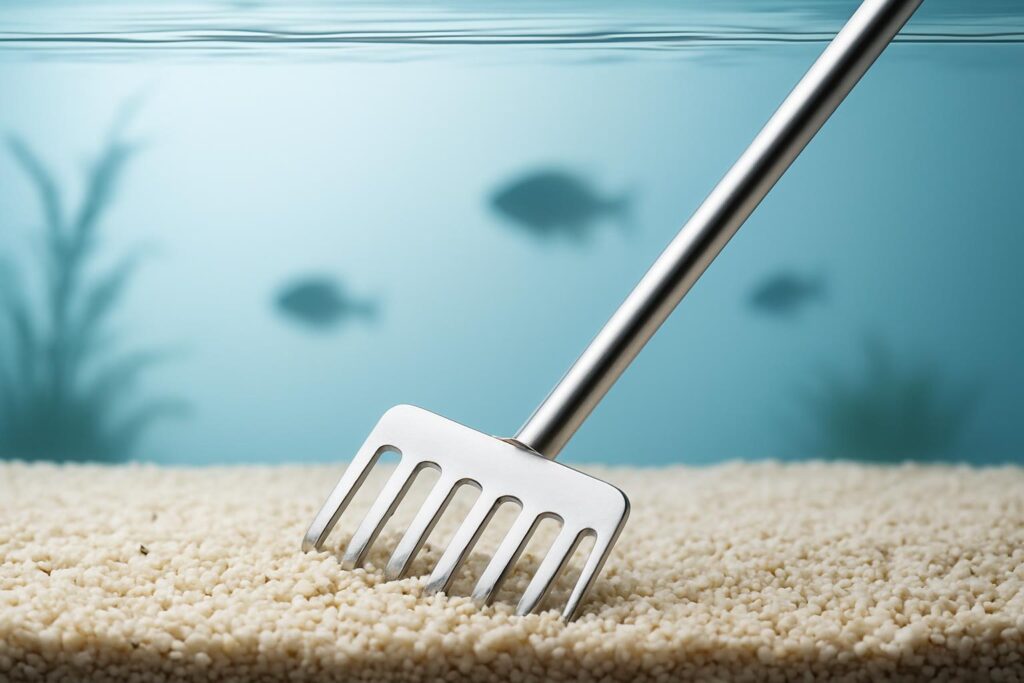
What Makes a Great Aquarium Gravel Rake
Build quality and materials
Stainless steel or rigid ABS plastic resists bending and corrosion. Flexible heads wobble, stir too shallow, and tire your wrist. Stainless tools last longer in hard water and with frequent use.
Head width and tooth profile
Wide rakes move more gravel but require more force. Narrow rakes penetrate deeper and fit around driftwood and hardscape. Short, rounded teeth suit sand and fine gravel. Longer teeth dig better in 3 to 5 inches of gravel.
Handle length and grip
Short handles give control in nano tanks. Extension handles or modular poles let you reach deep tanks without wet sleeves. Non-slip grips reduce hand fatigue during longer sessions.
Tool flexibility
Multi-tools with swapable heads are useful. A rake to loosen debris, a sand flattener to finish surfaces, and a scraper for algae can cover entire maintenance in one session.
Attachment security
Heads should lock firmly. Loose fittings rattle, pop off, and scratch glass. Look for threaded or clip locks that do not loosen under water resistance.
Ease of cleaning
Simple shapes rinse clean. Avoid deep grooves that trap mulm. Stainless steel wipes down easily and does not discolor.
How We Evaluated
We focused on substrate penetration, maneuverability, and fatigue reduction. We looked for strong head-to-handle connections, useful head shapes, and reliable reach for common tank sizes. We considered how each tool manages both deep gravel beds and finer sand layouts. The goal is predictable results with minimal disturbance to livestock and plants.
The 5 Best Aquarium Gravel Rakes for Deep Cleaning
1) hygger 6-in-1 Aquarium Cleaning Tool with Gravel Rake
The hygger 6-in-1 system provides a sturdy gravel rake head along with attachments for algae scraping, sponge wiping, and a plant fork. The rake is rigid enough to dig into 2 to 4 inches of gravel without flex. The modular pole has a comfortable grip and offers reliable reach for mid-depth tanks.
Why it helps: The rake teeth are spaced to pull debris up from the lower layers. This lets you siphon more waste per pass and reduces the number of water changes needed to catch up after neglected maintenance. The included sand flattener attachment is valuable after you rake because it restores smooth contours and prevents areas of detritus from resettling.
Best for: Community tanks with medium gravel, tanks with mixed substrates, and aquascapes with hardscape obstacles where a firm but not overly wide head is ideal. It also suits hobbyists who want one handle with multiple functional heads.
Potential downsides: The modular connections can accumulate fine grit if you do not rinse them after use. Occasional disassembly and drying keeps the locks secure.
Pro tip: Use gentle, overlapping strokes about 2 to 3 inches deep, then immediately vacuum the loosened debris with a siphon. Finish with the flattener to level areas fish have kicked up.
2) NICREW 5-in-1 Aquarium Cleaning Tool with Gravel Rake
NICREW’s 5-in-1 kit is a practical choice if you need a firm rake and a straightforward handle system without a premium price. The rake head is slightly narrower than some stainless models, which increases penetration and control in tight spaces.
Why it helps: The narrower head focuses force. This is ideal for compact gravel beds where debris packs tightly. Swapping to the sand spatula after raking lets you finish the surface cleanly so detritus does not settle back into newly opened pockets.
Best for: Small to medium tanks, mixed community setups, and aquascapes that need careful grooming around stones. It is also useful for spot-cleaning in planted tanks where you must avoid dislodging roots.
Potential downsides: Plastic parts can show wear if you twist the head under heavy load. Let the rake do the work with vertical strokes rather than prying laterally.
Pro tip: Turn off filters and powerheads before raking to avoid blowing debris throughout the tank. This makes the siphon more effective and reduces time spent polishing the water afterward.
3) Penn-Plax 5-in-1 Aquarium Cleaning Kit with Rake Attachment
This kit emphasizes reliable head locks and a balanced handle. The rake attachment has slightly longer teeth than typical multi-tool kits, which helps when you need to reach deeper into 3 to 5 inches of gravel without collapsing the surface around it.
Why it helps: Longer teeth lift compacted debris and open channels for water movement. Improving flow in deeper beds limits anaerobic zones and foul smells. You get deeper waste release per pass and steadier substrate structure afterward.
Best for: Larger community tanks with thicker gravel beds, cichlid tanks where fish constantly rearrange substrate, and goldfish tanks with heavy waste loads.
Potential downsides: The longer teeth are not ideal for loose sand. On fine substrates, swap to the included sand flattener for grooming and use a lighter touch.
Pro tip: Rake in sections. Complete one quadrant fully, siphon immediately, then move to the next. This keeps water clarity better during a deep clean and reduces stress on fish.
4) Marina Multi-Tool Cleaning Set with Gravel Rake
The Marina multi-tool offers a reliable rake and slim handle that fits easily behind background panels and in narrow tanks. The head profile is rounded, which rolls smoothly through pea gravel without catching on edges.
Why it helps: The rounded tooth profile disturbs waste while minimizing sudden substrate collapse. This reduces clouding and makes it easier to track what you have already cleaned. The slender handle improves control in nano and portrait tanks.
Best for: Small aquariums, betta and shrimp tanks, and minimal hardscape designs where precision and low turbulence are important.
Potential downsides: The lighter handle may flex slightly in dense gravel. Keep strokes shorter and controlled. For large tanks with deep beds, consider a model with a heavier handle.
Pro tip: For shrimp tanks, use very shallow strokes to avoid uprooting mosses. Siphon with a pre-filter sponge to protect small inhabitants.
5) VIVOSUN Stainless Steel Aquascaping Tool Set with Sand Spatula and Rake
This stainless set focuses on aquascaping precision and long-term durability. The sand spatula and rake combo helps you groom both fine sand and fine gravel while resisting rust and maintaining rigidity.
Why it helps: Stainless steel keeps its shape while you make deeper passes. The sand spatula finishes flat, open surfaces that look clean after a deep rake and vacuum. The tool tolerates hard water and frequent maintenance cycles without loosening.
Best for: Display tanks, high-clarity aquascapes, and tanks where a clean final finish matters. It also suits keepers who prefer a metal tool that can be sterilized and wiped down cleanly.
Potential downsides: All-steel tools can be heavier. If you have wrist strain, work in shorter sessions or use a lighter plastic rake for the initial passes and switch to steel for final shaping.
Pro tip: On fine sand, use the sand spatula at a shallow angle to avoid digging trenches. Make gentle strokes in one direction, then cross-strokes, and vacuum between passes.
How to Use a Gravel Rake for Deep Cleaning
Prepare the tank
Power down filters, powerheads, and wavemakers. This prevents debris from circulating while you work. Keep heaters on if required for sensitive livestock, but be cautious around them.
Work in sections
Divide the tank into quadrants. Rake one section, siphon it clean, then move on. This prevents a full-tank haze and keeps fish calmer.
Use the right depth
For gravel, aim for 2 to 3 inches of penetration per stroke. For deep beds, use overlapping passes. For fine sand, use very shallow strokes and finish with a sand spatula to level the surface.
Control your pace
Slow, deliberate raking lifts more waste while keeping the water clear enough to see your progress. Avoid forceful prying that can dislodge hardscape or scratch glass.
Pair with a siphon
Raking alone only moves debris upward. Siphon immediately to remove the waste from the water column. A pre-filter sponge on the siphon intake helps when working around shrimp or fry.
Finish and restart flow
After each section, groom surfaces with a sand flattener or spatula. Once the entire tank is done, restart filtration and direct flow to polish remaining fines through mechanical media.
Maintenance Frequency and Substrate Tips
How often to deep clean
Lightly stocked tanks can be deep cleaned every two to four weeks. Heavily stocked tanks often benefit from weekly partial deep cleaning with a full pass at least once per month. Consistency is more important than intensity.
Gravel size and rake choice
Coarse gravel needs longer or stiffer teeth to reach pockets under larger stones. Fine gravel works best with shorter, closer-spaced teeth that do not dump gravel on plants.
Sand substrates
Use a fine-edge rake or a sand spatula with a lighter touch. Focus on detritus-prone areas such as behind rocks and around driftwood bases. Avoid deep digging that can create valleys and expose root systems.
Planted tanks
Rake paths between plants and avoid root zones. Keep passes shallow near stems. Use a finishing spatula to tidy while preserving aquascape structure.
Cichlid and goldfish tanks
These fish constantly move substrate. Use deeper, controlled raking in craters and mounds to release trapped waste. Follow with a strong siphon for best results.
Troubleshooting Common Issues
Cloudy water after raking
Work in smaller sections. Reduce stroke speed. Start each section by raking and immediately siphoning. Keep the filter off during raking and on between sections if needed to clear water.
Head flex or detachment
Check locks before immersion. If a head flexes under load, reduce leverage by shortening strokes. Rinse attachment points after each session to prevent grit from weakening connections.
Scratches on glass
Keep the rake flat and do not press against glass. Rinse the head before use to remove hard grit that can scratch surfaces.
Stirring too shallow
Use a narrower or stiffer rake and apply steady, vertical pressure. Overlap passes to reach deeper layers.
Deep Cleaning Workflow You Can Repeat
1) Unplug filters and powerheads. 2) Rake one quadrant with slow, overlapping strokes. 3) Siphon immediately and focus on the areas you just disturbed. 4) Groom with a spatula or flattener. 5) Move to the next quadrant. 6) Restart filtration and polish water. This process prevents spikes, keeps fish calm, and gets more waste out each time.
Conclusion
A gravel rake is a simple upgrade that changes how effective your maintenance is. The right tool pulls hidden debris into the water column so your siphon can remove it. Choose a model with materials and head shape suited to your substrate, and match handle length to your tank depth. Use controlled strokes, work in sections, and finish with a spatula for a clean, level bed. With a solid rake and a consistent routine, your substrate stays healthy, your water stays clearer, and your fish stay more comfortable.
FAQ
Q: Why should I turn off filters and powerheads before raking gravel?
A: Turning off filters and powerheads prevents debris from circulating while you work, which makes the siphon more effective and keeps the tank clearer during deep cleaning.
Q: How deep should I rake into the substrate for a thorough clean?
A: For gravel, aim for 2 to 3 inches of penetration per stroke, using overlapping passes for deeper beds. For fine sand, use very shallow strokes and finish with a sand spatula.
Q: How often should I perform a deep clean with a gravel rake?
A: Lightly stocked tanks can be deep cleaned every two to four weeks, while heavily stocked tanks benefit from weekly partial deep cleaning with a full pass at least once per month.
Q: What type of rake head works best for sand versus gravel?
A: Short, rounded or fine-edge teeth suit sand and fine gravel, while longer, stiffer teeth dig better into 3 to 5 inches of coarse gravel.
Q: What is the best way to keep water clear while deep cleaning?
A: Work in sections, rake slowly, siphon immediately after each section, and keep filters off during raking to reduce clouding and stress on fish.