Author name: Nic Hsu

How does the partnership between algae and coral work | Guide

Coral reefs are living gardens built by corals and tiny algae living inside their cells. Light fuels energy for both, while nutrients recycle in a delicate loop. In tanks, mimicking light, flow, and steady chemistry keeps the partnership strong, supporting growth, color, and resilience against stress for reefs and homes.

How does the partnership between algae and coral work | Guide Read More »

Why are so many marine fish so specialised in their diet | Guide

Marine fish are renowned for color and form, yet many species eat specialized diets. Generalists adapt, while specialists target copepods, sponges, coral polyps, or plankton. This guide explains why specialization arises, how it shapes reefs and tanks, and how to feed wisely without harming water quality for beginners and hobbyists.

Why are so many marine fish so specialised in their diet | Guide Read More »

What is the smallest viable marine tank and what equipment do I need | Guide

Starting a saltwater aquarium is exciting, but small tanks demand careful planning. This beginner-friendly guide reveals the smallest viable sizes (13.5 to 20 gallons), essential gear, and a simple setup plan. Learn stability tactics, safe stocking, maintenance routines, and realistic expectations so a reef or fish-only system thrives with confidence.

What is the smallest viable marine tank and what equipment do I need | Guide Read More »

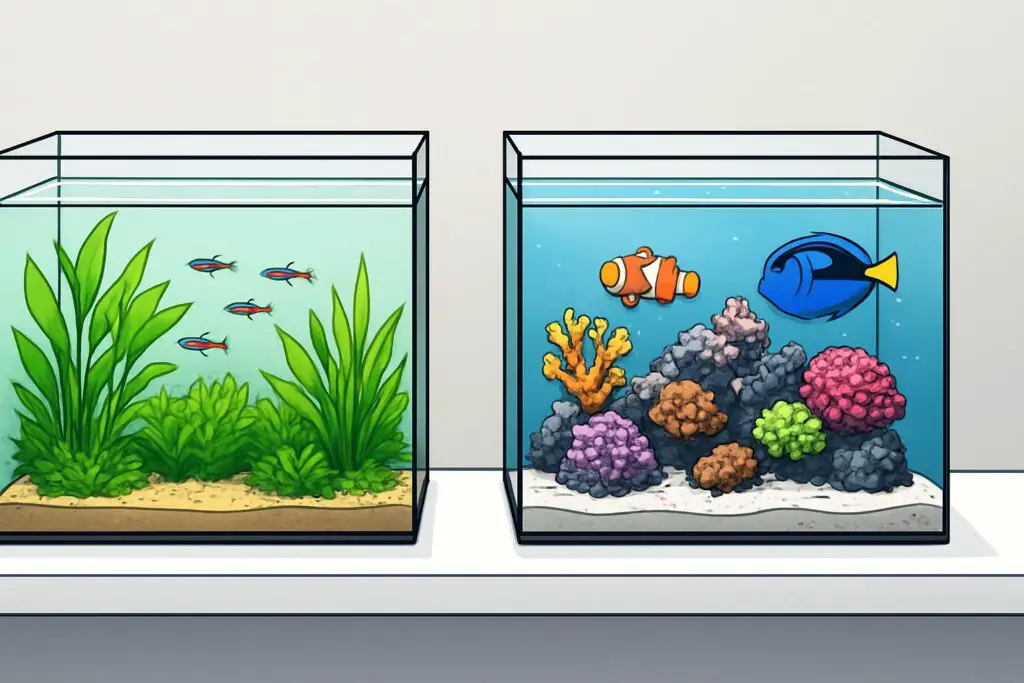
Why are marine tanks generally more expensive to set up than freshwater ones | Guide

Saltwater tanks dazzle, but beginners quickly see higher costs due to salt mix, RO/DI water, protein skimmers, live rock, reef lighting, and constant monitoring. Start small, choose fish-only or soft corals, buy used gear, mix your salt water, quarantine, and pace investments to build stability without over-spending and enjoy progression.

Why are marine tanks generally more expensive to set up than freshwater ones | Guide Read More »

Why does my anemone move around my tank so much | Guide

Wandering anemones signal needs: light, flow, or a secure footing. Read their behavior, adjust gradually, and give them a safe spot. Stabilize water quality, acclimate lighting, and fine-tune flow indirectly. With patience, stable parameters, and space from neighbors, your anemone will settle and stay in place for weeks to come.

Why does my anemone move around my tank so much | Guide Read More »

I want to start my first marine tank – what are the fish to avoid | Guide

Starting a first marine tank is exciting but challenging. This guide helps beginners avoid costly mistakes by highlighting fish to avoid, such as delicate eaters, large active swimmers, or aggressive species, and offers better alternatives. With a plan to let the tank mature, quarantine, and stock gradually, success follows home.

I want to start my first marine tank – what are the fish to avoid | Guide Read More »