
We are reader supported. When you purchase through links on our site, we may earn an affiliate commission. Also, as an Amazon affiliate, we earn from qualifying purchases.
Water changes are the backbone of a healthy aquarium. A good water transfer pump turns that chore into a fast, clean, and repeatable routine. In 2026, the best options balance flow rate, ease of use, reliability, and control. Below, you will find four proven picks for different tank sizes and setups, plus clear guidance on sizing, setup, and safety. Read on to find the match that fits your space and habits, then dial in your process for consistent, low-stress maintenance.
How to choose a water transfer pump
Picking the right tool starts with a few essentials:
- Flow rate and head height – real-world flow drops as hose length and lift increase. For most homes, aim to move your total tank volume in about 10 to 20 minutes.
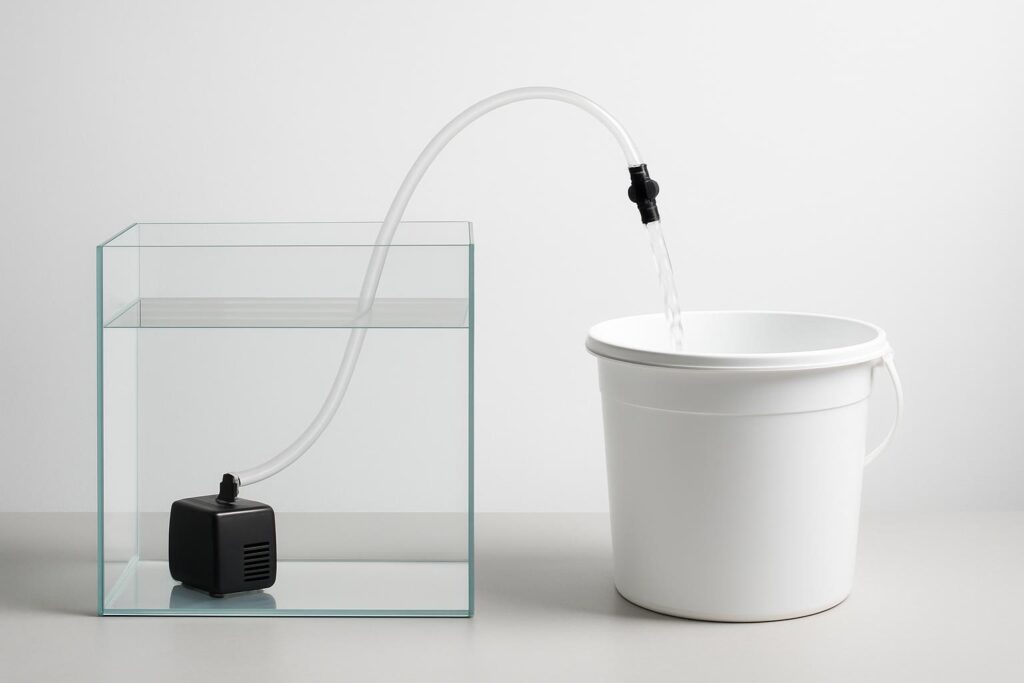
- Power type – submersible pumps sit in a bucket or sump and run quietly. Utility transfer pumps sit outside the water and offer strong lift but need priming.
- Control – an inline valve or a pump with adjustable flow helps prevent overfilling and sandstorms.
- Noise – submersibles tend to be quieter. Utility pumps move water fast but can hum.
- Safety – use a prefilter sponge near fish, never run a pump dry, and dedicate hoses to aquarium use only.
Best aquarium water transfer pumps for 2026
Wayne PC2 Portable Water Transfer Pump – fast drain and fill for larger setups
This compact utility pump delivers strong flow and lift for quick water moves. It excels when you need to push water through longer hose runs or up a floor. Place the intake hose in your tank or storage barrel, prime the pump per directions, and send water exactly where you want it. Pair it with a ball valve to fine-tune flow during refills.
Why it helps: Rapid transfer speeds slash maintenance time, and solid lift handles multi-room or multi-level hose routes.
Best for: Medium to large tanks, long hose runs, and users who want quick, high-control water changes.
Potential downsides: Needs priming, not submersible, and louder than small submersible pumps. Monitor closely to avoid running dry at the end of a transfer.
Setup tips:
- Dedicate hoses to aquarium use and rinse before first use.
- Add a prefilter sponge at the intake when working near fish.
- Use an inline ball valve on the output to slow refill flow.
Vivosun 800 GPH Submersible Water Pump – quiet, dependable, and beginner friendly
A submersible pump is simple to use and easy to control. Drop this pump into a clean bucket or reservoir, connect a hose, and plug it in. It is quiet, compact, and well suited to indoor water changes where noise and splash control matter. Attach a sponge prefilter to protect fish and shrimp if you run it inside the tank during draining.
Why it helps: Smooth, low-vibration operation and straightforward setup reduce stress for both you and your livestock.
Best for: Small to medium tanks, quiet apartments, and anyone who prefers a set-and-go workflow.
Potential downsides: Real-world flow drops as head height increases. Must remain fully submerged at all times. Power cord length can limit placement.
Setup tips:
- Use short, kink-free hose runs to keep flow strong.
- Add a valve or quick clamp to moderate refill speed.
- Rinse the pump and hose before first use to remove dust and oils.
Python No Spill Clean and Fill System – faucet-powered, no buckets, no mess
This well-known system uses a faucet attachment to create suction for draining, then switches to refill mode through the same hose. It pairs water transfer with gravel vacuuming, so you clean and change water in one pass. If you have a threaded faucet and want the simplest path to consistent weekly maintenance, this is a strong choice.
Why it helps: No lifting heavy buckets, no plugs or pumps to prime, and very little splash risk.
Best for: Frequent water changes, apartment living, and users who value speed and tidiness.
Potential downsides: Depends on faucet access and water pressure. Draining uses faucet water to power the venturi, which can waste water. Temperature and dechlorination must be managed carefully during refills.
Setup tips:
- Use the proper faucet adapter and test for leaks before first use.
- Match refill temperature closely to your tank.
- Dose dechlorinator for the full tank volume before or while refilling.
SumpMarine UTP 115 1/10 HP Utility Transfer Pump – compact power with hose kit
This portable unit moves water at a brisk pace and is supplied with a basic hose kit to get you started. It handles barrel to tank transfers well and is easy to carry between rooms. Like other utility pumps, it sits outside the water and needs priming, but once running it maintains a steady flow even with moderate lift.
Why it helps: Strong, reliable transfer with small footprint and good lift for typical home layouts.
Best for: Medium to large tanks, water storage barrel workflows, and users who want a ready-to-go kit.
Potential downsides: Not submersible, requires priming, and can hum more than a submersible. Monitor the intake to avoid sucking air as the source container empties.
Setup tips:
- Position the intake well below the water line and secure the hose to prevent whipping.
- Use a valve on the output to control refill speed into displays with fine sand or aquascapes.
- Flush the pump and hoses before first aquarium use.
Practical sizing and setup guidance
Dial in the right flow
Aim for a setup that can move your tank volume in roughly 10 to 20 minutes. If you use long hoses or need to pump up a floor, choose a stronger model to offset losses from head height and friction.
Protect fish and aquascapes
- Use a sponge prefilter or strainer on the intake near fish and shrimp.
- Throttle refill flow with a valve to avoid stirring substrate or uprooting plants.
Keep it safe and clean
- Dedicate hoses to aquarium use only.
- Rinse new pumps and hoses thoroughly before first use.
- Never run a pump dry. Shut off promptly as the source container empties.
- Dechlorinate for the full tank volume before or during refills when using tap water.
Conclusion
Pick a pump that suits your space and pace. For speed and lift, the Wayne PC2 and SumpMarine UTP 115 stand out. For quiet indoor changes, a Vivosun submersible keeps things smooth and simple. For the most convenient weekly routine, the Python system removes buckets from the picture and combines vacuuming with water changes. Lock in a consistent process with proper sizing, prefilters, valves, and safe dechlorination. Your fish will show the results.
FAQ
Q: How do I size a pump for my tank
A: Aim to move your tank volume in roughly 10 to 20 minutes, and account for head height and hose length which reduce real-world flow.
Q: Which option reduces mess the most for apartment living
A: The Python No Spill Clean and Fill uses a faucet attachment to drain and refill without buckets, keeping the process tidy.
Q: What protects fish during water transfers
A: Use a sponge prefilter or strainer on the intake, throttle refill flow with a valve, and dechlorinate for the full tank volume.
Q: What are common downsides of utility transfer pumps
A: They need priming, are not submersible, can be louder than submersible units, and must be monitored to avoid running dry.
Q: When should I pick a submersible pump instead
A: Choose a submersible when you want quiet operation, simple setup in a bucket or sump, and moderate hose runs without large lift.