
We are reader supported. When you purchase through links on our site, we may earn an affiliate commission. Also, as an Amazon affiliate, we earn from qualifying purchases.
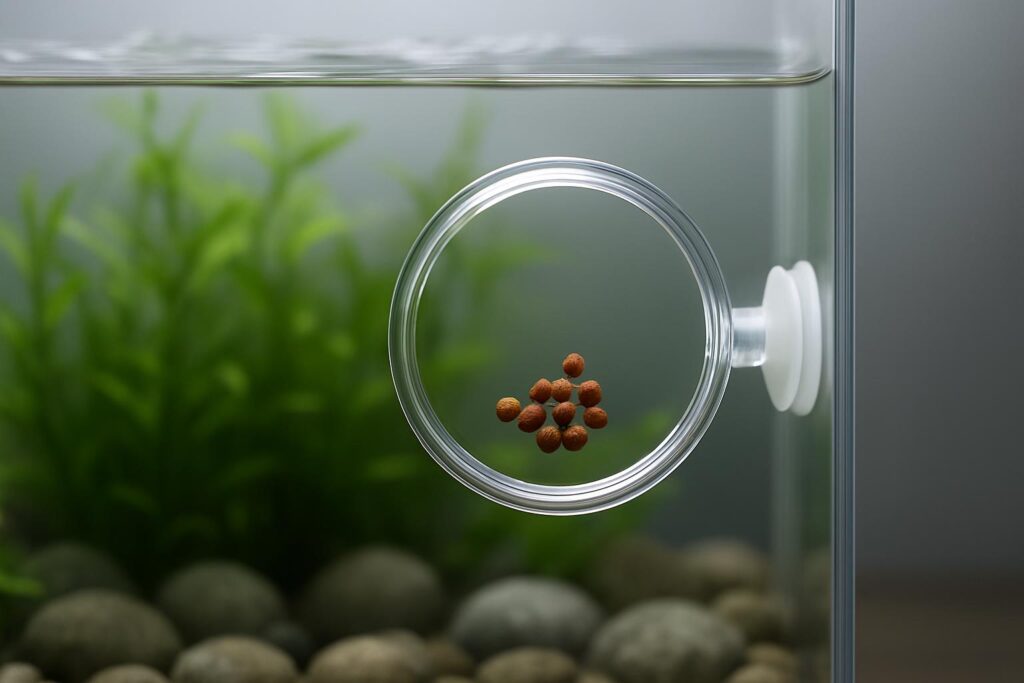
Feeding rings solve a common betta problem. Food drifts into the filter, sinks into plants, or scatters across the surface. Your betta chases pellets, misses them, and waste builds up. A good feeding ring creates a calm, consistent feeding zone. Food stays put, your betta focuses, and you keep the tank cleaner with better portion control.
This guide ranks five reliable feeding rings that work well with bettas in 2026. Each pick focuses on stability, easy setup, and real-world performance in nano tanks and low-flow aquariums.
What To Look For In A Betta Feeding Ring
Stable float and suction
A ring must stay where you place it. A decent float keeps food contained, while a solid suction cup prevents drift under light surface agitation.
Size for nano tanks
Most betta tanks are 2.5–10 gallons. Compact rings fit better, do not block light, and give your fish a predictable spot to eat.
Food compatibility
Betta pellets and freeze-dried foods work best. Some rings handle frozen foods; others are designed mainly for floating pellets. Pick based on what you feed most.
Ease of cleaning
Simple plastic parts that detach and rinse quickly help you maintain stable water quality.
1) Sera Feed A Ring
Why it stands out
Sera’s Feed A Ring is a classic for a reason. The floating ring corrals food and the adjustable arm with suction cup holds it steady. Bettas quickly learn to meet you at the ring, and pellets stay in one clean area.
Why it helps
The ring reduces food waste and prevents pellets from drifting into the filter intake. Less mess, less ammonia, and fewer uneaten pellets hiding under decor.
Best for
Small to medium betta tanks with gentle surface movement. Ideal if you mostly feed floating pellets and occasional freeze-dried treats.
Setup tips
Position the ring near a quiet corner with minimal surface agitation. Adjust the arm so the ring rests flat. Feed 2–4 pellets at a time and observe your betta for 2–3 minutes.
Potential downsides
The suction cup can harden over time. Replace it periodically or soak in warm water to restore grip.
2) EHEIM Feeding Station
Why it stands out
This is more than a ring. EHEIM’s station creates a defined feeding platform that keeps food from spreading. It works with manual feeding and pairs well with automatic feeders.
Why it helps
Food drops into a controlled zone, so pellets do not wander. Bettas learn to rise under the station and take food calmly, which reduces frantic gulping and waste.
Best for
Moderate-sized tanks or setups with a small HOB filter where food tends to get swept away. Useful if you alternate between pellets and freeze-dried foods.
Setup tips
Mount the station away from the strongest outflow. Test a few positions until floating food stays in the cup area. Clean the platform weekly to prevent film buildup.
Potential downsides
Bulkier than a simple ring. In very small betta tanks, it can look oversized.
3) AQUANEAT Aquarium Fish Feeding Ring, Round and Square Set
Why it stands out
The AQUANEAT set includes one round and one square ring, both with suction mounts. The floats are light, the setup is simple, and the price is budget-friendly.
Why it helps
Two shapes let you choose the footprint that fits your scape. The ring keeps pellets contained and easy to remove if uneaten, which helps new keepers maintain clean water.
Best for
Nano betta tanks and beginners who want a no-fuss, low-cost tool that just works with pellets and most freeze-dried foods.
Setup tips
Rinse the suction cup and glass first to improve grip. If you see drift, move the ring farther from the filter output or lower the waterline slightly near the ring.
Potential downsides
Generic suction cups can wear out with time. Keep a spare on hand or rotate cups between rings to extend life.
4) SunGrow Betta Fish Feeding Ring
Why it stands out
SunGrow’s ring is compact and betta-focused. It creates a quiet feeding spot that new fish take to quickly, reducing anxiety and surface chasing.
Why it helps
The design limits current inside the ring so pellets remain in place. That makes it easier to portion small, frequent feedings, which is safer for betta digestion.
Best for
Small betta habitats with gentle filtration or sponge filters. Great for daily pellet routines and occasional freeze-dried treats.
Setup tips
Mount the suction cup so the ring sits a few inches from the glass edge for easy access with feeding tweezers. Offer tiny amounts and remove leftovers within 3 minutes.
Potential downsides
The float is light. In strong surface agitation or with airstones nearby, reposition the ring to calmer water.
5) Capetsma Fish Feeding Ring
Why it stands out
Capetsma’s ring is durable, with a straightforward float-and-suction design. It balances stiffness for stability with a compact footprint for nano tanks.
Why it helps
A defined feeding zone keeps pellets from slipping under plants or hardscape. Bettas learn the routine fast, which curbs overfeeding and eases cleanup.
Best for
Owners who value a rigid, long-lasting ring and consistent positioning in tanks from 3 to 10 gallons.
Setup tips
Place the ring opposite the filter outflow. If film forms inside the ring, use a paper towel to wick it off the surface before feeding to improve pellet float.
Potential downsides
Rigid plastic can show stress if bent sharply. Handle gently during placement and cleaning.
How To Use A Feeding Ring For The Best Results
Portion precisely
Feed 2–4 pellets per meal, 1–2 times daily, and watch your betta finish them within 2–3 minutes. Remove leftovers to prevent spikes in ammonia and nitrite.
Control water movement
Lower flow near the ring. Aim filter outputs away from the feeding area or baffle the flow to help pellets stay put.
Match food to the tool
Floating betta pellets and freeze-dried foods are ideal. Some stations also manage frozen foods, but thaw and rinse them first to reduce clouding.
Clean on a schedule
Rinse the ring weekly to prevent biofilm. Replace suction cups when they lose grip.
Conclusion
Feeding rings make betta care simpler. They cut down on waste, teach consistent feeding behavior, and protect water quality. Sera’s Feed A Ring is a dependable all-rounder, EHEIM’s station offers premium control, and the AQUANEAT, SunGrow, and Capetsma rings deliver compact, budget-friendly solutions. Pick the size and style that fits your tank, control flow near the ring, and feed small portions. Your betta stays focused, healthy, and easy to care for.
FAQ
Q: Do bettas need a feeding ring?
A: Bettas are surface feeders and a feeding ring keeps pellets from drifting into the filter or plants, reducing waste and making portion control easier.
Q: Which feeding ring is best for small tanks?
A: Compact rings like Sera Feed A Ring, SunGrow, and AQUANEAT work well in nano betta tanks with gentle surface movement.
Q: What foods work best with feeding rings?
A: Floating betta pellets and freeze-dried foods work best; some stations also handle thawed frozen foods when placed carefully.
Q: Where should I position the feeding ring?
A: Place it in a calm corner away from the strongest filter outflow so pellets stay inside the ring.
Q: How often should I clean or replace parts?
A: Rinse the ring weekly to remove film and replace suction cups when they lose grip to maintain stability.