
We are reader supported. When you purchase through links on our site, we may earn an affiliate commission. Also, as an Amazon affiliate, we earn from qualifying purchases.
Betta mirror training is simple, fast, and effective when used correctly. A short, controlled flare session helps your betta exercise facial muscles, boost color, and relieve boredom. The key is choosing a mirror tool that is safe, easy to position, and consistent. Below you will find five reliable mirror training tools for 2026, how they differ, and how to use each one without stressing your fish.
How to Choose a Betta Mirror Training Tool
Mirror type and positioning
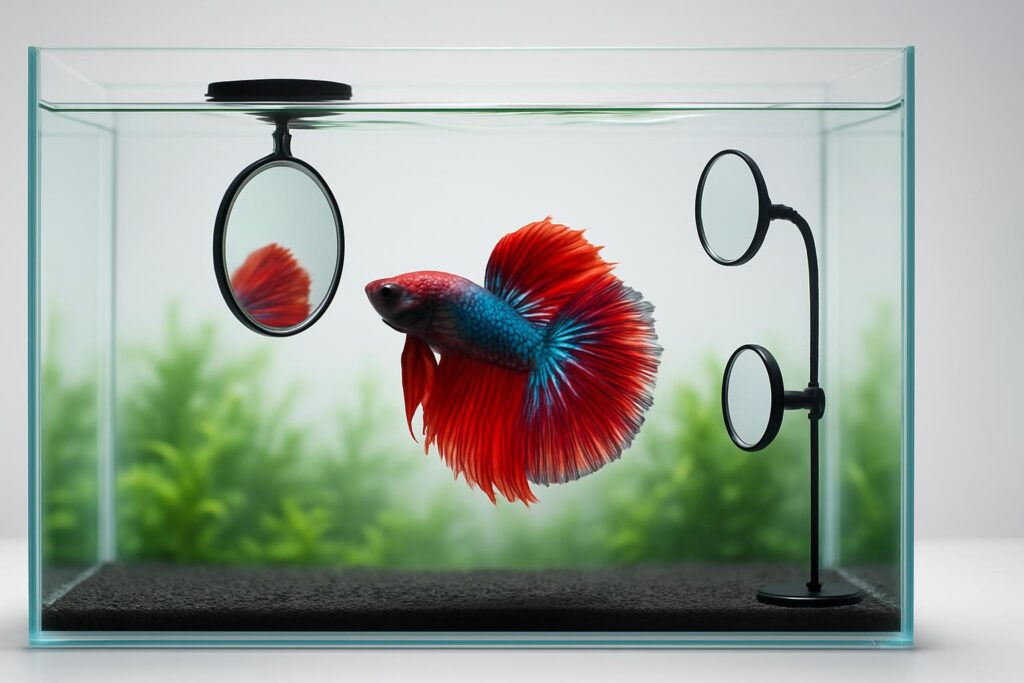
Floating mirrors move with surface currents and tend to feel less threatening, making them good for sensitive or first-time bettas. Suction cup mirrors stay fixed on glass and allow precise placement at eye level or near a favorite perch.
Size, clarity, and adjustability
A small clear mirror is enough to trigger a flare without overwhelming your fish. An adjustable arm or a buoyant float makes short, repeatable sessions much easier.
Safety and durability
Choose smooth edges, non-toxic plastics, and parts that are easy to rinse and dry. Avoid sharp seams and any metal that could rust.
1) Zoo Med Floating Betta Exercise Mirror
What stands out
This compact mirror hangs from a buoyant float, so it sits at the surface and moves naturally. That motion reduces intensity and often encourages curious, confident approaches. It is plug and play, with no suction cup to fiddle with.
Why it helps
The gentle movement simulates a fleeting rival and encourages short controlled flares. This is ideal for beginners and for bettas that get startled by a fixed, in-your-face reflection.
Best for
First-time mirror users, shy or young bettas, and tanks with delicate plants where suction cups would be inconvenient.
Potential downsides
Surface-only placement may not engage bettas that prefer the mid-water column. In high flow, it can drift to corners; reduce surface agitation for steadier sessions.
Setup and safe use
Float it near a favorite hide so your betta can retreat easily. Start with 30 to 60 seconds per session for the first week. Build to 1 to 3 minutes, up to 1 to 2 sessions per day, 3 to 5 days per week. End a session if breathing stays heavy more than 30 seconds after removing the mirror.
2) Fluval Betta Exercise Mirror
What stands out
A compact design with clean optics and a tidy profile. The build quality is consistent and the mirror surface is crisp, so flares trigger quickly and predictably. Depending on the version, you will get either a floating style or a low-profile mount.
Why it helps
Clear reflections reduce confusion and shorten warmup time. Consistent clarity also helps you run repeatable sessions and track progress in color and posture.
Best for
Owners who want dependable materials, tidy aesthetics, and a tool that pairs well with modern betta tanks and low-flow setups.
Potential downsides
Premium feel can come at a slightly higher price than generic mirrors. If you use a mounted variant, plan the placement so it does not block maintenance.
Setup and safe use
Position at or just below eye level near calm water. Start with 30 to 60 seconds and watch recovery. Keep sessions to 1 to 3 minutes once your fish is comfortable. Provide a plant or cave nearby to lower post-session arousal.
3) Penn-Plax Betta Fish Mirror with Suction Cup
What stands out
A simple round mirror with a reliable suction cup. The small footprint makes it easy to place and remove during short daily sessions. It is also easy to wipe clean during water changes.
Why it helps
Fixed placement gives you precise control over distance and angle. This targets specific training spots, such as near a leaf hammock or open swim lane, for consistent conditioning.
Best for
Owners who want repeatability and who run structured sessions at the same location each day.
Potential downsides
Suction cups can loosen over time, especially on algae or mineral film. Clean the glass and cup before mounting. Avoid placing on textured acrylic.
Setup and safe use
Mount at mid-height so your betta can flare and then retreat down or up. Keep the mirror out of direct filter output. Maintain the 30 to 60 seconds introductory window, then extend to 1 to 3 minutes as tolerated. Rotate rest days to prevent habituation.
4) SunGrow Betta Fish Mirror
What stands out
This budget-friendly option typically includes either a floating tether or a compact suction mount. The mirror area is small and direct, which helps minimize over-stimulation.
Why it helps
Minimalist size presents just enough rival presence to trigger a flare without dominating the scene. This is useful for daily micro-sessions and for fish that escalate quickly.
Best for
Owners on a budget, or those experimenting with short, frequent micro-sets across the week.
Potential downsides
Build variance is possible among budget lines. Inspect edges before first use. Replace if the mirror film looks warped or scratched.
Setup and safe use
Place in a calm zone with cover nearby. Use short intervals and end if you see clamped fins, frantic darting, hiding, or refusal to eat after a session. Log session length and recovery time to refine your routine.
5) POPETPOP Betta Mirror with Suction Cup
What stands out
Lightweight, easy to mount and remove, and typically larger than ultra-mini models without being overwhelming. Good choice for keepers who want an obvious target area for training.
Why it helps
The slightly larger face is useful for bettas that ignore micro mirrors. It also gives you more angle control to limit intensity by offsetting the reflection.
Best for
Confident adult bettas, large tanks where a small mirror disappears visually, and owners who want a clear training focal point.
Potential downsides
A bigger reflection can feel too bold for timid fish. Start farther away, angle slightly off-axis, and shorten sessions until your betta settles.
Setup and safe use
Mount off-center and at a slight tilt to soften the first impression. Build duration gradually. Keep weekly frequency to 3 to 5 days with at least one rest day in between heavier flare days.
Safe Training Protocol for All Mirrors
Session length and frequency
Start at 30 to 60 seconds once daily in week one. If your betta recovers quickly and shows interest, move to 1 to 3 minutes per session. Limit to 1 to 2 sessions per day, 3 to 5 days per week. Always leave at least one full rest day after a heavy flare day.
Stress checks
End a session if you see clamped fins, frantic darting, hiding, refusal to eat, or if breathing stays heavy more than 30 seconds after you remove the mirror. Provide dense plants or caves for recovery and dim the light slightly if needed.
Special considerations
Long-finned bettas like Halfmoon and Rosetail tire faster. Keep flow low and sessions shorter. Skip training during active fin regrowth or when your fish is building a large bubble nest. In community tanks, ensure no other males can see the mirror-triggered fish to avoid chain stress.
Conclusion
Mirror training should be brief, predictable, and easy to stop. Floating tools like the Zoo Med are gentle starters. Fixed mirrors from Fluval, Penn-Plax, SunGrow, and POPETPOP allow precision and repeatability. Pair your tool with a clean schedule, watch recovery signs, and give your fish cover and rest. Done right, a few minutes of training brings color, confidence, and better daily activity without unnecessary stress.
FAQ
Q: How long should a betta mirror training session last
A: Start at 30 to 60 seconds once daily in week one, then move to 1 to 3 minutes per session as your fish tolerates it.
Q: How often should I do mirror training each week
A: Limit to 1 to 2 sessions per day, 3 to 5 days per week, with at least one full rest day after a heavy flare day.
Q: What are signs I should stop a session
A: End a session if you see clamped fins, frantic darting, hiding, refusal to eat, or if breathing stays heavy more than 30 seconds after you remove the mirror.
Q: Which is better, a floating mirror or a suction cup mirror
A: Floating mirrors feel gentler and are ideal for beginners or shy fish, while suction cup mirrors provide precise, repeatable placement at eye level.
Q: Are long-finned bettas okay with mirror training
A: Yes, but keep flow low and sessions shorter because long-finned bettas tire faster.