
We are reader supported. When you purchase through links on our site, we may earn an affiliate commission. Also, as an Amazon affiliate, we earn from qualifying purchases.
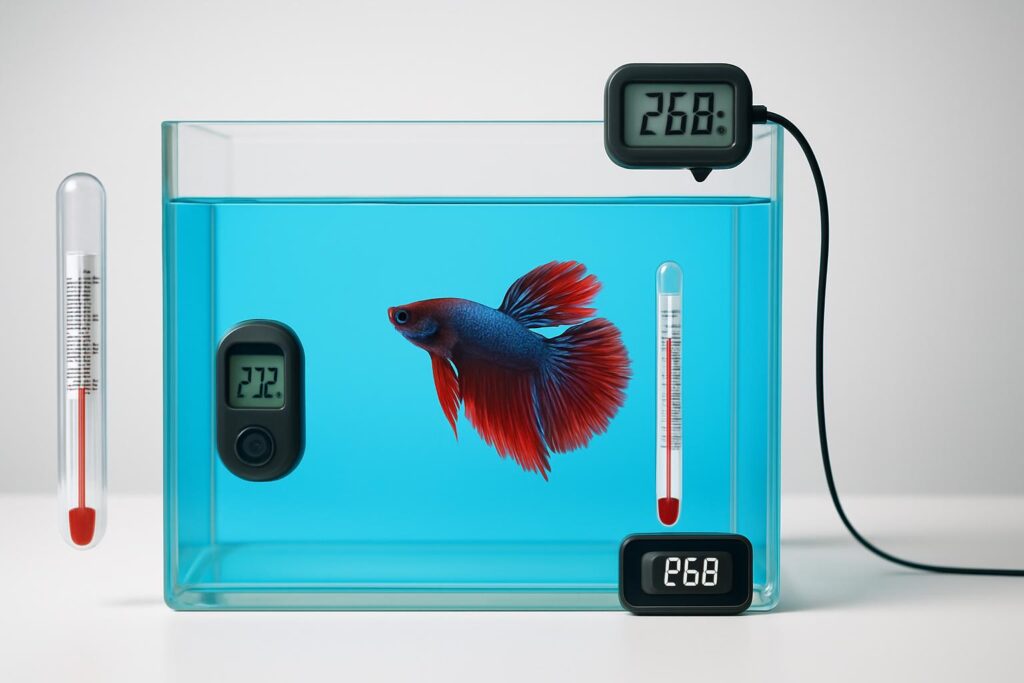
Betta fish stay healthy when their water stays warm and stable. The sweet spot is 78 to 80 F. Small swings stress bettas, weaken immunity, and invite fin rot and ich. A good thermometer is not optional. It is the fastest way to catch heater issues, drafts, or room changes before your betta pays the price. This guide cuts through the noise and highlights five reliable thermometers that are easy to read, consistent, and sized for betta tanks in 2026.
What to look for in a betta thermometer
Accuracy and stability
Look for consistent readings within about 1 F. Stability matters more than a flashy spec. A thermometer that reads the same day after day helps you spot real changes, not random jumps.
Placement and readability
Place the sensor where water mixes well, usually opposite the heater and near flow. Avoid direct sunlight or against the heater glass. Displays should be easy to read at a glance from your usual viewing distance.
Calibration and cross-checking
Many digital units cannot be user calibrated, so do a quick cross-check. Compare with a known reliable thermometer or a calibrated kitchen probe. Keep one simple backup thermometer for occasional verification.
Safety and build
Choose aquarium-safe plastics and sealed electronics. If you pick a glass thermometer, handle carefully and keep it away from hardscape. For suction cups, plan to refresh them or remount if they loosen over time.
Best betta thermometers for 2026
JW Pet Company SmartTemp Thermometer
This glass thermometer uses a magnet mount, so you avoid suction cups altogether. It sits inside the tank while a small magnet holds it from outside, making it simple to reposition. It needs no batteries, is always on, and has a clear temperature scale with a highlighted tropical zone that aligns with betta needs.
Why it helps: Reliable, battery-free monitoring with stable readings and a clean look in nano betta tanks.
Best for: Small to medium betta tanks where you want a low-profile, always-on thermometer.
Potential downsides: Glass can break if bumped. Magnet hold works best on thinner glass; very thick glass reduces grip. Response time is slower than some digital probes.
Tips: Mount it mid-water column, opposite the heater, so you read the temperature your betta actually experiences.
Fluval Submersible Digital Thermometer
A compact submersible digital unit with a clear display and a simple suction mount. It reads the water directly rather than through glass, which improves response time and accuracy compared to external strips. The minimalist design blends well with plants and decor.
Why it helps: Direct in-water sensing delivers quick, consistent temperature updates, so you catch dips or spikes early.
Best for: Keepers who want a clean look and digital readability without a separate probe and cable.
Potential downsides: Battery replacement is required. Suction cups can harden with age; plan to remount occasionally. Not ideal for extreme flow zones where microbubbles can cling to the sensor.
Tips: Place it on the side panel opposite the heater, a few inches below the surface, away from direct sunlight.
hygger Digital Aquarium Thermometer with Probe
This popular model uses a waterproof in-tank probe connected to a large external display. You get fast response times and large digits you can see from across the room. Cable routing is simple, and the display pad mounts on the outside glass for convenient viewing.
Why it helps: Probe-based sensing tracks temperature changes quickly, while the oversized display keeps you informed at a glance.
Best for: Betta keepers who want easy-to-read numbers and dependable performance in rooms with larger temperature swings.
Potential downsides: Cable management takes a bit of planning. The external display is not waterproof, so keep it dry and avoid splashes during water changes.
Tips: Tuck the probe near moderate flow. Secure the cable along the tank rim to keep your lid sealing properly and reduce clutter.
Zacro Digital Aquarium Thermometer
An affordable, widely used digital thermometer with a submersible probe and an external display. It offers quick readings, straightforward installation, and enough accuracy for routine betta care. It is often chosen as a backup checker because of its simplicity and price.
Why it helps: Fast and simple verification of your heater performance without straining your budget.
Best for: First-time betta owners and anyone who wants a secondary thermometer to cross-check a primary device.
Potential downsides: Display housing is splash resistant but not waterproof. Adhesive pads may need replacement over time. Build quality is basic compared to premium options.
Tips: Use it alongside a primary thermometer. If readings drift apart by more than 1 F consistently, investigate placement or replace the weaker unit.
Marina Floating Thermometer with Suction Cup
A classic glass thermometer with a suction cup and an easy-to-read indicator. It runs without power and gives a steady baseline for tanks from 2 to 10 gallons. Many keepers use it as a dependable reference to confirm digital readings.
Why it helps: No batteries, simple scale, and consistent readings that beginners can trust.
Best for: Small betta tanks, temporary hospital setups, and as a reliable second opinion to check a digital device.
Potential downsides: Suction cups can lose grip over months. Response is slower than probe thermometers. Reading the scale requires getting close, and slight viewing angle can affect what you see.
Tips: Mount it mid-depth on a side panel. Replace or remount the suction cup when it starts to slide.
Quick setup and calibration tips
Place the sensor correctly
Install the thermometer opposite the heater and near gentle flow. Avoid dead spots behind decor and avoid direct sunlight on the display or sensor.
Check stability, not just a single number
Record morning and evening readings for a few days. A stable betta tank should sit at 78 to 80 F with minimal swing. If you see more than about 1 F change day to night, adjust heater placement, flow, or room drafts.
Cross-check periodically
Keep a simple backup thermometer. Compare both devices monthly. If one starts to drift consistently, replace it. For digital models, replace the battery when the display fades or readings become erratic.
Conclusion
Pick a thermometer that you will actually read every day. For battery-free simplicity, a glass unit like the JW Pet SmartTemp or Marina Floating Thermometer is dependable. For fast response and big digits, the hygger Digital with probe or a compact Fluval submersible model is hard to beat. Add a low-cost backup like the Zacro Digital to verify accuracy. Keep the probe well placed, watch for stability, and hold your betta at 78 to 80 F. Consistent temperature is the foundation of long, stress-free betta care.
FAQ
Q: What temperature range should a betta tank stay in?
A: Aim for 78 to 80 F with minimal daily swing.
Q: Where should I place the thermometer in a betta tank?
A: Place it opposite the heater and near gentle flow, away from direct sunlight and dead spots.
Q: Do I need a second thermometer?
A: Keeping a simple backup is smart. Cross-check monthly and replace any unit that shows consistent drift.
Q: When should I replace a digital thermometer battery?
A: Replace it when the display fades or readings become erratic.