
We are reader supported. When you purchase through links on our site, we may earn an affiliate commission. Also, as an Amazon affiliate, we earn from qualifying purchases.
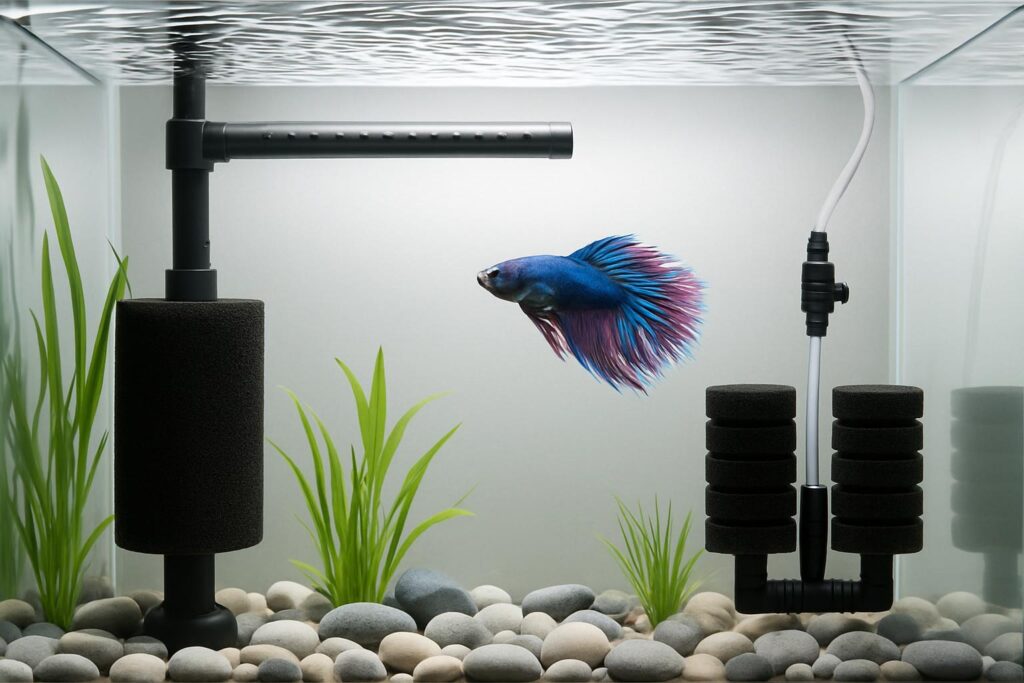
Bettas thrive in calm water. Strong currents tire them out, damage fins, and keep them from building bubble nests. If your filter blasts water, a good flow reducer solves it without sacrificing filtration or oxygenation. Below are the five best options for 2026, plus simple selection tips so you get quiet, gentle movement your betta will appreciate.
Why reducing flow matters for bettas
Bettas evolved in slow, shallow waters. Their long fins create drag, so high flow forces constant swimming and stress. You will see clamped fins, hiding, or struggling to reach the surface. Reducing flow prevents fatigue and helps your filter media work more efficiently because water is not bypassing it at high speed. Aim for a mild ripple at the surface and a slow, steady circulation throughout the tank.
How to choose the right water flow reducer
Target flow and tank size
For a 5–10 gallon betta tank, practical turnover after reduction is about 3–5 times per hour. If your filter is rated much higher, plan to reduce in stages: intake sponge plus outlet diffusion or throttling.
Compatibility with your filter
Match the reducer to your setup. Intake pre-filter sponges fit hang-on-back and internal filters with a strainer. Spray bars need a hose connection. Airline valves only reduce air-driven sponge filters, not electric impellers.
Maintenance overhead
Add-ons trap debris. Choose gear you can rinse weekly during water changes. Pre-filter sponges clog faster in planted or heavily fed tanks, so plan for more frequent cleaning.
Noise and simplicity
Airline valves are silent when tuned well. Spray bars can gurgle if mounted too high. Intake sponges are plug-and-play and very quiet.
5 Best Betta Water Flow Reducers for 2026
1) Fluval Edge Pre-Filter Sponge
This compact pre-filter sponge slips over most small intakes and instantly tames suction, protecting fins and shrimp while smoothing overall flow. It is dense enough to slow water but open enough to avoid starving the filter of water.
Why it helps: It reduces intake velocity, prevents debris from entering the impeller, and evens out the filter output because water is delivered steadily through sponge pores.
Best for: Small HOB and internal filters on 3–10 gallon tanks where intake suction is the main problem.
Installation notes: Wet the sponge, slide it over the strainer, and seat it snugly. Rinse weekly in tank water to prevent clogging.
Potential downsides: If left uncleaned, it will clog and reduce flow too much. Keep two on hand and rotate for quick swaps.
2) AQUANEAT Aquarium Filter Bio Sponge Prefilter
A versatile prefilter available in multiple sizes and pore densities. It slides onto most intake tubes and offers a larger surface area than many stock sponges, providing both mechanical and biological support while dialing down flow.
Why it helps: The larger diameter and fine pores create gentle suction that bettas tolerate, and the added surface area supports beneficial bacteria for stable water quality.
Best for: Overpowered HOBs on 5–20 gallons, shrimp-and-betta community tanks, and anyone wanting extra bio capacity along with slower flow.
Installation notes: Measure your intake diameter. Choose a sponge with a snug core or use the included adapter if provided. Position vertically and fully submerge to avoid drawing air.
Potential downsides: Fine-pore versions clog faster. If you feed heavy or keep messy fish, pick a medium pore and rinse more often.
3) EHEIM Spray Bar Set
Spray bars diffuse the outlet stream across many small holes, eliminating the single jet that batters fins. This set is durable and fits common canister and internal filter tubing, making it an easy way to calm flow while maintaining oxygenation.
Why it helps: It spreads outflow over a wider area, transforming a harsh blast into a soft sheet of water. Angle it toward the glass for even gentler motion.
Best for: Canister-filtered or internal-filtered betta tanks from 10–20 gallons where the outlet jet is the main culprit.
Installation notes: Mount just below the surface. Point holes slightly upward for a faint ripple or toward the back wall to eliminate surface agitation during bubble nest building.
Potential downsides: Requires compatible hose size. On very small tanks, trim the bar and cap unused sections to avoid visual clutter.
4) Penn Plax Airline Control Kit
For air-driven sponge filters, this kit lets you fine-tune airflow with inline valves and splitters. Reducing air reduces uplift rate, which lowers circulation to a gentle level for bettas while keeping filtration active.
Why it helps: Precise airflow control lets you set the exact bubble rate your fish tolerate. Bleed off excess air to keep the pump from backpressure noise.
Best for: Sponge-filtered nano tanks, breeding setups, and anyone who wants quiet, minimal current with excellent biofiltration.
Installation notes: Place the valve on the line between pump and sponge filter. Start half open, observe fish behavior, then adjust until swimming is effortless.
Potential downsides: Does not reduce flow on electric impeller filters. Use with sponge filters or air-powered internals only.
5) hygger Aquarium Double Sponge Filter
A complete sponge filter with dual sponges for more surface area and calmer water movement. Driven by an air pump, it creates a soft, even uplift rather than a hard jet, ideal for bettas and long-fin varieties.
Why it helps: The broad intake through porous sponges slows flow and provides extensive biofiltration. You can pair it with an airline control valve to dial it in perfectly.
Best for: 5–20 gallon betta tanks, quarantine tanks, and planted aquariums where gentle circulation is critical.
Installation notes: Pre-soak sponges to remove trapped air. Position low in the tank. Adjust airflow until you see a slow, steady column of bubbles and minimal lateral current.
Potential downsides: Requires a separate air pump and airline. Sponges need regular squeezing in tank water to prevent detritus buildup.
Setup tips for calmer, cleaner flow
Combine methods for fine control
Use an intake sponge to slow suction and a spray bar to diffuse the outlet. This two-step approach creates stable, betta-friendly movement even on strong filters.
Watch your betta and adjust
If your betta is pinned by the filter, reduce further. If food collects on the surface or dead spots form, increase slightly. Aim for a faint ripple across the surface and gentle movement around plants.
Maintain reducers regularly
Rinse prefilter sponges and spray bars weekly in removed tank water. Clean airline valves and replace hardened tubing every few months to maintain precise control.
Prevent microbubbles and gurgle
Keep outlets just under the surface and ensure tight hose connections. Angle spray bars to avoid drawing air. For air-driven filters, use a check valve and keep the pump level to minimize noise.
Conclusion
Good filtration does not require harsh current. With the right reducer, you protect fins, lower stress, and keep water quality stable. For quick wins, start with a prefilter sponge. For precise tuning, add a spray bar or airline valve. For the gentlest approach, switch to a sponge filter. Set the flow by watching your betta, and maintain the add-ons so gentle stays consistent. Calm water keeps bettas healthy and active without the daily fight against the current.
FAQ
Q: What flow rate is safe for bettas in small tanks
A: For 5–10 gallons, aim for about 3–5 turnovers per hour after reduction, with only a mild surface ripple and gentle circulation.
Q: Will a pre-filter sponge reduce flow enough on its own
A: Often yes for small HOB or internal filters, because it lowers intake suction and stabilizes output. If the outlet jet is still strong, add a spray bar or baffle.
Q: Is a spray bar good for a small betta setup
A: Yes, it diffuses a harsh jet into a soft sheet. Mount just below the surface and angle it toward the glass or slightly upward for a mild ripple.
Q: How often should I clean prefilter sponges or spray bars
A: Rinse them weekly in tank water to prevent clogging and flow loss, and clean more often in planted or heavily fed tanks.
Q: Can I combine a sponge filter with my existing HOB filter
A: Yes, running both is effective. Use an airline valve to fine-tune the sponge filter and an intake sponge or spray bar to calm the HOB output.