
We are reader supported. When you purchase through links on our site, we may earn an affiliate commission. Also, as an Amazon affiliate, we earn from qualifying purchases.
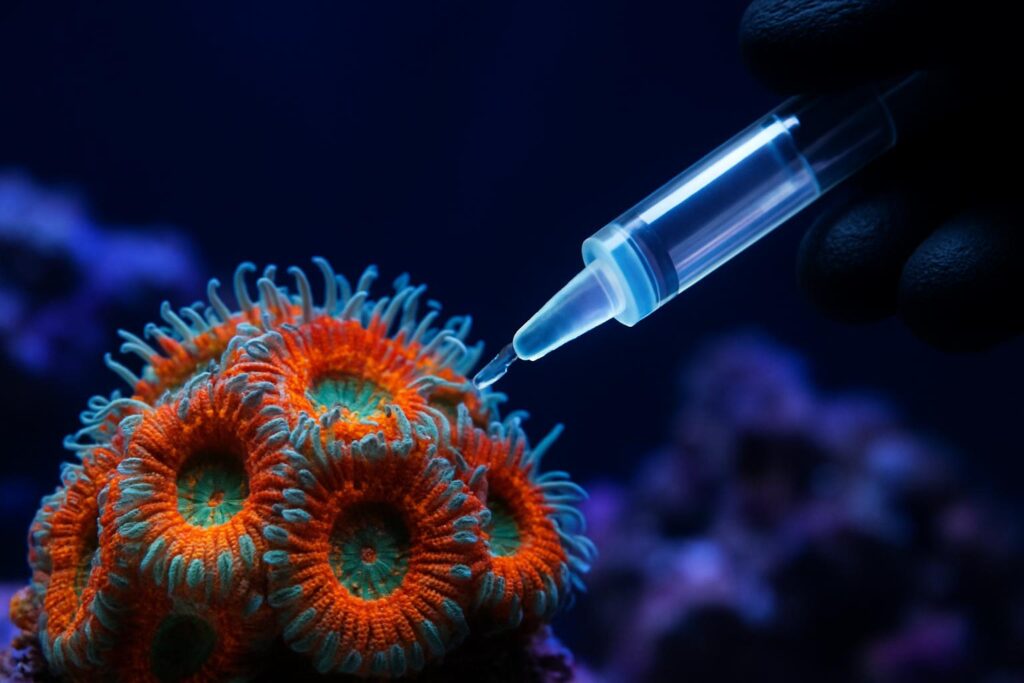
Target feeding corals is one of the simplest ways to improve growth, color, and polyp extension in a reef tank. The right tool puts food exactly where it belongs, reduces waste, and keeps nutrients in check. In this guide, you will find the five best coral target feeders for 2026, how to choose between them, and how to use them for consistent results.
What target feeding does for your reef
Precision feeding cuts waste
Broadcast feeding throws food across the tank. Target feeding puts it directly on coral mouths and feeding tentacles. You use less food, get cleaner water, and encourage faster response from corals that rely on meaty or particulate diets.
When target feeding makes the biggest difference
- New frags that need support while encrusting
- LPS corals with large mouths such as Acanthastrea, Scolymia, Trachyphyllia
- NPS corals that do not rely on light
- Picky eaters or shaded colonies that miss broadcast food
How to choose a coral feeder
- Reach enough length to feed without wet sleeves
- Control smooth plunger or bulb action for delicate delivery
- Capacity suitable for your tank size and food type
- Material reef safe plastics or acrylic that clean easily
- Maintenance parts that come apart and rinse clean
Best Reef Tank Coral Target Feeders for 2026
Two Little Fishies Julians Thing
This classic multi purpose feeder remains a favorite for precision. A rigid acrylic tube gives firm control, while the soft silicone tip protects coral tissue. The tool draws and pushes food with a fine plunger, so you can deliver tiny puffs or a steady stream without blasting polyps.
Why it helps precise control of flow and direction keeps food on target and out of the water column. It also doubles as a handy tool for blowing detritus off frags or moving small items.
Best for LPS and soft corals that benefit from gentle spot feeding, small to mid sized tanks, users who want a long lasting tool.
Potential downsides costs more than generic pipettes and needs a thorough rinse after oily foods to keep the plunger smooth.
Use tip purge air first, then draw food slowly to avoid bubbles. Feed with lights low or off to reduce fish theft.
Kent Marine Sea Squirt Feeder
Sea Squirt is all about reach and simple operation. The extendable tube helps you access deep spots without disturbing aquascape. Graduations on the barrel help you measure portions. The soft tip limits tissue damage if you make contact.
Why it helps long reach and easy one hand operation let you feed shy corals in the back without moving pumps or rockwork.
Best for larger or deeper tanks, feeding under ledges, and hobbyists who prefer a familiar baster like feel with extra length.
Potential downsides the sliding extension adds parts to clean and can stick if salt creep dries on the shaft. Rinse with fresh water after each session.
Use tip extend only as much as you need to reduce flex and keep aim steady.
A slim, rigid feeder with interchangeable tips that suit particle foods and small mysis. The narrow bore gives tight control over small portions for SPS and small polyp feeders. The parts separate for easy cleaning after greasy foods.
Why it helps small bore and fine tip let you place food near polyps without pushing it away, which is important for acans, acros during night feeding, and picky NPS.
Best for fine particulate foods such as reef roids style powders, rotifers, and small cyclops.
Potential downsides not ideal for larger chunks and can clog if you skip straining thicker mixes. Pre mix to a smooth slurry.
Use tip hydrate dry food well, then strain out clumps before loading to avoid blockages.
AquaBasik Long Reef Pipette Feeder Set
This budget friendly set usually includes two lengths of acrylic pipettes with soft tips. The simple squeeze bulb draws food fast and the long tube keeps your hands dry. It handles most slurry and small mysis without fuss.
Why it helps affordable, long, and easy to clean, so you can dedicate one to coral foods and another to pest control or dusting frags.
Best for beginners who want a low cost, do everything feeder for LPS and softies in nano to mid sized systems.
Potential downsides bulb action is less precise than a plunger and can blast if you squeeze too hard. Practice gentle pressure outside the tank first.
Use tip pinch and release slowly to avoid drawing air, which can spook corals and fish.
OXO Good Grips Turkey Baster
Not an aquarium brand, yet many reefers rely on a high quality kitchen baster for everyday target feeding. The silicone bulb and clear tube give strong suction and quick delivery for chunky foods such as mysis, chopped shrimp, and roe. It is sturdy, easy to disassemble, and simple to sanitize.
Why it helps reliable suction and large bore move heavier foods with minimal clogging, perfect for meaty LPS and hungry fish that intercept bites.
Best for feeding larger particle foods to big mouths like trachys and scolys, and for tanks where you also feed fish at the same time.
Potential downsides too much flow for delicate polyps and not ideal for fine powders. Keep a light touch and consider a second feeder for small particle foods.
Use tip angle the tip slightly above the polyp and let food fall onto the mouth rather than blasting head on.
How to get the most from any target feeder
Prepare food the right way
- Hydrate powders in tank water for at least five minutes
- Strain thawed frozen foods to remove packing juices that add nutrients
- Make a smooth slurry that matches your feeder bore
Turn pumps down
Set return and powerheads to feed mode or turn them off briefly. This keeps food on target and reduces waste. Restore flow within ten to fifteen minutes to avoid dead spots.
Feed when corals are receptive
Many corals extend feeding tentacles after lights down. Try dimming or switching to blue only for a few minutes before feeding. Watch for tentacle extension to time delivery.
Clean tools after every session
Rinse feeders with warm fresh water, operate the plunger or bulb under the tap, and air dry. A monthly soak in a mild vinegar solution removes carbonate buildup and keeps seals smooth.
Choosing the right feeder for your tank
- Nano tanks a slim plunger style or small pipette limits overfeeding
- Deep tanks an extendable feeder like Sea Squirt prevents wet sleeves and keeps aim steady
- Mixed reefs keep two tools on hand, one narrow bore for powders and one wide bore for mysis
- Sensitive corals soft silicone tips and gentle plunger control reduce tissue irritation
Conclusion
Target feeding is a high impact habit with low effort when you have the right tool. Use a precise plunger for powders and delicate polyps, a long reach feeder for deep tanks, and a sturdy baster for meaty foods. Control portions, feed when corals are ready, and keep your tools clean. Do this consistently and you will see stronger feeding response, better coloration, and healthier growth without chasing nutrients.
FAQ
Q: Which feeder suits a deep tank
A: An extendable tool such as Sea Squirt gives the reach to feed corals in the back and under ledges without disturbing rockwork.
Q: What should I use for fine particulate foods
A: A slim, narrow bore plunger style feeder such as a premium coral feeder or Julians Thing gives better control and reduces waste.
Q: How do I avoid blasting delicate polyps
A: Use gentle plunger or light bulb pressure, angle the tip slightly above the polyp, and turn pumps down or off during feeding.
Q: How do I keep my feeder working smoothly
A: Rinse with warm fresh water after each session, operate the plunger or bulb under the tap, and do a monthly vinegar soak to remove buildup.
Q: When is the best time to target feed
A: Feed when corals show tentacle extension, often after lights dim or switch to blue, and keep flow low so food stays on target.