
We are reader supported. When you purchase through links on our site, we may earn an affiliate commission. Also, as an Amazon affiliate, we earn from qualifying purchases.
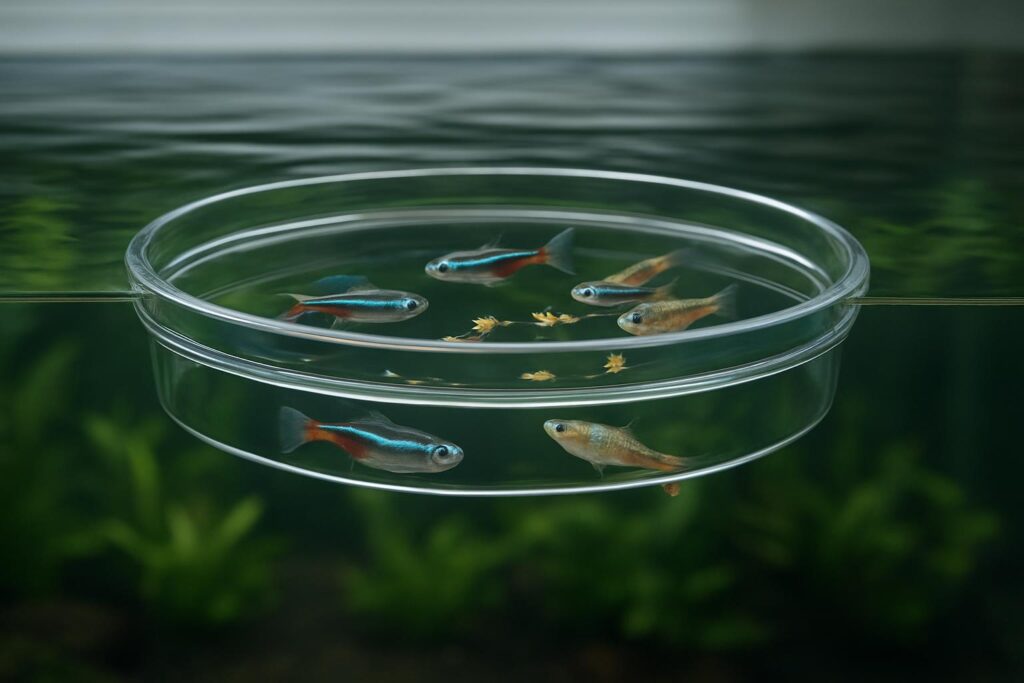
Feeding rings solve a simple problem in a clean way. Floating food scatters across the surface, rides the current, slips into the filter, and pushes timid fish away from mealtime. A feeding ring holds flakes and floating pellets in one calm spot so fish can eat with less stress and your filter does not swallow the food. The result is clearer water, steadier feeding routines, and easier observation. This guide breaks down how feeding rings work, what to look for, and the five best options for reliable, beginner friendly use.
Why a Feeding Ring Helps With Floating Food
Creates a predictable feeding zone
Fish learn where food appears. A ring builds a calm pocket on the surface where flakes and pellets stay put. This reduces surface chasing and gives shy fish a chance to eat.
Reduces waste and supports water quality
A ring keeps food away from filter intakes and high flow. Less food gets lost. That means less uneaten food breaking down into ammonia and less strain on your biofilter. Tanks stay cleaner for longer.
Makes training and observation simple
With food in one place, you can train fish to come to the same spot every day. This helps you check appetite, body condition, and behavior at a glance. It also helps you portion food better because you see exactly how much is left.
Protects floating plants and skimmer lines
Rings prevent food from catching in floating plant roots or entering surface skimmers. Plants stay pristine and skimmer performance is stable.
What to Look For Before You Buy
Float stability and ring size
Look for a firm but buoyant ring that sits level. Too small and fish bump food out. Too large and food drifts apart. For nano tanks, rings around 2.5 to 3.5 inches work well. For standard 10 to 40 gallon community tanks, 3.5 to 5 inches is a solid range. Bigger tanks or strong surface flow may benefit from 5 to 6 inch rings.
Anchor style and adjustability
Most rings use a suction cup and a flexible arm or a simple tether. An arm lets you fine tune placement away from glass braces and under a lid. A basic tether is cheap and works in calm tanks. Ensure the suction cup is soft, large enough, and easily replaceable.
Material and ease of cleaning
Food oils and biofilm collect on rings. Smooth plastic or silicone cleans fast with a sponge. Avoid porous foam that can trap grime. Simple is best for weekly wipe downs.
Compatibility with automatic feeders
A good ring pairs with an auto feeder. If you plan to automate, pick a ring with an arm that can align directly under the feeder chute. This reduces scatter and keeps feeding consistent while you are away.
The 5 Best Aquarium Feeding Rings for Floating Food
EHEIM Feeding Station
EHEIM builds gear that focuses on function and reliability. The Feeding Station is designed to create a stable target zone for food and it does this very well. It is more than a ring. It includes a tray that directs sinking food and prevents flakes from drifting off too quickly. It suits community tanks, planted tanks, and setups that already use an EHEIM auto feeder or similar units.
Key features and build
- Floating ring plus food tray that collects food in a defined area
- Mounts to the glass with a sturdy bracket and suction cup
- Pairs nicely with many auto feeders for consistent dosing
- Smooth plastic that wipes clean in seconds
Setup and day to day use
Mount the bracket on clean glass near the front or side of the tank, away from the strongest outflow. Adjust the height so the tray sits just below the surface. Drop flakes into the ring. For auto feeders, line up the drop chute over the tray. Clean the ring weekly to prevent biofilm buildup.
Who will like it most
Best for community tanks with moderate surface flow, planted tanks where food must not get stuck in leaves, and hobbyists who want to pair a ring with an auto feeder.
What to consider
Potential downsides it is bulkier than a simple foam ring and may take a bit more room under lids. It also works best if you can place it away from strong outflow.
Bottom line
Why it helps it delivers a robust, well anchored feeding zone with versatile placement and automatic feeder support.
AQUANEAT Fish Feeding Ring
AQUANEAT offers a straightforward floating feeder that hits the sweet spot for price and performance. It includes a floating ring and a suction cup with a flexible connector so you can anchor the ring at a fixed location. The design is minimal and effective.
Key features and build
- Simple floating ring with a tethered suction mount
- Available in packs for multiple tanks or multiple feeding stations
- Flexible connector reduces stress on the suction cup
- Lightweight plastic for quick cleaning
Setup and day to day use
Rinse, then press the suction cup onto clean glass. Leave a little slack in the tether so the ring can self level on surface ripples. Add small portions of flake or floating pellets. Fish quickly learn the location and gather underneath.
Who will like it most
Best for beginners and budget minded keepers who want a compact ring that just works. Also good for betta and nano community tanks that do not need large rings.
What to consider
Potential downsides lighter rings can drift if mounted too close to outflow. The suction cup may need occasional rewetting or replacement over time.
Bottom line
Why it helps it solves food scatter in a clean, low cost way and is easy to position in most small to mid tanks.
SunGrow Betta Fish Feeding Ring
Betta owners often face a simple challenge. Bettas prefer calm surfaces and can be picky eaters. The SunGrow ring is compact, gentle on fins, and perfect for flakes and micro pellets. Its small footprint suits small aquariums and bowls with lids or limited space.
Key features and build
- Small, light ring sized for betta portions
- Suction cup and short tether to keep food from drifting
- Soft edges that are safe for delicate fins
- Quick to clean and reposition
Setup and day to day use
Secure the suction cup high on the glass. Place the ring so it sits in a calm corner away from the filter return. Add just a few pellets per feeding to prevent overfeeding. Bettas will quickly associate the spot with meals.
Who will like it most
Best for betta tanks from 2.5 to 10 gallons and shrimp friendly community nanos where precise feeding helps control waste.
What to consider
Potential downsides the smaller ring area is not ideal for larger community groups. In higher flow tanks, placement must be further from the return.
Bottom line
Why it helps it centers food in a calm pocket, keeps the surface tidy, and prevents food from sliding into filters or plant mats in small setups.
Yagote Aquarium Fish Feeding Ring
Yagote delivers a well known design with a little extra stability. The floating frame is thicker than most budget rings and resists tipping when fish bump it. The included suction cup mount is simple and small, making it easy to fit under tank rims or lids.
Key features and build
- Thicker buoyant frame that sits level on rippled surfaces
- Compact suction mount with light tether
- Neutral color that blends into most setups
- Non porous plastic that rinses clean
Setup and day to day use
Anchor to clean glass, then place the ring where the current is moderate. The extra buoyancy helps keep flakes pooled. Feed in small amounts and watch fish gather underneath in an orderly way.
Who will like it most
Best for small to mid sized community tanks with active fish that tend to bump the ring. Also suits tanks with mild surface agitation.
What to consider
Potential downsides the tether is basic and not as adjustable as articulated arms. If you have very strong outflow, you may need to reposition it to calmer water.
Bottom line
Why it helps sturdy flotation keeps food corralled so you get the benefits of a ring without fussing over perfect placement.
UEETEK Aquarium Floating Food Feeder
UEETEK makes a compact, practical ring that is popular with nano tank keepers. The set often includes more than one ring size, which is handy if you run multiple tanks or want to offer different foods in separate spots. The form factor is simple, reliable, and suitable for daily use.
Key features and build
- Minimalist floating rings with suction cup anchors
- Multiple sizes available for flexible placement
- Lightweight and easy to clean
- Good value for multi tank households
Setup and day to day use
Pick the size that matches your tank and stocking. Place the suction cup high, let the ring float naturally, then feed. The smaller ring is great for micro pellets, while the larger size handles standard flakes.
Who will like it most
Best for nano communities, shrimp tanks, and anyone who wants more than one feeding zone without clutter.
What to consider
Potential downsides the rings are light and work best in calm areas. Suction cups may need to be reseated periodically as they age.
Bottom line
Why it helps flexible sizing and simple hardware deliver clean feeding lines across different tanks while keeping floating food where you want it.
How to Get the Most From a Feeding Ring
Position it away from strong outflow
Place the ring where surface movement is gentle. The front third of the tank or a quiet corner works well. If the ring drifts or tips, it is too close to the return. Move it a few inches at a time until food stays calm inside the ring.
Portion control and timing
Feed what fish can finish in one to two minutes. Reduce amounts if you see food piling up. For grazers and timid fish, split feedings into two or three small sessions.
Training fish to the ring
On day one, drop food just outside the ring and let it drift in. On day two and after, drop food directly inside the ring. Most fish learn in one or two feedings.
Pairing with automatic feeders
Mount the auto feeder above the ring so food falls straight into the center. Test with a small portion and adjust as needed. This keeps feeding predictable while you travel or maintain a strict schedule.
Cleaning routine
Wipe the ring weekly with tank water during maintenance. If you see biofilm or oil on the surface, lift the ring and gently rinse. Replace worn or cloudy suction cups to maintain grip.
Special notes for planted and shrimp tanks
Use smaller portions to avoid overfeeding. A ring keeps food out of dense stems and floating mats so debris does not tangle in plants. In shrimp tanks, a ring helps direct fish to eat at the surface, giving shrimp room to forage below.
Quick Comparison and Selection Tips
For auto feeder setups
EHEIM Feeding Station offers the most solid alignment and capture for automated feeding in tanks with moderate flow.
For bettas and small nanos
SunGrow Betta Fish Feeding Ring is sized right for small pellets and calm surfaces.
For simple, budget friendly control
AQUANEAT and UEETEK rings are easy to install, clean, and replace. They are ideal as first feeding rings or for multi tank users.
For slightly more surface stability
Yagote brings extra buoyancy that resists tipping in moderate current.
Conclusion
A feeding ring is a small tool that delivers steady results. It reduces waste, keeps food out of filters, and guides fish to a predictable feeding zone. For most home aquariums, any of the five options above will tighten your feeding routine and support clearer water. Choose based on tank size, flow, and whether you plan to use an automatic feeder. Set the ring in a calm spot, feed lightly, and clean it during weekly maintenance. Your fish will eat better and your tank will stay cleaner with less effort.
FAQ
Q: Where should I place a feeding ring in my tank
A: Put it in a calm area away from strong outflow, typically the front third or a quiet corner, so food stays inside the ring and does not drift into the filter.
Q: Will a feeding ring help reduce waste and keep water clearer
A: Yes, it keeps floating food in one spot and away from filter intakes, which reduces uneaten food and helps maintain better water quality.
Q: Can I use a feeding ring with an automatic feeder
A: Yes, align the feeder directly above the ring so food drops into the center, then test and adjust placement for consistent results.
Q: How do I train fish to use a feeding ring
A: Start by letting food drift into the ring, then drop it directly inside on the next feedings. Most fish learn in one or two sessions.
Q: How often should I clean a feeding ring
A: Wipe it weekly during tank maintenance and replace worn suction cups as needed to keep a firm hold.