
We are reader supported. When you purchase through links on our site, we may earn an affiliate commission. Also, as an Amazon affiliate, we earn from qualifying purchases.
Stable temperature is the backbone of a healthy aquarium. Fish, shrimp, and corals are sensitive to swings as small as 1 to 2 degrees, which can stress immune systems, slow growth, and trigger disease. A good digital thermometer gives you fast, reliable readings so you can act before small shifts become big problems. This guide breaks down what matters, how to set up for accuracy, and six proven digital thermometers that deliver consistent results for freshwater and marine tanks.
How to Choose a Digital Aquarium Thermometer
Accuracy and consistency come first
Look for models with stable sensors and clear displays. A claimed accuracy of ±0.5 F or ±0.3 C is ideal for sensitive species. Consistency matters as much as precision. If the reading is repeatable day after day, you can trust trends and react early.
Sensor type and placement
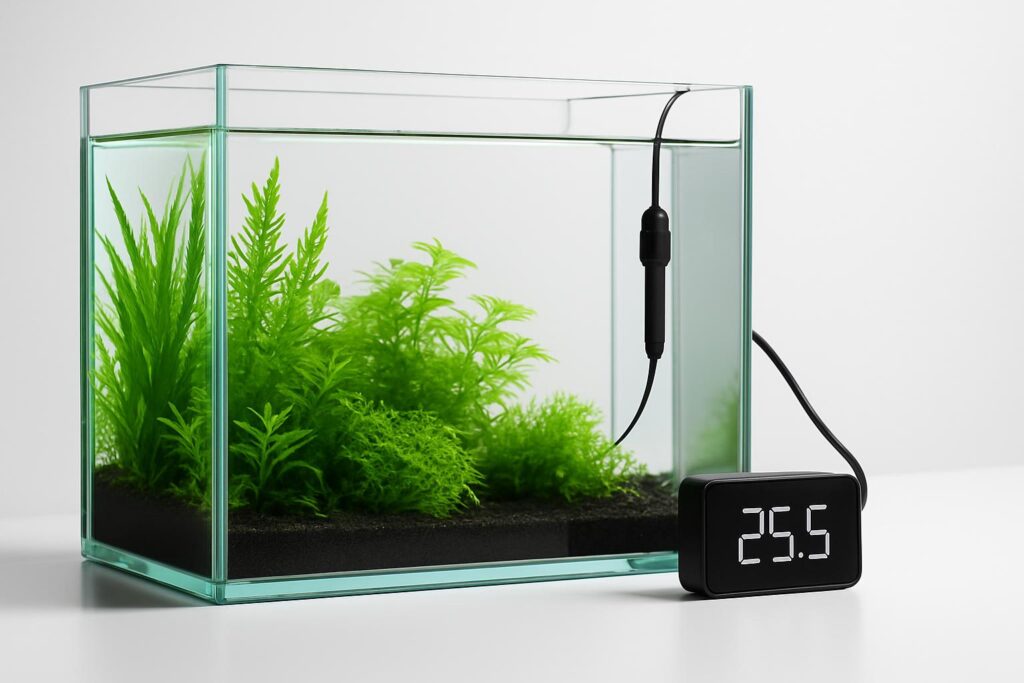
Probe-based thermometers with a waterproof sensor inside the water tend to be the most accurate. External stick-on displays are convenient and look clean, but they infer temperature through the glass. For best results, put probes where water flows well and away from heaters or direct sunlight.
Response time and refresh rate
Fast sensors help you catch changes during water changes or heater failures. Most basic units refresh every second or two. Controllers refresh rapidly and can trigger alarms or control heaters directly.
Build quality and waterproofing
Check the IP rating or product notes for waterproof or splash proof status. Cable strain relief, suction cups that do not slip, and sealed probes prevent failures that lead to false readings.
Readability and power
A bright, large display reduces mistakes. Backlighting helps in cabinet spaces or rooms with low light. Standard button cell batteries are common; some units include a spare. Replace batteries annually or when readings flicker.
6 Best Aquarium Digital Thermometers for Accurate Readings
Zacro Digital Aquarium Thermometer
The Zacro Digital Aquarium Thermometer is a classic probe style pick with a simple LCD display. It seats easily on the outside of a tank with a suction cup, while the waterproof probe sits in the water for direct readings. It is fast, readable, and cost effective, making it a strong daily driver for both beginners and experienced keepers.
Why this model stands out
Why it helps: Direct in water sensing delivers more accurate numbers than glass surface readings, so you can dial in heater settings and spot drift.
Best for: Freshwater and saltwater tanks from nano to larger community setups that need a trusted everyday reading.
Potential downsides: No backlight; the cable can tug if not routed cleanly; no audible alarm.
Key tips for accurate use
Place the probe on the opposite side of the heater and near gentle flow. Secure the cable along the rim or stand to avoid pulling. Verify once with a trusted reference thermometer during setup.
Capetsma Touchscreen Aquarium Thermometer
This sleek, external display thermometer sticks to the outside glass and uses an external sensor pad to estimate water temperature without a dangling cord in the tank. The display is large and touch controlled with simple icons. It cleans up the look of rimless and scaped tanks while remaining practical.
Why this model stands out
Why it helps: A clean, cable free display reduces clutter and makes daily checks quick. Touch operation is simple even with wet hands.
Best for: Aesthetics focused aquariums, rimless tanks, and deskside nanos where minimal gear on display is a priority.
Potential downsides: External sensing can lag a bit behind actual water changes and may read a hair high or low based on room temperature and glass thickness.
Key tips for accurate use
Mount away from direct sunlight, heater placement, and vents. If readings differ slightly from a probe, note the offset and watch for trends. Clean the glass patch monthly for best contact.
Inkbird ITC-308 Temperature Controller
The Inkbird ITC-308 is more than a thermometer. It is a dual relay controller that reads water via a probe and can switch a heater and a cooling device on and off within tight limits. It adds a safety net for sensitive or high value setups like reef tanks or discus systems.
Why this model stands out
Why it helps: Built in control, calibration, and alarms reduce the risk of heater failures and temperature swings. You set the target temperature and differential, and the controller handles the rest.
Best for: Reef and planted tanks, breeders, and anyone who wants alarmed and automated temperature control.
Potential downsides: Higher cost and a bulkier footprint than basic thermometers; requires a dry mounting spot and cable routing planning.
Key tips for accurate use
Mount the controller dry and at eye level. Place the probe in a well circulated area. Set a narrow differential, such as 0.5 to 1.0 F, and test alarms monthly. Keep drip loops on all cords for safety.
Hygger Digital Aquarium Thermometer
Hygger offers a compact digital thermometer with a waterproof probe, clear display, and strong suction cups. It strikes a balance between speed, readability, and price. The brand focuses on aquarium gear, and this unit fits neatly on tank frames or stands.
Why this model stands out
Why it helps: A fast probe and easy to read face make routine checks smooth, even across multiple tanks.
Best for: Community tanks, betta tanks, and planted setups where you want reliable numbers without extra features.
Potential downsides: No backlight on some models; verify you receive the waterproof version; readings can drift when battery runs low, so replace proactively.
Key tips for accurate use
Seat suction cups on clean glass. Route the probe cable with a clip to avoid stress on the display. Keep a spare battery on hand and replace yearly.
NICREW Digital Aquarium Thermometer
NICREW delivers a simple, budget friendly thermometer that gets the job done. The probe reads in water, the display shows clear digits, and the unit includes common mounting hardware. It is popular with beginners setting up their first tank and seasoned keepers running fish rooms.
Why this model stands out
Why it helps: Straightforward design and dependable readings make it an easy default choice for daily monitoring.
Best for: Entry level tanks, quarantine tubs, and backup monitoring alongside a controller or heater thermostat.
Potential downsides: Finish and suction cups feel basic; no alarm or backlight; verify cable length for taller tanks.
Key tips for accurate use
Place the probe near moderate flow, not directly in front of the return. Avoid letting the cable pinch under lids. Cross check with a reference thermometer at setup.
VIVOSUN Digital Aquarium Thermometer 2 Pack
This twin pack offers value for multi tank keepers or anyone who wants a second reading in the same aquarium. Each unit has a submersible probe and a simple LCD display. Having two sensors lets you compare readings at different spots, like near the heater and across the tank, to spot stratification.
Why this model stands out
Why it helps: Two probes reveal hot or cold zones, which is useful in long tanks, sumps, or high flow systems.
Best for: Fish rooms, racks, and hobbyists who want redundancy without spending much.
Potential downsides: Basic build; no alarms; mounting hardware may need cleaning to keep suction strong.
Key tips for accurate use
Place one probe near the return or filter outlet and the other on the opposite end. Compare readings daily for a week to confirm even heat distribution. Reposition as needed.
Quick Comparison Guide
Pick by priority
If ultimate stability is your goal, choose a controller such as Inkbird ITC-308. If you want the highest accuracy on a low budget, pick a probe style like Zacro or NICREW. If tank aesthetics matter most, go with the Capetsma touchscreen external display. If you run multiple tanks, a VIVOSUN two pack keeps costs down.
Probe vs external display
Probe based units usually read closer to true water temperature and respond faster. External stick on displays look clean and avoid cables inside the tank, but can lag and shift with room temperature. Both are useful when you understand their behavior and place them correctly.
Setup Tips That Improve Accuracy
Place the sensor in moving water
Put the probe opposite the heater and near gentle flow from a filter or wavemaker. Avoid contact with glass and direct heater output. This area reflects the average tank temperature better than still corners.
Control sunlight and drafts
Do not mount displays or external sensors where sunlight hits the glass. Keep them away from AC vents or radiators. Room influences can bias readings, especially for external units.
Verify once and then track trends
At setup, check your thermometer against a trusted reference or a second unit. Note any consistent offset and focus on changes over time. Replace the battery if digits fade or readings become erratic.
Use redundancy for sensitive livestock
Reef tanks, discus, and shrimp colonies benefit from two readings. A controller plus a simple probe thermometer gives both automatic control and a second opinion.
Maintenance and Troubleshooting
Clean contacts and cups
Algae under suction cups leads to slipping, which can move sensors and skew readings. Clean glass before mounting and wipe the cups monthly.
Watch for cable wear
Inspect probe cables where they cross lids and rims. Kinks and crushed points can damage insulation. Reroute with clips and keep drip loops to prevent water from running along cables.
Understand normal tank swings
Most tanks shift slightly from lights on to lights off. A swing of 0.5 to 1.0 F is common. Larger swings point to heater issues, poor circulation, or room temperature extremes.
Which One Should You Get
Best overall for most tanks
Zacro Digital Aquarium Thermometer balances accuracy, speed, and simplicity. It is the pick for most beginners and intermediate keepers who want confidence without extra cost.
Best for safety and control
Inkbird ITC-308 protects valuable livestock by adding alarms and heater control. Choose it when you want to set a target and maintain it within tight limits.
Best for clean looks
Capetsma Touchscreen Aquarium Thermometer keeps the display neat and modern with less gear visible inside the tank.
Conclusion
An accurate digital thermometer turns guesswork into certainty. Place the sensor well, verify it once, and watch trends. With the right pick and a short setup routine, you catch problems early, keep fish stress low, and maintain stable conditions for growth and color. Choose a probe based unit for the best accuracy, add a controller for safety on sensitive setups, or go with a clean external display if you value a minimalist look. The six options above cover all common needs from first tanks to advanced systems.
FAQ
Q: Which type of aquarium thermometer is most accurate for everyday use
A: Probe based thermometers that read water directly are generally the most accurate and respond faster than external stick on displays.
Q: Where should I place the thermometer probe in my aquarium
A: Place the probe opposite the heater and near gentle flow, away from direct heater output and sunlight, to reflect average tank temperature.
Q: How often should I verify my thermometer reading
A: Verify once at setup against a trusted reference, then recheck during routine maintenance or if you notice unusual swings.
Q: Do external stick on thermometers read true water temperature
A: External displays infer temperature through the glass, so they can lag behind changes and shift slightly with room temperature and glass thickness.
Q: What is the best option if I want alarms and automated control
A: A temperature controller such as the Inkbird ITC-308 adds alarms and can switch heaters and cooling devices to maintain tight limits.