
We are reader supported. When you purchase through links on our site, we may earn an affiliate commission. Also, as an Amazon affiliate, we earn from qualifying purchases.
Fragging corals at home is the most reliable way to grow your reef without adding risk to your system. A good kit keeps the process clean, fast, and repeatable. The right tools protect coral tissue, reduce stress, and help every cut heal into a healthy new colony. In this guide, you will learn what matters in a fragging kit, what to avoid, and the six best kits that make coral propagation simpler for beginners and efficient for experienced reefers.
Why the right fragging kit matters
Coral tissue is delicate. Every extra second out of water, every ragged cut, and every contaminated blade increases the chance of infection or failure. Purpose-built fragging tools let you cut cleanly, hold small pieces securely, and mount frags fast. That leads to better polyp extension, faster healing, and higher survival.
A complete kit also keeps you organized. When scalpels, cutters, tweezers, glue, and plugs live in one case, you work faster and touch the coral less. Less handling equals less damage.
Buying guide: how to choose a coral fragging kit
Tools you will actually use most
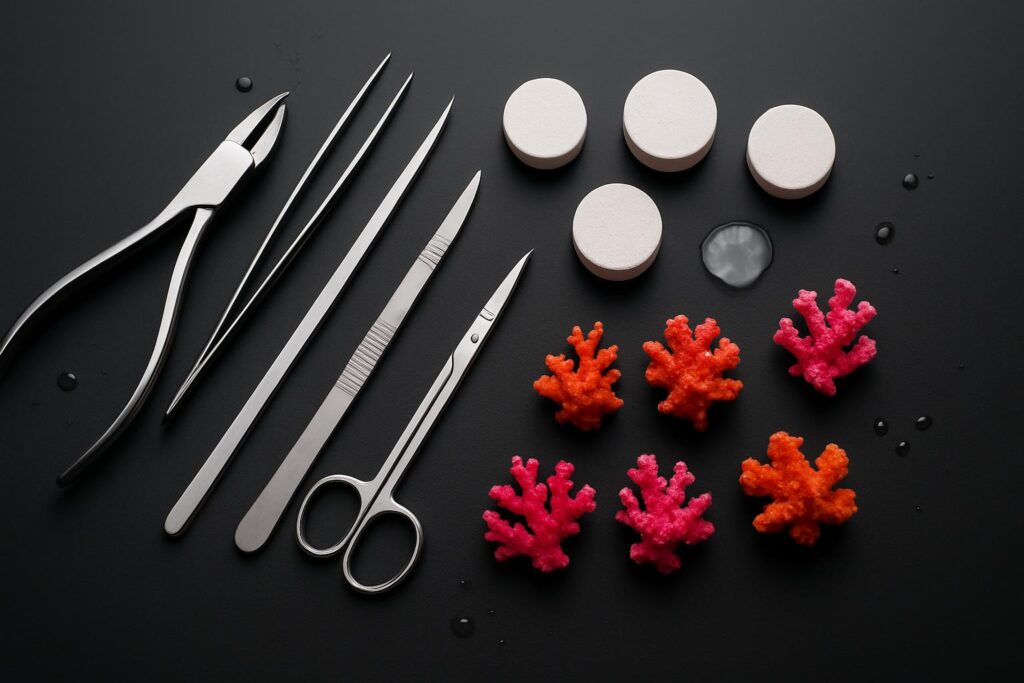
At minimum, you want bone cutters for stony corals, a scalpel for soft corals and precise trimming, and fine-tip tweezers or forceps for placement. Scissors are helpful for softies and macroalgae. A good kit includes at least one glue option and a few frag plugs or discs to get started.
Metal quality and corrosion resistance
Look for 316 or 316L stainless steel. It resists saltwater corrosion better than 304. Tools that are sharp out of the box and stay sharp reduce crushing and bruising of coral tissue. Riveted or screwed joints on cutters should feel tight but smooth. Avoid kits with thin, flexy cutters or rough edges.
Glue and frag plugs that make mounting easy
Cyanoacrylate gel is the standard. Gel bridges gaps and stays put on uneven skeleton. Accelerator is optional but speeds cure time. Ceramic or aragonite frag plugs with rough texture help glue grip and let coralline spread.
Case and safety features
A zippered or snap case keeps sharp parts contained and clean. Sheaths or caps for blades prevent accidents. Foam inserts prevent banging around that can dull blades or misalign cutters.
Value and replaceability
A budget kit can be fine for learning, but check if replacement blades fit standard sizes. If you plan to frag often, invest in stronger cutters and 316L steel to avoid rust and pitting.
The 6 best aquarium fragging kits for coral propagation
1) Oceans Wonders Pro Coral Fragging Kit
This pro-level set covers almost every common fragging task, from slicing zoa mats to snapping SPS branches. The tools feel solid in hand and hold an edge well when cared for. It is a reliable choice if you want a single kit that does not need fast upgrades.
What is included: Heavy-duty bone cutters, fine and angled forceps, soft coral scissors, precision scalpel handle with blades, coral gel, and a selection of frag plugs in a protective case.
Why it helps: Clean, controlled cuts reduce tissue tearing. Having angled and straight tools cuts handling time and speeds mounting, which helps frags recover faster.
Best for: Mixed-reef hobbyists who frag both soft and stony corals and want one kit that is ready for frequent use.
Standout details: Strong hinge on the bone cutters and a comfortable handle feel that reduces fatigue during long sessions.
Potential downsides: Higher price than basic sets. Bone cutter edges can pit if not rinsed and dried after every use.
Tips: Rinse tools in fresh water, dry fully, and add a light coat of food-safe mineral oil to pivot joints between sessions.
2) Oceans Wonders Standard Coral Fragging Kit
A leaner, budget-friendly option that still includes the essentials. It is a practical choice if you are just getting started and want dependable tools without extras.
What is included: Bone cutters, straight forceps, scalpel handle with blades, coral gel, and a few ceramic plugs in a compact case.
Why it helps: Covers the core steps of fragging without clutter. Fewer tools keeps your workflow simple when learning technique.
Best for: Beginners and small nano reef keepers who frag occasionally.
Standout details: Simple case with dedicated slots protects tool edges. Ceramic plugs have a rough finish that grips glue well.
Potential downsides: Lacks angled tweezers and specialized scissors. You may want to add curved forceps later for precise placement under ledges.
Tips: Pre-score SPS branches with the scalpel, then snap cleanly with bone cutters to avoid crushing the skeleton.
Built around sturdy stainless tools and reliable adhesive, this kit emphasizes clean handling and quick mounting. The brand focus on reef-safe consumables shows in the glue performance and plug quality.
What is included: Heavy bone cutters, precision tweezers, scissors, scalpel handle with blades, thick gel adhesive, and textured plugs in a protective pouch.
Why it helps: Thick gel cures fast and holds to uneven frag surfaces. Balanced tool geometry makes delicate work more predictable for small polyp corals.
Best for: Reefers who value strong adhesive and consistent tool finish for repeatable results.
Standout details: Adhesive viscosity is tuned for reef use, staying where you place it with less sag.
Potential downsides: Adhesive tube volume may feel small for bulk projects. Add an extra tube if planning large batches.
Tips: Keep a cup of tank water and a paper towel at the station. Dip tweezers to prevent glue stringing, and wipe tips often to maintain precision.
4) Flipper Aquarium Frag Tool Kit
A practical midrange kit from a brand known for robust aquarium tools. It balances price and performance and focuses on comfortable handling and straightforward storage.
What is included: Bone cutters, straight and angled tweezers, scissors, scalpel handle with blades, and a zip case for organization.
Why it helps: The angled tweezers improve accuracy when placing frags in tight aquascape gaps and on vertical faces.
Best for: Hobbyists who want a trusted name and a balanced tool selection without extra consumables in the box.
Standout details: Comfortable grips reduce hand strain during longer sessions.
Potential downsides: No glue or plugs included in some configurations. Plan to purchase consumables separately.
Tips: Lay out tools left to right in the order you use them. This reduces fumbling and keeps coral air exposure brief.
5) Yakamoz 9-Piece Coral Fragging Tool Set
This value kit gives beginners a low entry cost while still delivering the basic instruments required for soft and hard coral propagation. It is a sensible pick if you want to test the process before upgrading.
What is included: Bone cutters, straight and curved forceps, scissors, scalpel handle with blades, and a small case.
Why it helps: Covers the fundamentals so you can learn clean cuts, gentle handling, and proper mounting technique with minimal investment.
Best for: First-timers and budget-focused reefers who frag a few pieces at a time.
Standout details: Curved forceps improve reach under ledges and inside branching structures.
Potential downsides: Metal grade may not be 316L. Edges can dull faster and corrosion resistance is lower if tools are not dried thoroughly.
Tips: After rinsing and drying, place a desiccant packet in the case to reduce moisture between uses.
6) Aquastation 9-Piece Coral Fragging Kit
A straightforward starter kit with a focus on reliable cutters and user-friendly tweezers. It gives new fraggers confidence without adding unnecessary tools.
What is included: Bone cutters, precision tweezers, scissors, scalpel handle with blades, and a storage pouch.
Why it helps: The bone cutters deliver clean snaps on small SPS branches and LPS skeleton, which reduces tissue trauma at the cut line.
Best for: Mixed reef keepers who want dependable basics and plan to add premium glue and plugs as needed.
Standout details: Balanced cutter spring tension that opens smoothly without jerky action.
Potential downsides: Does not include plugs or adhesive. Consider pairing it with a gel glue and ceramic frag discs.
Tips: Label the pouch with a reef-only tag and keep these tools separate from household use to prevent contamination.
How to get better results from any fragging kit
Sanitize tools before and between frags
Rinse tools in fresh water, then dip in a mild disinfectant that is reef safe when rinsed off. A simple isopropyl alcohol wipe down works, followed by a thorough freshwater rinse and dry. This reduces cross contamination between colonies.
Work quickly and plan each step
Set up a clean station. Pre-open glue, set out plugs, and keep a container of tank water nearby. Dry the frag surface gently with a paper towel before gluing. Speed and organization keep tissue exposure short.
Use the right cut for the coral type
For SPS, target a quick, clean snap with bone cutters on healthy growth tips. For LPS, avoid crushing the skeleton. For softies, make decisive cuts with a sharp scalpel to avoid ragged edges that invite infection.
Mount with gel and stabilize the frag
Use gel adhesive to fill small gaps and press the frag onto a rough plug surface for a few seconds. If needed, dip in tank water to skin the glue. Place the plug in a low-flow area for initial set before moving to final placement.
Let frags heal
Most frags benefit from moderate light and gentle flow as tissue seals. A simple rack in a clean part of the tank keeps frags off the sand and easy to inspect.
Care and maintenance of your fragging kit
Good tools last longer and stay safer when you give them a minute of care after every session.
Rinse: Immediately after use, rinse all tools in warm fresh water to remove salt and organics.
Dry: Pat dry with a lint-free towel and air dry fully before storing. Do not store wet tools in a closed case.
Protect hinges: Add a drop of food-safe mineral oil to bone cutter pivots. Wipe off excess to avoid residue.
Sharpen and replace: Replace scalpel blades often for clean cuts. If cutter edges dull or nick, consider professional sharpening or replacement.
Store safely: Use the included case. Keep blades capped. Add a desiccant pack to fight humidity.
Putting it all together
Start with a kit that fits your coral mix and frequency of use. Pro-grade sets like the Oceans Wonders Pro Coral Fragging Kit deliver confidence on day one and grow with your skills. Budget kits help you learn the workflow and upgrade as you go. Focus on clean tools, fast handling, proper adhesive use, and calm healing conditions. Do these consistently and you will turn one healthy colony into many without guesswork.
FAQ
Q: What tools do I actually need to start fragging
A: At minimum, you want bone cutters for stony corals, a scalpel for soft corals and precise trimming, and fine-tip tweezers or forceps for placement.
Q: Which stainless steel grade should I look for
A: Look for 316 or 316L stainless steel because it resists saltwater corrosion better than 304.
Q: Is gel or liquid glue better for mounting frags
A: Cyanoacrylate gel is the standard because it bridges gaps and stays put on uneven skeleton.
Q: How should I sanitize fragging tools between cuts
A: Rinse tools in fresh water, then dip in a mild disinfectant or wipe with isopropyl alcohol, followed by a thorough freshwater rinse and dry.
Q: How do I set up to work quickly and reduce stress on corals
A: Pre-open glue, set out plugs, keep a container of tank water nearby, dry the frag surface before gluing, and organize tools so every step is smooth and fast.